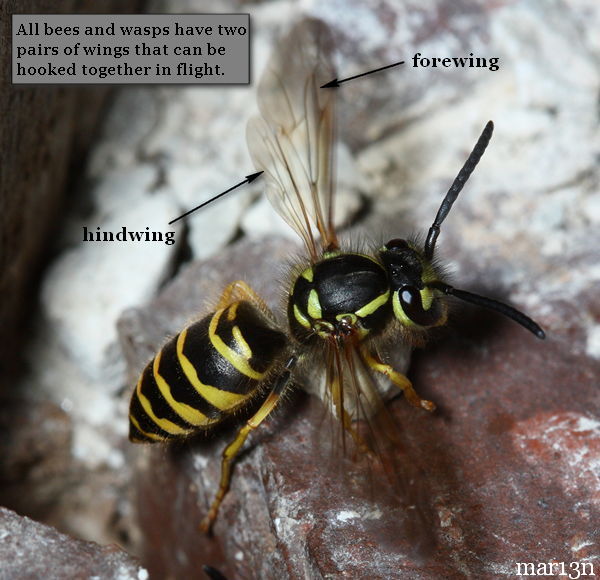
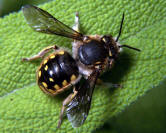
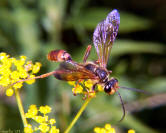
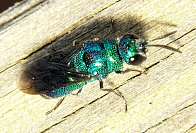
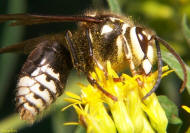
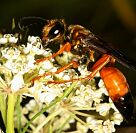
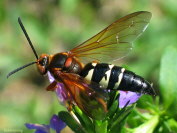
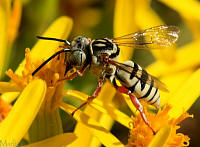
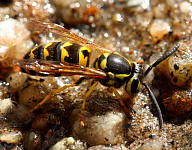
Male
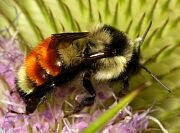
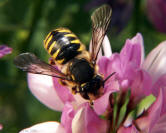
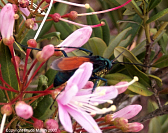
Brownbelted Bumble Bee - Bombus griseocollis

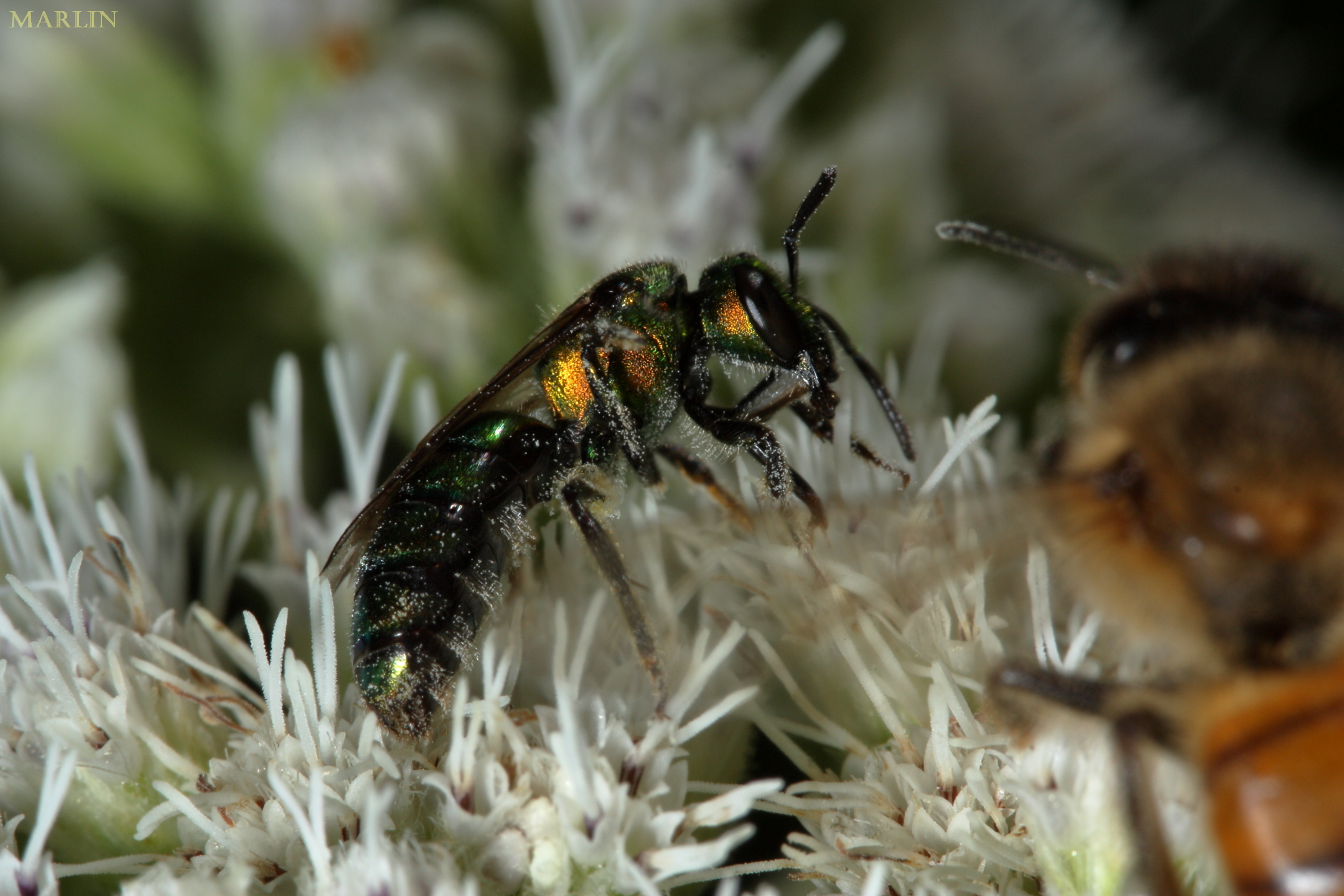
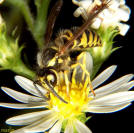
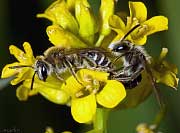
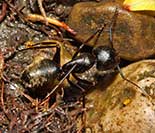
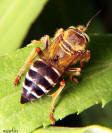
Andrenidae, Andrena barbilabris: Queen is on the left. Andrenid
males mate multiple
times on their nuptial flight.
Ovipositors of Hymenoptera are usually well developed and modified into a stinger in the higher forms of the order. Because the stinger of such forms has developed from the ovipositor
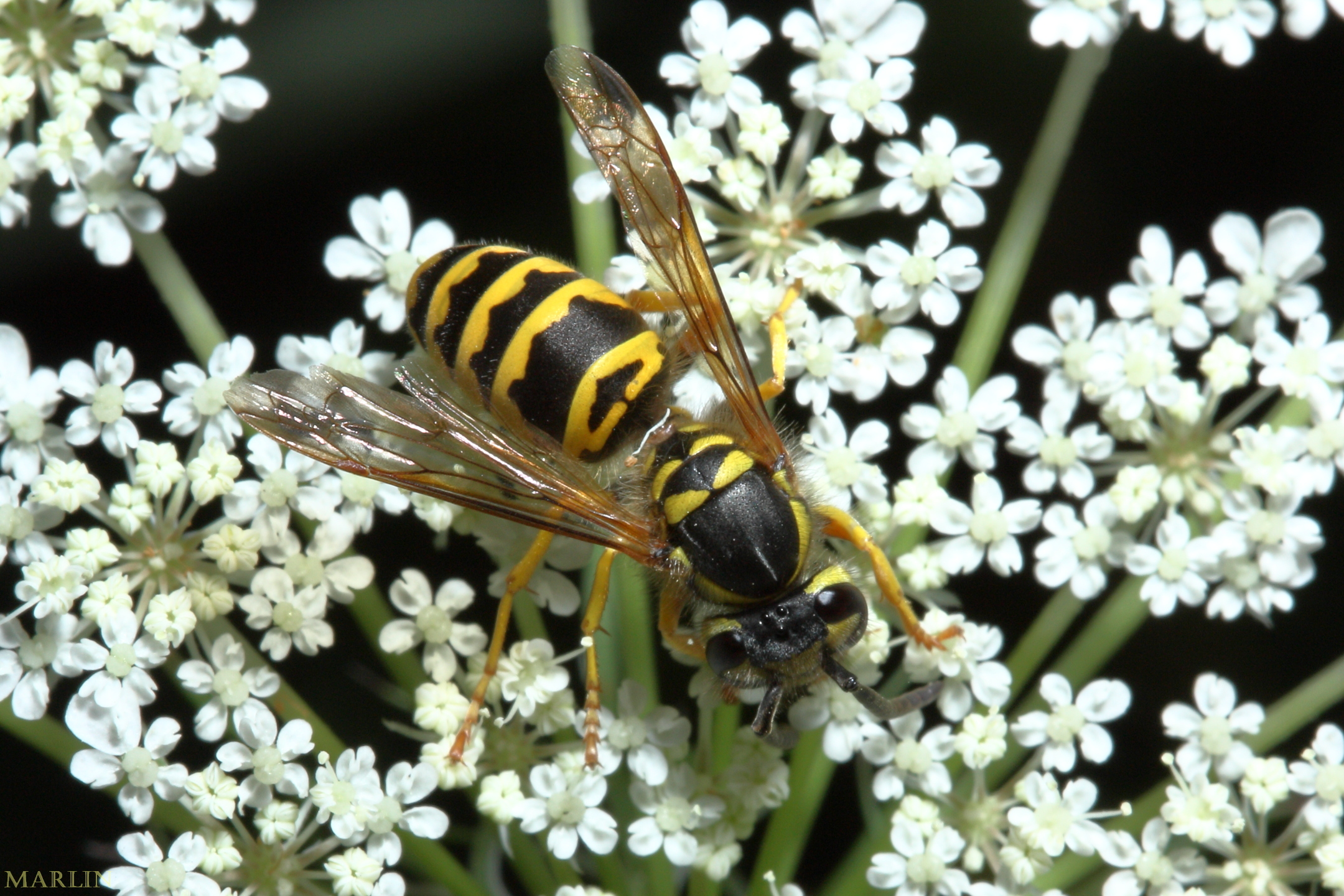
possessed only of females, male wasps are not able to sting. All social wasps use their stinger to defend the colony. The sting consists of a venom reservoir and three "needles": two barbed lancets and a stylet, linked together to form a hollow tube through which venom can be pumped. The stylet makes the initial penetration, and then the two lancets, which slide on "rails" alongside the stylet come forward to
deepen the wound. Wasps and bumblebees can withdraw the stinger and reuse it, but honeybees (Apis mellifera) have multiple large barbs on their sting; they cannot be withdrawn and the bee sacrifices herself for the colony: when she withdraws, the venom sacs are pulled from her abdomen, resulting in death. The venom
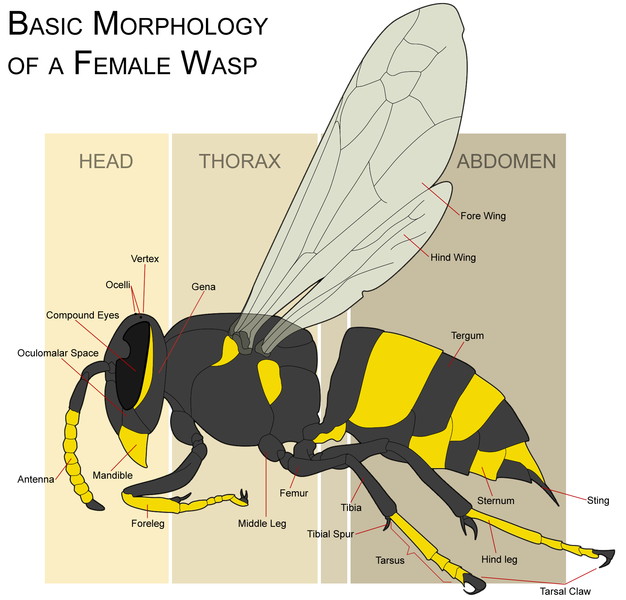
apparatus continues to function, however, pumping more poison into the wound long after the bee has decamped. [1] Many humans have developed allergies to bee stings, and can suddenly develop anaphylactic shock, a condition which can kill if not treated quickly. All adult Hymenopterans have chewing mouthparts; bees and some wasps have modified tonguelike structures for drinking liquid nectar. Many species of Hymenoptera are extremely small and are thus difficult to identify even to family. A publication by Edward Mockford in 1997 recorded discovery of a new species of wasp that is now known as the tiniest existing insect. |
|
Aculeate hymenoptera are those species
whose ovipositors have been modified into stingers; there are 50,000
to 60,000 such species. |
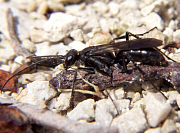
Hymenoptera metamorphosis is complete. Larvae have a well developed head with chewing mouthparts. Most are legless, but sawfly larvae have legs attached to the thorax as well as abdominal prolegs. In bees and a few wasps the larvae feed on nectar or pollen. Most wasps lay eggs in cavities, tunnels or burrows in the ground, or nests made of paper or mud. The female wasp provisions these nests with paralyzed insects on which the larvae, after hatching, feed. Sawflies usually lay their eggs in plant tissue, using the sawlike ovipositor that gives the family their common name. Sawfly larvae live inside stems or leaves and feed externally on foliage. This unhappy trait makes many sawfly species terrible agricultural pests. In braconids, ichneumons and some others, the larvae are parasites of many different insects, as well as spiders and spider egg sac. One such wasp, The Tarantula Hawk (Hemipepsis species) featured here, is famous for using paralyzed tarantula spiders as food for its larvae, and many species specialize in other prey such as cicadas and katydids.
The great Charles Darwin conducted many experiments on insects. He once lay motionless to let a wasp drink from his eye.
[2] |

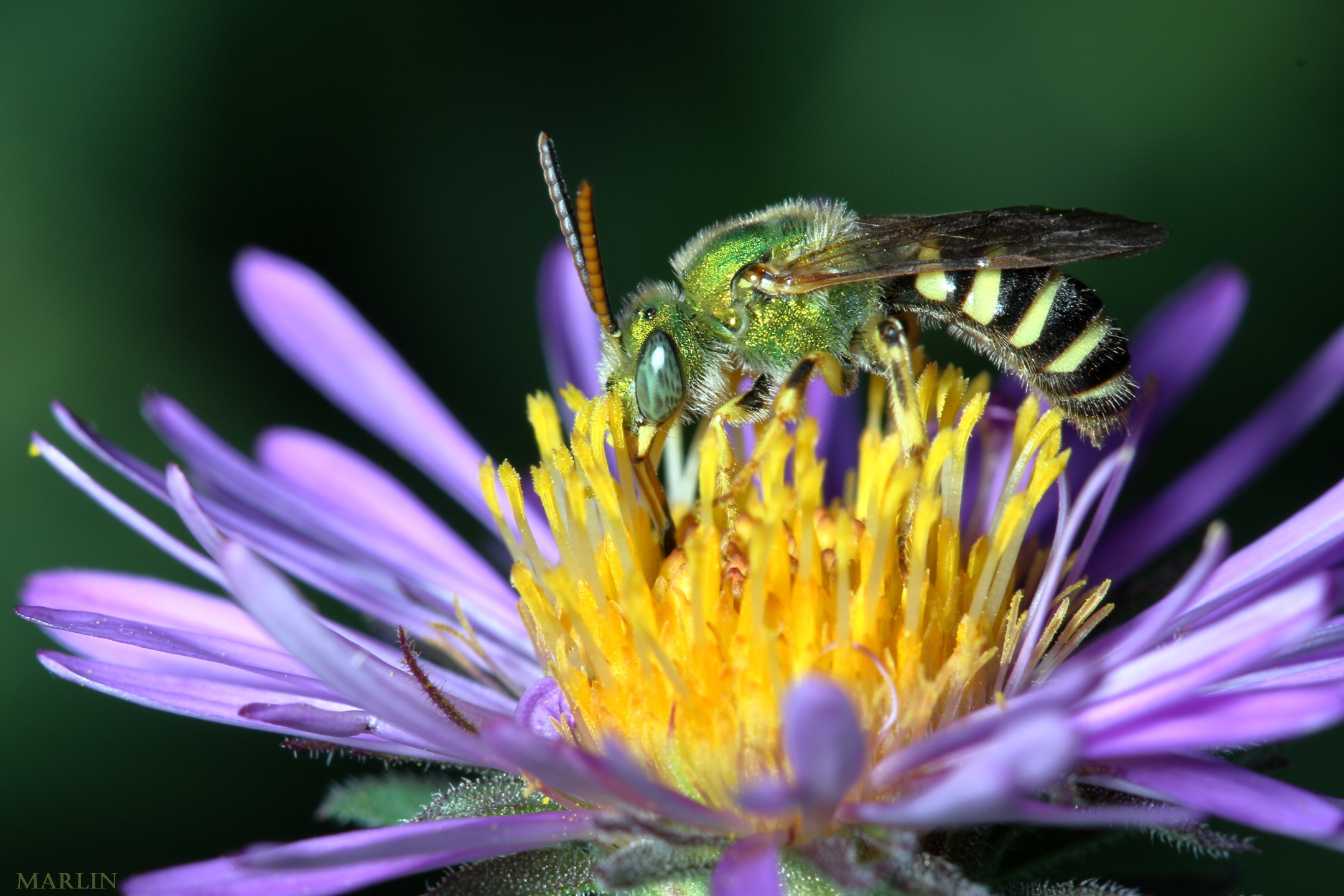
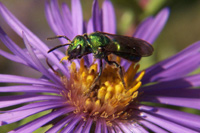
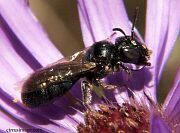
Sweat
Bee in the family Halictidae
The honey bees, bumblebees, mason and orchard bees pollinate a variety of important
agricultural crops in the U.S. including blueberry, apple, raspberry, cranberry, tomato, peppers, kiwi, pumpkin, and squash. Both wild and domesticated honeybee populations have been declining worldwide, due to widespread infestations of Varroa mites, an external parasite that attacks adults and brood (larvae). Honeybees are the preferred pollinator for most fruit crops because they have high populations. Thorough honeybee pollination requires warm, sunny weather. Some 90 different crops -- ranging from apples to zucchini and cantaloupes to cucumbers -- depend on honeybee pollination. To some extent, other insects will pollinate specific crops, however, no insect is as widely effective as the honeybee. The value added by honeybee pollination to American agriculture is estimated to range from $5 billion to $20 billion a year. Bumblebees are also effective pollinators because they fly from early light until almost dark, and they fly during poor weather. They have long ‘tongues’ and are able to gather nectar and pollen from deep flowers like tomato. Unfortunately, bumblebee populations are not nearly as high as honeybee populations and therefore are used primarily for vegetable pollination. Bumblebees are not good subjects for domestication, as their habit is to nest underground. The various bumblebee species have successfully resisted efforts to entice them into man-made beehives.
[2] |
References - Michael Chinery, Amazing Insects: Images of Fascinating Creatures (Firefly Books, 2008).
- David Attenborough, Life in the Undergrowth (Princeton University Press, 2006).
|
|
|