|
  |
Morel Mushroom - Morchella conica
Kingdom: Fungi
/ Division: Ascomycota / Subdivision: Pezizomycotina / Class: Pezizomycetes
Order: Pezizales / Family: Morchellaceae / Genus: Morchella
|
|
|

Morel Mushroom - Morchella conica
|
CREAM OF CHICKEN WITH
WILD MUSHROOMS SOUP
1 1/2 gal. chicken stock and meat from chicken legs
1/2 c. (8 tbsp.) butter
1/2 c. flour
1/4 c. sherry
Salt and pepper
1 tbsp. chopped garlic
Sliced wild mushrooms in season (i.e. shitakes, chanterelles,
morels)
A few domestic mushrooms
1 c. sliced leeks (optional)
1/4 c. chopped parsley
1/2 tsp. chopped thyme
1 pt. heavy cream (optional)
Melt butter in a stock pot, add flour and whisk to form a roux. Cook
5 minutes on low to medium heat. Slowly whisk in chicken stock.
Simmer 10 minutes, stir in sherry (this is called a chicken
veloute). In a separate pan, saute garlic leeks and mushrooms in
fortified butter (oil and butter). Do not stir mushrooms until they
are slightly browned on first side. Shake pan and saute until
browned all around. Drain and add with cooked chicken meat to the
creamed soup. Season to taste and add the chopped parsley last.
(Cream may be added to produce a richer soup).
|
MOREL MUSHROOM SOUP
4 c. morels, fresh
1 med. onion, chopped
2 stalks celery, chopped
2 c. asparagus, cooked
4 c. milk
4 tbsp. whole wheat flour
Salt & pepper to tasteSaute morels, onion and celery in a small
amount of oil until barely tender. Stir in flour gradually, add
milk, salt and pepper. Add cooked asparagus. Simmer until slightly
thickened.
|
|
Mushrooms (asocarps of cap fungi) in the
genus Morchella are commonly known as Morels or sponge mushrooms. They are
highly prized by mushroom hunters, who sometimes jealously guard their
favorite spots. The morels are famously used in French cuisine, and
thousands of people take to the woods every year seeking these delicacies.
The most sought-after is the aptly-named Morchella deliciosa, commonly known
as 'the' morel. Other types may be referred to as gray, black, or yellow
morels.
Morels typically grow abundantly in areas damaged by forest fire. These
bumper crops may continue for two or three years after a fire, and
commercial gatherers sometimes flock to the smoldering ashes in hopes of a
cash crop. Morels also grow in the same locales year after year. Many
afficianados claim a symbiotic relationship between certain trees (perhaps
this is overflow from the Oak tree - Truffle relationship), most often ash,
apple, and poplar. It will be interesting to note, in the coming years,
whether the Emerald Ash Borer Beetle will have a negative effect on morel
populations, as the beetle spreads and kills our ash trees by the millions.
(Sadly, I have no doubt this will happen).
|
| Although Fungi were once
considered to be part of the plant kingdom, most experts now
consider them to be a separate Kingdom or phylum. There are
estimated to be over 100,000 different fungi, most of which form
only tiny threads (Hypha) that can only be seen through a
microscope. Of these, about 20,000 are considered to be high fungi
or macro fungi, i.e. those that produce visible fruiting bodies.
Only these are of any interest to the fungi enthusiast and covered
in any detail, mostly of which belong to the subdivision
Ascomycotina and Basidiomycotina. |
|
Species of fungi are divided into the
following three categories
1 - Mycorrhizal fungi form a partnership with some plants,but mostly with living
trees.
2 - Parasitic fungi prefer the living host; this category is fairly small.
3 - Saprophytic fungi prefer dead and decaying material.
Mycorrhizal
Mycorrhizal fungi form a partnership mainly with trees but also with some
plants, but rather then harming the tree, their presence significantly increases
the roots' effectiveness. Fungi send their hyphae in and about the little
rootlets of the tree until its difficult to tell them apart. The tree supplies
the mycelium with moisture and carbohydrates, and the mycelium returns the
favour with minerals and other nutrients from the surrounding soil. Mycorrhiza
fungi are beneficial both in nature and agriculture; plants with them tend to
grow better than those without.
Parasitic
Parasitic fungi are the second largest group, of whose members do a lot of
serious damage. Rather than obtaining their food from dead animals or plants,
they prefer a living host, often attacking and killing, it then living on as a
saprophytic fungi.
Saprophytic
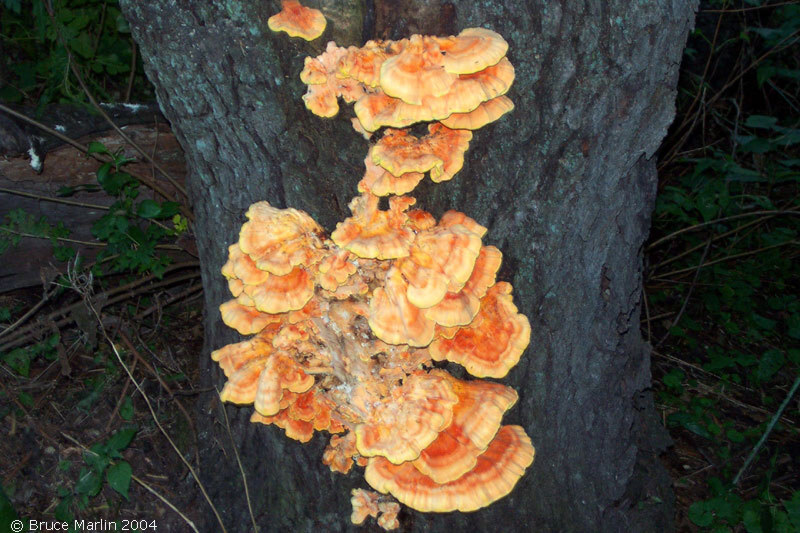
Saprophytic fungi are the largest group of fungi, they growing on dead organic
matter such as fallen trees, cow patties, dead leaves, and even dead insects and
animals. These fungi have enzymes that work to "rot" or "digest" the cellulose
and lignin found in the organic matter, with the lignin being an important
source of carbon for many organisms. Without their digestive activities, organic
material would continue to accumulate until the forest became a huge rubbish
dump of dead leaves and trees. |
|