Robber Fly – Laphria thoracica
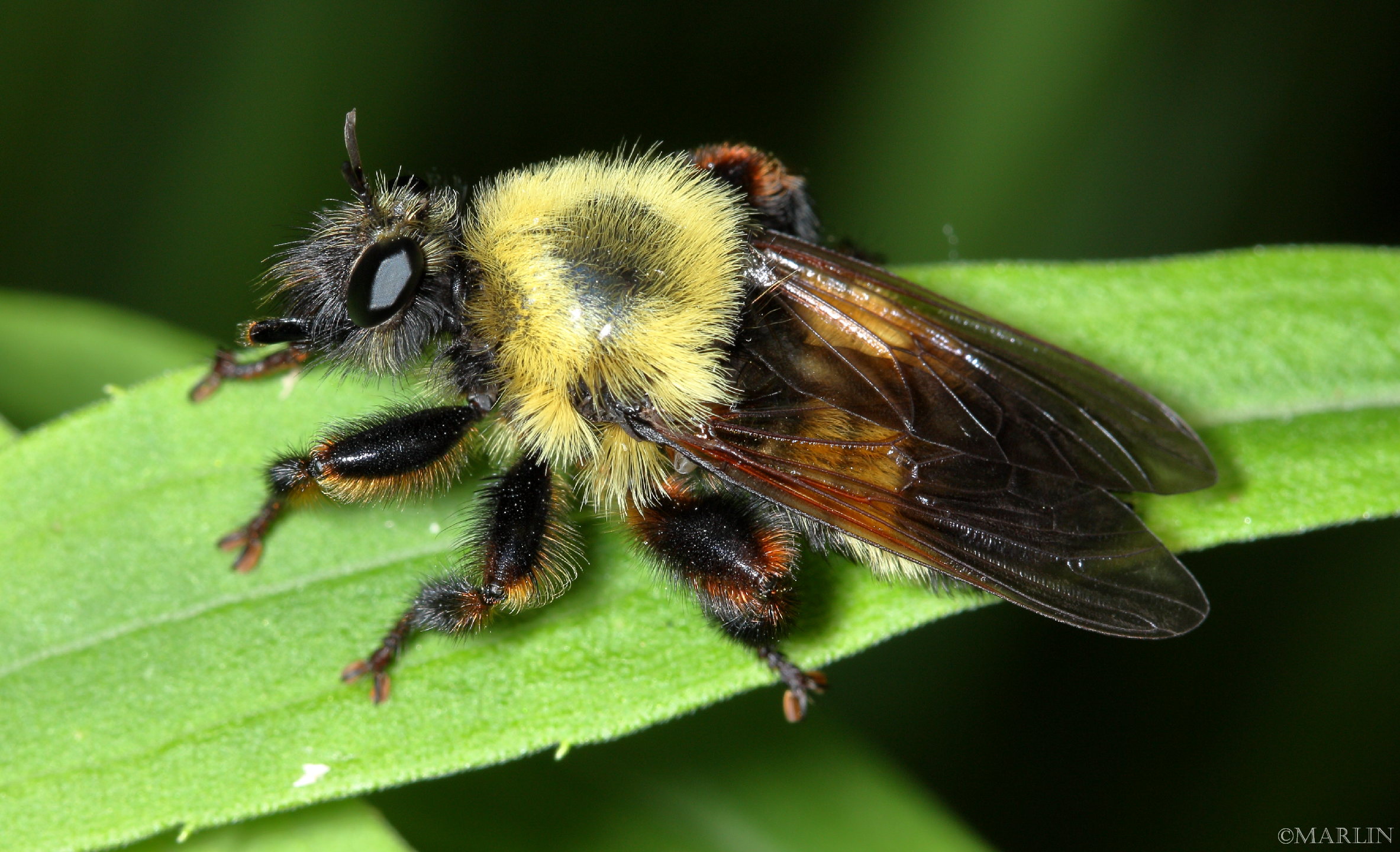 Family Asilidae – Robber Flies
Live robber flies photographed at northern Illinois. Size = 25mm / deer fly prey size = 10mm
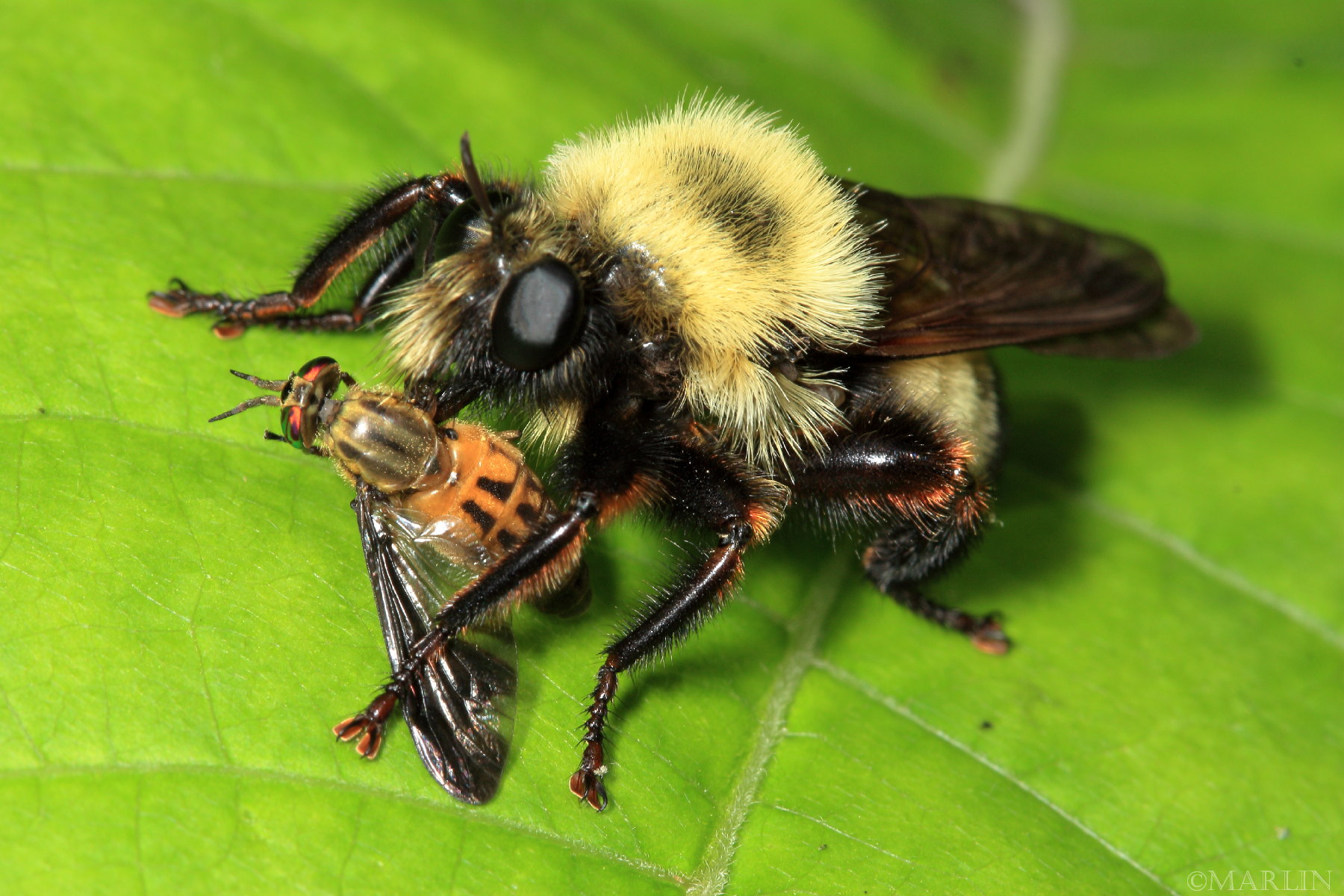 The backwash from this sucker’s prop almost knocked me down yesterday when it did a close fly-by with a stunned deer fly held tenderly in its front claws, impaled on its proboscis. This is the largest (and in my opinion most stately) of the Laphria complex flies, a truly magnificent creation.
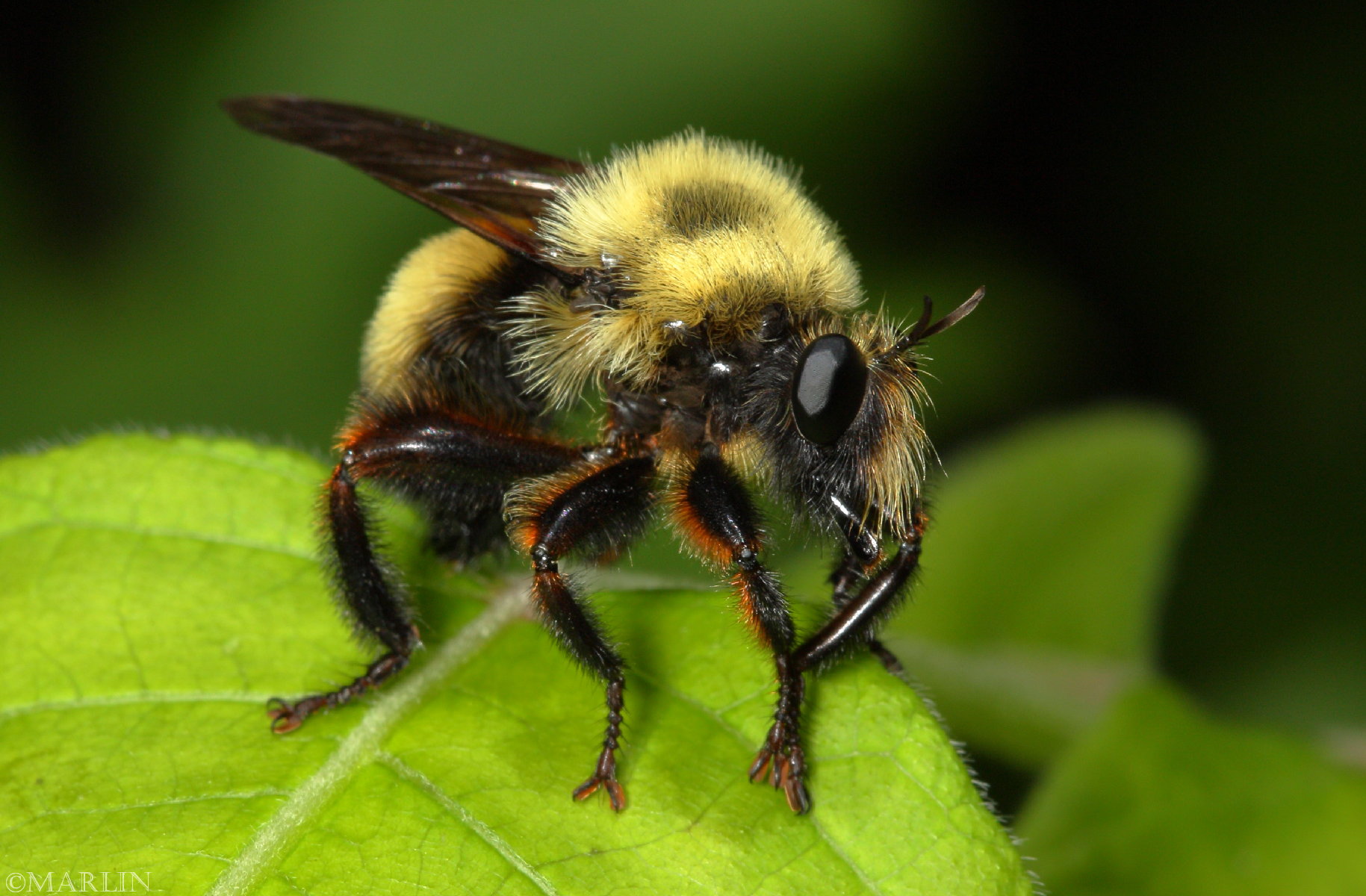
Before I began photographing insects, I had no idea such a thing existed. Now it is my ardent wish every time I’m in the field for an opportunity to watch one of these clever creatures at work.
For me, such a spectacle is every bit as fascinating as watching a lion or cheetah capture and consume a large mammal; a less dangerous pursuit certainly, accessible and inexpensive!
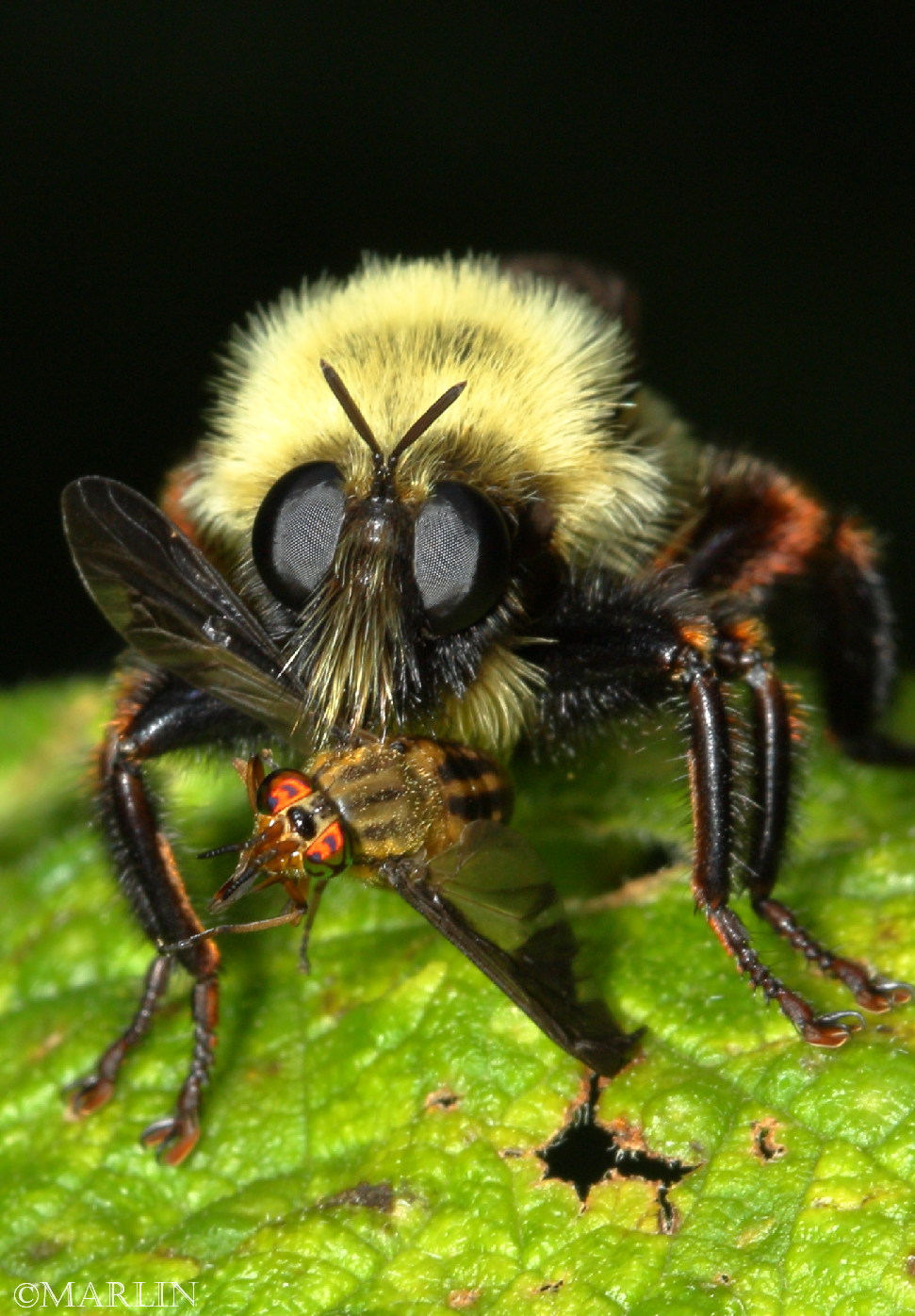 There are over 7,000 species of robber flies world wide; nearly 1,000 in North America.
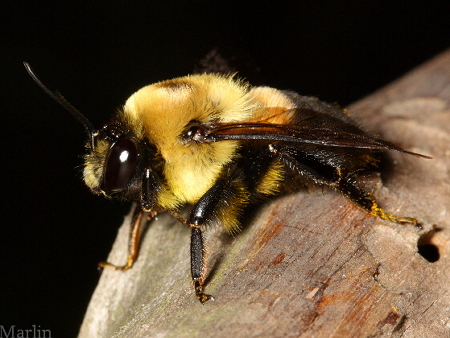 Male Bumble Bee |
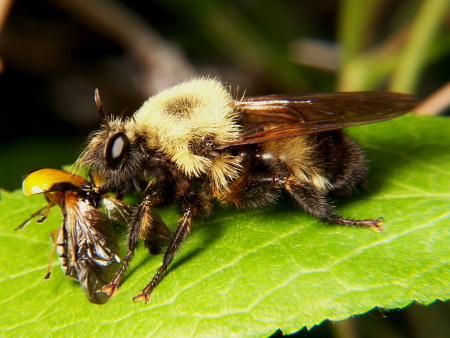 Female Robber Fly |
The Laphria complex flies are convincing bumble bee mimics. This evolutionary adaptation allows them to reap the benefits of aposematic (warning) coloration without the high metabolic cost of constructing and maintaining a venom-delivery system.
Reference: Bugguide.net Laphria thoracica
Flies Main | Flies Index | Bee Flies | Robber Flies
Tree Encyclopedia / North American Insects & Spiders
Online since 2002