Midge – Family Chironomidae
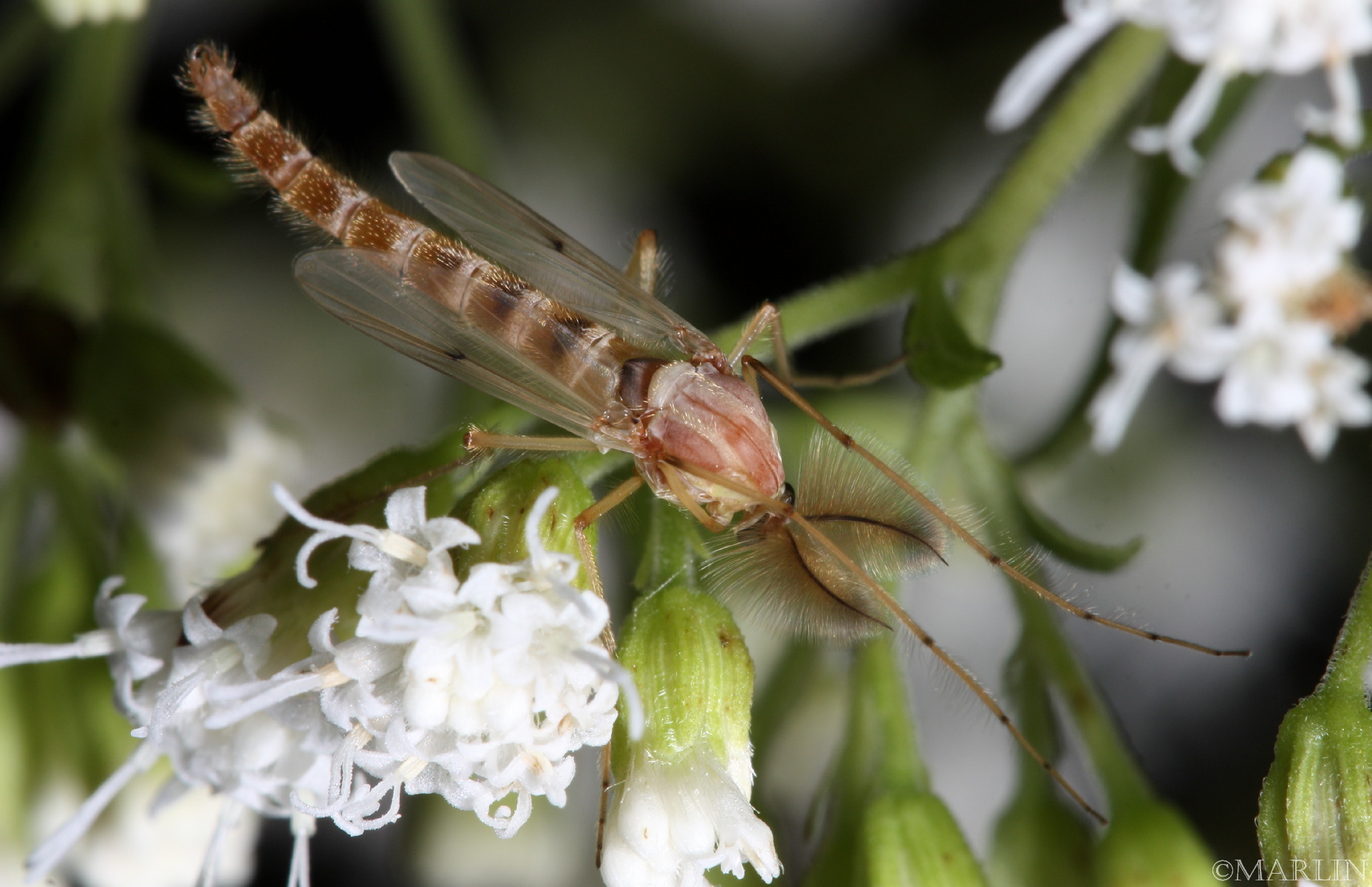
Feathery antennae = male / size = 10mm
Diptera (Flies) / Culicomorpha / Chironomidae (Midges) / Chironominae
The characteristic front legs held in the air are limited to midges in the subfamily Chironominae
Chironomidae (informally known as chironomids or non-biting midges) are a family of nematoceran flies with a global distribution. They are closely related to the Ceratopogonidae, Simuliidae, and Thaumaleidae. Many species superficially resemble mosquitoes but they lack the wing scales and elongate mouthparts of the Culicidae. This is a large group of insects with over 5000 described species and 700 species in North America.
Red larvae of genus Chironomus are called “bloodworms”. Their blood contains hemoglobin, unusual for insects. Larvae are often very abundant and are an important food item for many fresh water fish and other aquatic animals. [1]
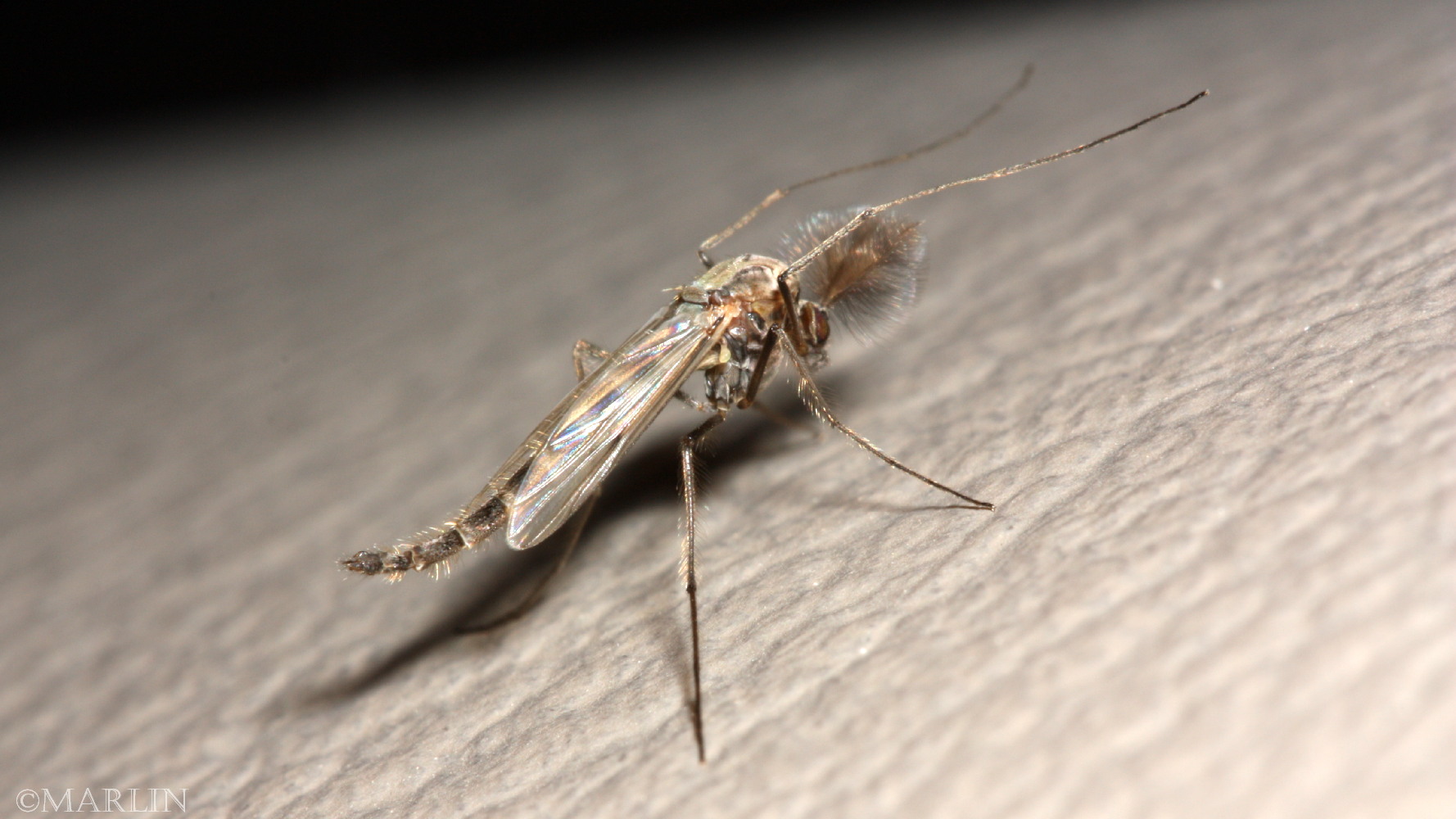
Male midge
Midges In Fly Fishing: Midges are the most important aquatic insects in some places, especially fertile spring creeks where they are extremely abundant and the current is so slow that it’s efficient for trout to surface feed on very tiny insects. Midges can be used to gauge the local water quality.
Some midges are large, up to hook size 14, but the majority are size 22 or smaller. The number of genera and species is hopelessly huge for angler entomologists to ever learn, and the identifing characteristics often require slide-mounting tiny parts under high-powered microscopes. Even the most Latin-minded fisherman must slip back to the basics–size and color–to describe his local midge hatches.
Midges rise to the surface as pupae and struggle slowly through the surface film while the pupa’s body dangles vertically below. This is the most common stage for trout to take, though the adults may be useful at times too.
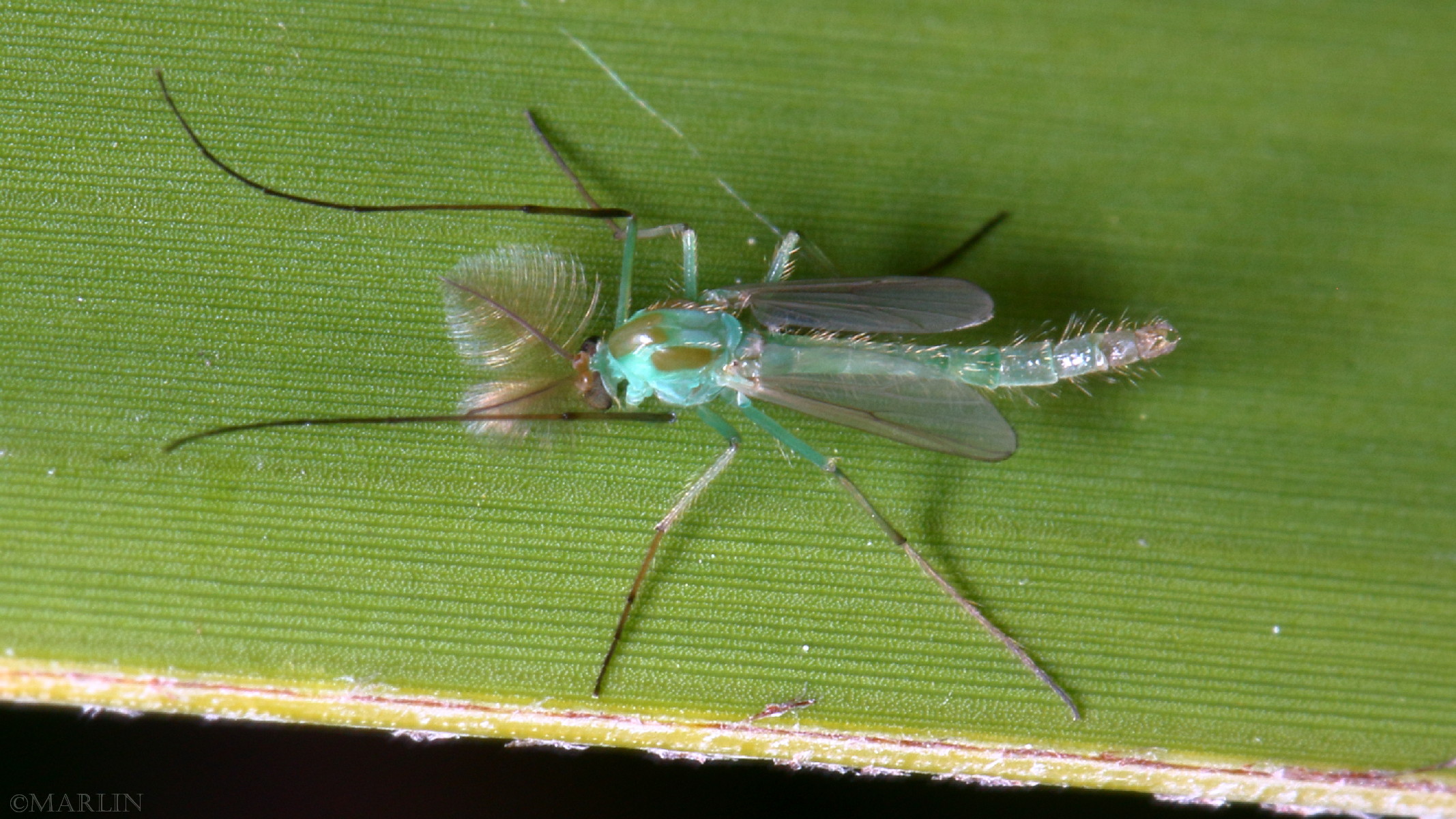
I found this lovely midge (above) in Florida near Cedar Key.
Midge pupae account for much of the mystifying midsummer spring creek action on evenings when no bugs seem to be in the air or on the water, yet trout are rising everywhere and ignoring one’s flies. Recognizing a midge hatch is far from a guarantee of fish, however. Suitable imitation is not easy. Despite the tiny size of midges, trout can be very selective to their size and color. Remember that a difference of a single hook size in the tiny sizes is a very large percentage difference and very noticeable by the trout. Netting some of the real insects before choosing a fly is surely a good idea, but it’s easier said than done. [2]
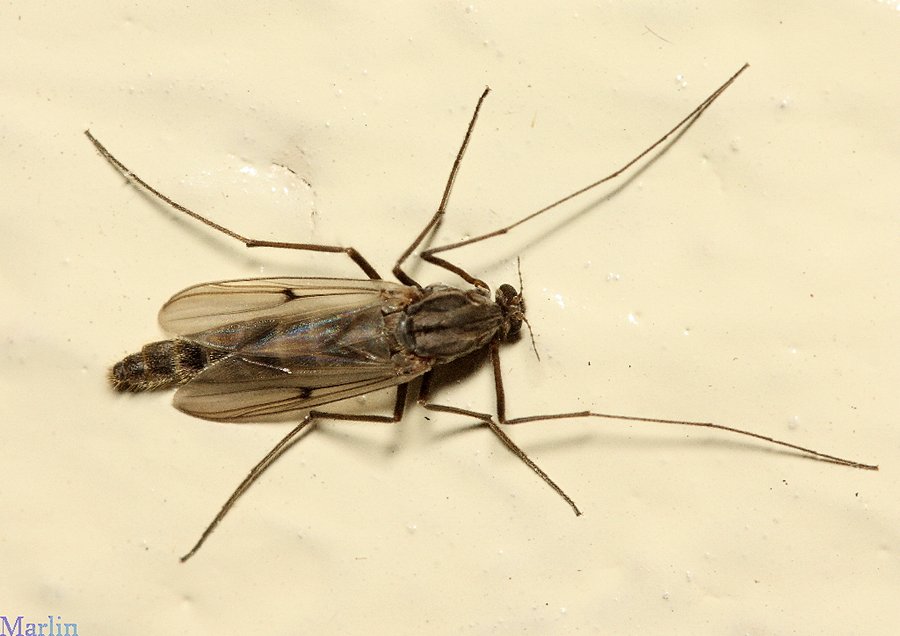
Female
References
- Bugguide.net, Chironominae
- Troutnut.com, True Fly Family Chironomidae
Flies of North America – Order Diptera. Flies are prevalent in virtually all habitats, with over 16,000 species in North America. Flies can be distinguished from all other insects in that they only have one pair of normal wings. The other pair has evolved into small ball-like structures called halteres. Most flies have compound eyes and mouthparts adapted for piercing, lapping or sucking fluids.
Insects & Spiders | Flies Index | Tachinidae | Dung Flies | Bee Flies | Robber Flies
Tree Encyclopedia / North American Insects & Spiders is dedicated to providing family-friendly educational
resources for our friends around the world through large images and macro photographs of flora and fauna.
Online since 2002