![]() |
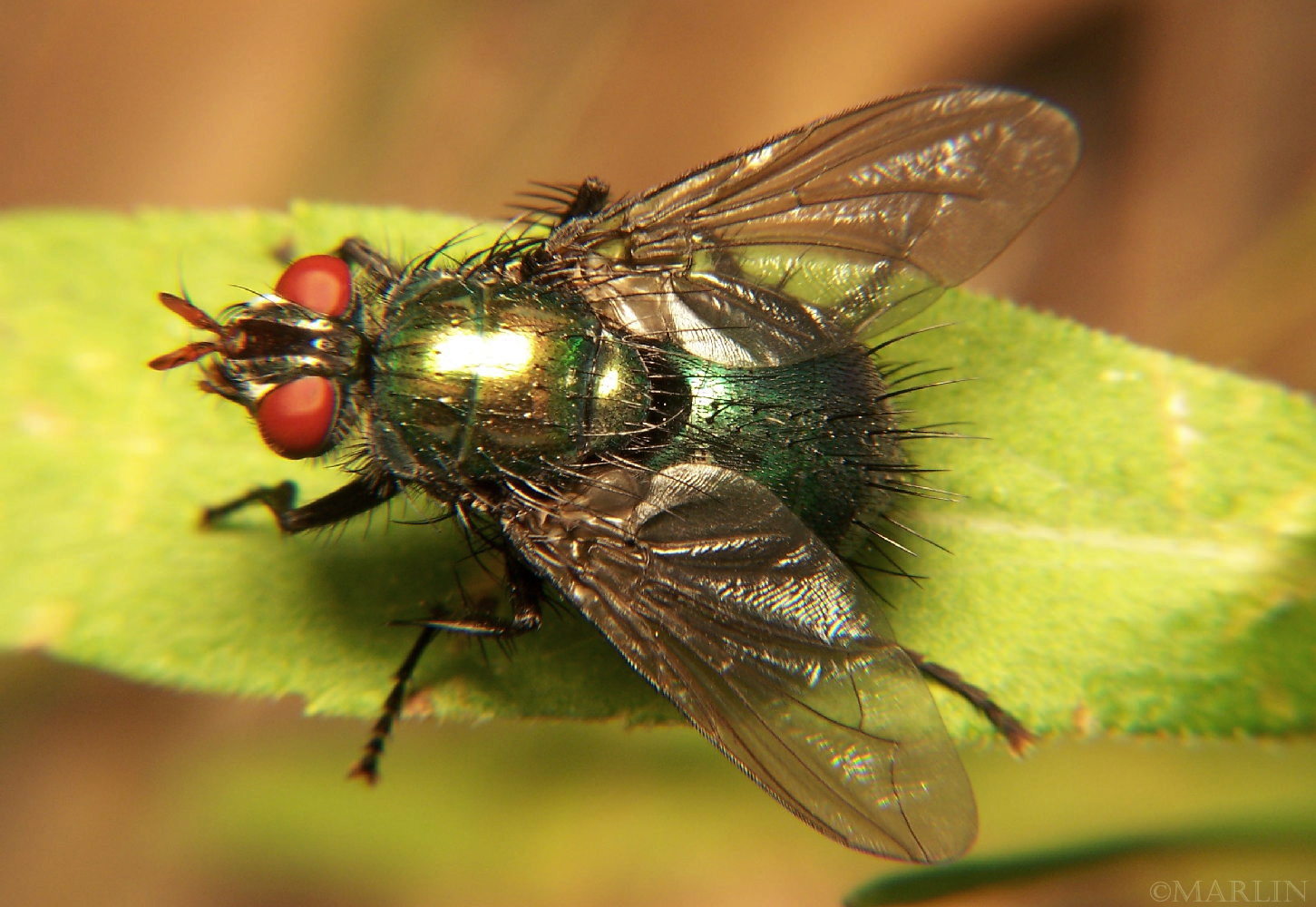
Tachinid Fly - Gymnocheta sp. Order Diptera / Suborder Brachycera / Infraorder Muscomorpha / Family Tachinidae / Subfamily Tachininae / Tribe Ernestiini Live adult female fly photographed at West Chicago Prairie, DuPage County, Illinois, USA. Identification by Dr. James E. O'Hara, Ph.D. North American Dipterist Society. |
![]() |
The family Tachinidae is considered the largest amongst all the diverse families of Diptera (two-winged true flies). Recent science shows approximately 8,200 species worldwide. Adult tachinid flies are diverse in appearance, but they are generally known for their bristly facies. Archytas (fig. 1) exhibits prototypical tachinid features, including a large, metallic-colored abdomen covered with bristles. Many other tachinids, however, are sparsely bristled and exhibit very pale coloration. All Tachinids share the parasitoid habit, and almost all of them are endoparasites of of other insects; in spite of their varied appearance all species of Tachinidae are alike in this characteristic. Insects most commonly parasitized by the tachinids are the larvae of the Lepidoptera (butterflies and moths) and the adults and larval form of the beetles, or Coleoptera. Other tachinids attack true bugs of the Hemiptera (Heteroptera), larva of Hymenoptera (bees, wasps, ants, sawflies), or adults of Orthoptera (grasshoppers, katydids, crickets and their kin). Rarely do Tachinidae parasitize other Diptera or any other groups of arthropods, however, some of these flies are known to attack woodlice (Isopoda).
Few tachinids are known to be host-specific,
although some species of the genus Phasiinae
are limited to a few Hemiptera hosts. Many
tachinids will attack insect hosts in 2 or
more different orders. Many tachinids
parasitize major agricultural pests of food
or timber crops, and have potential for use
as biological control agents, but most
attempts at using them in such wise have
been dismal failures. |

Another tachinid fly - Archytas sp.