Lead Plant – Amorpha canescens
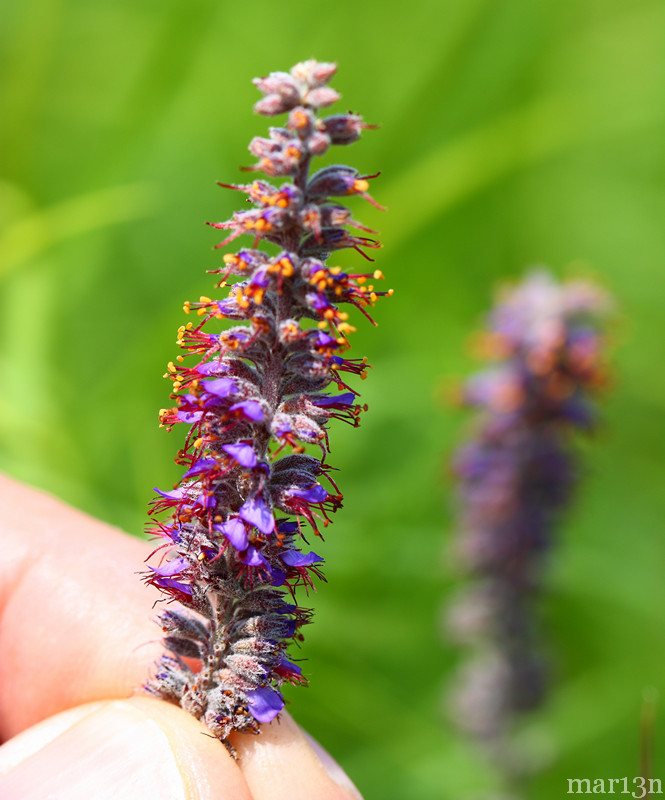
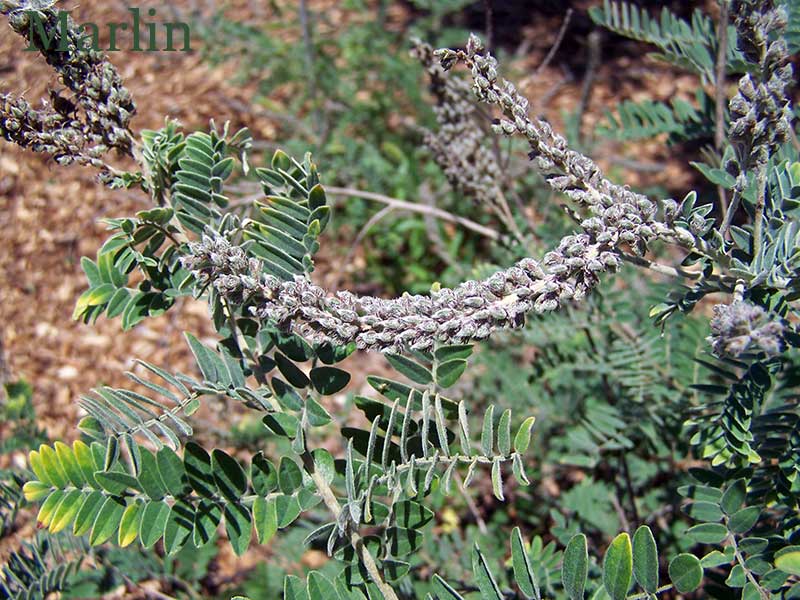
Flowers are born on several terminal spikes. An individual spike may contain 50 to 100 flowers. The massing of so many small flowers and the contrast of the single purple petal and yellow stamens of each flower can only be appreciated at close range but it is one of the great joys of viewing this plant. When pollinated each flower produces a single seed, borne in a small, gray hairy pod. Seeds require both a cold period and heat to germinate. Heat can be provided by pouring boiling water over the seeds and then allowing the water to cool.
Family Fabaceae: Pea & Bean Family. USDA Hardiness Zone: 3
Amorpha comes from the Greek amorphos meaning ‘without shape or deformed” in reference to the small (-1/4 inch) flower which is reduced to a single petal; and canescens is Latin meaning ‘gray-hairy”.
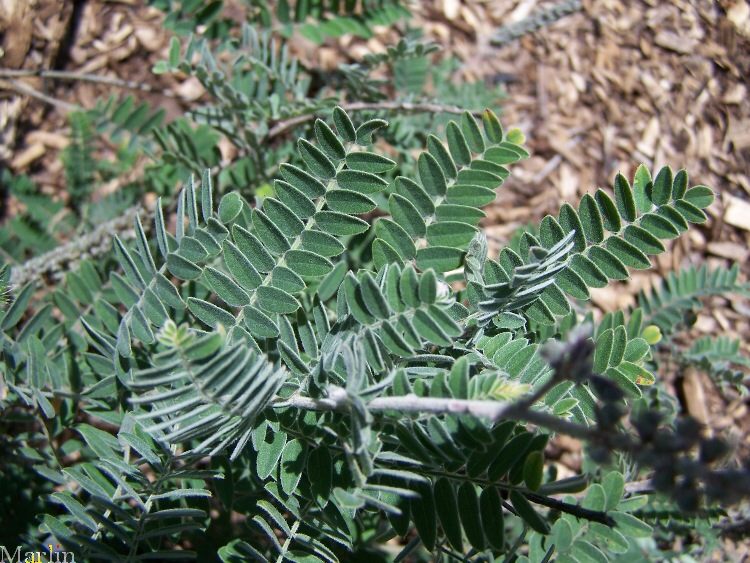
Lead plant is widely distributed throughout the prairies of the American Midwest especially in mesic or dry areas. Individuals grow 1 to 2 feet tall. They are shrubby, meaning they have woody stems and their buds are above the ground, but they can bud from ground level if plants are burned or grazed. A member of the bean family, the leaves are compound, like most legumes, are 2 to 4 inches long, and are composed of – 25 pairs of grayish leaflets along a single axis.
Lead plant is one of 15 species of Amorpha present in the United States, and one of 3 species in Illinois. False indigo (Amorpha fruticosa) grows 5 to 6 feet tall, and the leaflets are larger and seem to be less hairy than those of lead plant. Dwarf wild indigo (Amorpha nana) is found in the western, dry prairies of Illinois. It is more diminutive in stature (-l foot tall), and the leaflets are greener and more rounded.
Family Rosaceae – Rose Family; Fruit Trees
Trees Index | Pine Family | Beech, Oak | Nut Trees | Birch Family | Magnolias
Tree Encyclopedia / North American Insects & Spiders is dedicated to providing family-friendly educational
resources for our friends around the world through large images and macro photographs of flora and fauna.
Online since 2002