New England Aster – Symphyotrichum novae-angliae

This very common wildflower can be one of the most abundant insect nectar sources available in fields and meadows in late summer through fall.
Numerous purple-violet flowers with distinctive orange centers grow on a branching stalk at the top of the plant. These perennials are up to 4 feet tall, with dense leaves covered by bristly hairs. The late-blooming wildflowers attract just about every insect active in late summer, including butterflies, moths, honeybees, bumblebees, halictid bees, flies of all sorts, beetles – you name it. These flowers are my favorite for color contrast. The beautiful purple rays offset with the brilliant deep orange-yellow center provides the perfect color backdrop for just about any insect photograph. Bloom time: From August through October.
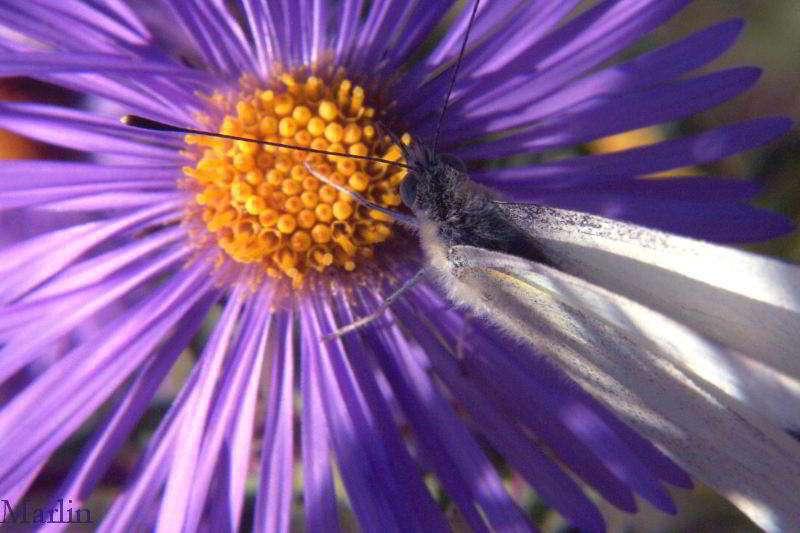
This plant is commonly found in moist prairies, meadows, roadsides and near streams. It requires well-drained soil and prefers sandy, loamy and clay soils. This species can grow on nutritionally poor soil but prefers rich soil.
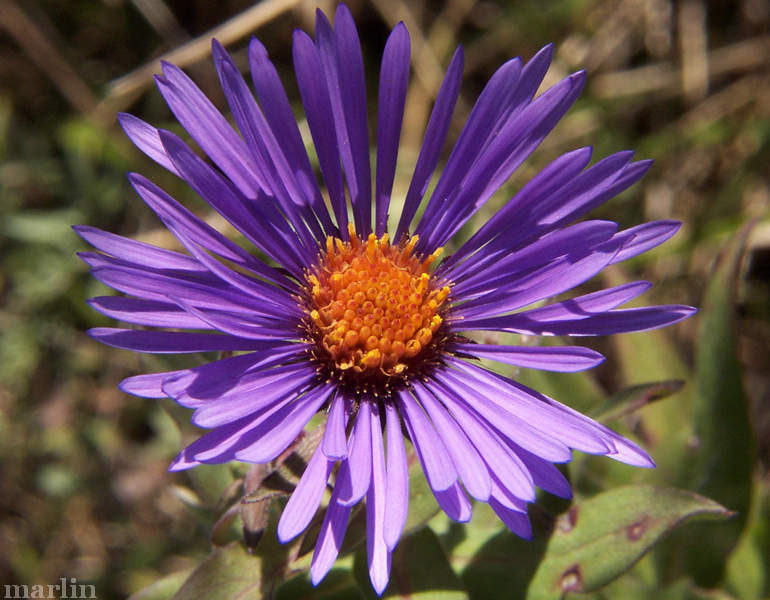
New England aster grows well in a sunny location and can succeed in partial shade. Propagation by Seed: Aster novae-angliae seeds should be sown fresh in the fall or spring (Heuser 1997). Pre-chill spring sown seeds to improve germination. When the seedlings are large enough to handle, place them into individual pots and plant them out in the summer. Division of this species should be done in the spring or autumn. Large divisions can be planted into their permanent positions whereas smaller clumps should be kept in a cold frame until they are growing well.
Butterflies, bumblebees and honeybees love this flower. These pictures were taken where it grows wild, in the forest preserves near Chicago, Illinois. There are quite a few cultivated versions of this plant available for home gardens. Mix with goldenrod or native grasses for a stunning Autumn display.
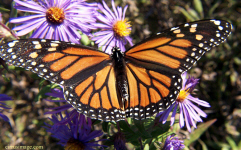 Monarch Butterfly |
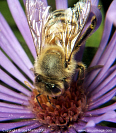 Honey Bee |
 Halictid Bee |
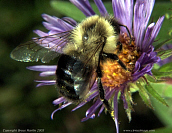 Bumblebee |
Family Rosaceae – Rose Family; Fruit Trees
Trees Index | Pine Family | Beech, Oak | Nut Trees | Birch Family | Magnolias
Tree Encyclopedia / North American Insects & Spiders is dedicated to providing family-friendly educational
resources for our friends around the world through large images and macro photographs of flora and fauna.
Online since 2002