Family Conopidae: Thick-Headed Flies
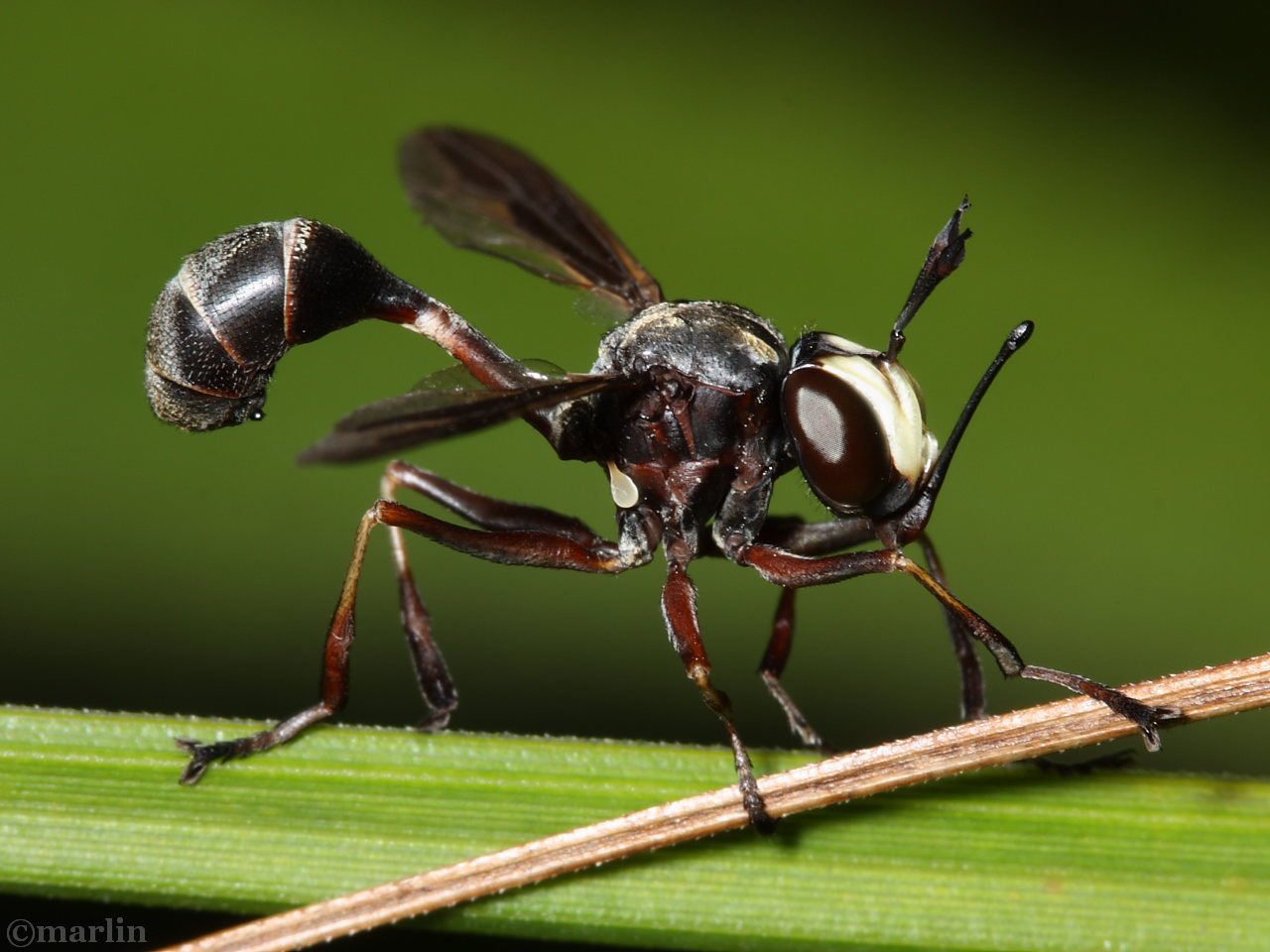
Physocephala furcillata Size: 15mm
I was reminded of an air force KC 135 refueling boom when I saw this fly’s folding proboscis.
Live adult thick-headed flies photographed in the wild at Winfield, Illinois, USA. Our Physoconops photographs were featured in The American Wildlife Federation’s Field Guide to Insects.
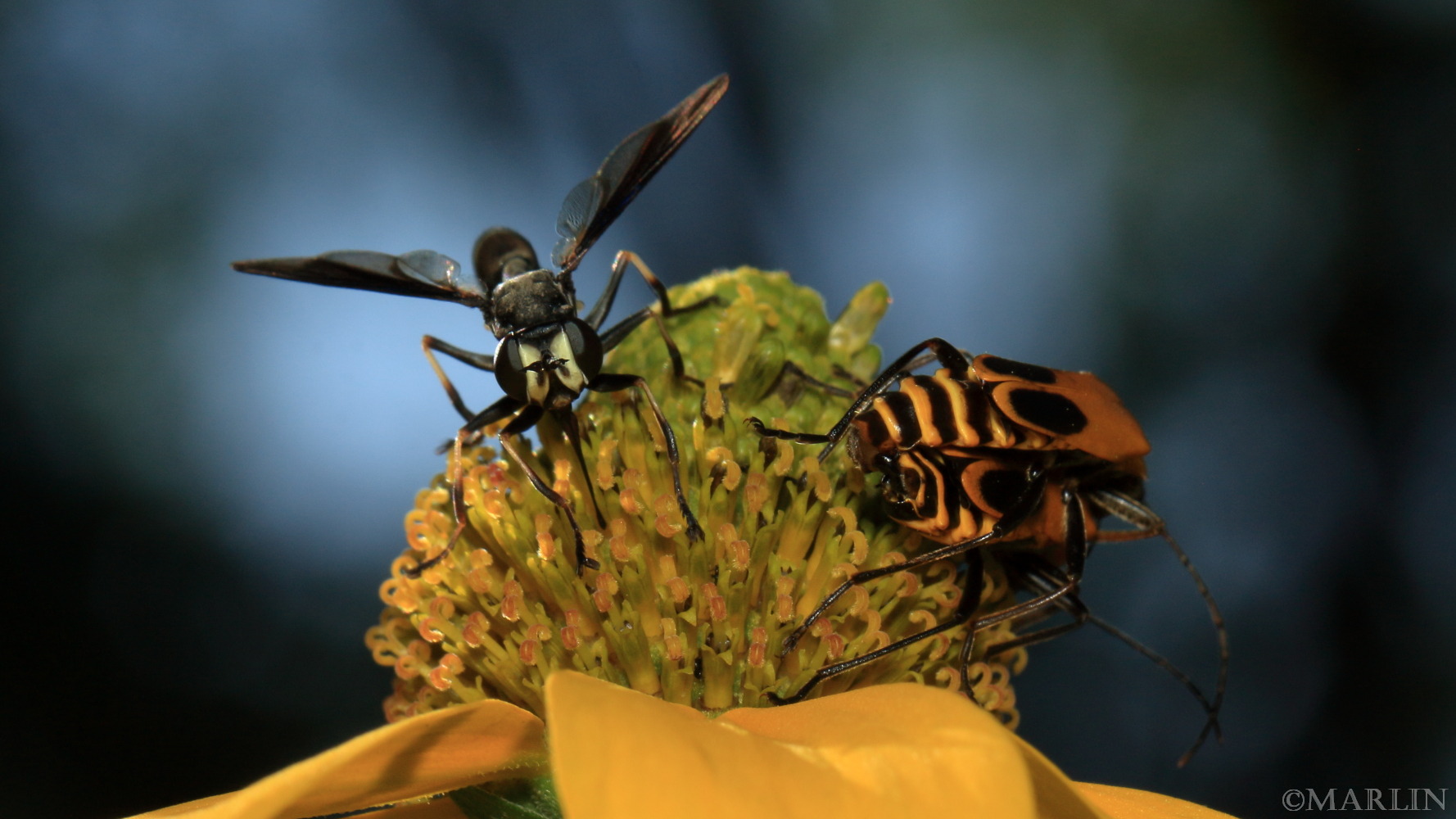
If you’ve ever seen one of these flies, you’ll know how the word ethereal applies to its habit. Physocephala tibialis [2] Size: 15mm
This fly was photographed on a hot day in August, amongst a stand of aster and frost aster wildflowers, alive with thousands of bees, wasps, and flies of all sorts, all in competition for valuable nectar.
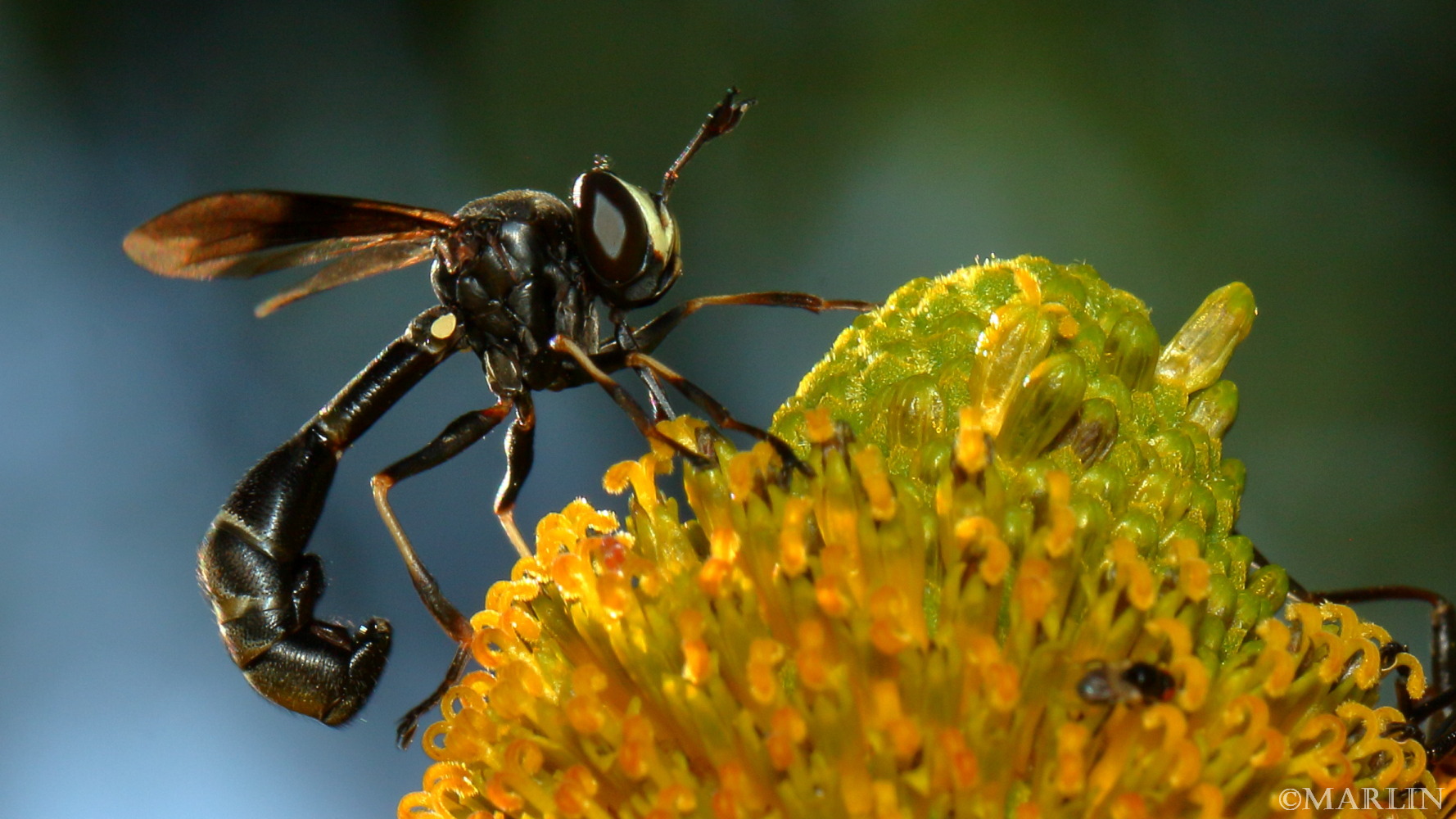
Since these flies are said to lay their eggs, in mid-flight, on the host, the close association with Hymenoptera is beneficial to the fly in more ways than one. Their mimicry of the stinging hymenoptera provides the fly with protection from predators as well.
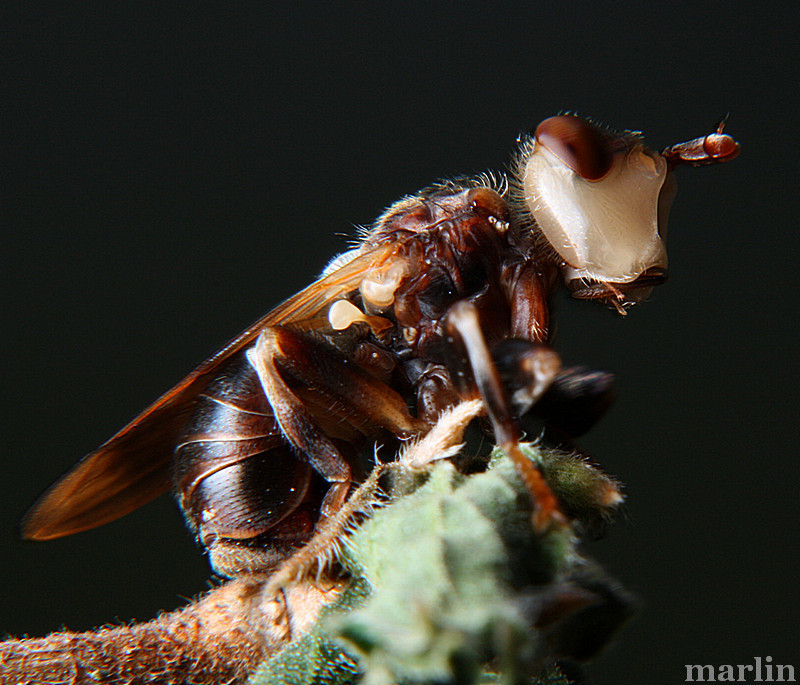
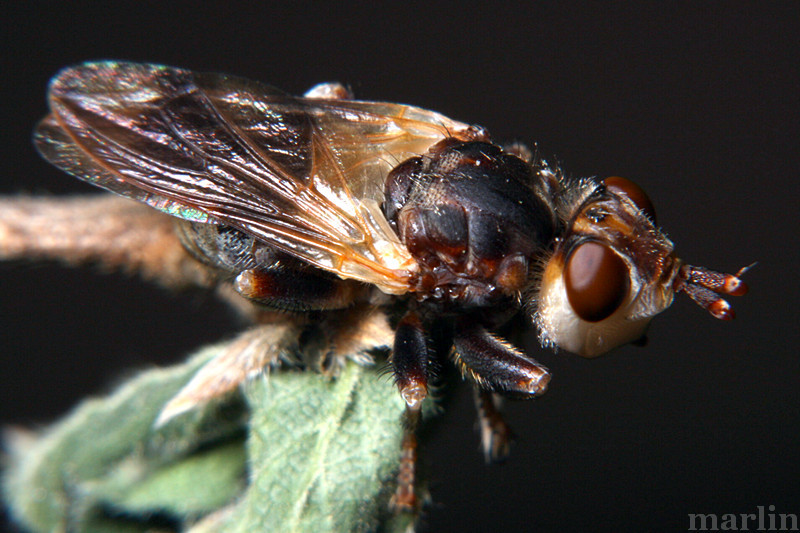
Myopa species shows eponymous ‘thick-head’ Size: 10mm [1]
Conopids are most frequently found at flowers, feeding on nectar with their long proboscis. The fly above has it proboscis folded under its head.
Flies of the family are distributed in all the zoogeographic regions except for the poles and many of the Pacific islands. About 800 species are described worldwide, approximately 67 of which are found in North America. The majority of conopids are black and yellow, or black and white, and often strikingly resemble wasps, bees, or flies of the family Syrphidae, themselves notable bee mimics. The larvae of all conopids are internal parasites, most of aculeate (stinging) Hymenoptera. Adults are said to alight and deposit eggs on their flying hosts.
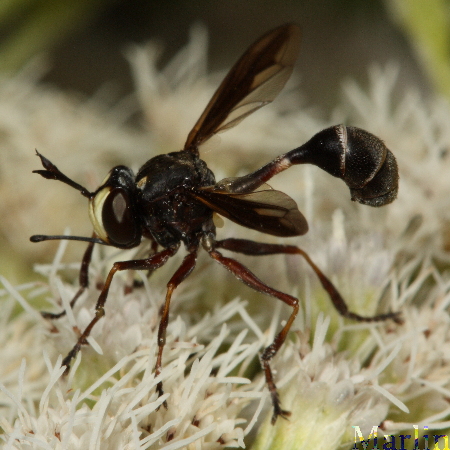 Some conopids mimic vespid wasps |
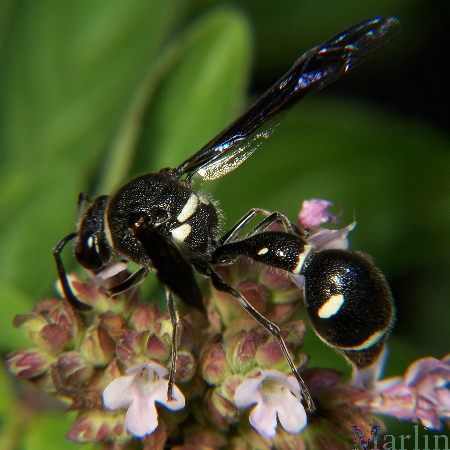 Potter Wasp Eumenes sp. |
References
- Bugguide.net, Myopa genus
- Bugguide.net, Physocephala tibialis
Syrphidae | Flies Index | Tachinidae | Bee Flies | Robber Flies