Long-Tailed Dance Fly – Rhamphomyia longicauda
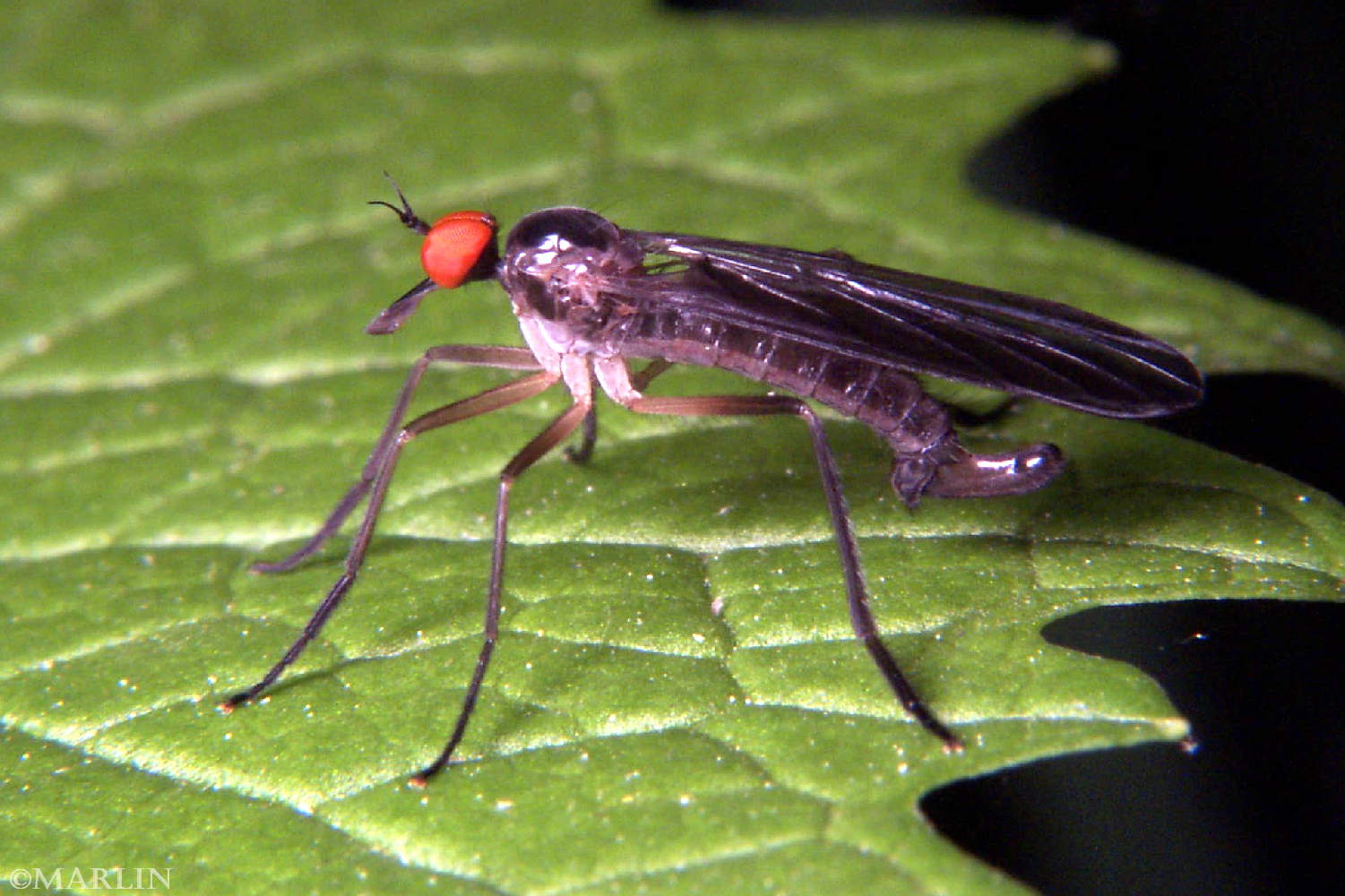
Male
Family Empididae — balloon flies, dance flies
Live adult dance flies photographed in the wild at Winfield, Illinois. Size: Female: 11mm Male: 10mm
Species epithet longicauda, Latin “long tail.” Dance flies are known for their mating swarms which sometimes occur during daylight, but most often at dusk when they are very difficult to see.
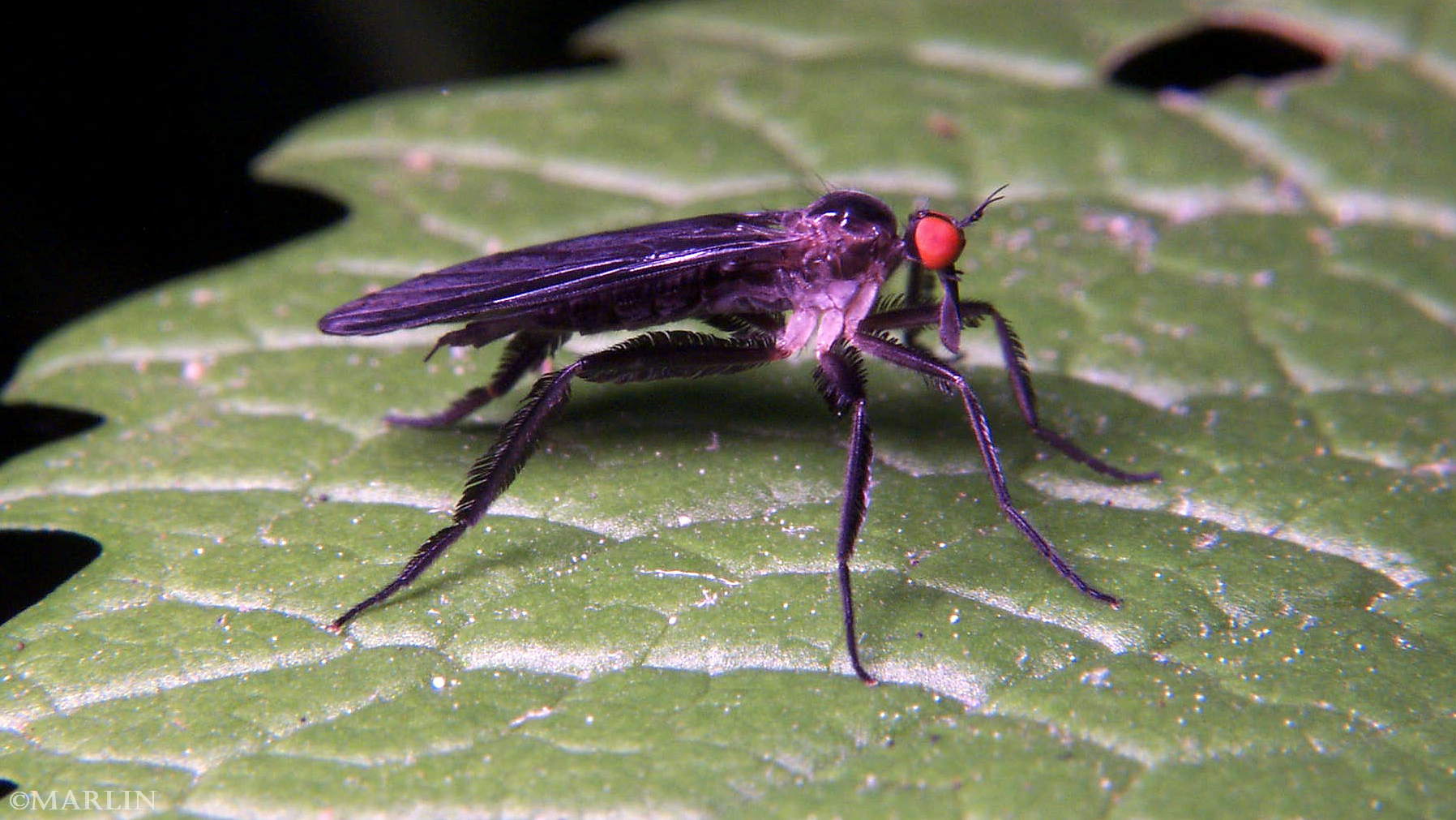
Female
Male dance flies of some species are known to capture smaller insects and wrap them in silk, then fly about offering the prey to receptive females in the swarm. They have even been known to offer empty balls of silk in an effort to deceive females into mating with them. It is not known how often this practice is successful, however, one would think evolutionary pressures would have eliminated the deceptive strains were it not a viable reproduction tactic.
Habitat: Understory in wet deciduous woods, often along ponds or streams. Adults rest on foliage during the day; their courtship flights begin at late dusk, when it’s almost impossible to see their swarm. They fly in vertically-elongated ovals about 2-3 feet high, near the ground. I have seen swarms with perhaps 3 dozen females. Males meanwhile hunt small insects as “nuptial gifts” they give the female in exchange for sex. [1]
Females in the swarm are similarly engaged in deception: they pump up air sacs in the abdomen, ostensibly in an effort to fool the males into thinking they are bulging with ripe eggs. The fringed legs are said to enhance the effect. [1]
..It’s the most bizarre insect story I’ve read: to male Rhamphomyia longicauda, the most attractive female is the one with the fattest abdomen and hairiest legs (slightly different than the situation in Homo sapiens).” — Robin McLeod, 23 May, 2005

Teneral female in the process of pumping up her wings; ovipositor is visible upper left of center
The American midwest was seeing a population explosion of these flies this spring and early summer of 2005. Adults of both sexes dance in swarms of several dozen flies at twilight; their dark colors make them almost impossible to see at this time of day. I had to capture several of them with my hand before I could tell what they were.
References
- Bugguide.net, Long-tailed Dance Fly
Insects & Spiders | Flies Index | Tachinidae | Dung Flies | Bee Flies | Robber Flies
Tree Encyclopedia / North American Insects & Spiders is dedicated to providing family-friendly educational
resources for our friends around the world through large images and macro photographs of flora and fauna.
Online since 2002