|
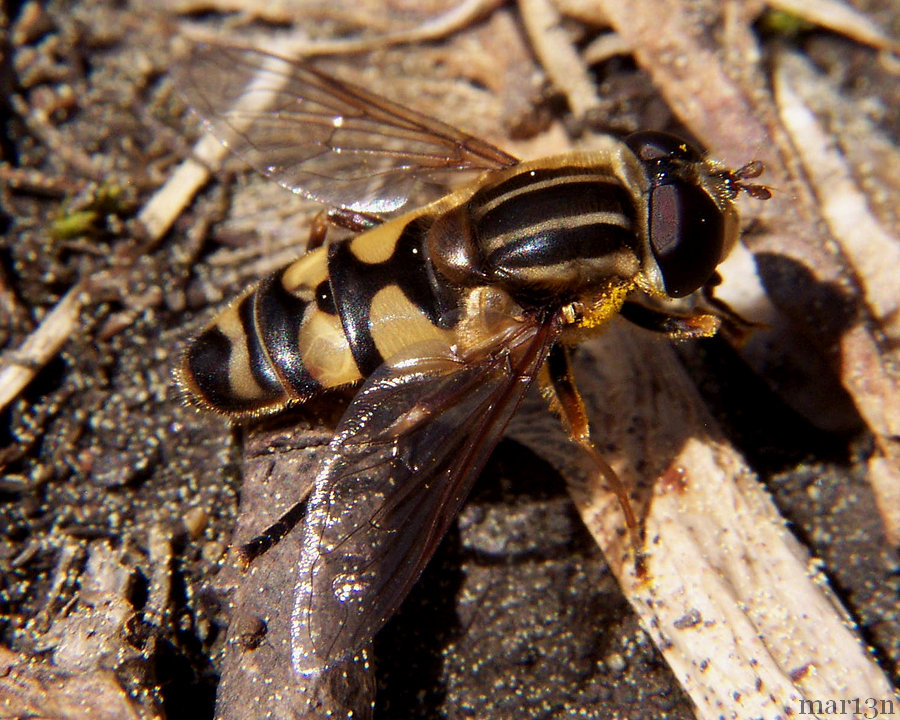
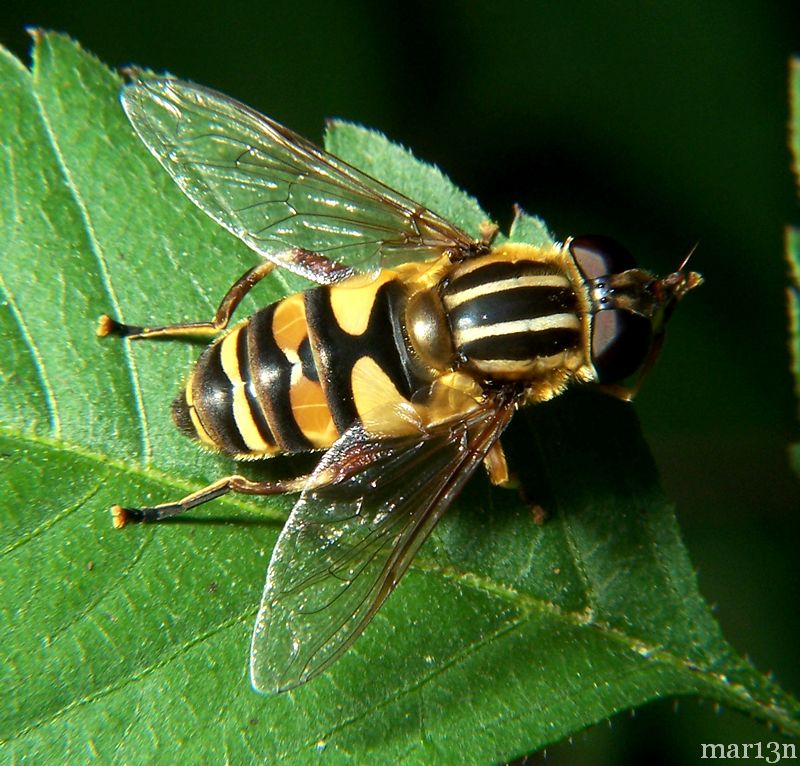
Syrphid Fly - Helophilus sp. Diptera family Syrphidae Syrphid flies are also known as hover flies, flower flies, or drone flies. One of their identifying characteristics is their bee or wasp mimicry. Syrphid flies cannot sting and do not bite. This species of Helophilus is without doubt the most abundant Syrphid fly here in northern Illinois. Live adult Syrphid flies photographed at Winfield, Illinois, USA. |
|
|
| This gorgeous fly
certainly lives up to its name, "sun lover."
From early spring, these large insects are
active and basking in sunny areas, or
nectaring on dozens of different flowers. The hover flies are a large group of generally beneficial insects. Their coloring and movements of most species mimic bees or wasps -- they are either stout-bodied and covered with hair, resembling a bumble bee, or boldly patterned with yellow, orange and black, resembling wasps or honey bees. Some species even go so far as to wave their front legs in front of their face to mimic the jointed antennae of the potter wasps. Adult hover flies can generally be found hovering in midair or feeding at flower blossoms. They eat only nectar and pollen. However, their larvae can be rapacious predators of aphids, thrips, and mites, or parasitic in the nests of ants or solitary bees. Still other larvae scavenge in soil or decaying plant material or eat living plants. Some are aquatic. Most hover flies are between 5-20 mm long, brightly colored in yellow and black, and have large compound eyes that nearly cover the head. One rule of thumb for identifying hover fly gender is, if the eyes meet at the top of the head, it's a male specimen. Each wing has a characteristic fold, or "false vein" which can be visible to the naked eye - it is located anterior to the first large vein that runs all the way to the outer margin of the wing. Of course, being true flies, they have only one pair of wings, plus the characteristic halteres, or bulb-like organs that evolved from the second pair of flying wings. In Syrphid flies, however, the halteres are fairly inconspicuous. |
|
|
|
![]() |
![]() |
![]() |
|
|