Brown centipede – Lithobius forficatus
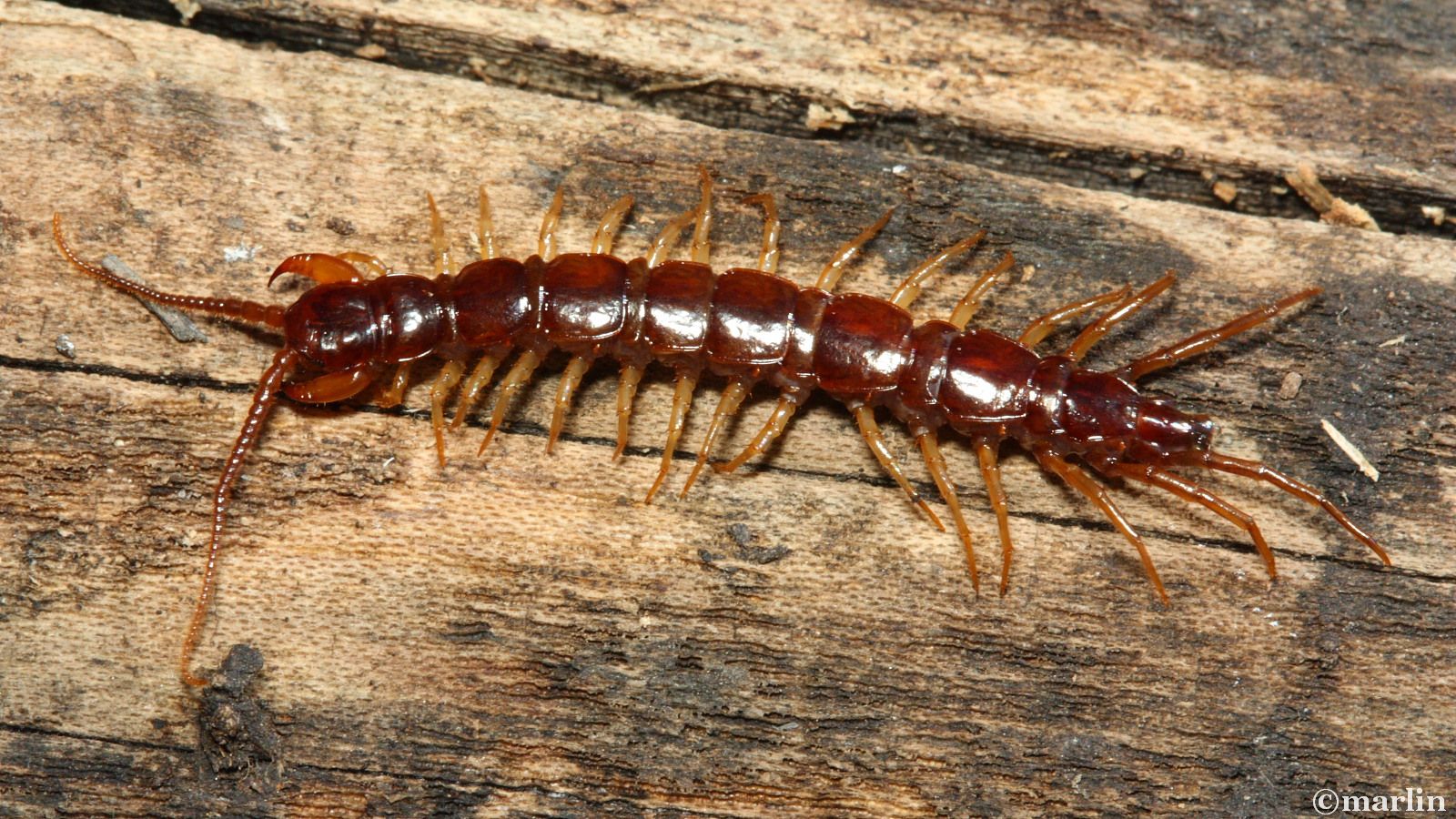
Live adult brown centipedes photographed at DuPage County, Illinois, USA. Size: 20mm
Some exotic, large centipedes will bite defensively, and should not be handled. This is not one of them.
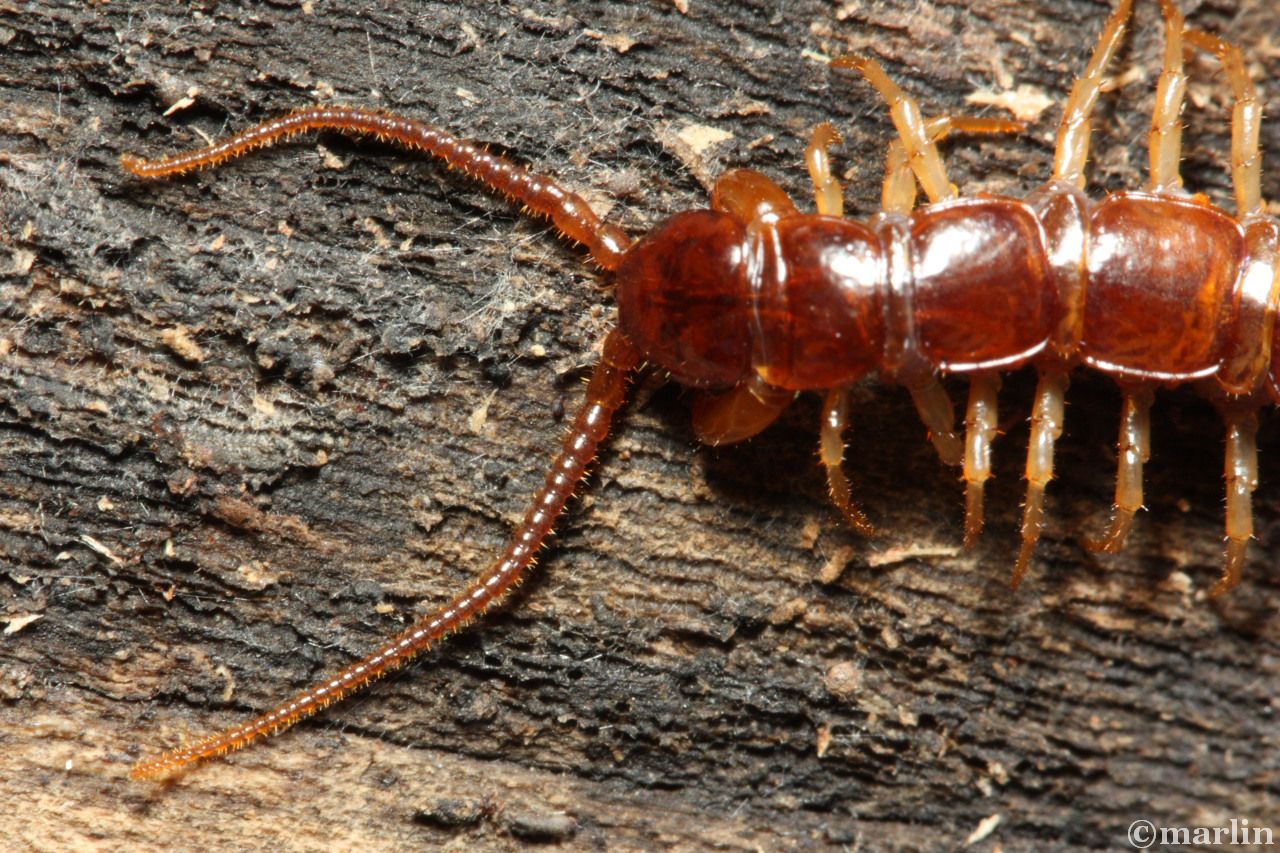
Some of the plates (tergites) covering the body segments fused and became smaller during its evolution. The resulting mismatch between body segments and tergites is the cause for this centipede’s relatively inflexible body. [4] The two tergites just behind this centipede’s head are fused. The 2 modified legs just under the antennae function as poison fangs, or forcipules.
Centipedes are some of the oldest terrestrial animals, and some of the very first creatures to crawl from the sea onto the land were probably very similar in appearance to modern centipedes. All centipedes are nocturnal predators which live by actively hunting down insects and other small animals.
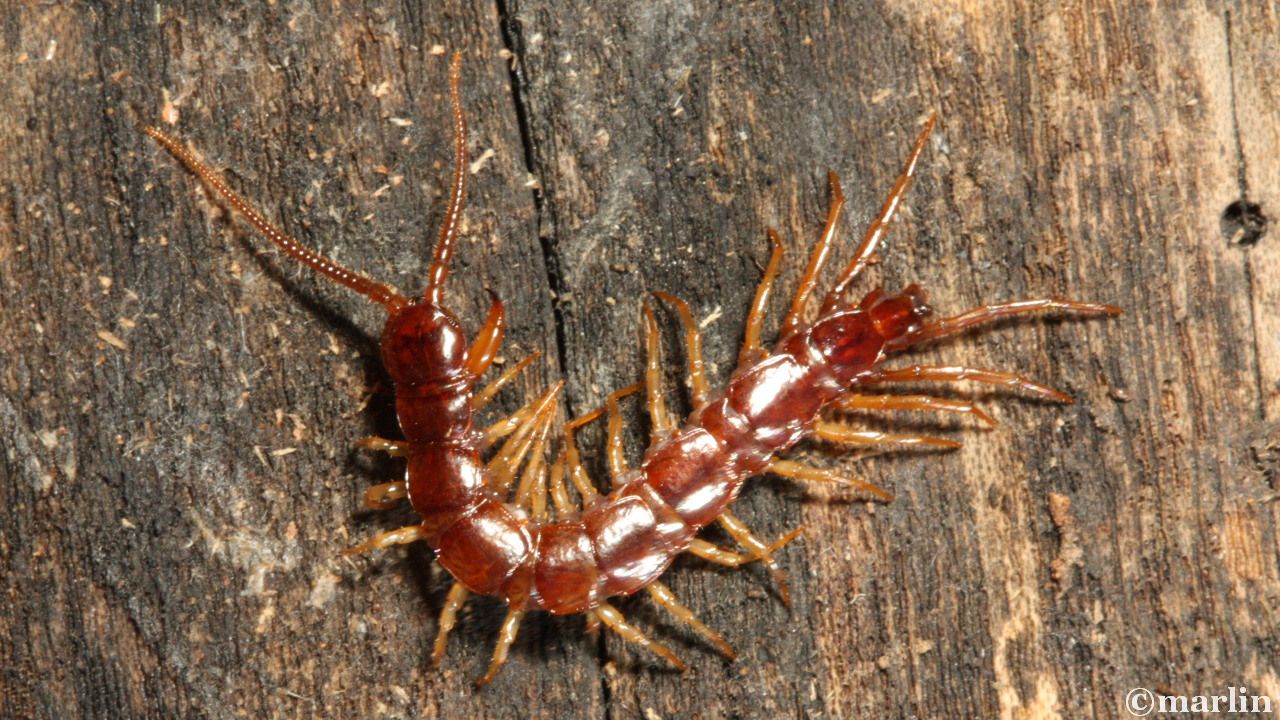
They are found mostly in tropical forests, but have also established themselves in temperate forests, deserts, and human habitations. Most centipedes have between 15 and 30 pairs of legs, one pair on each body segment.
Some of the larger centipedes can live longer than 10 years.
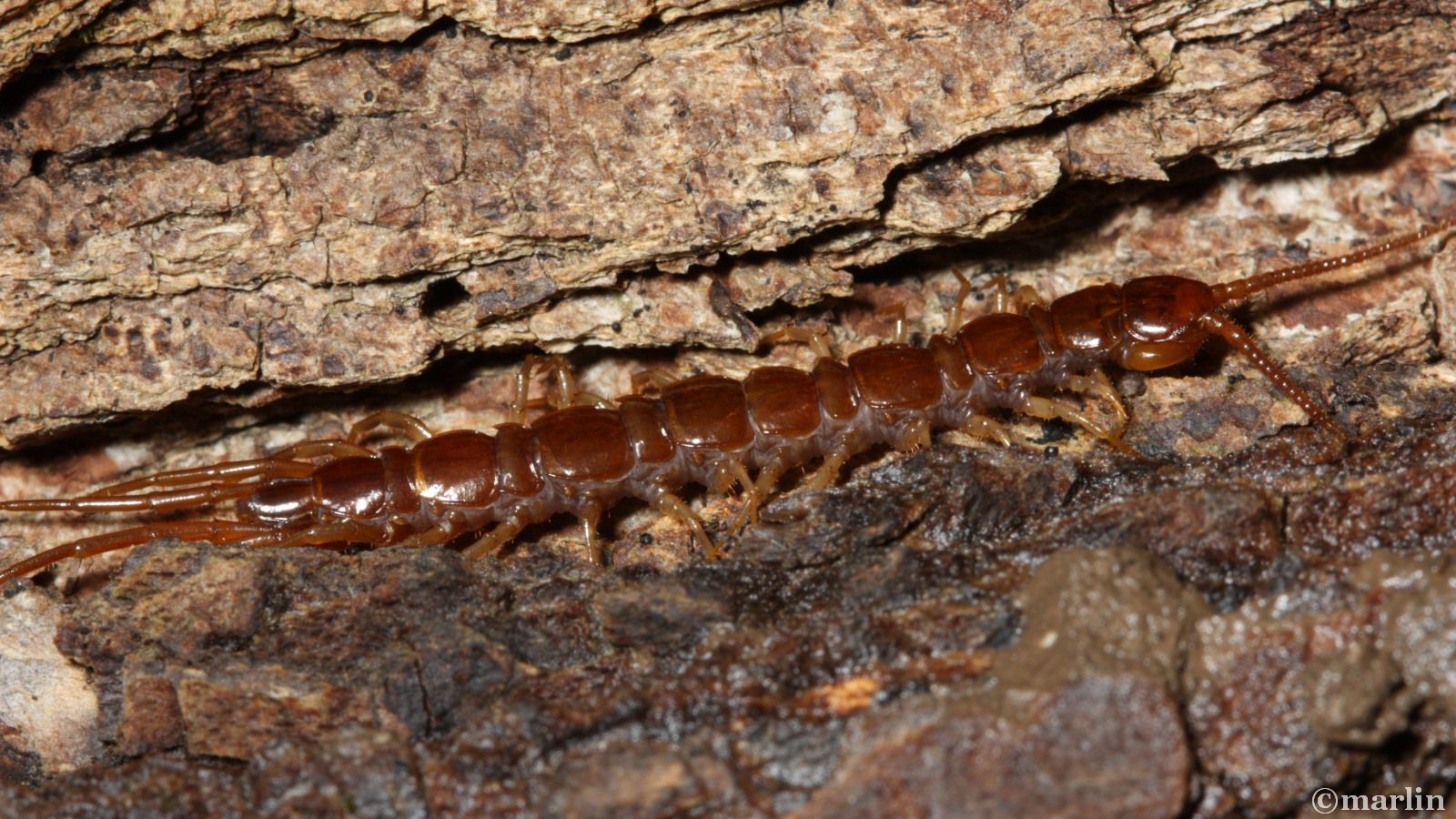 Centipedes and millipedes most often live outdoors in moist places such as leaf litter, or under rocks and decaying wood.
See also: House Centipede
References
- Bugguide.net, Brown centipede – Lithobius forficatus
- William F. Lyon, Ohio State University Extension Fact Sheet HYG-2067-94
- Wikipedia, The Free Encyclopedia, Millipede
Tree Encyclopedia / North American Insects & Spiders
Online since 2002