Pipevine Swallowtail Butterfly – Battus philenor
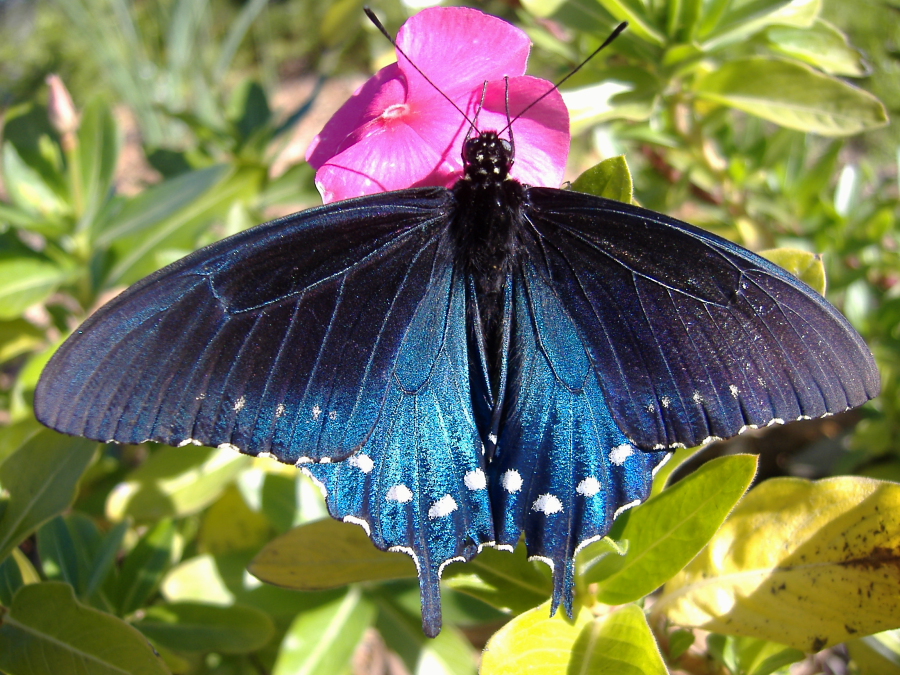 Live swallowtail butterflies photographed in the wild at Alpharetta GA and Corpus Christi TX.
Identification: Upper surface of hindwings iridescent blue or blue-green. Underside of hindwing with submarginal row of 7 round orange spots in iridescent blue field. Life history: Adult males patrol likely habitat in search of receptive females. Females lay batches of eggs on underside of host plant leaves. Caterpillars feed gregariously when young but become solitary. Chrysalis overwinters.
Caterpillar host plants: Pipevine (Aristolochia species), including Aristolochia californica, A. serpentaria and others. Pipevines confer a poisonous quality to the larvae and resulting adults, much as the monarch butterfly obtains protection by feeding on milkweed. Adults seek nectar from flowers including thistles (Cirsium species), bergamot, lilac, viper’s bugloss, common azaleas, phlox, teasel, azaleas, dame’s-rocket, lantana, petunias, verbenas, lupines, star thistle, buckeye and butterfly bush.
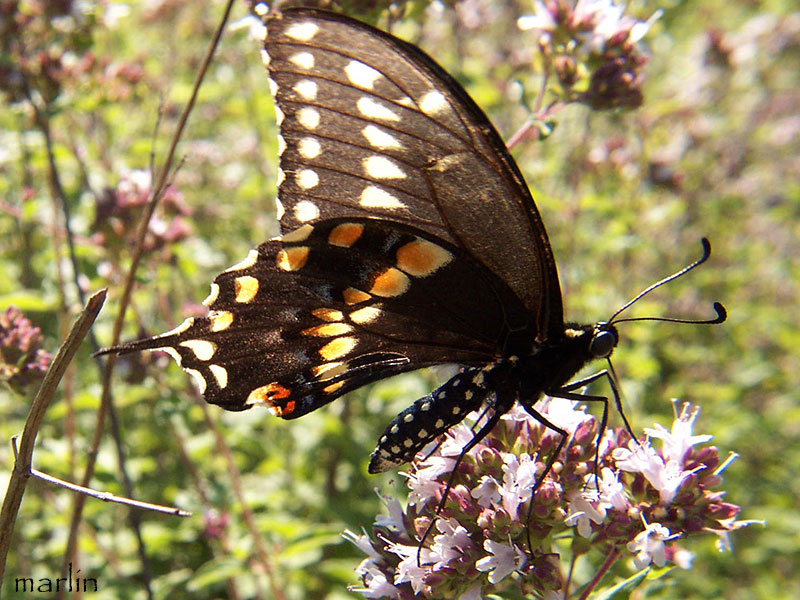
The Black Swallowtail (above) is a pipevine swallowtail mimic
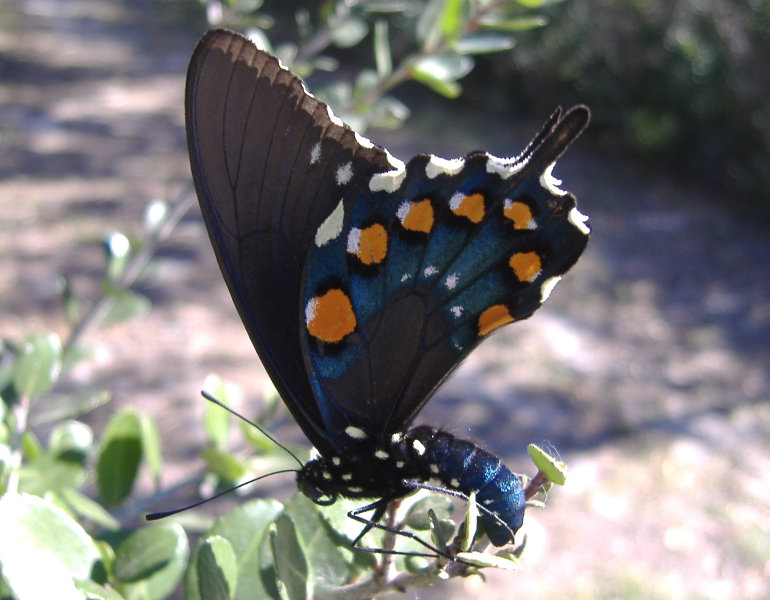
Photos ©Andrew Willias used with permission
References
- Opler, Paul A., Harry Pavulaan, Ray E. Stanford, Michael Pogue, coordinators. 2006. Butterflies and Moths of North America.
- National Audubon Society Field Guide to Insects & Spiders (North America), Chanticleer Press 1980
- Eric Eaton & Ken Kaufman, Kaufman Field Guide to Insects of North America, Hillstar Editions 2007
Moths Index | Moths | Butterflies Main | Butterflies Index | Skippers
Tree Encyclopedia / North American Insects & Spiders is dedicated to providing family-friendly educational
resources for our friends around the world through large images and macro photographs of flora and fauna.
Online since 2002