Pearl Crescent Butterfly – Phyciodes tharos
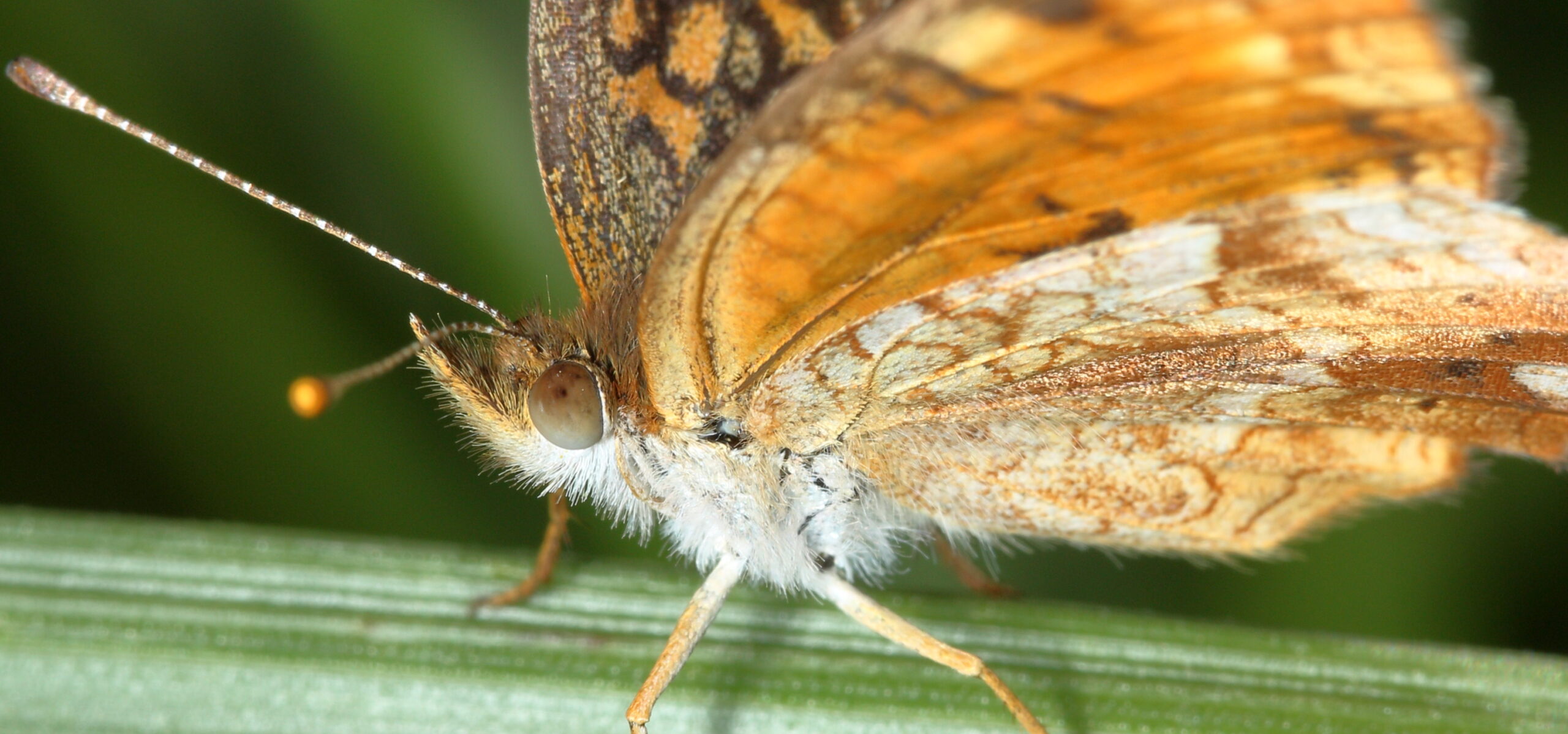
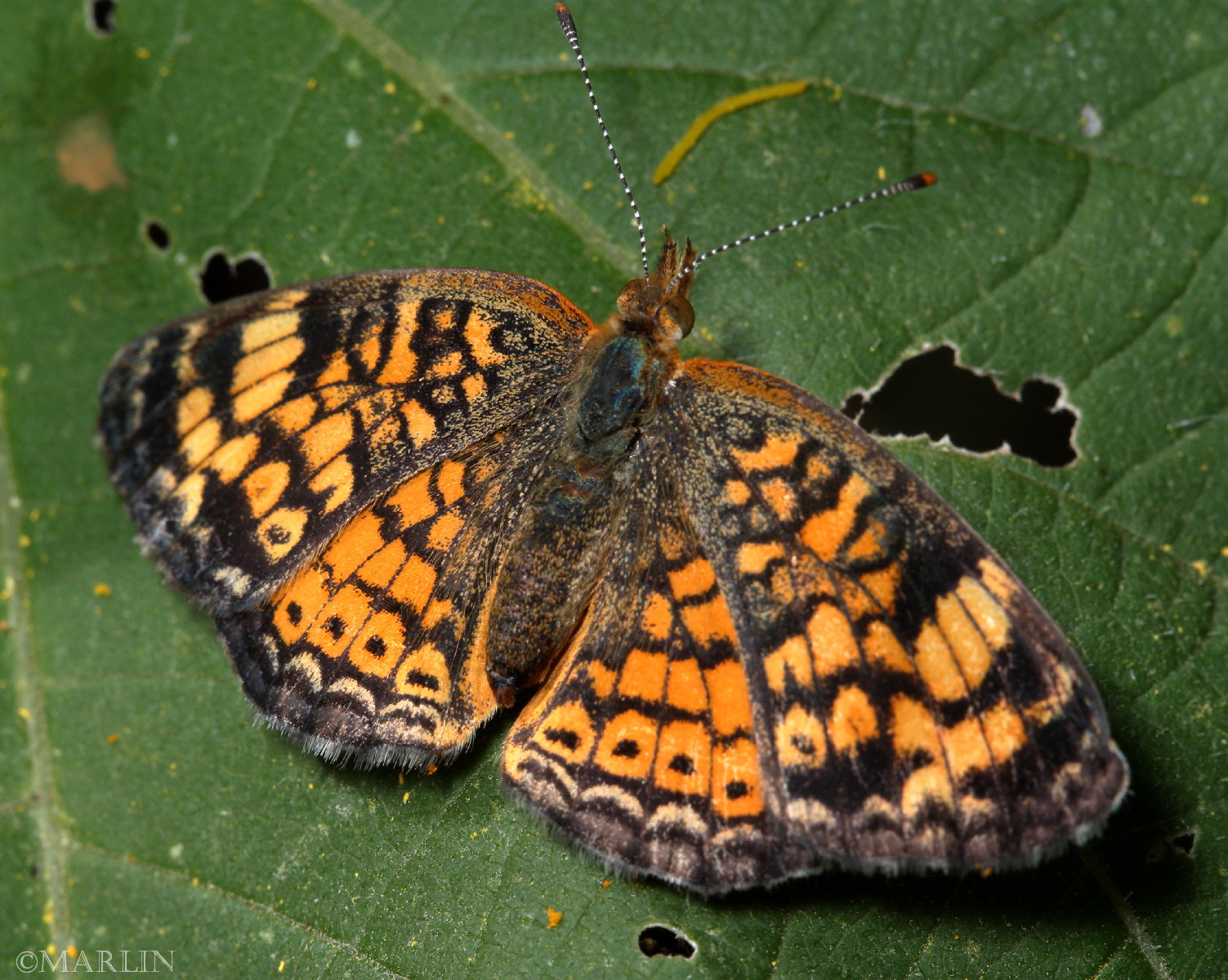
This small to medium-sized butterfly (1-1/4 to 1-1/2 inch wingspan) is overall orange with brown markings, but is highly variable in its markings geographically and even from season to season. The underside of the hindwings are relatively unmarked orange-brown to mottled gray-brown with a white crescent on the outer margin. A number of subspecies are recognized, including Phyciodes tharos distincta Bauer that also occurs in Texas south to Mexico. Caterpillars are blackish-brown with a cream-yellow stripe down their sides and blackish to yellowish branched spines covering their bodies.
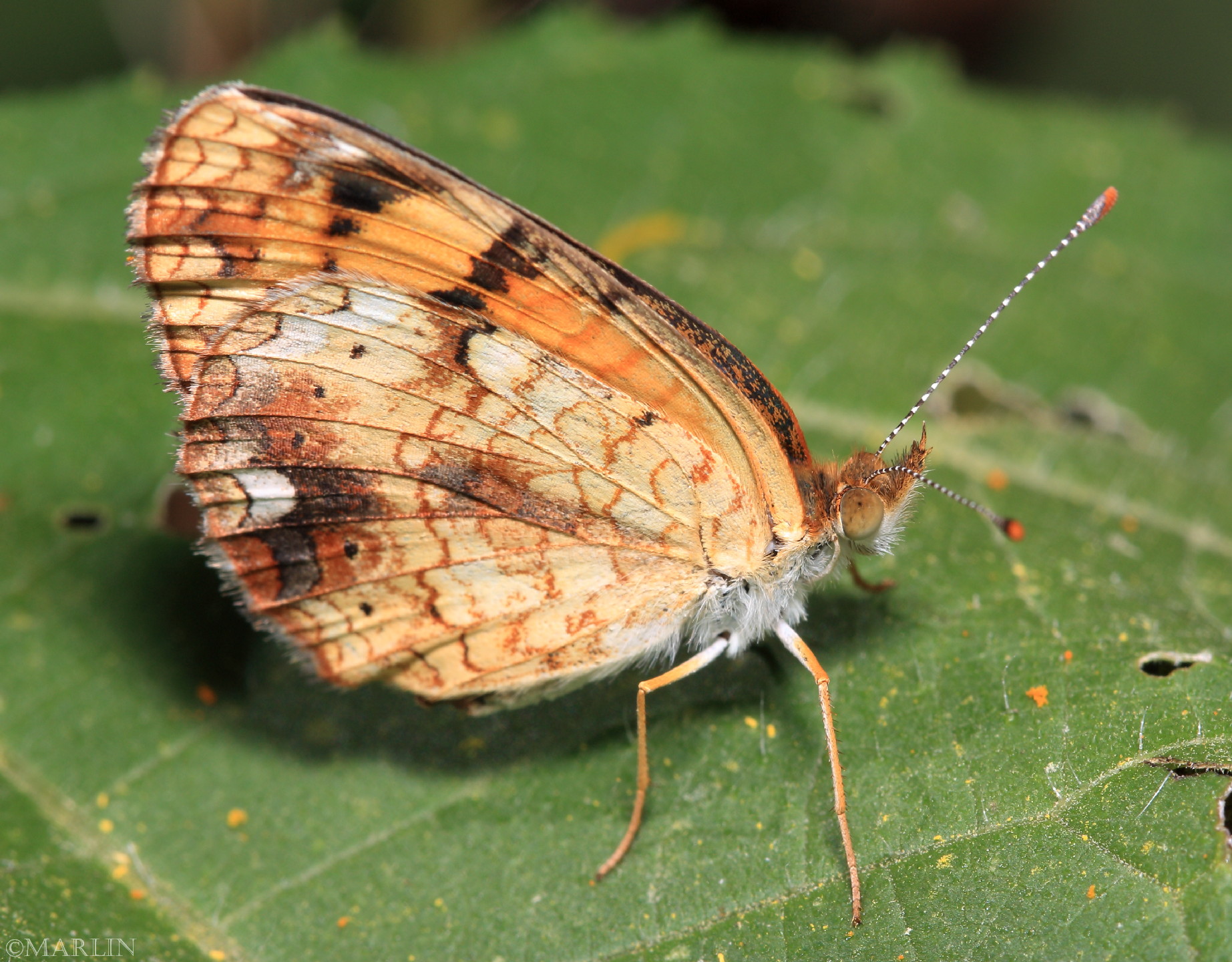
Life Cycle: Adults lay eggs in clusters on host plants. Caterpillars hatching from eggs develop through several stages (instars) before forming a mottled grayish to brownish, spine-covered chrysalis. Up to five generations can be produced annually. Habitat and Food Source: Caterpillars have chewing mouthparts. Adults have siphoning mouths. Caterpillars feed on leaves of asters and related Compositae. They feed together (gregarious) but do not spin silken webs. [1]
Habitat: Open spaces, meadows, fields, roadsides, streamsides.
Similar Species: Phaon Crescent; Painted Crescent
Life cycle: Eggs are laid in clusters on leaves of asters. Larvae feed on aster foliage. Caterpillars are brown with yellow bands and many branching spines; last brood overwinters. Chrysalis is mottled gray, yellow and brown. There are usually several broods per season.
Range: Yukon to Newfoundland to southern Mexico.
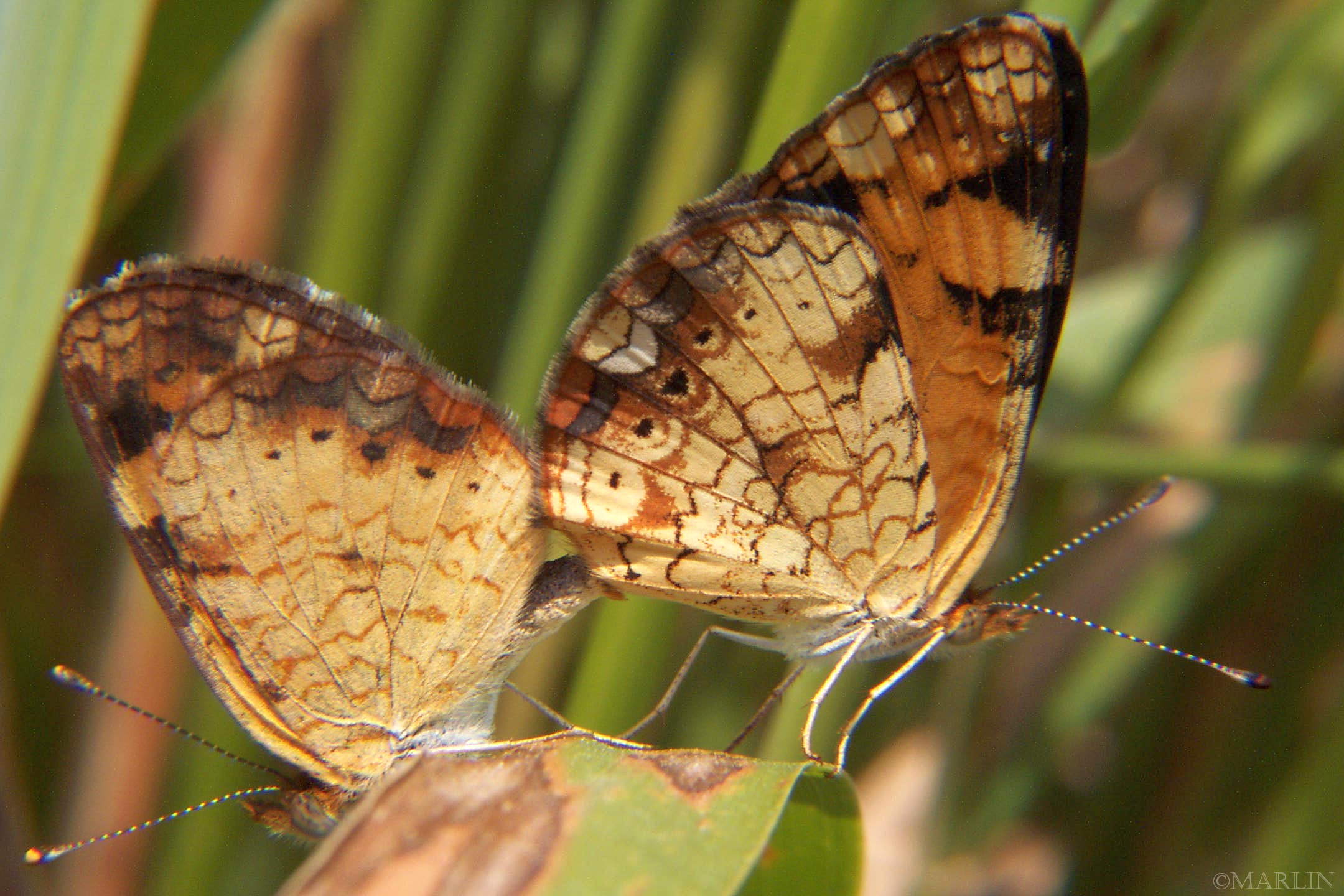
The Pearl Crescent is one of the most abundant butterflies here in the American Midwest. I counted at least three, possibly four generations the summer of 2002. I was surprised at the last one – it came the first week of October, long after most common butterflies were nearing the end of their life spans and disappearing (with the notable exceptions of the Orange Sulphurs and Cabbage Whites). These fairly small butterflies quickly flit from flower to flower during the summer, but do pause for nectar occasionally – the last generation seemed not to feed at all. The mated pair photos clearly show the difference in wing markings between male and female.
Similar species:
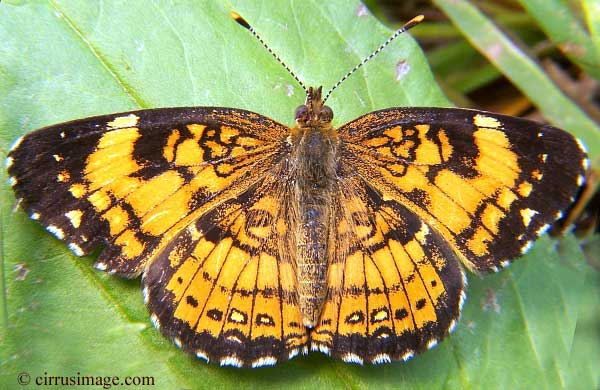
Silvery Checkerspot – Closyne nycteis
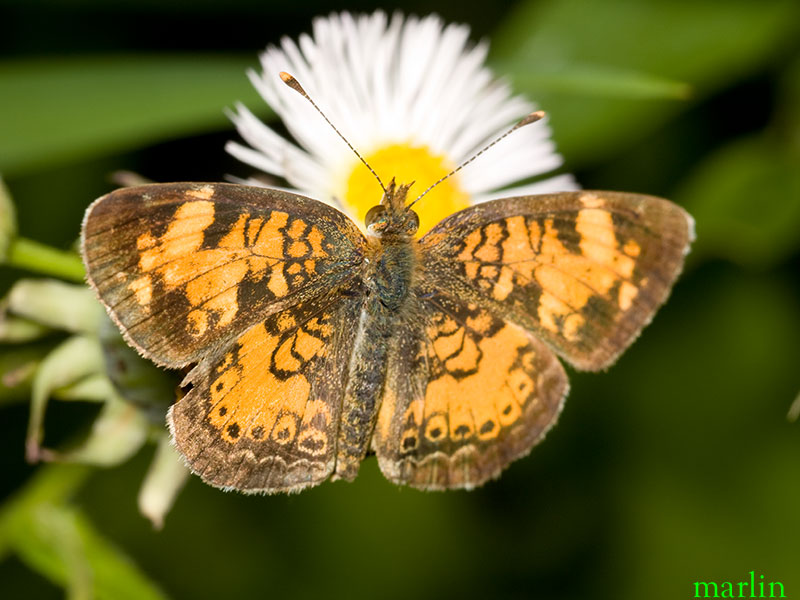
Northern Crescent – Phyciodes cocyta
Moths Index | Moths | Butterflies Main | Butterflies Index | Skippers
Tree Encyclopedia / North American Insects & Spiders is dedicated to providing family-friendly educational
resources for our friends around the world through large images and macro photographs of flora and fauna.
Online since 2002