Little Wood Satyr Butterfly – Megisto cymela
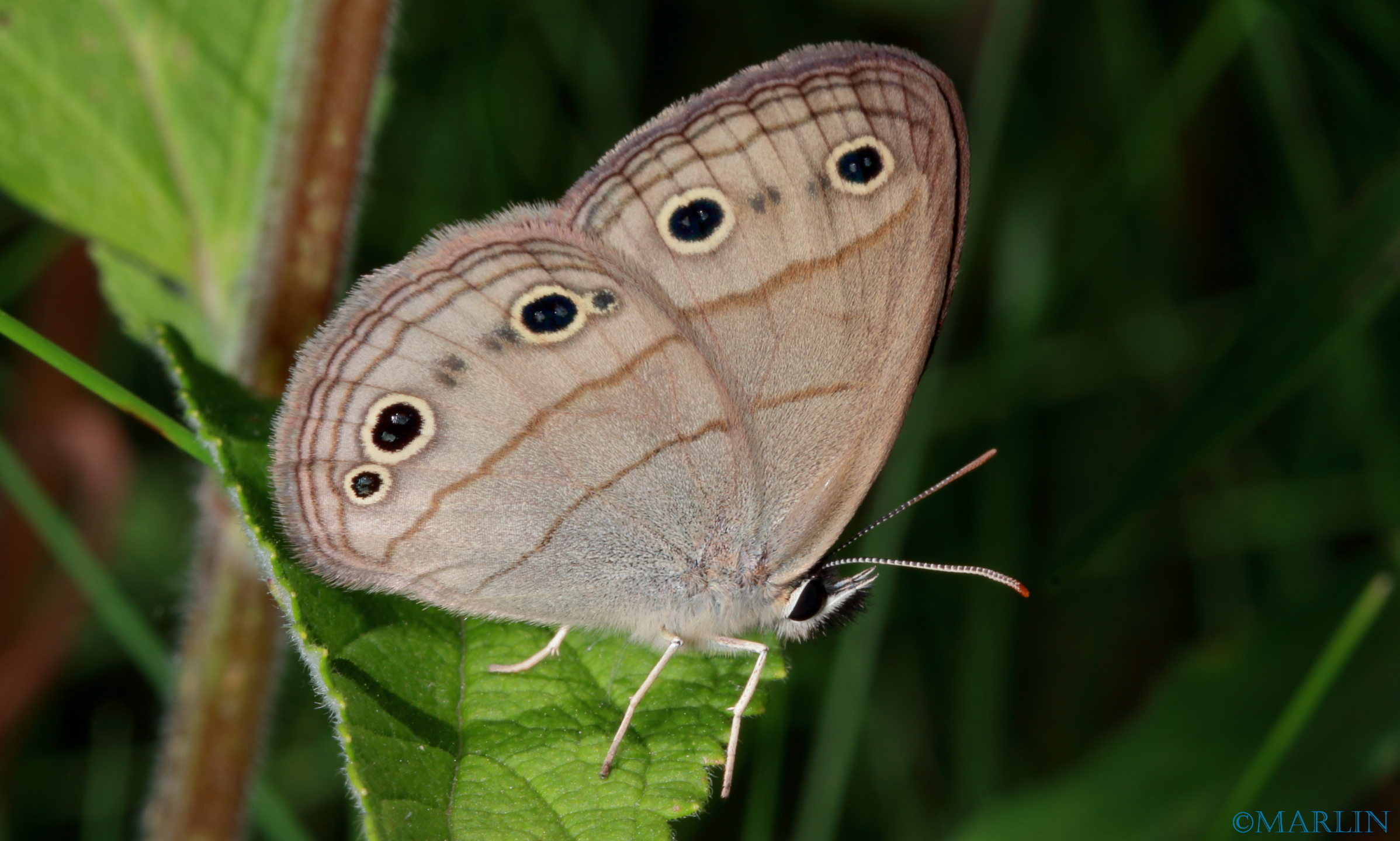
I came across a tree sap party one day in late June. There were a dozen or more northern pearly-eyes and little wood satyrs all clustering on one pin oak tree that was oozing sap at several locations. That sap was like catnip for those butterflies. They kept coming and going and jockeying for position, it was really a sight to see. Little Wood Satyrs do not frequent flowers in search of nectar as do most other butterflies; adults rarely feed at all, taking only water at puddles or sap as is shown here.
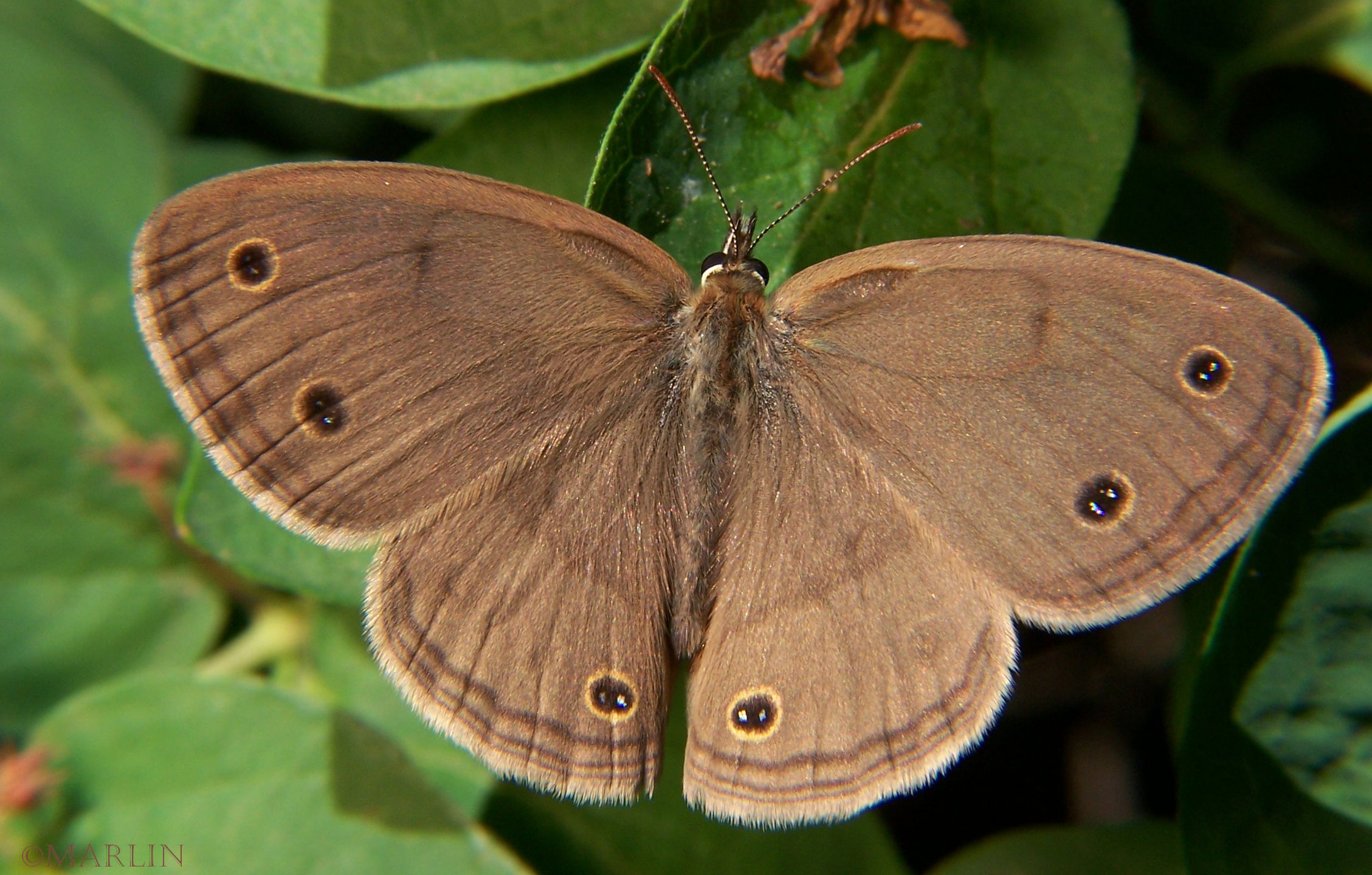
The Little Wood Satyr is a very adaptable butterfly. It requires only some woods, grass and moisture to thrive; it is a prodigious reproducer and can become extremely abundant under the right conditions. The summer of 2004 was just such a time here near Chicago. I cannot isolate any particular weather or other conditions that made it so, it just was. Those butterflies were everywhere! The Little Wood Satyr is equally at home flitting from tree trunk to tree trunk, many times in a group of butterflies that seem to be playing tag, and expertly negotiating tall grass and thick underbrush with their dancing, seemingly slow-motion flight.
They fly on cloudy days, unlike many butterflies, and they tolerate deep shade as well. One of my favorite woodland denizens!
These butterflies are fun to watch when gamboling about amidst a stand of trees; it really looks as if they are having fun, which is how they got their name; satyrs of Greek mythology are best known for their fondness for drinking, dancing and revelry.
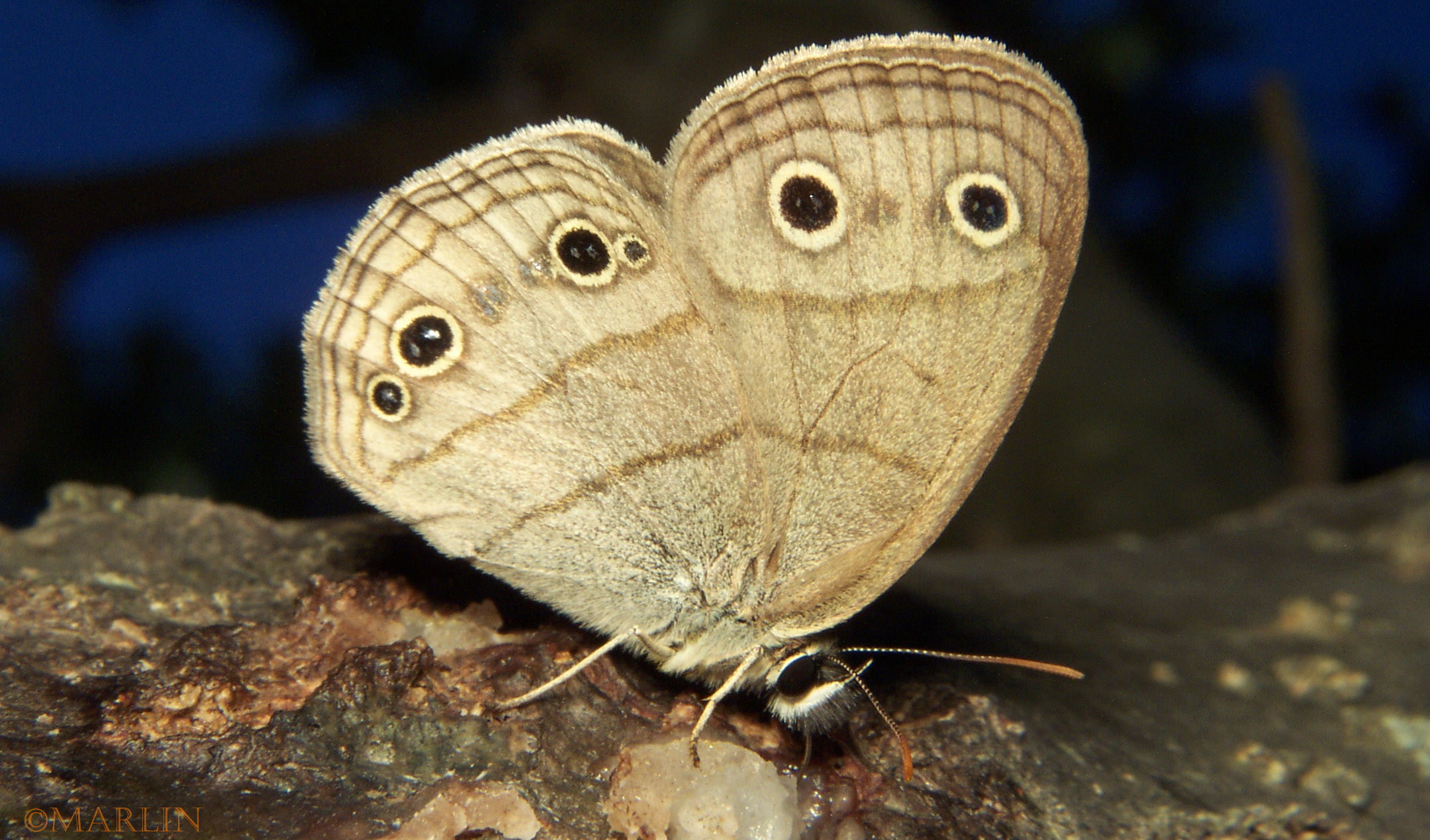
Little Wood Satyr at tree sap party
Life cycle: Eggs are pale green. Caterpillar is brown with tiny white bumps, feeds on grasses and possibly sedges; larvae overwinter partially grown. Habitat: Deciduous woods and forest clearings, meadows and fields, pine woods, salt bays and streamsides. Range: Saskatchewan, North and South Dakota, Colorado, Texas and NE Mexico; east throughout southern Canada and U.S.
This satyr’s dorsal eyespots all have two “pupils”
Description: Each wing, both above and below, has two prominent eyespots with yellow rims and two pupils. Smaller eyespots may be clustered around large one. No other small satyr has eyespots in pairs above and below.
Butterfly Index | Moth Pictures | Moths Index | Skipper Butterflies
Tree Encyclopedia / North American Insects & Spiders is dedicated to providing family-friendly educational
resources for our friends around the world through large images and macro photographs of flora and fauna.
Online since 2002