Small Milkweed Bug – Lygaeus kalmii
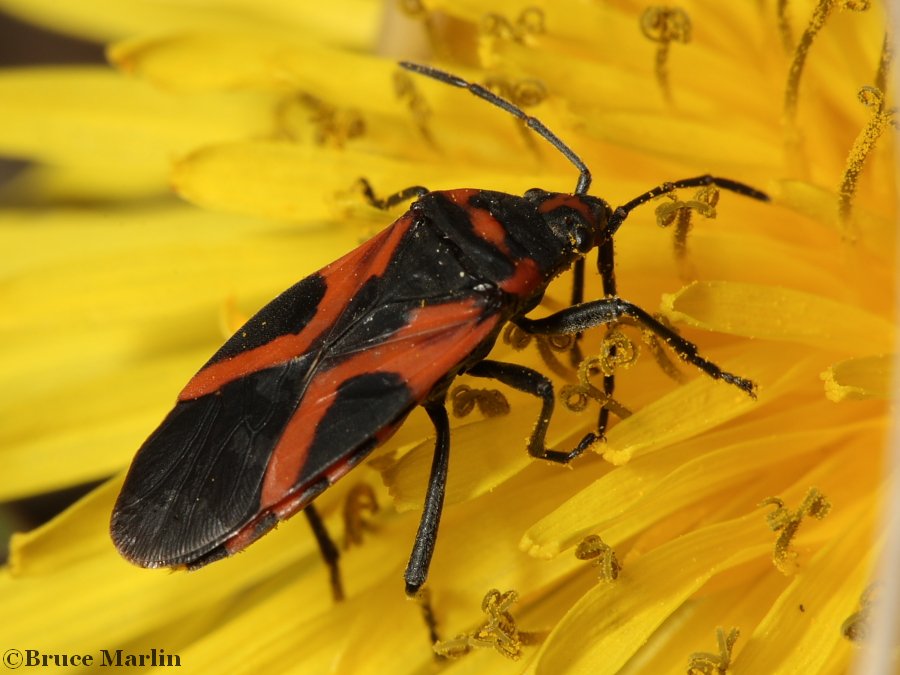
Milkweed bugs (Family Lygaeidae) are usually found in groups on milkweed plants, often on the underside of the leaves. I have seen them in conglomerations of hundreds. Milkweed plants are large (3-4 feet high) with sprays of small white flowers in the summer.
Milkweed bugs can be found on seed pods piercing the wall of the pod to feed on seeds. Milkweed bugs are one of a small group of insects that have the ability to tolerate the toxic compounds in the milkweed plant.
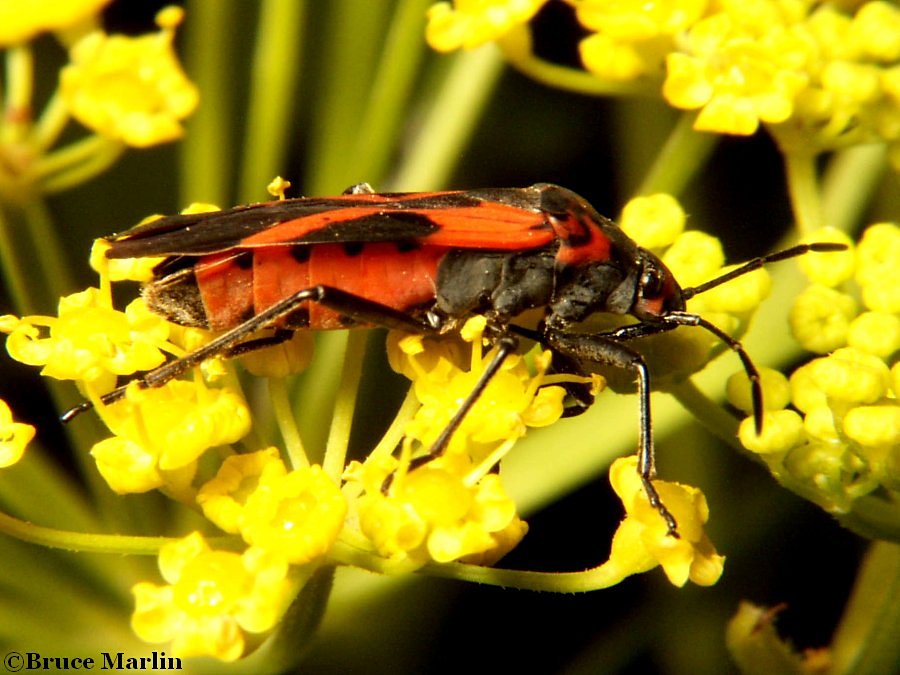
Milkweed bugs have few predators because they concentrate in their bodies bad tasting compounds found in the sap of milkweed plants. The bugs use their bright colors to advertise to predators their toxic nature, exactly like monarch butterflies.
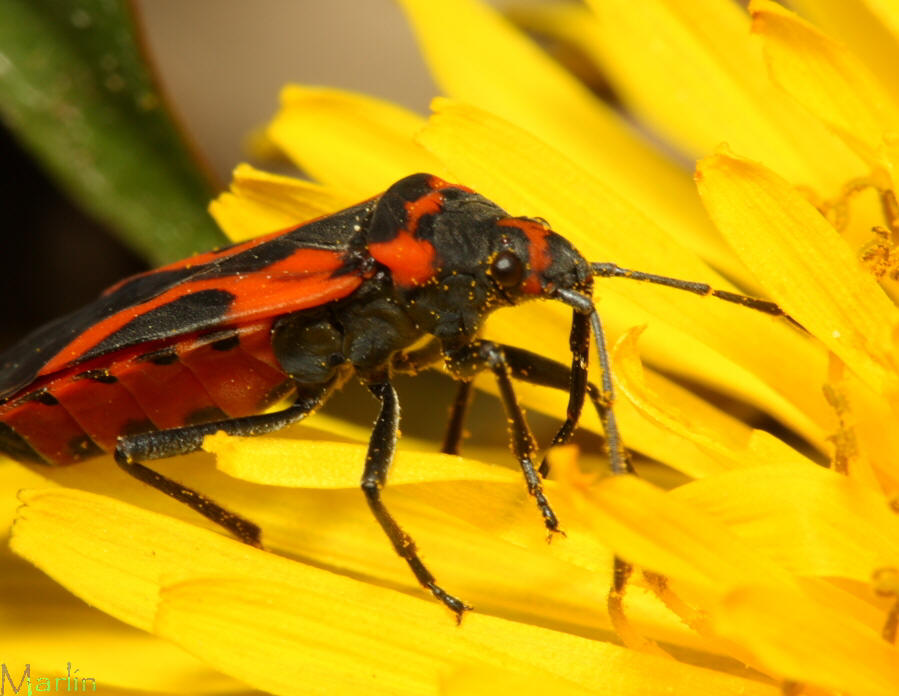
Both small and large milkweed bugs have incomplete metamorphosis. The nymphs look like the adults except that they do not have full wings and their color pattern is different.
Nymphs have bright orange abdomens, and usually molt 5 times before becoming an adult. Eggs take about 1 week to hatch and a month to become adults.
References
- John L. Foltz, University of Florida, Dept of Entomology & Nematology, Hemiptera: Miridae, 2001.
- Bugguide.net, Lygaeus kalmii
- Alfred G. Wheeler and Sir T. Richard E. Southwood FRS, Biology of the Plant Bugs
- American Museum of Natural History, National Science Foundation and University of New South Wales
Tree Encyclopedia / North American Insects & Spiders
Online since 2002