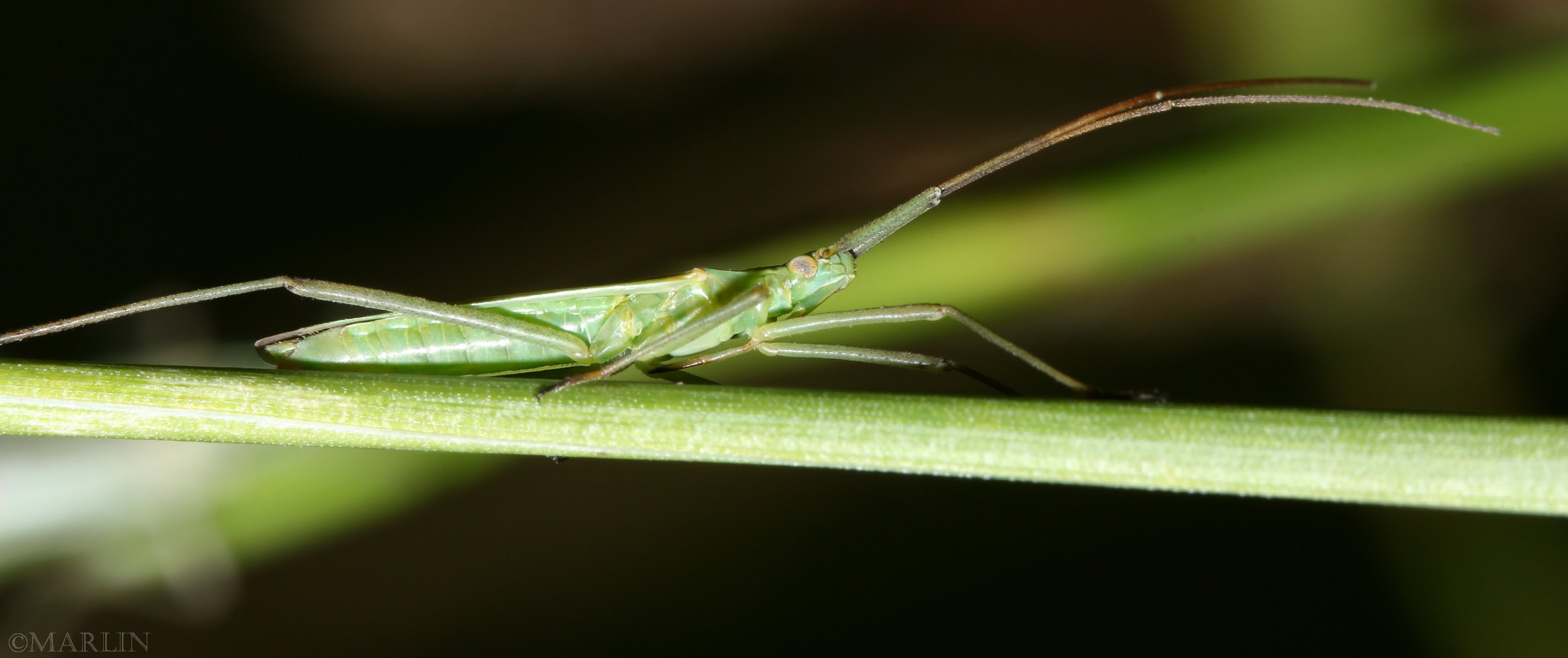
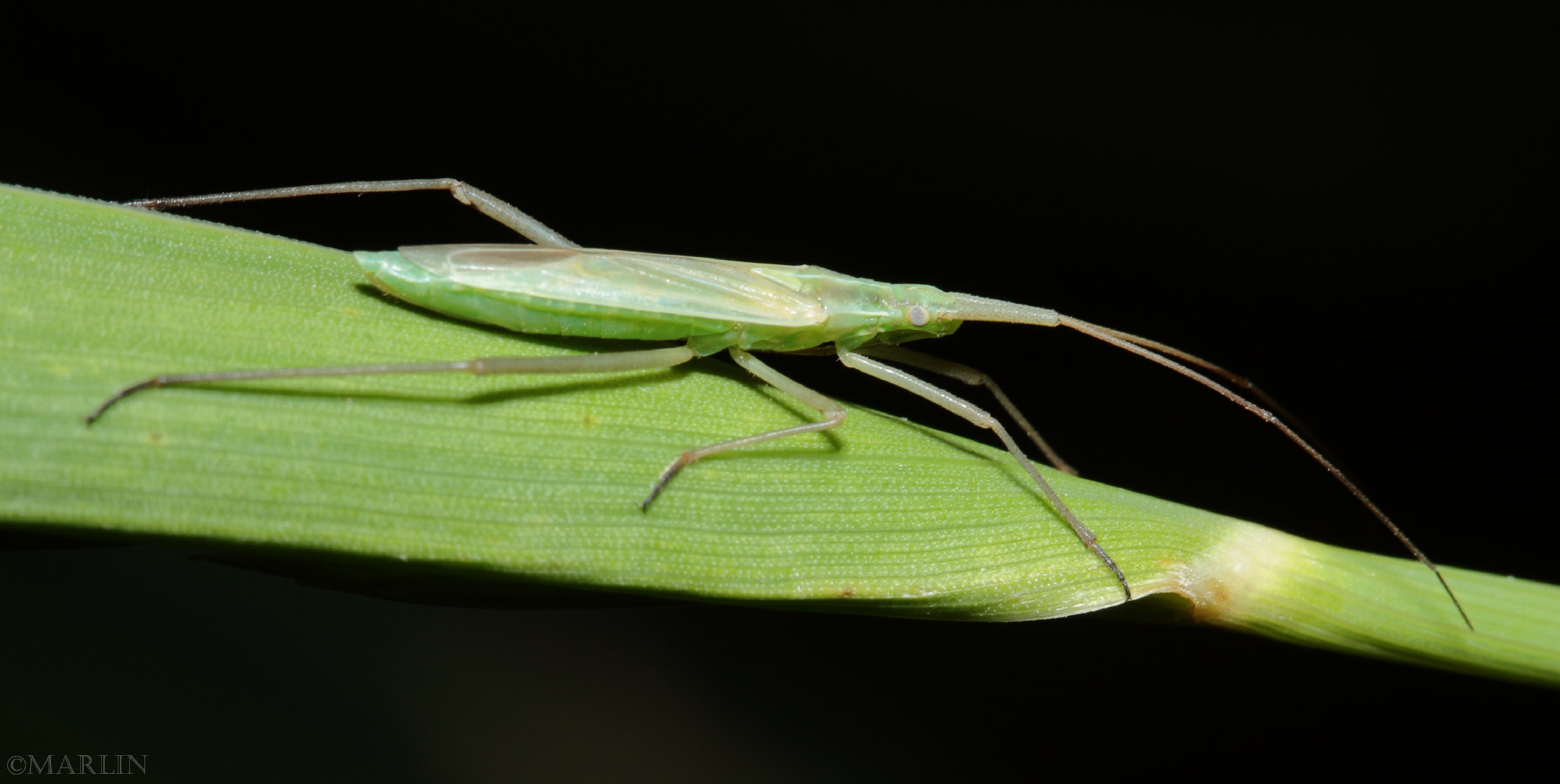
Plant Bug – Megaloceroea recticornis
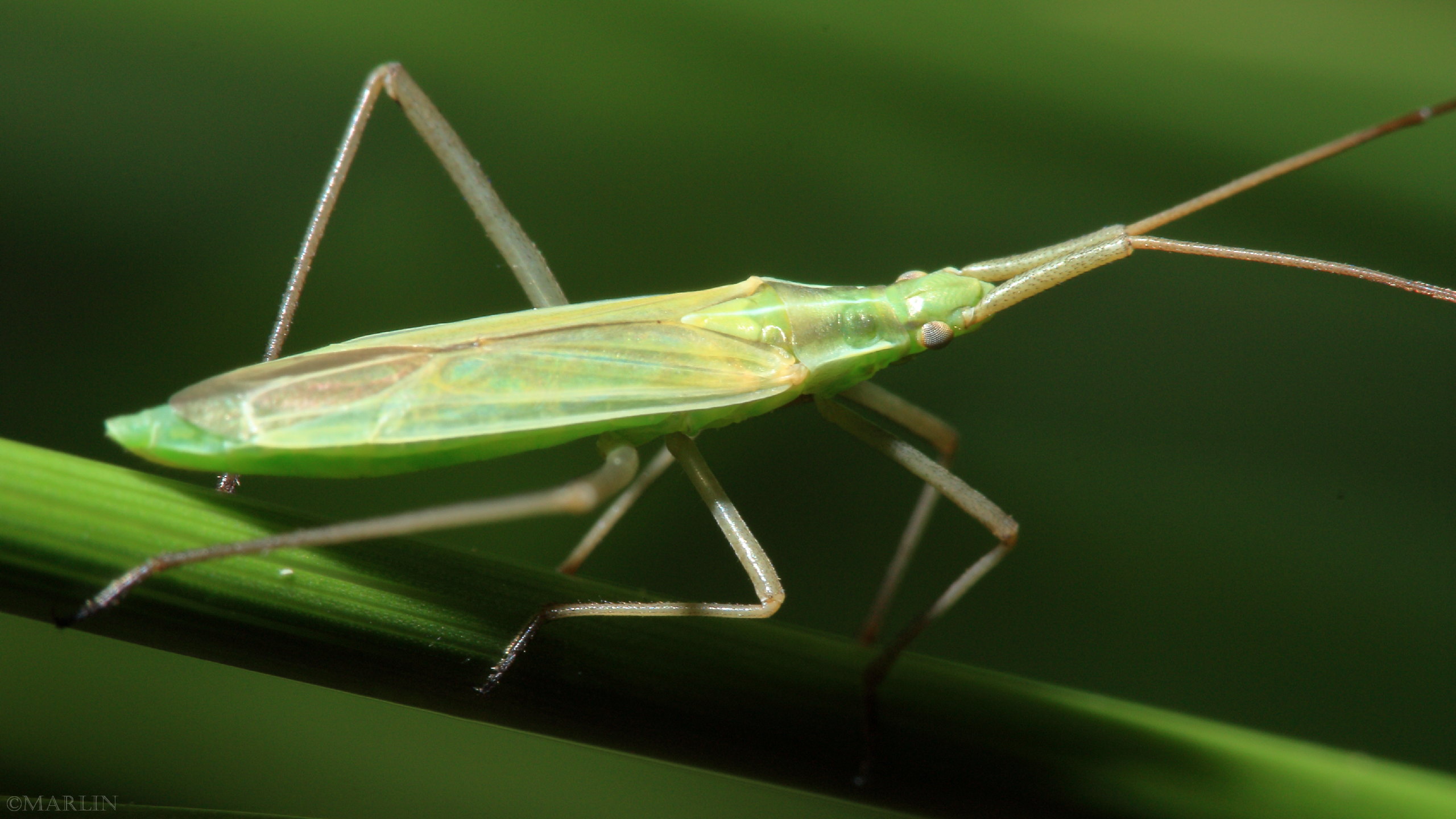
Family Miridae – Plant Bugs
Live adult bugs photographed in the wild at McKee Marsh Forest Preserve, DuPage County, Illinois.
Larvae and adults feed on various grasses, particularly meadow foxtail, timothy, and red fescue.
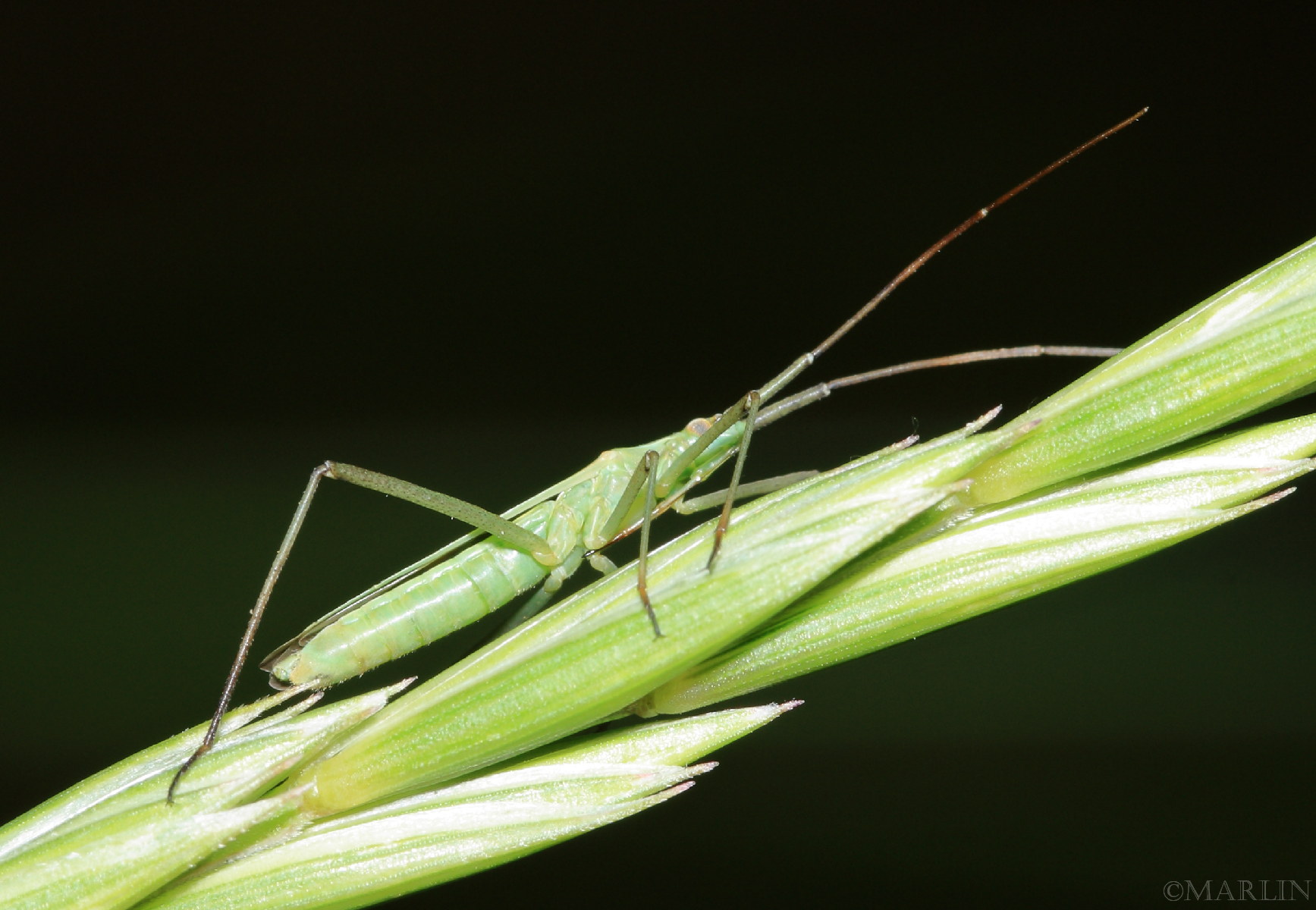
Plant bugs — Miridae, the largest family of the Heteroptera, or true bugs– are globally important pests of crops such as alfalfa, apple, cocoa, cotton, sorghum, and tea. Some also are predators of crop pests and have been used successfully in biological control. Certain omnivorous plant bugs have been considered both harmful pests and beneficial natural enemies of pests on the same crop, depending on environmental conditions or the perspective of an observer.
As high-yielding varieties that lack pest resistance are planted, mirids are likely to become even more important crop pests. They also threaten crops as insecticide resistance in the family increases, and as the spread of transgenic crops alters their populations. Predatory mirids are increasingly used as biocontrol agents, especially of greenhouse pests such as thrips and whiteflies. [3]
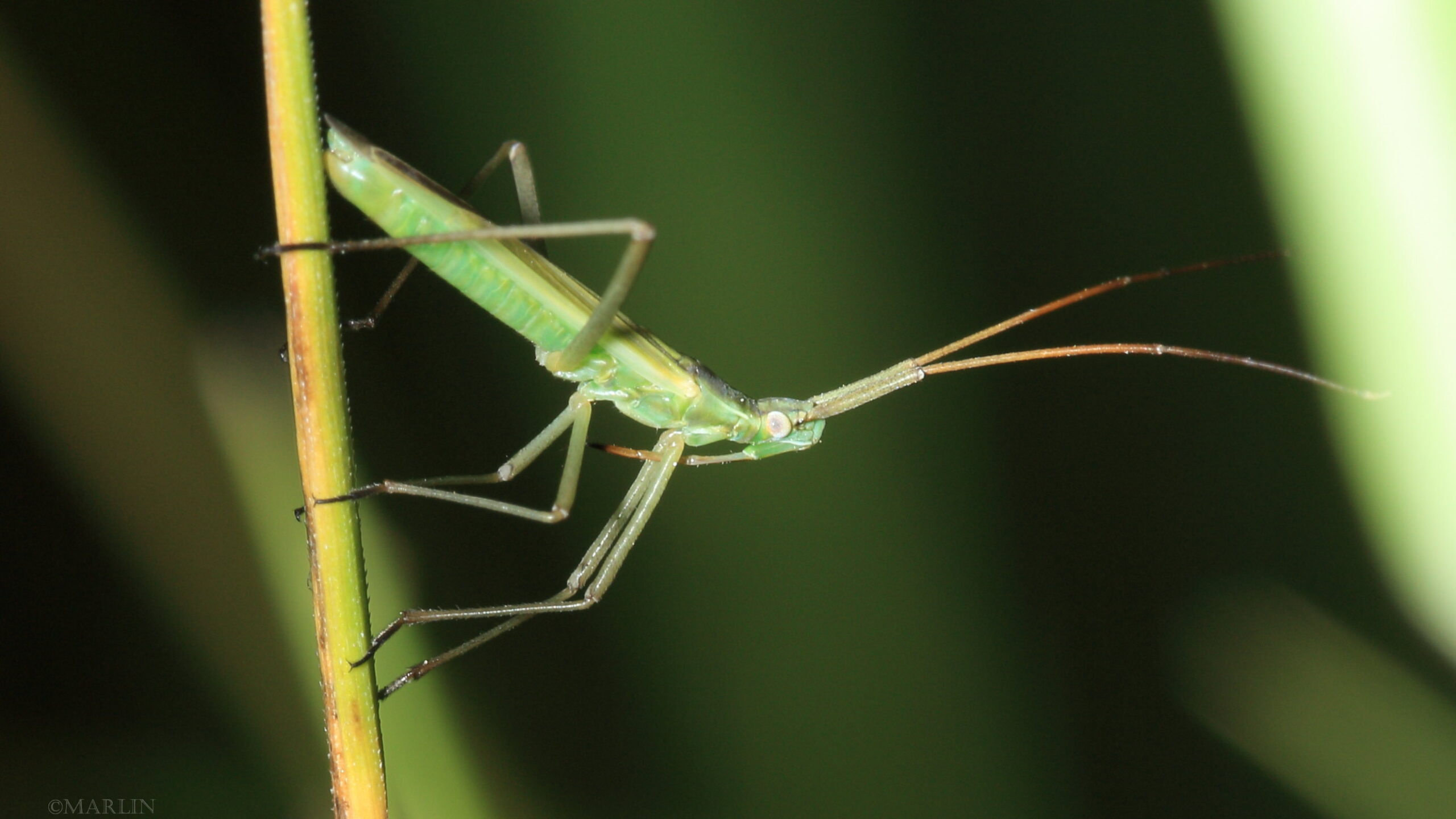
4-segmented rostrum (visible curving to left under the insect’s head) is used to suck sap and dissolved tissue from living plants.
Some diagnostic characteristics of plant bugs in the family Miridae:
- Membranous portion of forewing has 1 or 2 closed cells
- Thickened portion of front wings with a cuneus, a triangular shaped area adjacent to membranous area
- Ocelli (simple eyes) – most species lacking
- 4-segmented antennae and rostrum (beak)
- 3-segmented tarsi [1]
- Specialized setae known as trichobothria on the middle and hind femora [4]
The Miridae are unique within the Heteroptera in their possession of specialized setae known as trichobothria on the middle and hind femora. Most species lack the pair of ocelli found situated between the compound eyes of the majority of heteropteran species; the exception to this rule is the subfamily Isometopinae, which is thought to be the sister group of all remaining Miridae (the most basal lineage). The hemelytra, or forewings, nearly always have a well-demarcated cuneus, a triangular structure that is found in some other groups such as the non-parasitic Cimicoidea (bed bugs and their relatives) and whose anterior margin if formed by the costal fracture.
The pretarsus (claws and associated structures) shows much greater variation in the Miridae than in most other hemipterans, and provides many features crucial for understanding the subfamily classification of the group. As in most other bugs, the claws in the Miridae are symmetrical, the right and left claws being similarly developed. They may bear a pulvillus, a fleshy pad, on the ventral or interior surface of the claw; the exterior claw surface is sometimes ornamented with a few claw hairs of variable length.
References
- John L. Foltz, University of Florida, Dept of Entomology & Nematology, Hemiptera: Miridae, 2001.
- Bugguide.net, Megaloceroea recticornis
- Alfred G. Wheeler and Sir T. Richard E. Southwood FRS, Biology of the Plant Bugs
- American Museum of Natural History, National Science Foundation and University of New South Wales, Plant Bug Planetary Biodiversity Inventory, Plant Bugs (Miridae)
Order Hemiptera: True Bugs number almost 5,000 species in North America, and 40,000 worldwide. They have mouthparts formed into a beak, adapted for sucking plant juices or the liquefied insides of their animal prey.
Suborder Auchenorrhyncha – Cicadas & Planthoppers
Suborder Sternorrhyncha – Aphids, scales, mealybugs, jumping plant lice.
Bugs Main | Bugs Index | Assassin Bugs
Tree Encyclopedia / North American Insects & Spiders
Online since 2002