Leaf-Footed Bug – Euthochtha galeator
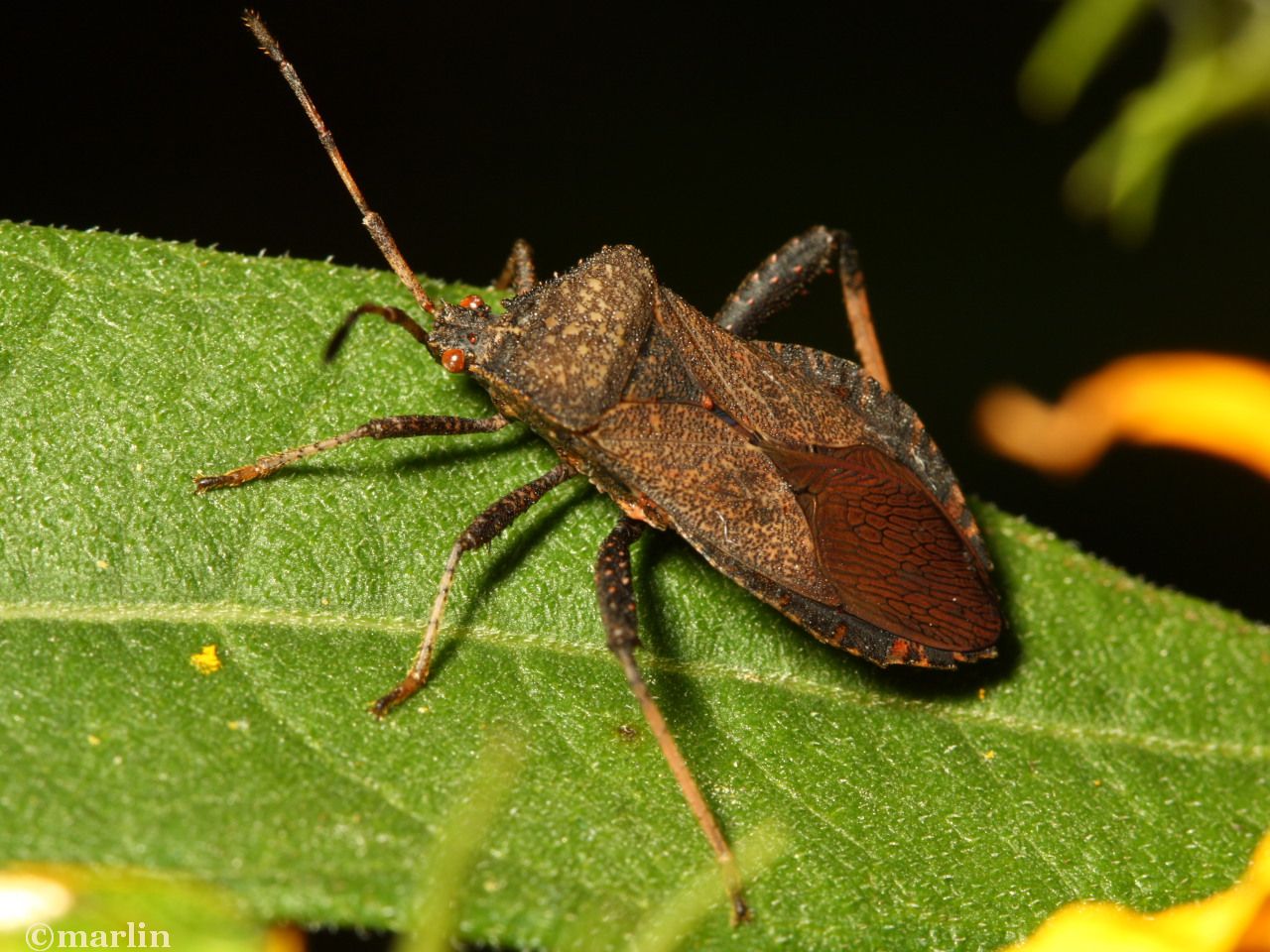
Family Coreidae. Also called helmeted squash bug.
Live male and female adults, egg cases and first and nymphs photographed near Chicago, Illinois.
Leaf-footed bugs take their common name from the leaf-like appearance of the femora and related structures. I love these large and stately bugs; they move slowly in general, but are strong fliers.
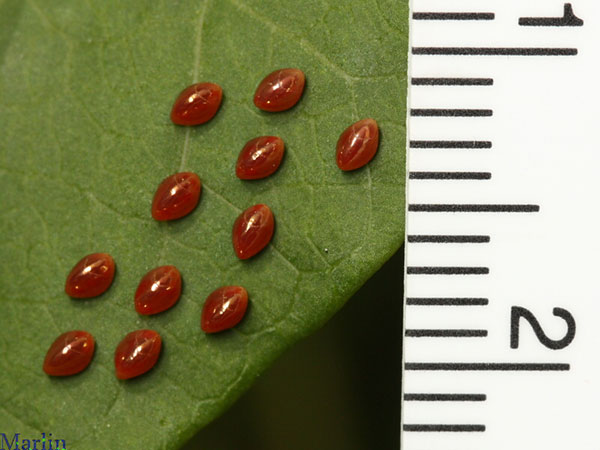 2mm Coreidae eggs on morning glory leaf
Life Cycle: Like all Hemiptera, leaf-footed bugs go through a simple metamorphosis with egg, nymph, and adult stages. Females of most species lay eggs during warm months. The eggs are often stuck to leaves or branches, or hidden under bark, depending on the species. After hatching, the wingless nymphs molt several times before becoming full-sized, winged adults. The adults will often mate and reproduce numerous times during the growing season.
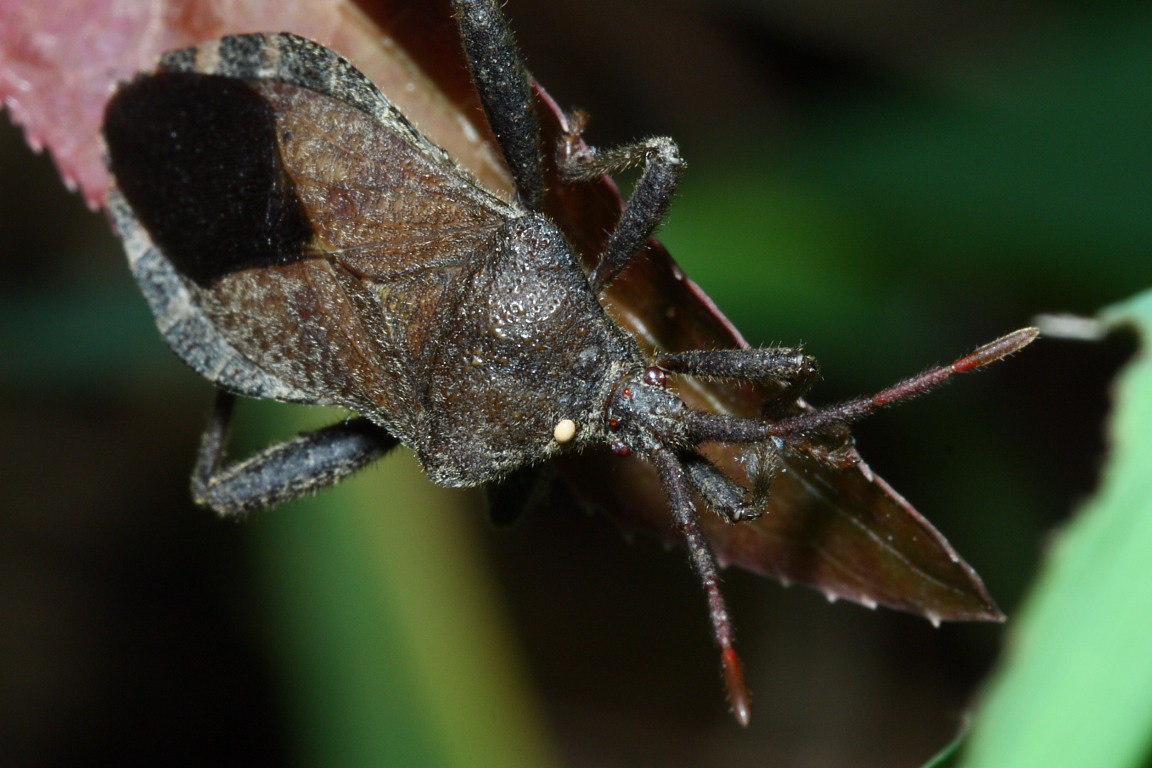 Leaf-Footed Bug with parasite egg attached; likely culprits include the tachinid fly Trichopoda pennipes (below)
Like stink bugs, leaf-footed bugs are able to exude foul-smelling fluids from pores on the sides of their bodies. These secretions help to protect leaf-footed bugs from predators. Nevertheless, leaf-footed bugs are often eaten by birds, spiders, assassin bugs, and other predators. [2]
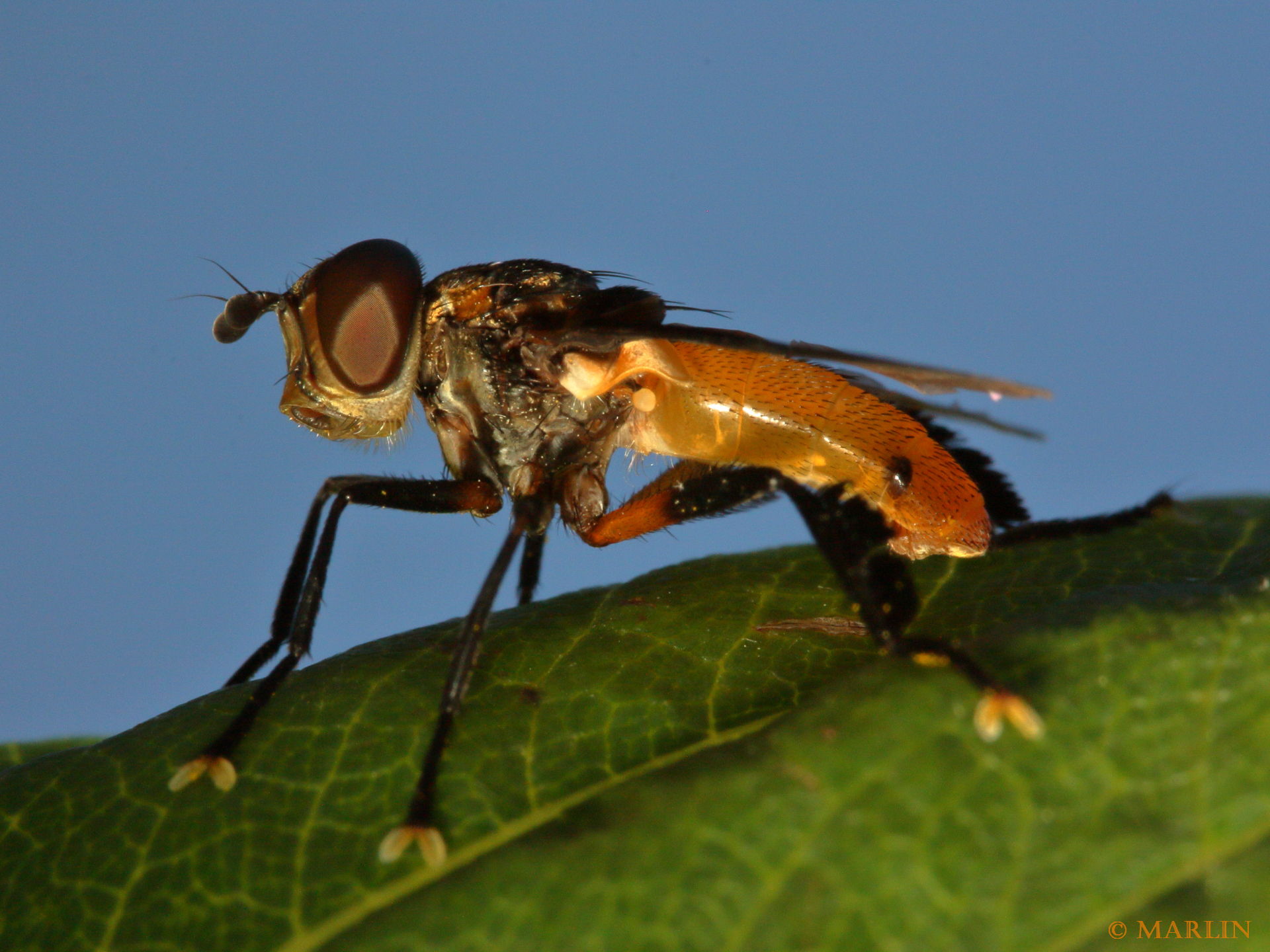
Tachinid fly Trichopoda pennipes lays its eggs on many types of bugs, including leaf-footed and stink
References
- Kenn Kaufman and Eric R. Eaton, Kaufman Field Guide to Insects of North America, 1st ed.
- Thomas Eisner, Maria Eisner, and Melody Siegler, Secret Weapons: Defenses of Insects, Spiders, Scorpions, and Other Many-Legged Creatures
- Les Line, The Audubon Society Book of Insects (Harry N Abrams, 1983).
Order Hemiptera: True Bugs number almost 5,000 species in North America, and 40,000 worldwide. They have mouthparts formed into a beak, adapted for sucking plant juices or the liquefied insides of their animal prey.
Suborder Auchenorrhyncha – Cicadas & Planthoppers
Suborder Sternorrhyncha – Aphids, scales, mealybugs, jumping plant lice
Tree Encyclopedia / North American Insects & Spiders is dedicated to providing family-friendly educational
resources for our friends around the world through large images and macro photographs of flora and fauna.
Online since 2002