|
 |
Stink
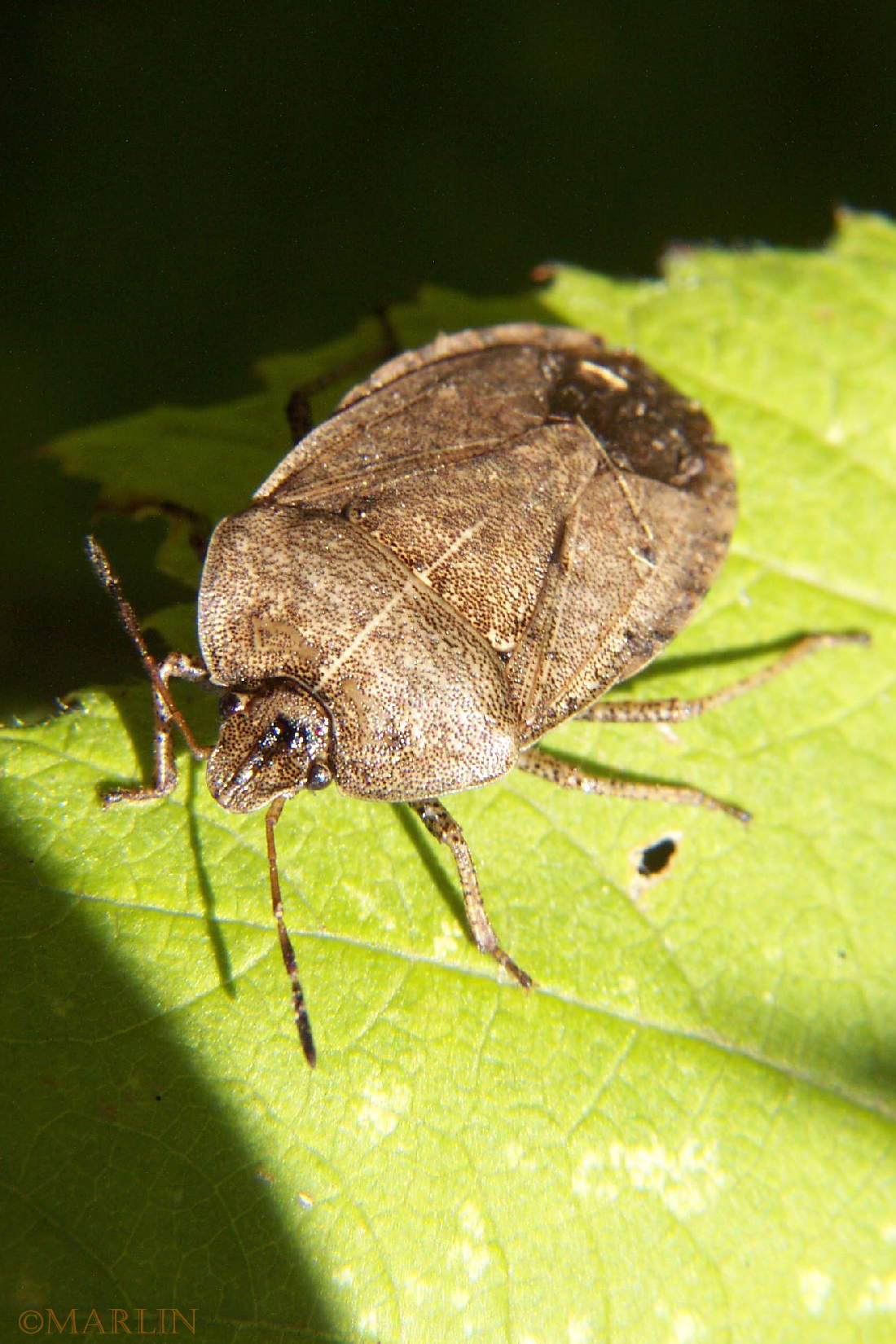
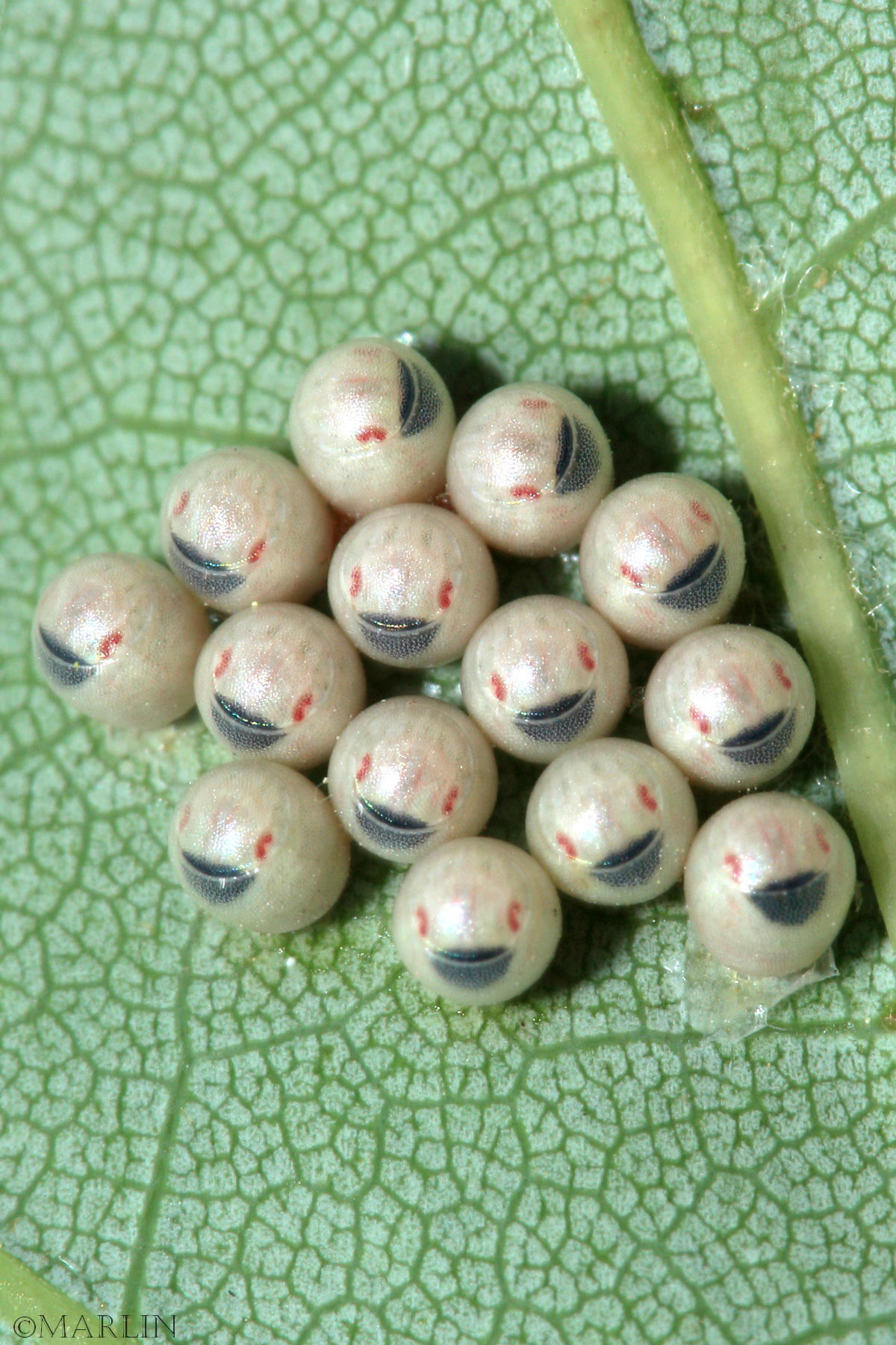
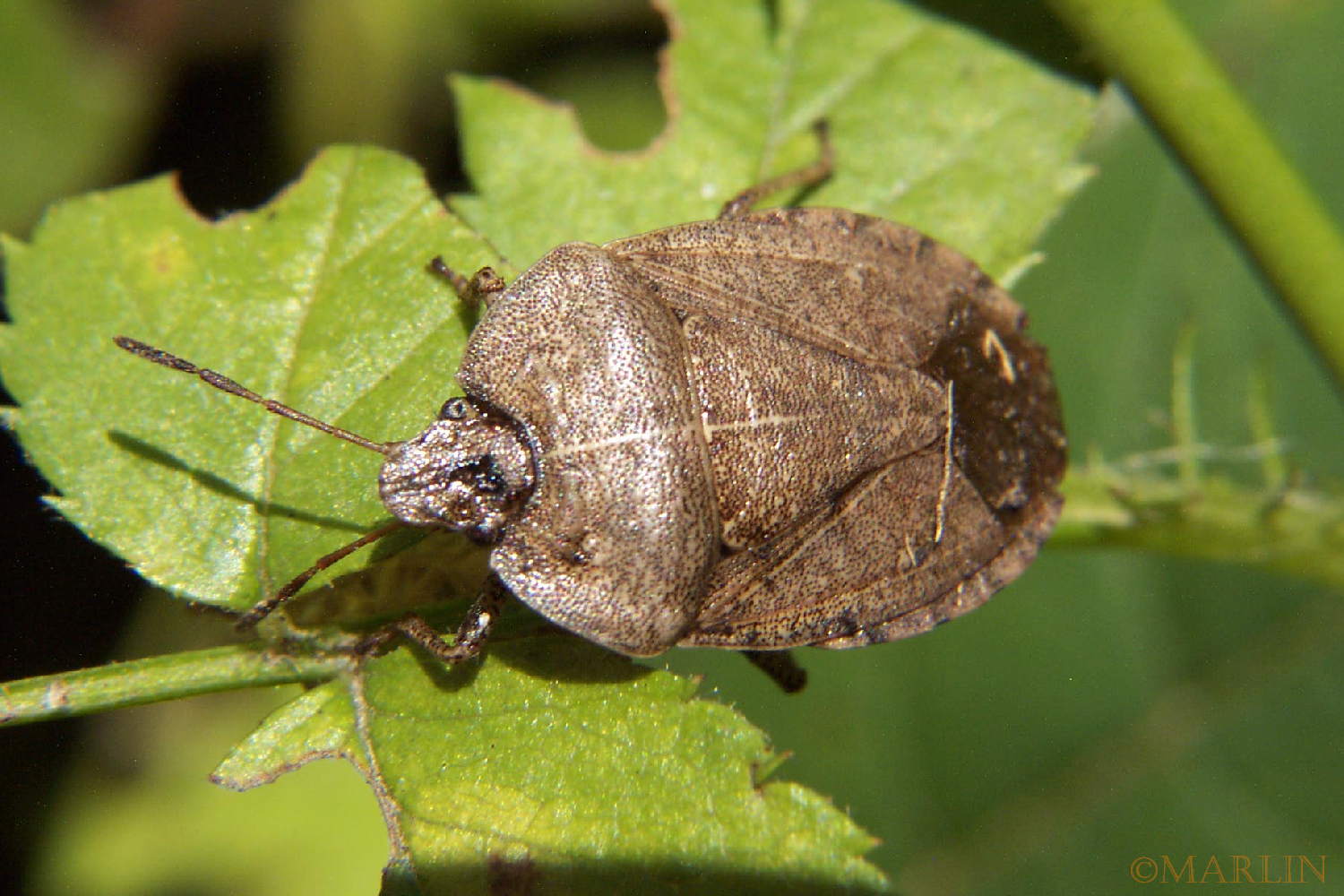
Bug - Menecles insertus
Order Hemiptera / Suborder Heteroptera / Infraorder
Pentatomomorpha / Superfamily Pentatomoidea
Family Pentatomidae / Synonym: Pentatoma inserta Say, 1832
Live adult stink bugs photographed in the wild at Winfield, Illinois, USA on August 17, 2004.
Length: 15 mm not including antennae.
|
|
|
|

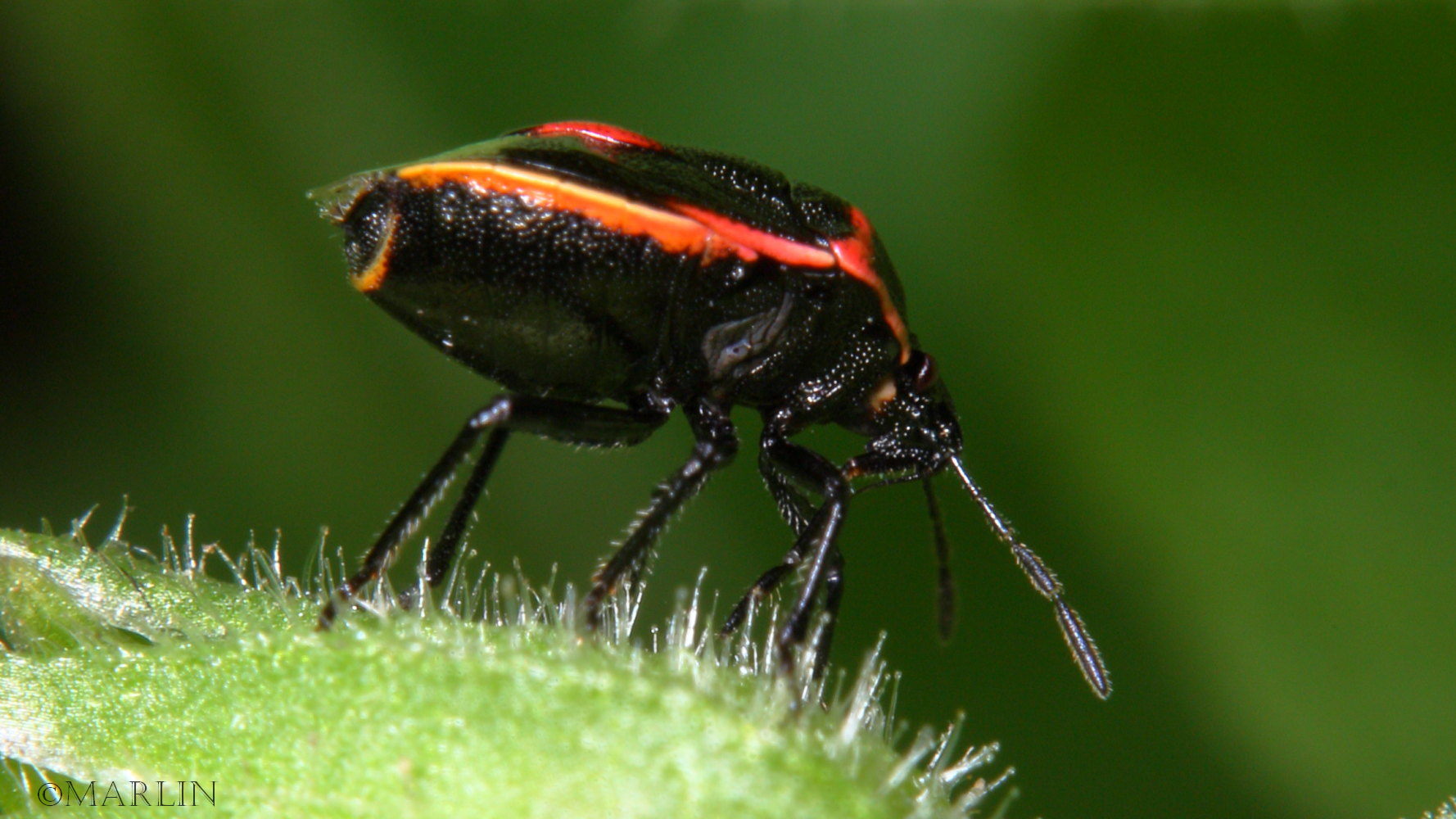
Stink Bug, also sometimes commonly called Shield Bug
Several species of
insects that feed on peaches and other fruits early in the growing
season cause a gnarling and distortion of the fruits called
catfacing. Plant bugs and stink bugs, called catfacing insects, are
largely responsible for this type of injury. They suck the sap from
the fruit. If the peaches do not fall as a result of this attack,
fruit development is inhibited in the area of the punctures. The
surrounding healthy tissue continues to grow thereby causing a
defect resembling a cat's face.
The green stink
bug, Acrosternum hilare, and brown stink bug, Euschistus servus are the two culprits
most frequently cited form the Pentatomidae family. |
|
|
|

|
Exclude Stink Bugs
from your house: Mechanical exclusion is
the best method.Cracks around windows,
doors, siding, utility pipes, behind
chimneys, and underneath the wood fascia and
other openings should be sealed with good
quality silicone or silicone-latex caulk.
Damaged screens on doors and windows should
be repaired or replaced.
Exterior applications of insecticides may
offer some relief from infestations where
the task of completely sealing the exterior
is difficult or impossible. Applications
should consist of a synthetic pyrethroid
(i.e. deltamethrin, cyfluthrin,
lambda-cyhalothrin, cypermethrin, sumithrin
or tralomethrin) and should be applied by a
licensed pest control operator in the fall
just prior to bug congregation.
Unfortunately, because insecticides are
broken down by sunlight, the residual effect
of the material will be greatly decreased
and may not kill the insects much beyond
several days or a week. |
|
|
|
|
 |
 |
 |
|
If numerous bugs are
entering the living areas of the home,
attempt to locate the openings where the
insects gain access. Typically, stink bugs
will emerge from cracks under or behind
baseboards, around window and door trim, and
around exhaust fans or lights in ceilings.
Seal these openings with caulk or other
suitable materials to prevent the insects
from crawling out. Both live and dead stink
bugs can be removed from interior areas with
the aid of a vacuum cleaner.
It is not advisable to use an insecticide
inside after the insects have gained access
to the wall voids or attic areas. Although
insecticidal dust treatments to these voids
may kill hundreds of bugs, there is the
possibility that carpet beetles will feed on
the dead stink bugs and subsequently attack
woolens, stored dry goods or other natural
products in the home. Although aerosol-type
pyrethrum foggers will kill stink bugs that
have amassed on ceilings and walls in living
areas, it will not prevent more of the
insects from emerging shortly after the room
is aerated. For this reason use of these
materials is not considered a good solution
to long-term management of the problem.
Spray insecticides, directed into cracks and
crevices, will not prevent the bugs from
emerging and is not a viable or recommended
treatment.
|
|
|