Red-Shouldered Pine Borer – Stictoleptura canadensis
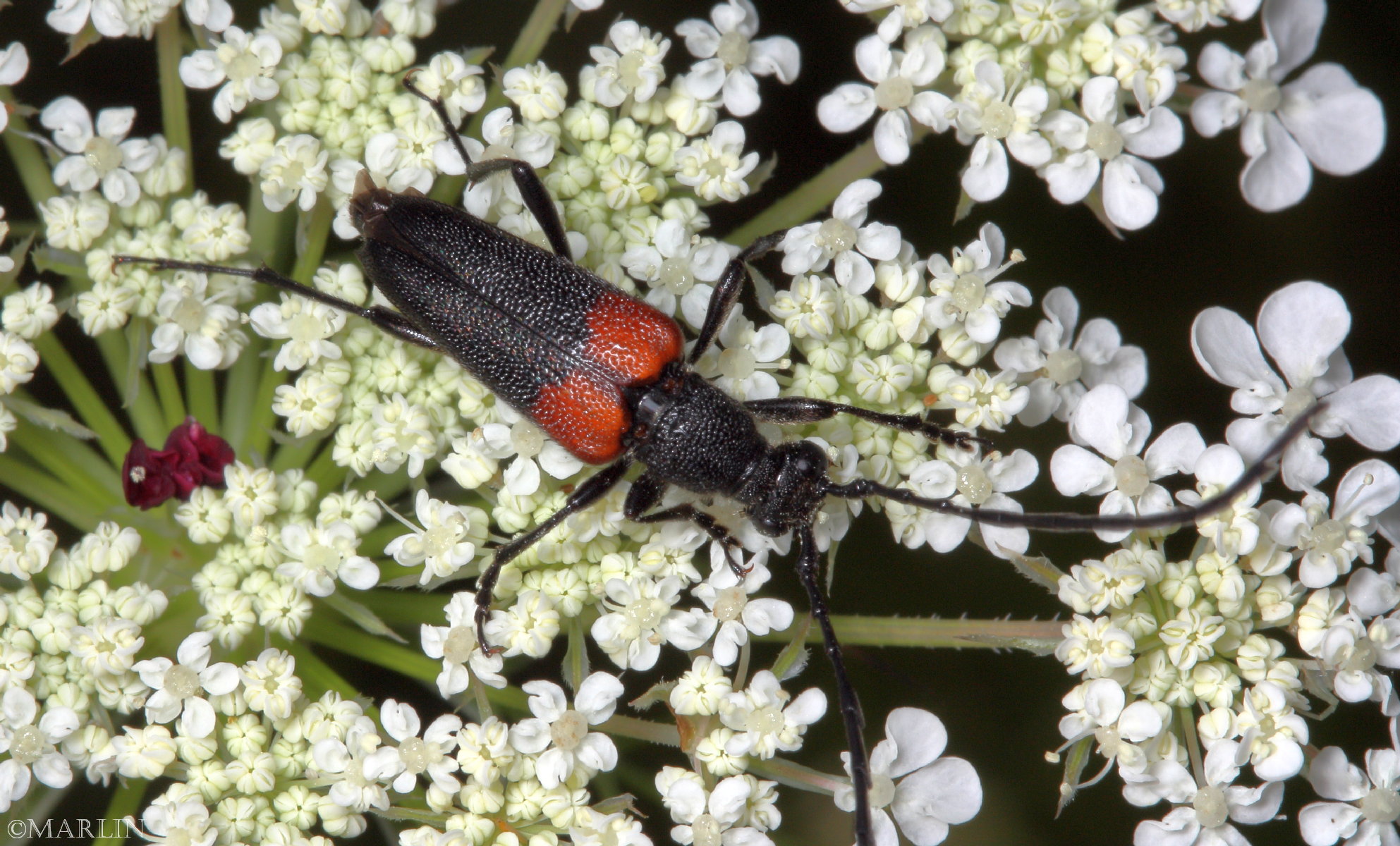
Family Cerambycidae – Longhorned Beetles
Live adult beetles photographed at Forest County, Pennsylvania. Size: 15mm not including antennae
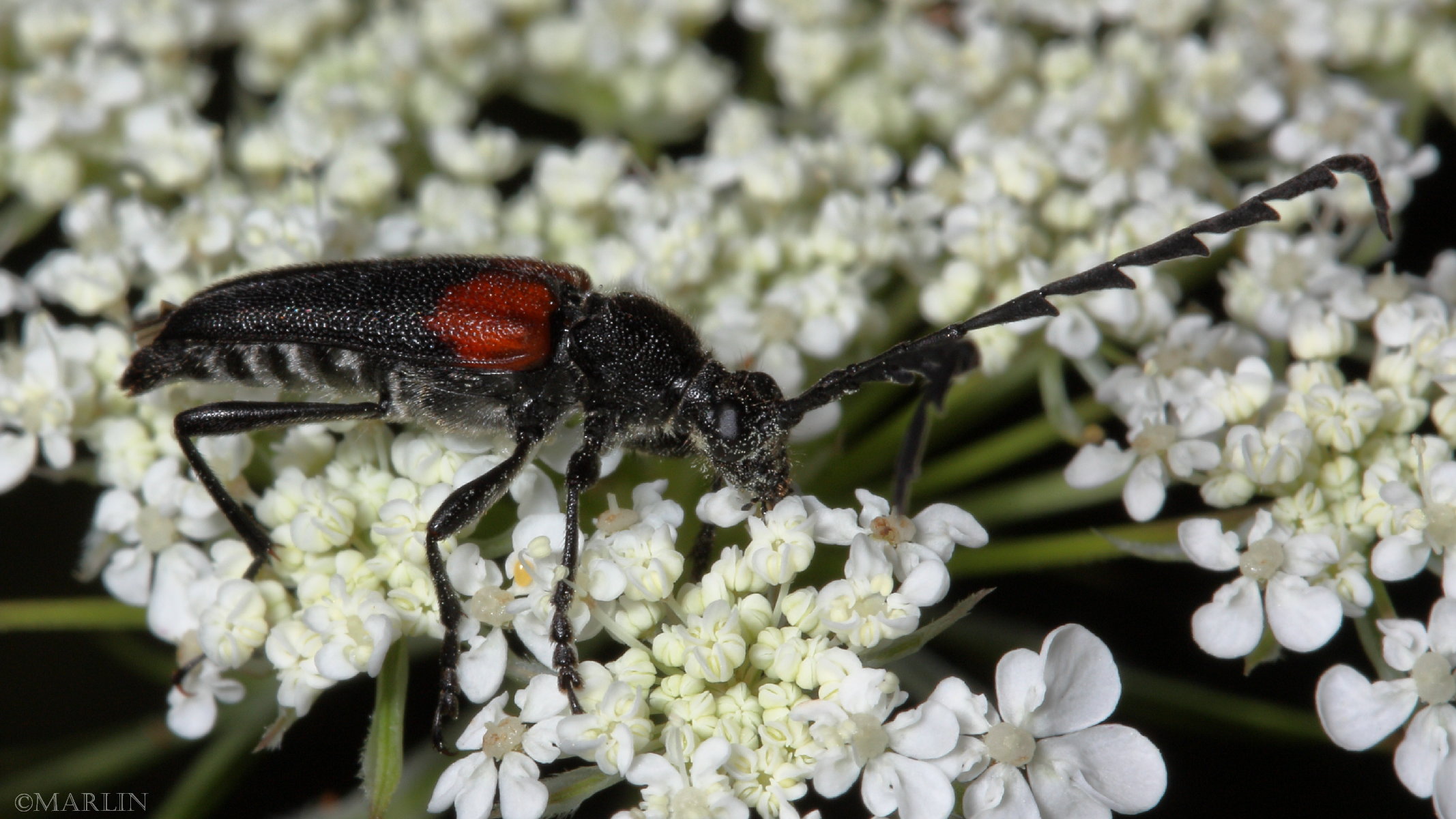
Cerambycidae is a cosmopolitan family of beetles characterized by their extremely long antennae, which are often longer than the beetle’s body. There are over 20,000 species described. Many longhorns are serious agricultural pests, as their larvae have the unfortunate habit of boring wood.
The Asian Longhorn beetle, for instance has been responsible for the preventive destruction of thousands of trees in northern Illinois and other locations in the United States.
 Larval habits: Most species feed within dead, dying or even decaying wood, but some taxa can use living plant tissue. Girdlers sever living branches or twigs, with the larvae developing within the nutrient-rich distal portion.
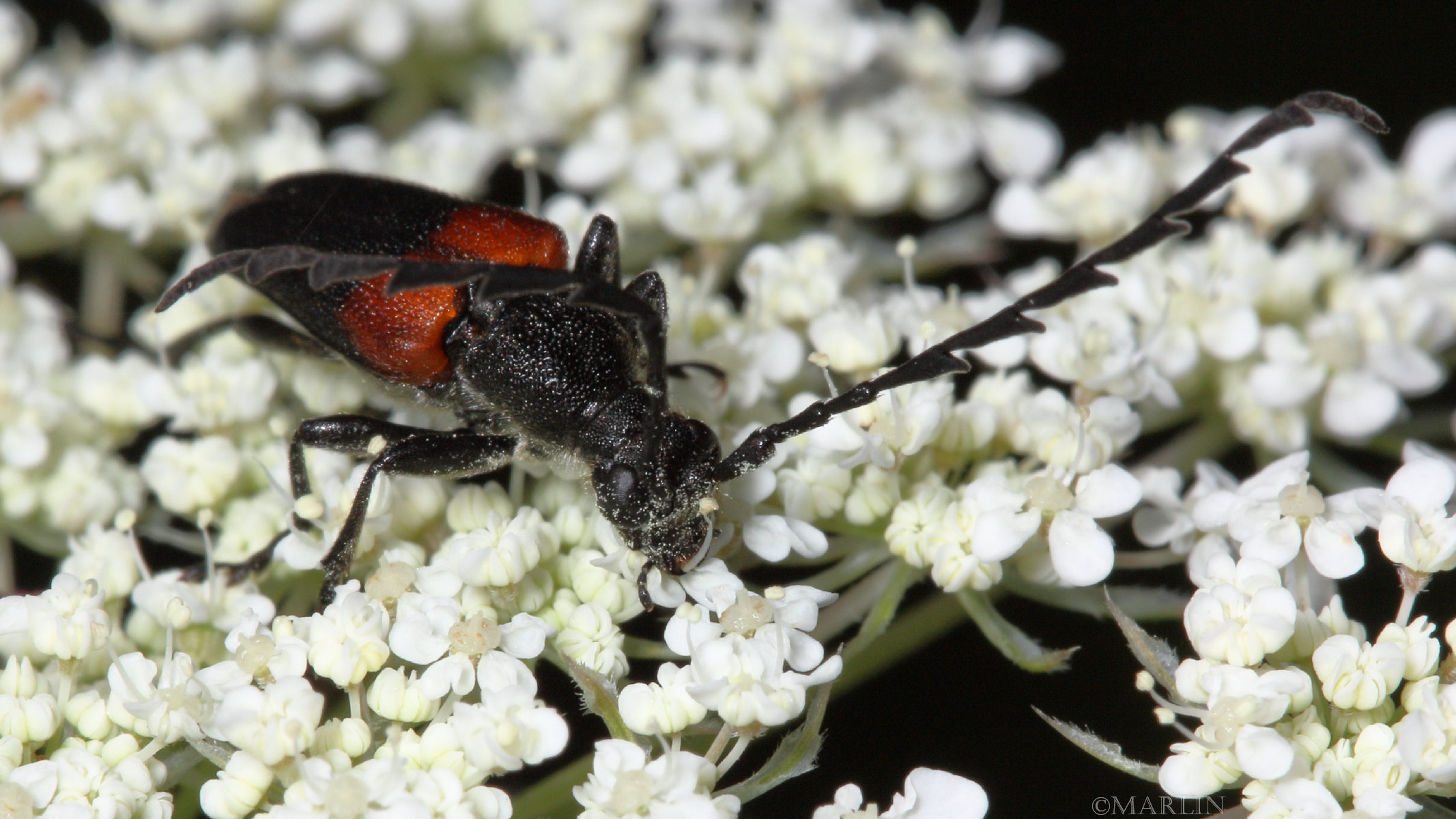
Many adults (especially the brightly colored ones) feed on flowers. Adult feeding requirements are variable, with some species taking nourishment from sap, leaves, blossoms, fruit, bark, and fungi, often not associated with larval hosts; others take little or no nourishment beyond water.
References
- Bugguide.net, Stictoleptura canadensis
Family Cerambycidae – Longhorn Beetles
Beetles Main | Beetles Index
Tree Encyclopedia / North American Insects & Spiders
Online since 2002