Lady Beetle Larva, Pupa – Harmonia axyridis
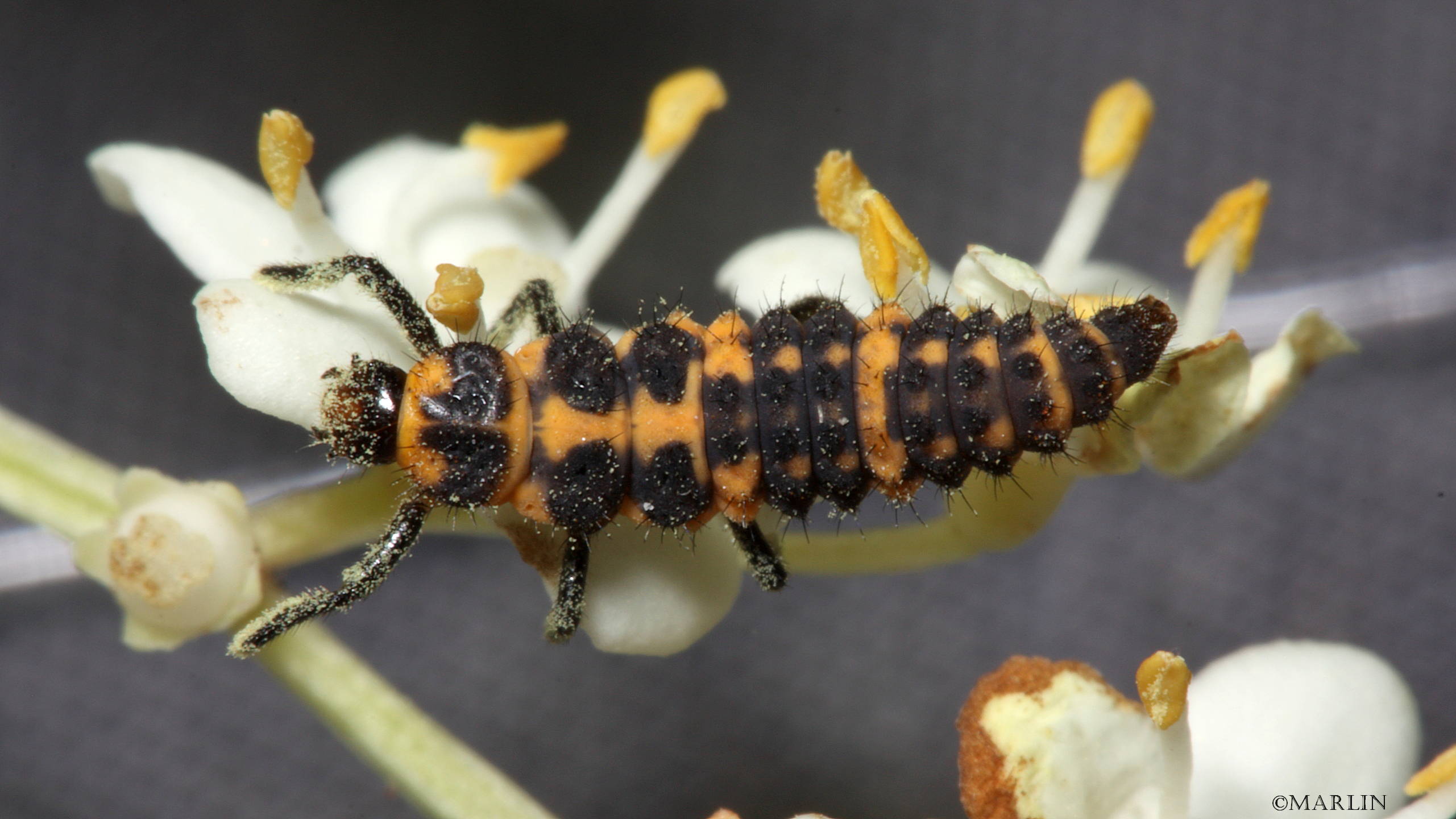
Coleomegilla maculata larva feeding on flower pollen
Family Coccinellidae – Lady Beetles. These beetles and their larvae are beneficial to agriculture and the backyard gardener, being voracious predators of aphids, thrips, flies and mites.
The multicolored Asian ladybug was imported in an early attempt at biological control of aphids; it has naturalized rapidly and inhabits most of North America. Ditto the so-called 7-Spotted lady beetle. It just shows the succes of the beetle body-plan in exploiting the ubiquity of that predator-prey ratio: aphids and their ilk are extremely prolific reproducers; their predators are therefore many and varied. It all boils down to a complex web of interactions beginning with animals capable of exploiting plants’ ability to make sugar from sunlight.
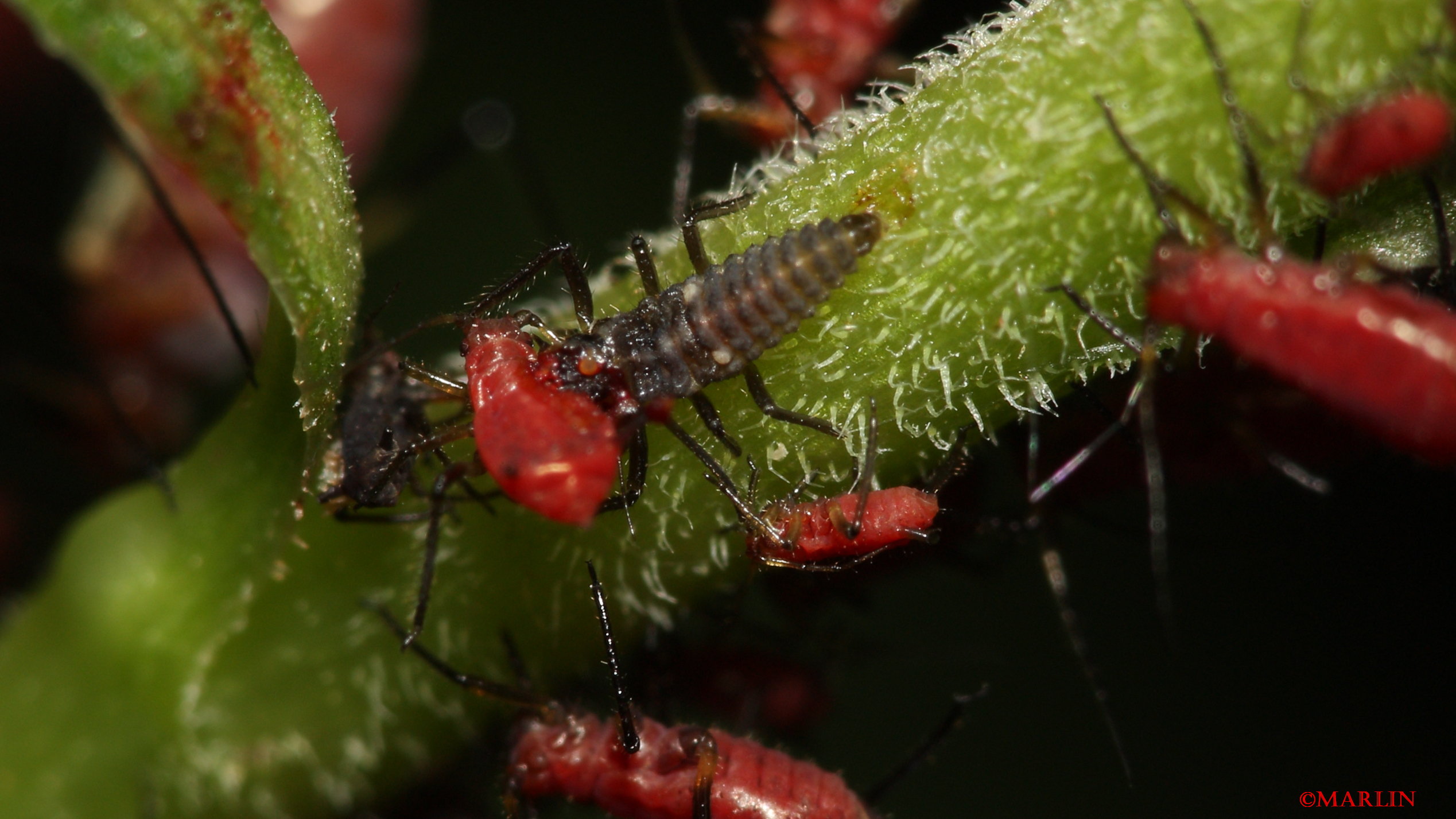 Ladybeetle larva attacking red aphid colony
Ladybugs often overwinter as adults in gregarious swarms under fallen leaves, bark, or inside unheated buildings. As insects go, they are a very beneficial group, being natural enemies of many insects, especially aphids and other critters that damage plants by feeding on their sap. A single ladybug can consume vast quantities of aphids in its lifetime, perhaps as many as 5,000 or more. During the Middle Ages, these beetles were used to control aphid infestations of grapevines in vinyards.
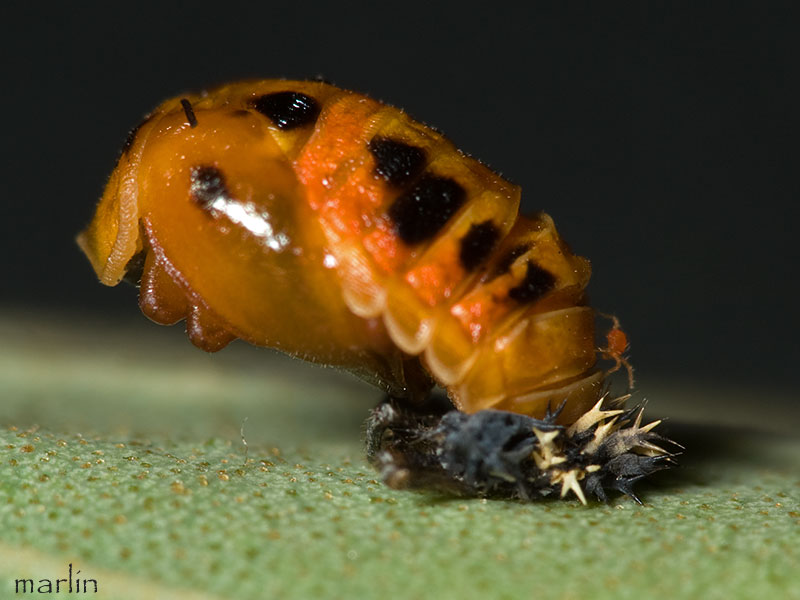 Ladybug pupa, Harmonia axyridis. Note red mite hitchhiker
Aphids in the suborder Homoptera are plant sap-processing machines. They feed by inserting their hypodermic needlelike proboscis directly into a plant’s vascular system (phloem), which contains carbohydrate laden sap, under pressure. As a passive but very efficient process, sap flows into the insect’s digestive system. (Other predatory species inflict essentially the same process on their prey, except instead of sap, they are vacuuming out the victim’s liquefied innards.)
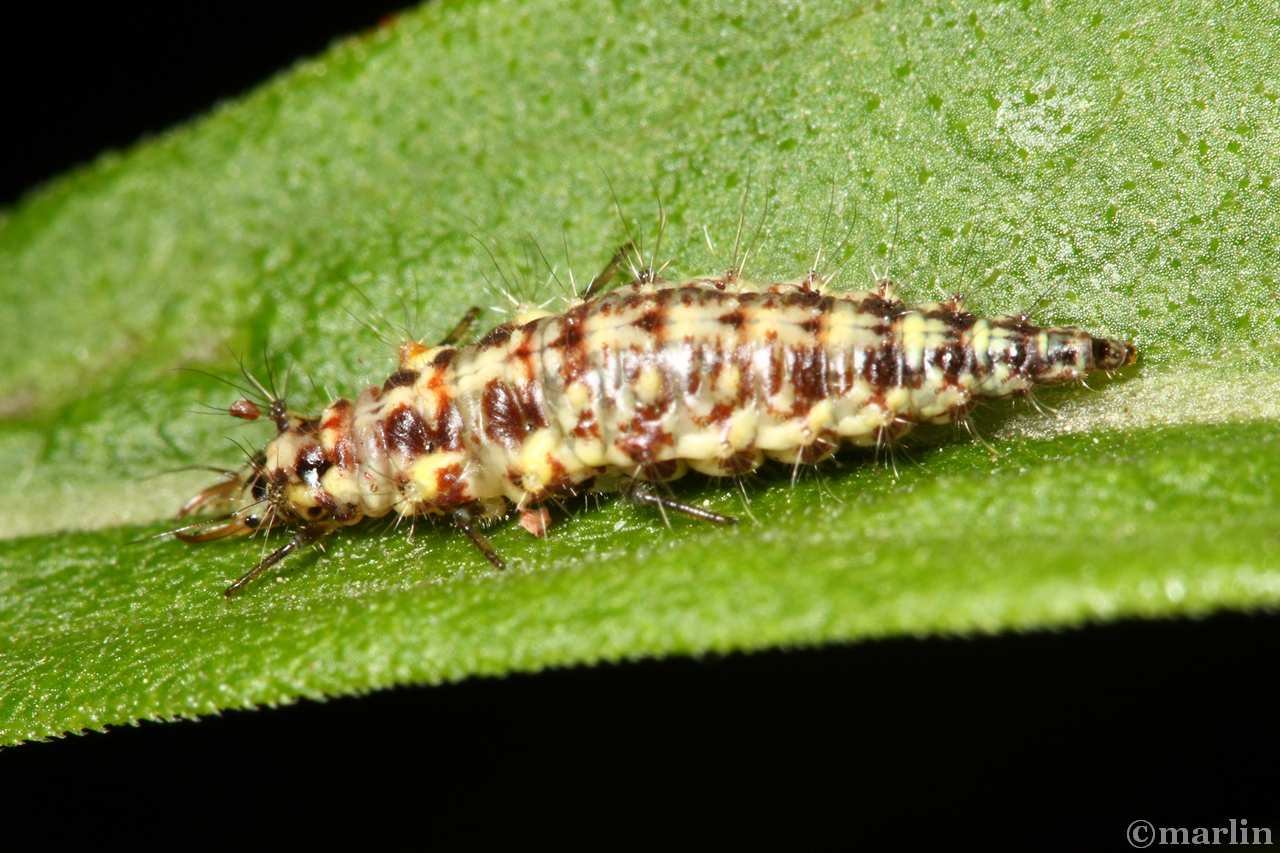 Green lacewing larva is commonly called “aphid lion” for its voracious appetite for those little pesky blobs of evil. These guys bite, too – they will bite fire out of you, and the welt can sting and itch for days afterward. I’d been bitten so many times before I figured it out!
Ladybugs, both adults and larvae, are well-known primarily as predators of aphids (plant lice), but they prey also on many other pests such as soft-scale insects, mealybugs, spider mites and eggs of the Colorado Potato Beetle and European Corn Borer. A few feed on plant and pollen mildews. One larva will eat about 400 medium-size aphids during its development to the pupal stage. An adult will eat about 300 medium-size aphids before it lays eggs. About three to ten aphids are eaten for each egg the beetle lays. More than 5,000 aphids may be eaten by a single adult in its lifetime. The lady beetle’s huge appetite and reproductive capacity often allow it to rapidly clean out its prey.
Beetles Index | Longhorns | Leaf Beetles | Soldier | Blister | Lady | Scarab
Tree Encyclopedia / North American Insects & Spiders is dedicated to providing family-friendly educational
resources for our friends around the world through large images and macro photographs of flora and fauna.
Online since 2002