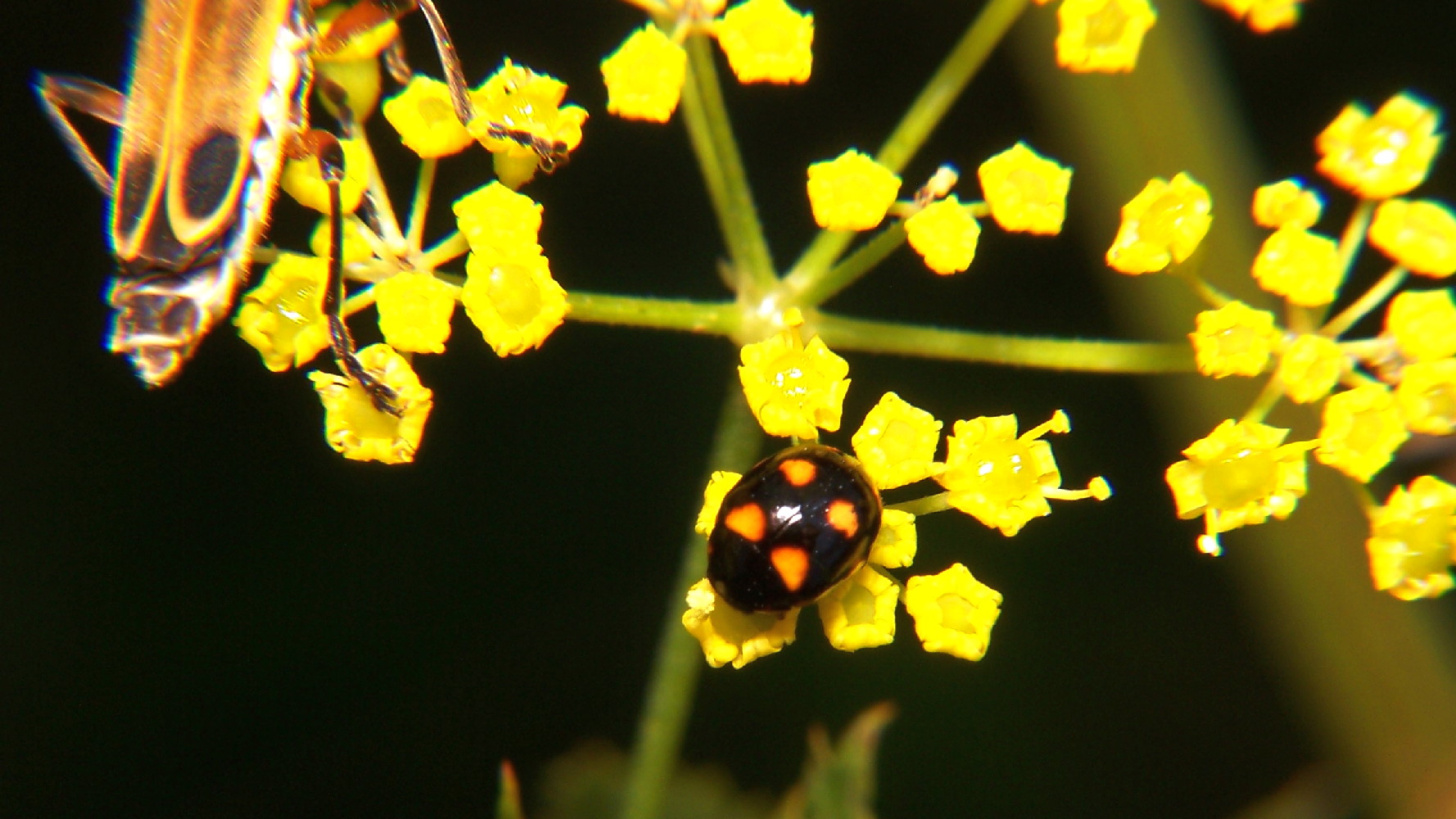
Orange-Spotted Lady Beetle – Brachiacantha ursina
Family Coccinellidae – Lady Beetles
Live adult ladybug photographed at DuPage County, Illinois. Size: 4mm
These are old photos – 2003. I don’t see this species anymore (2012). (That doesn’t mean it’s not there.)
“Adult beetles of the genus Brachiacantha (from the Greek “brachys” meaning short and “akantha” meaning thorn) are rounded to elongate oval and strongly convex. Their color is black with variable patterns of yellow to orange spots, some of which may become confluent.” – From PDF The Brachiacantha (Coleoptera: Coccinellidae) of Illinois by H. Wilson Montgomery, Jr. and Michael A. Goodrich.
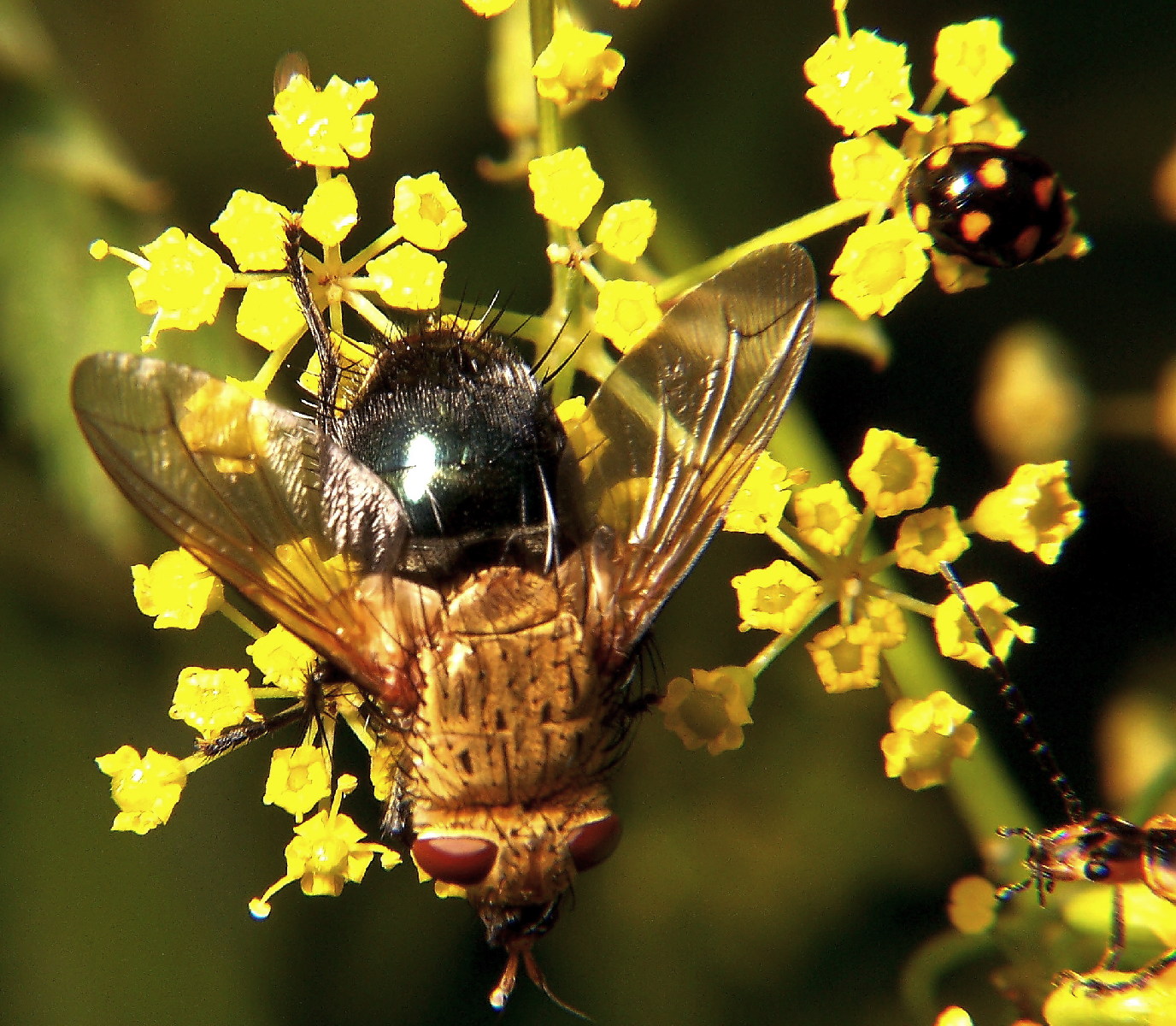
It’s a busy place in the weeds today! Archytas fly, soldier beetle, and our shy lady bug.
As insects go, ladybugs are a very beneficial group, being natural of aphids and other critters that damage plants by feeding on their sap. A single ladybug can consume vast quantities of aphids in its lifetime, perhaps as many as 5,000 or more. There is a brisk business in commercial ladybugs for aphid control, and some of the species found here in North America are actually “invasives” brought from Europe or Asia for such purpose.
Coccinella septempunctata, the seven-spotted ladybug, sometimes called ‘C-7′, is a medium-sized, orange beetle with seven black spots. It is a European species that was introduced into the US to aid in managing some aphid pests. Harmonia axyridis, the Multicolored Asian lady beetle, was introduced to North America many times, finally taking hold and becoming established in the 1980’s. This invasive has become far and away the most numerous of the Coccinellids here in the midwest, and they are becoming one of the most annoying insect pests, invading homes to overwinter, much as the box elder bug.
 Seven-spotted ladybug |
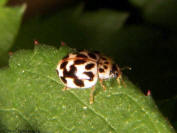 Mildew-eating ladybug |
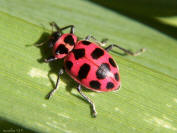 Pink spotted ladybug |
Beetles Index | Longhorns | Leaf Beetles | Soldier | Blister | Lady | Scarab
Tree Encyclopedia / North American Insects & Spiders is dedicated to providing family-friendly educational
resources for our friends around the world through large images and macro photographs of flora and fauna.
Online since 2002