Acorn Weevil – Curculio sp.
Family Curculionidae – Weevils
Live adult weevils photographed at Winfield Mounds Forest Preserve, DuPage County, Illinois, USA.
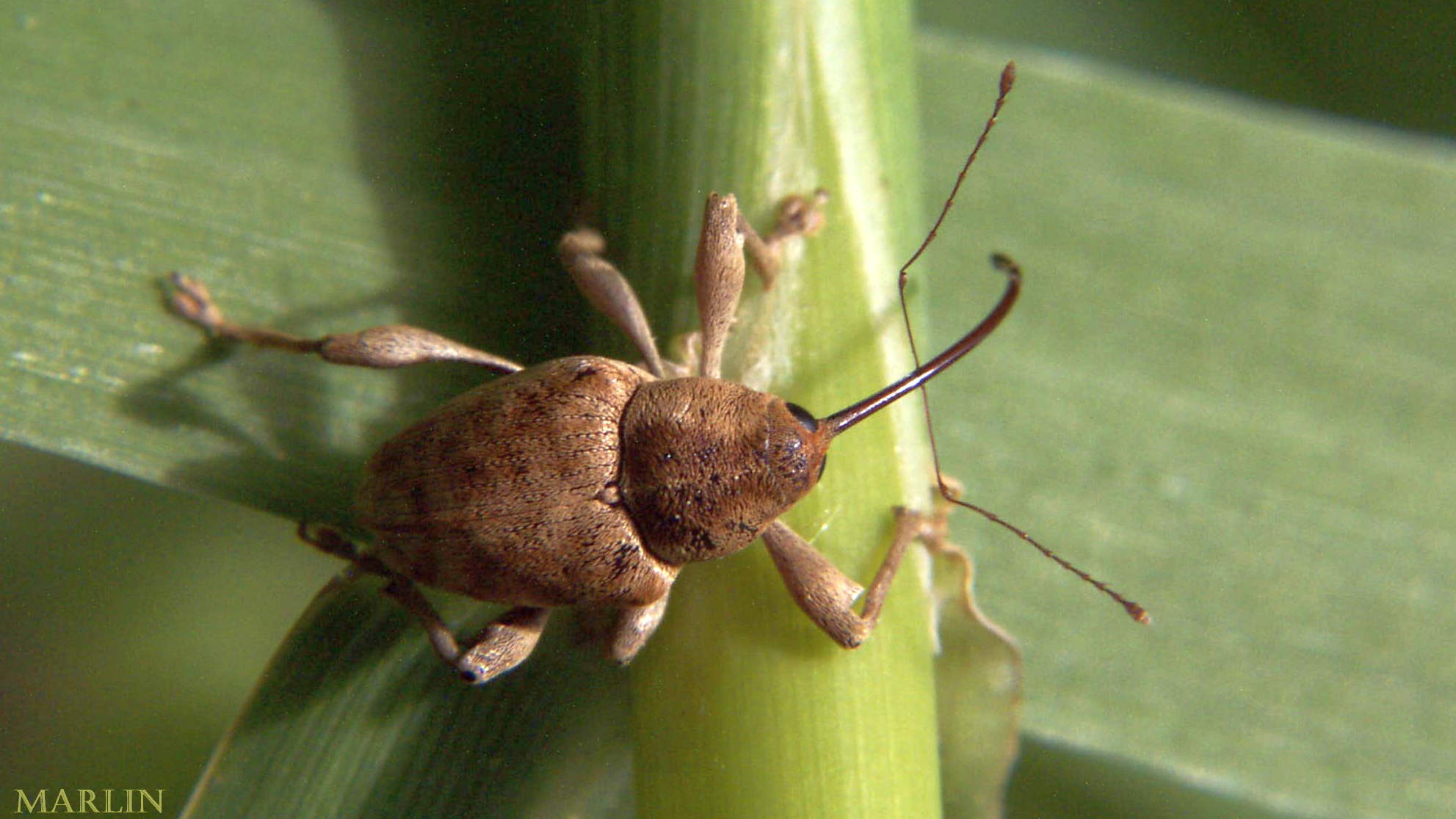
There are over 35,000 species of weevil worldwide, with more than 2,500 species in North America. All are strictly herbivorous. Weevil is the common name for beetles of the snout beetle family Curculionidae. They are usually small, hard-bodied insects. The mouthparts of snout beetles are modified into down-curved snouts, or beaks, adapted for boring into plants; the jaws are at the end of the snout. The bent antennae usually project from the middle of the snout. In the case of the acorn weevils, the snout can actually be longer than the body.
The acorn weevil, Curculio, is one of the weevils that infest hardwood nuts. These weevils attack both red and white oaks and are found wherever the hosts grow. These live adult weevils were found in a large grove of Butternut, Shagbark Hickories and Oak trees at the original site of the Native American burial mounds at Winfield, Illinois.
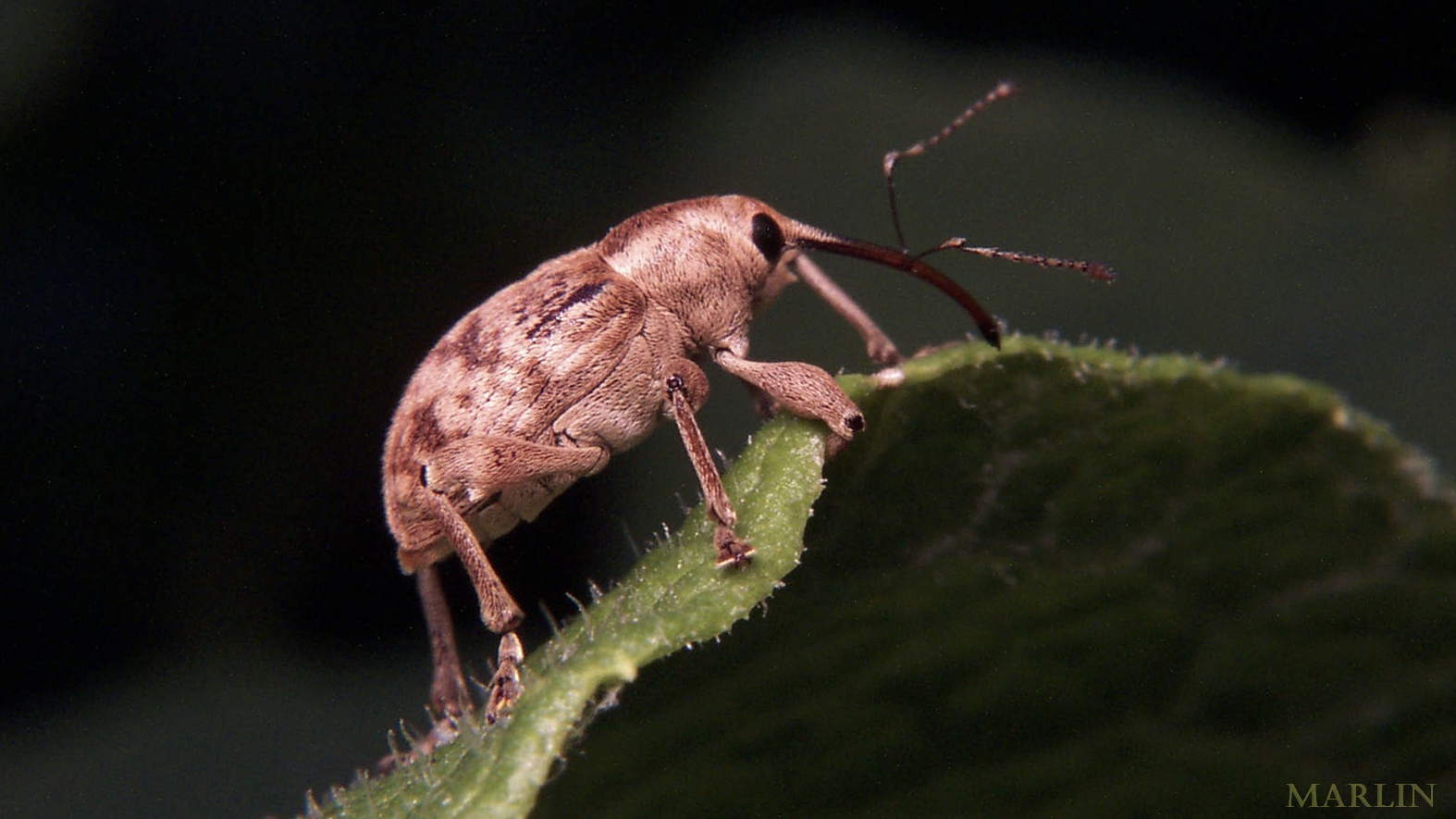
Acorn weevils have snouts with small, saw-like teeth at the very end. There are two types, or genera: the long-snouted acorn weevils (genus Curculio) and the short-snouted ones (genus Conotrachelus). The longsnouted acorn weevil’s snout may be equal to or greater than the length of its body. These specimens are, of course, the long-snouted variety.
Adults of both genera feed on acorns, but only the long snouted weevils can drill into the shells to feed and lay eggs inside the nutmeat. The tip of the snouth is actually a miniature saw, and the weevil places the tip against the shell, circling endlessly around the pivot point until the shell is pierced. Females place eggs inside the nut using a long ovipositor that descends from the abdomen.
Grub-like acorn weevil larvae hatch from eggs a few days after they are laid. There may be one to several acorn weevil larvae in each acorn. Larvae typically go through five growth stages, or instars. Each instar ends with the molt or shedding of the old skin, providing the larva with more room to grow. After a few weeks, larvae chew their way out of the acorn, burrow into the soil to pupate, and eventually emerge as adults the next year. Short-snouted larvae usually exit from a single hole that already exists in the acorn, but long-snouted larvae may chew their own exit hole through the acorn shell.
Like larvae of the short-snouted acorn weevil, acorn moth larvae can feed only on damaged or sprouting acorns. The grayish female acorn moths lay eggs in damaged acorns, sometimes in the emergence holes of acorn weevil larvae. It’s easy to distinguish the acorn moth larva, a caterpillar, from acorn weevil larvae. The acorn moth larva has three pairs of legs near the head and is generally longer than the legless, fat larvae of acorn weevils. Larvae of the acorn moth feed on acorns and probably on the fungi that often grow in damaged acorns.
Order Coleoptera: Beetles are the dominant form of life on earth: one of every five living species is a beetle. Coleoptera is the largest order in the animal kingdom, containing a third of all insect species. There are about 400,000 known species worldwide, ~30,000 of which live in North America. Beetles live in nearly every habitat, and for every kind of food, there’s probably a beetle species that eats it.
Beetles Main | Beetles Index | Longhorns | Leaf Beetles | Soldier | Blister | Lady | Scarab

Tree Encyclopedia / North American Insects & Spiders is dedicated to providing scientific and
educational resources for our users through use of large images and macro photographs of flora and fauna.