Jumping Spider – Habronattus decorus
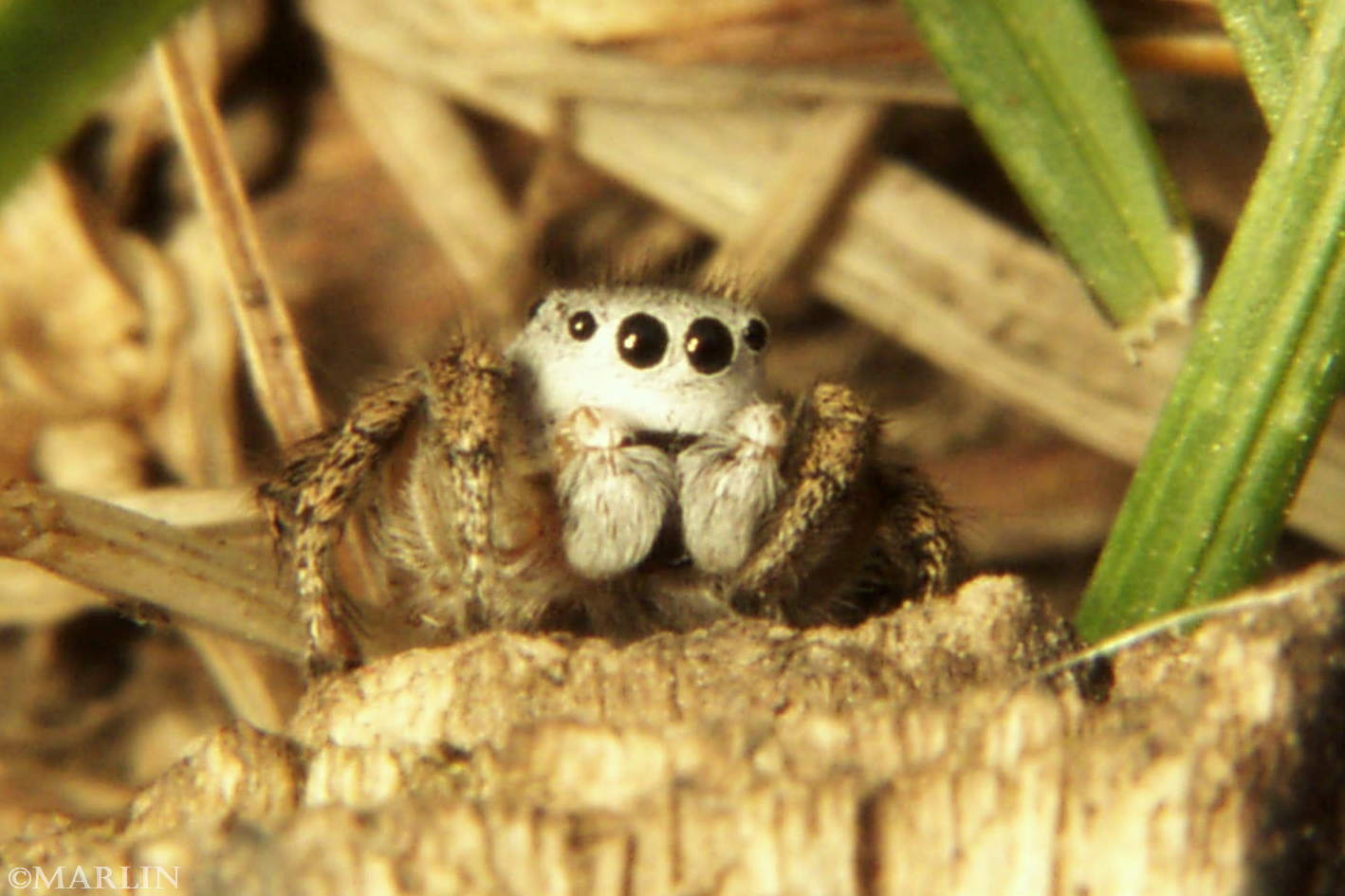
Genus Habronattus is a large diverse genus of medium-sized salticids (jumping spiders), primarily ground-dwellers and with highly ornamented males that perform complex courtship displays. Approximately 100 species are known, most from North America, the remainder in the neotropics. Most are ground-dwelling on open ground with sparse vegetation, especially on rocks, dry leaf litter and sand. The arid southwest has many species, but Florida also has many species, and others are known above the Arctic circle and east to maritime Canada.
Identification: The elbowed tegular apophysis (“conductor”) of the palp is distinctive. The third leg is much longer than the fourth, distinguishing these from other superficially similar genera such as Sitticus. [3]

Jumping spider’s anatomical points of interest:
- Esophagus passes straight through the brain
- Portion of gut overlies the eyes and brain inside carapace
- Heart extends from abdomen into cephalothorax
- Leg muscles attached inside the carapace operate legs like marionette puppets
- Jumping spider’s brain volume to body size proportionate to human, but visual processing region is larger
- Salticids move retinas inside the eyes to look in different directions, as the lenses are fixed in the carapace
Jumping spiders have excellent vision, among the highest acuity in any invertebrate. The eight eyes are grouped four on the face and four on top of the carapace. The two large, forward-facing eyes (AME) are tubular behind the lens, with a well-developed musculature, unique to salticids, that supports and moves the retina – the opposite arrangement of our own eyes. [1]
 Note: the function of the posterior medial eyes is unknown [4]
Spider musculature is also different from ours: in the spider, muscles operate from the inside to move external skeletal elements; our own skeletal muscles surround the elements they operate. But even these glaring differences are nothing compared to the jumping spider’s brain and digestive system – their esophagus passes right through the brain, and one branch of the gut (analogous to our intestines) actually sits on top of the eyes and brain. [1]
References
- Bugguide.net, Jumping Spider – Habronattus decorus
- Arthur V. Evans, National Wildlife Federation Field Guide to Insects .
- Maddison, Wayne. 1995. Salticidae. Jumping Spiders. Version 01 January 1995
- Jumping Spider Vision David Edwin Hill, licensed under the Creative Commons 3.0 Unported
Spiders Index | Spiders Main | Jumping Spiders | Orb Weavers | Nursery Web
Tree Encyclopedia / North American Insects & Spiders is dedicated to providing family-friendly educational
resources for our friends around the world through large images and macro photographs of flora and fauna.
Online since 2002