Smooth Sumac – Rhus glabra

Family: Anacardiaceae (Cashew Family)
Rhus glabra, commonly known as smooth sumac, is a deciduous shrub native to eastern North America. This plant has been used for medicinal, culinary, and ornamental purposes for centuries.
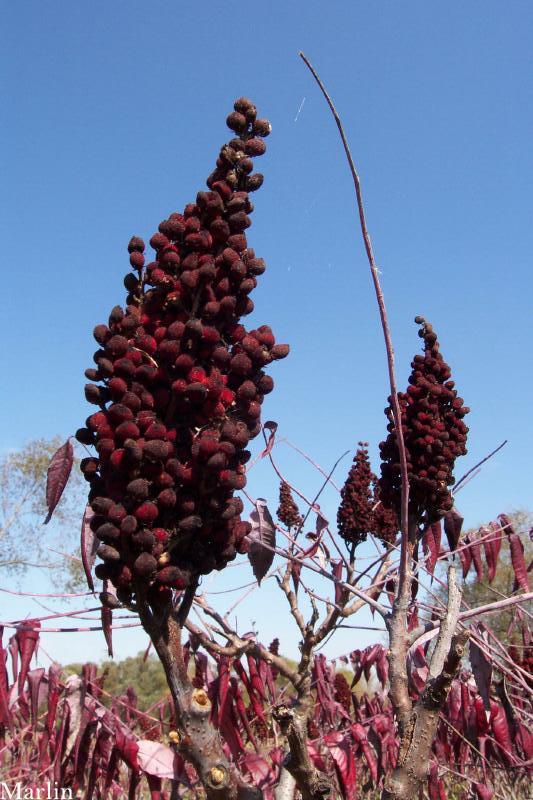
One of the easiest shrubs to identify throughout the year, smooth sumac has a spreading, open form growing up to 15 feet tall. Tiny green flowers in the spring are insignificant, but are later replaced by large cones of crimson berries that remain throughout the winter. Leaves are alternate, compound and turn a beautiful scarlet in the fall.
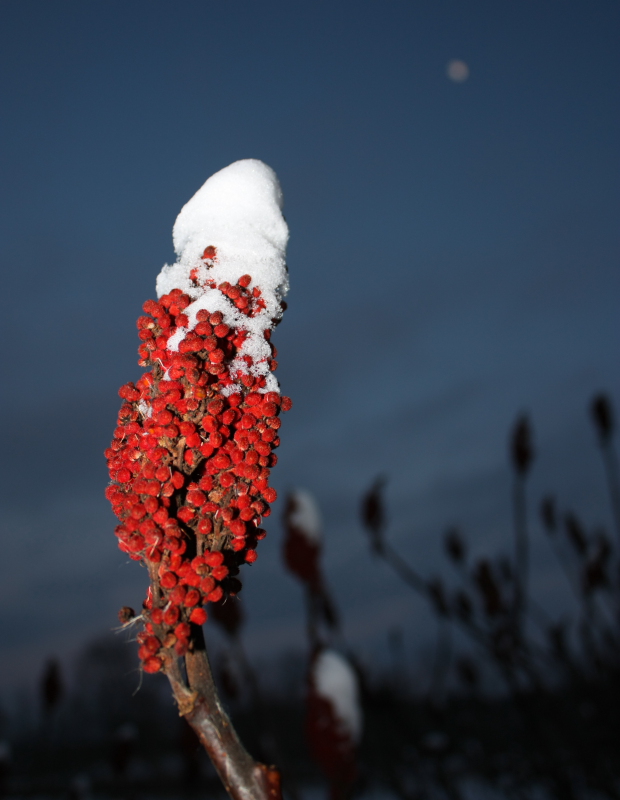
The fruit of Rhus glabra is particularly rich in phytochemicals, especially in flavonoids and organic acids.
This is the only shrub native to all 48 contiguous United States.
Family Rosaceae
Trees Index | Pine Family
Tree Encyclopedia / North American Insects & Spiders
Online since 2002