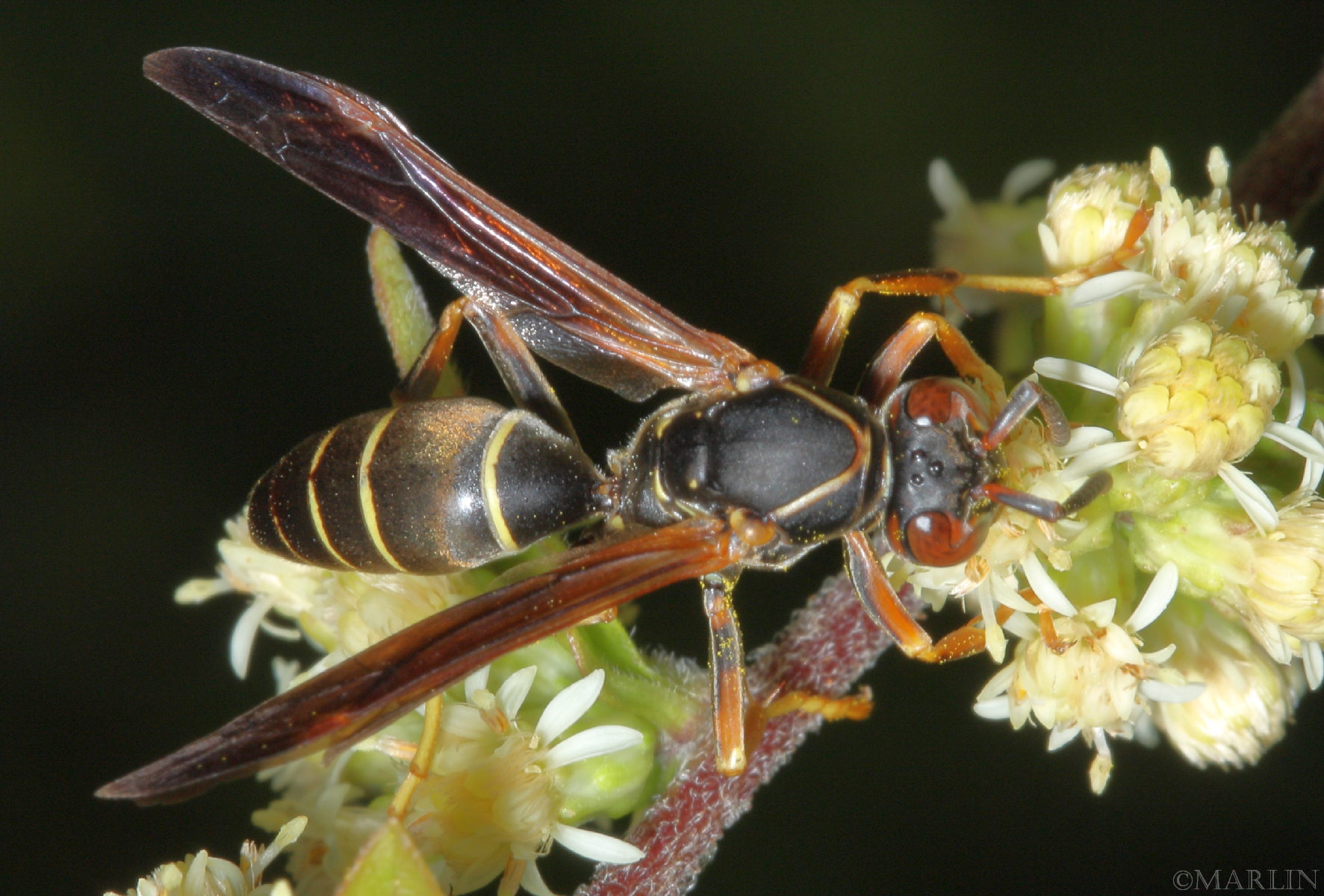
Paper Wasp - Polistes Fuscatus
Order Hymenoptera / Suborder Apocrita / Superfamily Vespoidea / Family Vespidae -- hornets, paper wasps, potter wasps, yellowjackets
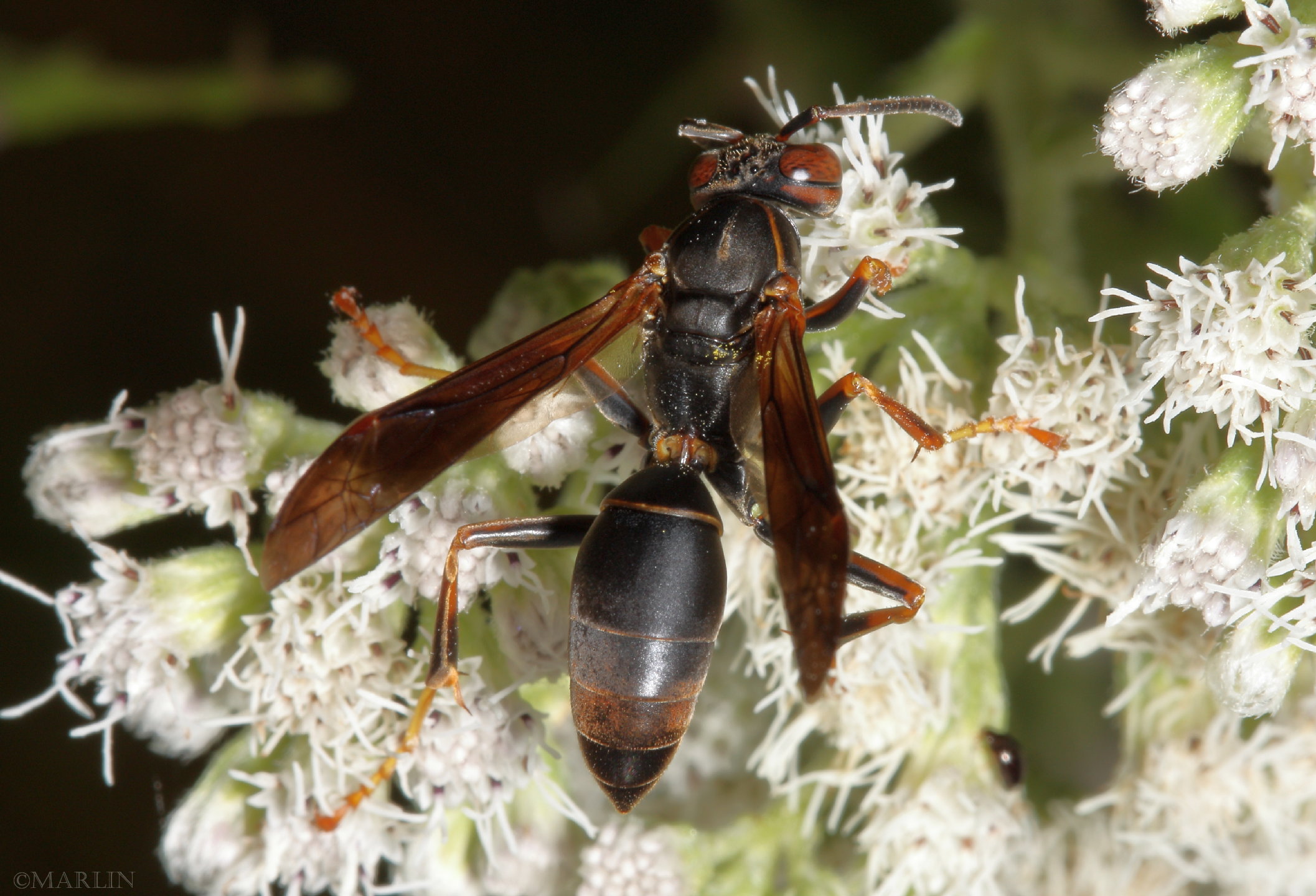
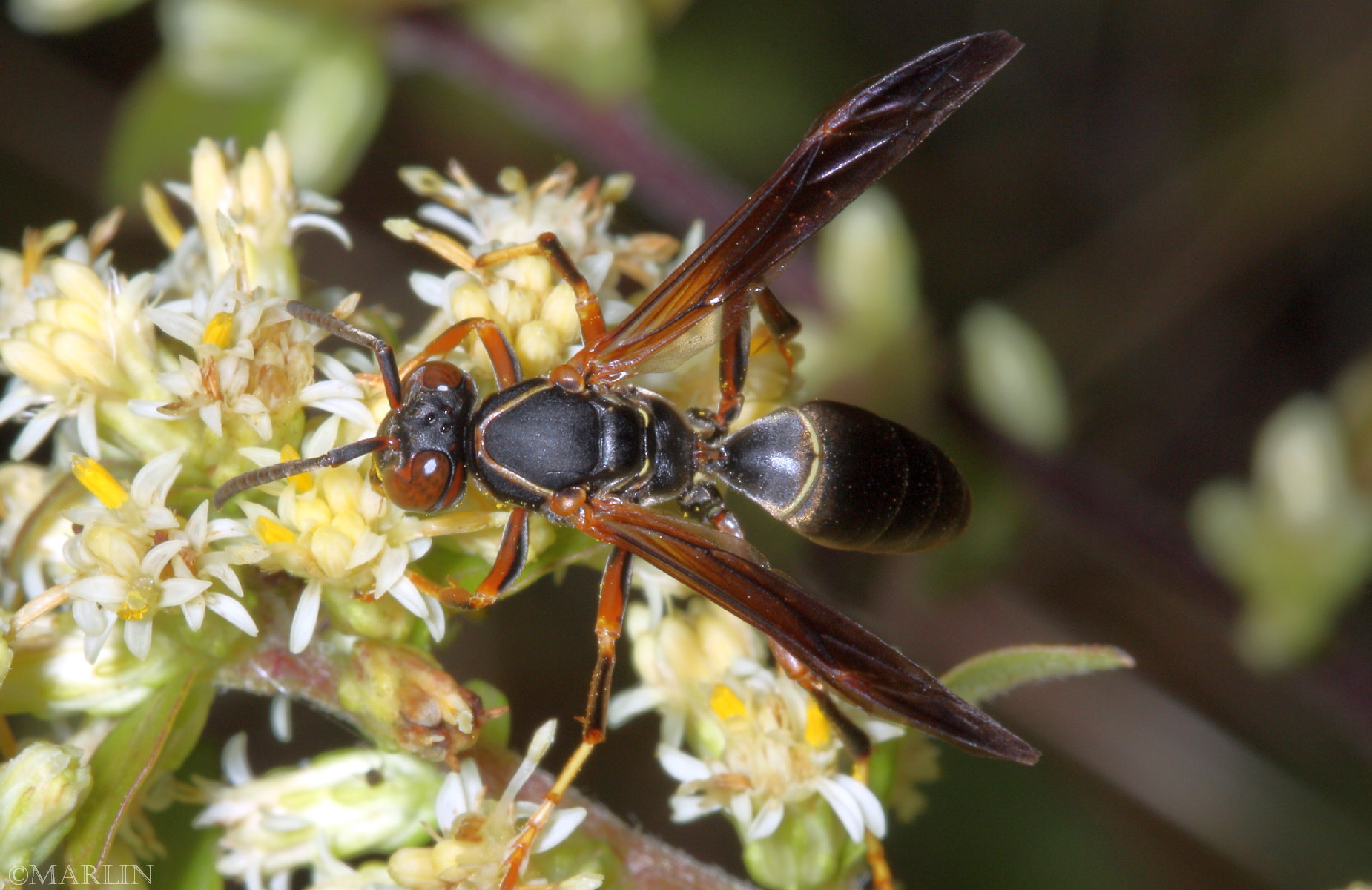
Live adult paper wasps photographed in the wild at Winfield, Illinois, USA.


Paper Wasp -  Polistes Fuscatus

Paper Wasp - Polistes Fuscatus
Paper Wasp, Polistes fuscatus

Wasps Versus Drug Smugglers
According to Discover Magazine, the antennae of common wasps are as sensitive to smell as the nose of drug-sniffing dogs used by the United States Drug Enforcement Agency (DEA). Scientists at the University of Georgia at Tifton have invented a gadget that takes advantage of the wasps ability to sniff out odors such as those emitted by corpses, drugs, bombs or toxins. It's called The Wasp Hound: a canister the size of an ordinary soda can, containing insects trained via classical conditioning to associate  a certain odor with food (a simple sugar syrup). When the wasps in the Wasp Hound canister detect the chemical odor they are trained for, they cluster around the source. A minicam inside detects the wasps' movements and transmits the results to a laptop computer.

The scientists point out the advantages of insect sniffers over our canine pals: The wasps are small and portable, and the training only takes 5 - 10 minutes. They don't eat much, and nobody gets attached to the darned things. They die after 48 hours, but they just insert a new batch and the device is again ready for action. They claim the wasps can be trained to recognize most chemicals.


The hexagonal structure of each cell is apparent in this paper wasp nest. P. dominula

Wasps that construct nests made of a papery material are commonly called paper wasps. The nests consist of a single upside-down layer of brood cells. There are 22 species of paper wasps in North America and about 700 species world-wide. Most are resident in the tropics of the western hemisphere. The two most common paper wasps in the American midwest are Polistes dominulus, an introduced species, and Polistes fuscatus, the native "golden paper wasp." It is my opinion, after 5 years of careful field work and observance, that dominulus is replacing fuscatus, at least in the environs of DuPage County, Illinois.

Most paper wasps measure about 2 cm (0.75 in) long and are black, brown, or reddish in color with yellow markings. Paper wasps will defend their nest if attacked. Adults forage for nectar, their source of energy, and for caterpillars to feed the larvae (young). They are natural enemies of many garden insect pests.
The nests of most species are suspended from a single, central stalk, or pedicle, and have the shape of an upside-down umbrella. Some tropical species make nests that hang in a vertical sheet of cells. Plant and wood fibers are collected by the wasps, mixed with saliva, and chewed into a paper-like material that is formed into the thin cells of the nest. The nests are constructed in protected places, such as under the eaves of buildings or in dense vegetation. The nest pictured here was constructed under the iron railing of a bridge over the DuPage River West Branch. Normally a colony of several to several dozen paper wasps inhabit the nest.
The colony is founded in early spring, soon after the queens emerge from hibernation. As the colony matures, males and the next year's queens are produced. These queens mate with males and are the only members of the colony to survive through winter. In late summer or fall, the founding queen, workers (sterile females), and males all die. The newly mated queens hibernate, in piles of wood, in vegetation, or in holes. The following spring they emerge and begin the cycle anew. A similar life cycle is found in bumble bees.
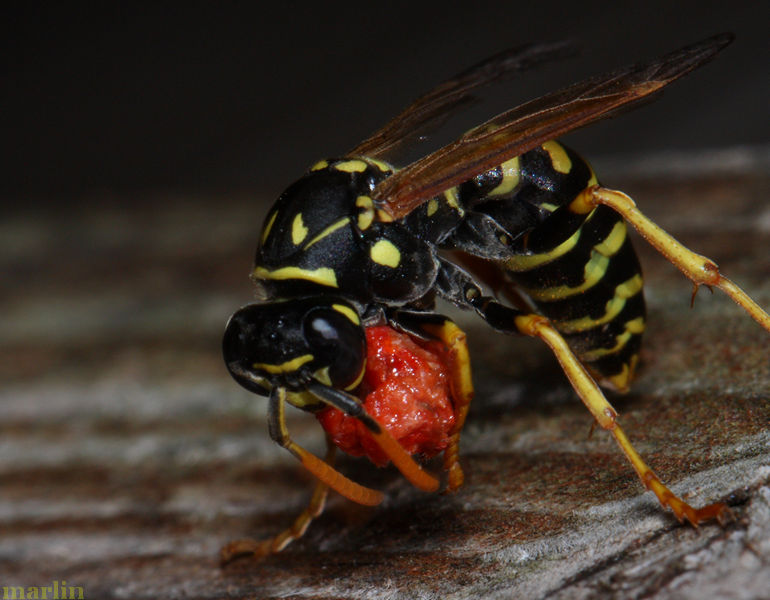
Paper Wasp - Polistes Fuscatus

In most temperate species of paper wasps, colonies are founded by one female who dominates the colony and lays most of the eggs. This female constructs the nest, lays eggs, forages, and raises the first generation of offspring. She then stops foraging, becomes the queen, and rules by dominating her offspring of workers. This is a classic dominance hierarchy with the queen maintaining control through aggressive interactions. Each individual in line maintains dominance over all others below her through confrontation and aggressive interactions. If the queen dies or is otherwise lost, the most aggressive worker takes over. This worker begins laying eggs and continues to dominate all below her. Since the workers have not mated, they can only lay unfertilized eggs, which develop into males, a typical trait in wasps.

Some queens that are unsuccessful at establishing their own nest may join another queen, submitting to her dominance and becoming a worker. Studies have shown that such individuals, called joiners, are most often sisters of the queen. Since this individual mated the previous fall, her eggs can develop into workers and she could become the next queen if the founding queen is lost. Occasionally a joiner dominates the founding queen and takes over the nest, a behavior known as usurpation. In such rare cases, the usurper becomes the queen and the previous queen becomes a worker.