Red Velvet Mite – Trombidium species
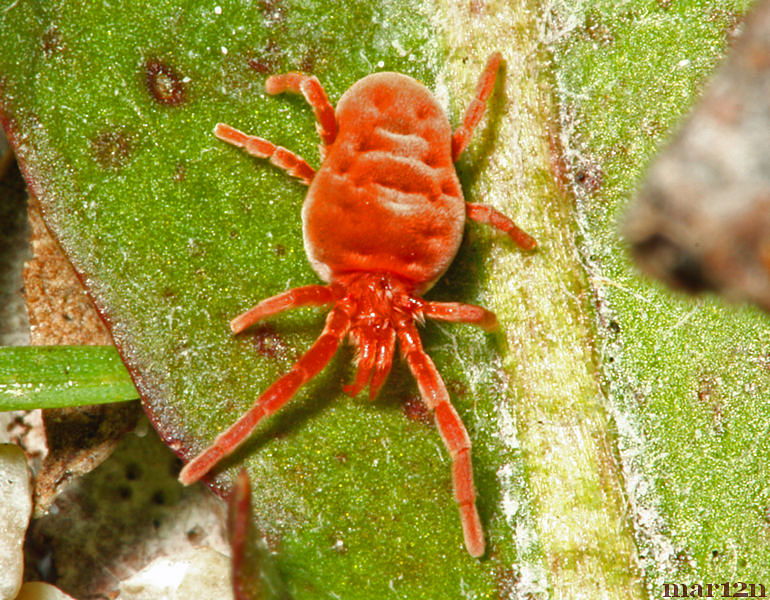
When I was a kid, I’d see these tiny red things crawling in the dirt and wonder, “What the hell are those things?” – but never investigated further. Now I know they are red velvet mites, with eight legs and chelicerae like spiders. These specimens are less than 1/8″ long including legs.
Trombidium is a genus of arachnids in the family Trombidiidae. Red velvet mites make their home in the litter layer of woodlands and forests, as well as ground litter communities nearly everywhere there is moist topsoil.
Red velvet mites do not bite or sting humans. However, they do wreak havoc on a variety of small insects, such as aphids, flies, and other mites. They are known to be voracious predators and can consume prey that is several times their own size.
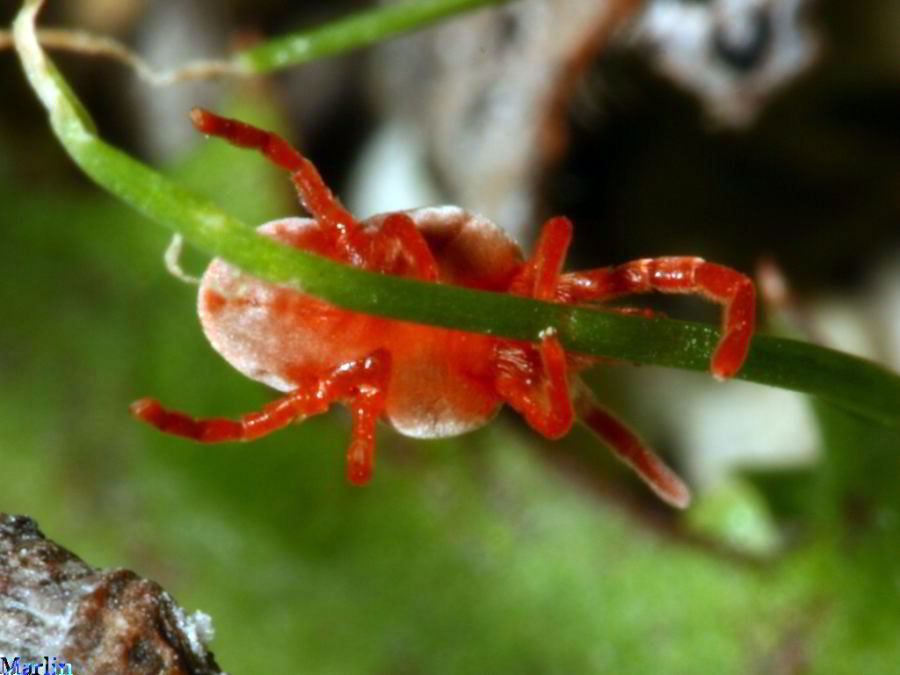 Like a big red balance-beam walker, here you can see the unusual 2-legs at each of four corners leg arrangement.
Red velvet mites are extremely important to the environment. These mites are part of a community of soil arthropods that is critical in terms of rates of decomposition in woodlands and in maintaining the structure of the entire ecosystem.
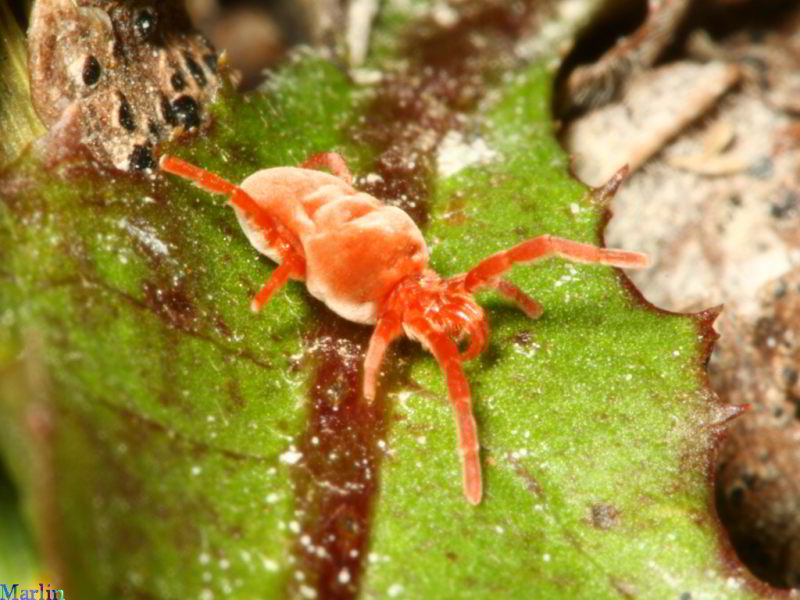
RVM live from one to several years, depending on the species. As larvae, they attach themselves to a variety of arthropods and feed parasitically.
“They will suck blood from a gnat or grasshopper, for instance, sometimes hitching a ride with several other mites. When red velvet mites become nymphs and then adults, they take to the soil to devour much smaller prey, including other mites and their eggs, the eggs of insects and snails, and primitive wingless insects.
Adult male mites release their sperm on small twigs or stalks. That ritual is followed by the male laying down an intricate silken trail to the sperm. Females spot these trails, then seek out the individual male. If he’s to her liking, she sits in the sperm. But if another male spots one of these sperm gardens, he’ll promptly destroy it and replace it with his own.” [1]
References
- Lori Rotenbeck, Chicago Wilderness Magazine, “Red Velvet Mite – Ruby Lord of the Love Garden”
Tree Encyclopedia / North American Insects & Spiders
Online since 2002