Chinquapin / Chinkapin Oak – Quercus muhlenbergii
Height: 40-50′ Spread: 40-50′ Habit/Form: Rounded Growth Rate: Slow Zone: 5-7
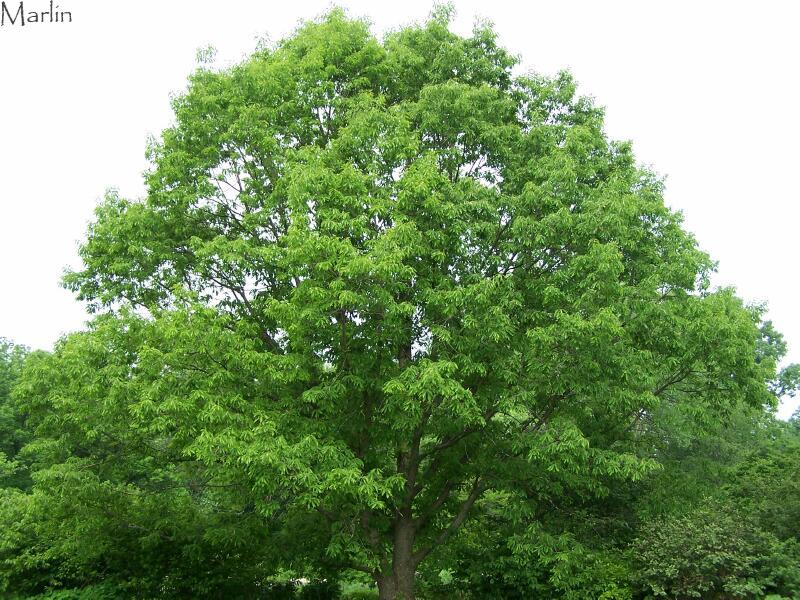
Chinquapin oak is easily grown in rich, loamy, well-drained soils in full sun. It’s one of the few oaks that tolerates alkaline soil and urban pollution, although young trees may be difficult to transplant and establish.
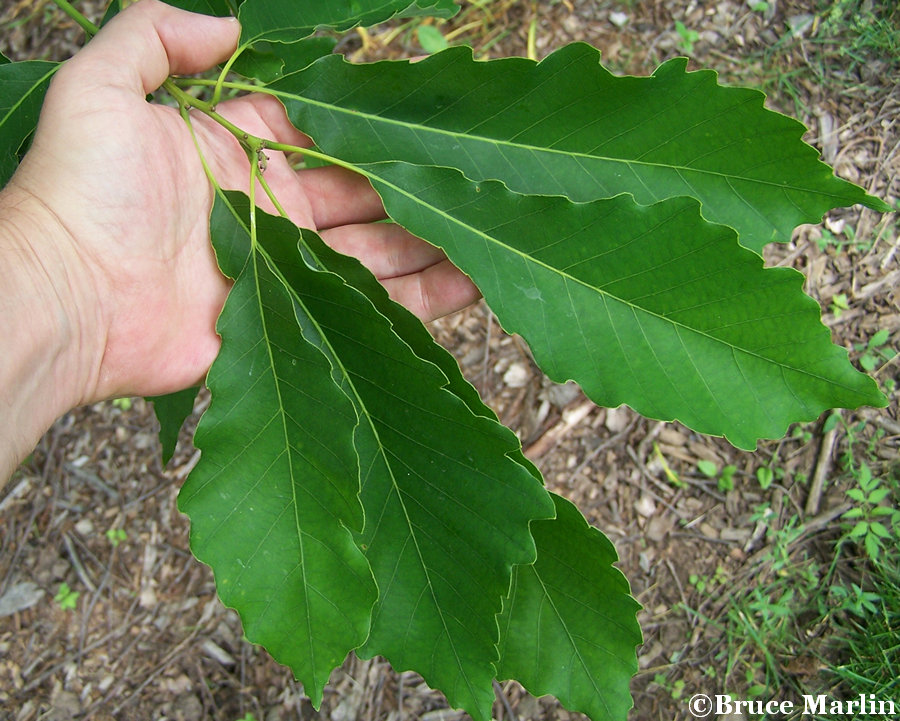
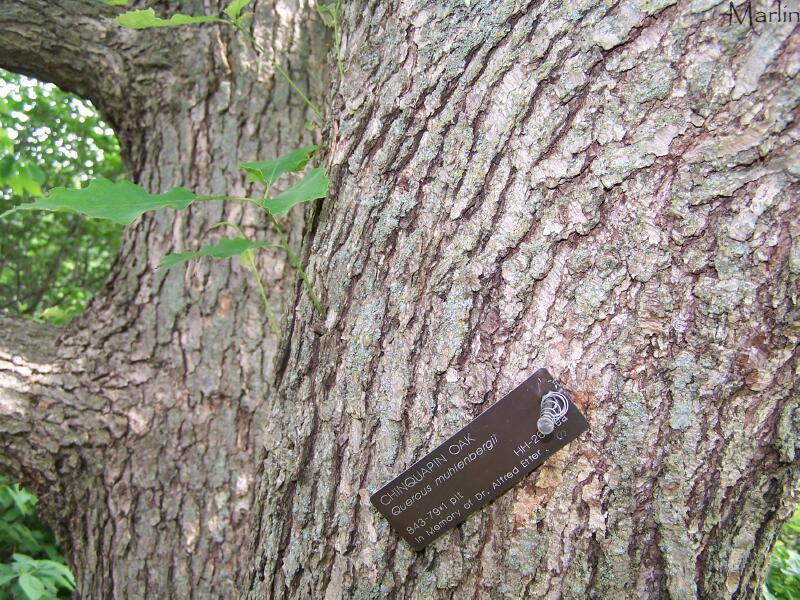
Ornamental Characteristics: Long, toothed leaves have a beautiful wavy margin and a whitish underside; showy, yellow fall color; branches grow mostly upright or horizontal and will not droop; bark is a bold, scaly gray. Acorns are one-half inches in length with a scaly cap. It may take 20 years to bear the first crop. Landscape uses: Shade tree, street and parking islands, large landscapes.
Chinkapin oak is sometimes called yellow chestnut oak, rock oak, or yellow oak. Its heavy wood makes excellent fuel. The acorns are sweet and are eaten by several kinds of animals and birds.
Chinkapin oak is rarely a predominant tree, but it grows in association with many other species, including white oak (Quercus alba), black oak (Q. uelutina), northern red oak (Q. rubra), scarlet oak (Q. coccinea), sugar maple (Acer saccharum), red maple (A. rubrum), hickories (Carya spp.), black cherry (Prunus serotina), cucumbertree (Magnolia acuminata), white ash (Fraxinus americana), American basswood (Tilia americana), black walnut (Juglans nigra), butternut (J. cinerea), and tulip-poplar (Liriodendron tulipifera).
Tree Encyclopedia
Explore over 3,000 large pictures of trees in more than 400 species. Our extensive catalog also contains the largest catalog of flowering fruit trees on the net – over 50 varieties. Find extensive descriptions and landscape planning information.
Birch | Oak | Walnut | Fruit Trees | Nut Trees