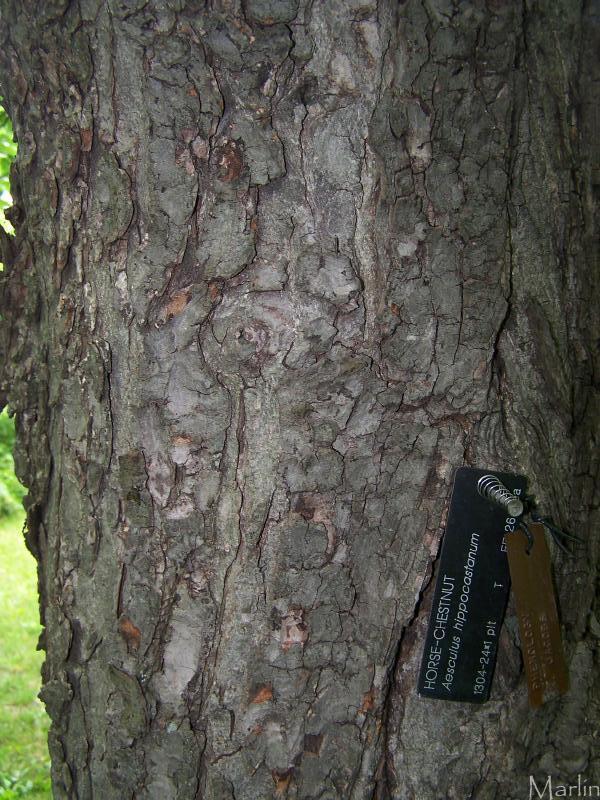
Horse Chestnut – Aesculus hippocastanum
Family Hippocastanaceae – Horse-Chestnuts & Buckeyes.
Native Range: Albania, northern Greece, and Bulgaria
Horse chestnuts thrive in any soil, including alkaline, and are common in parks and gardens as an often spectacular specimen planting. The horse chestnut is considered invasive in some locales.
Common Names: Hippocastanum, horse chestnut, bongay, konker-tree. Horse chestnut fruit contains an oil used for shining horse’s hooves and fetlocks; such is one explanation for the common name. [1]
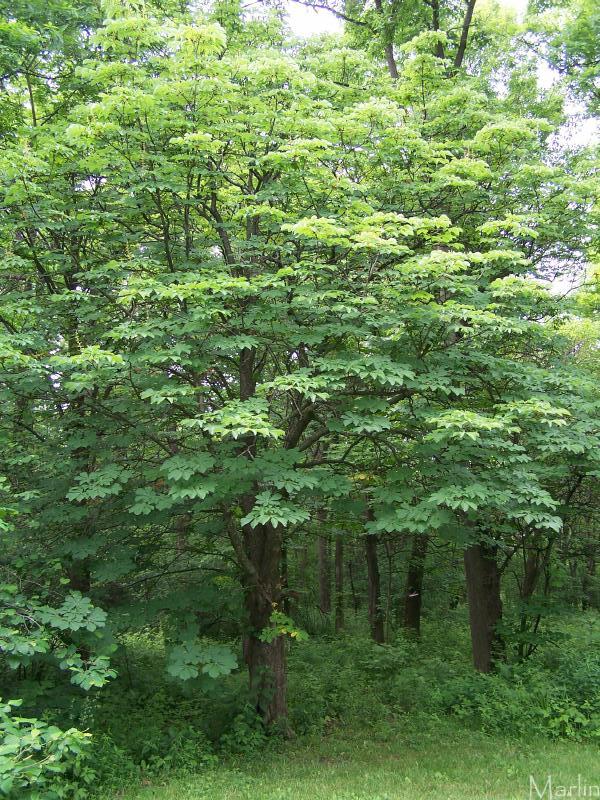
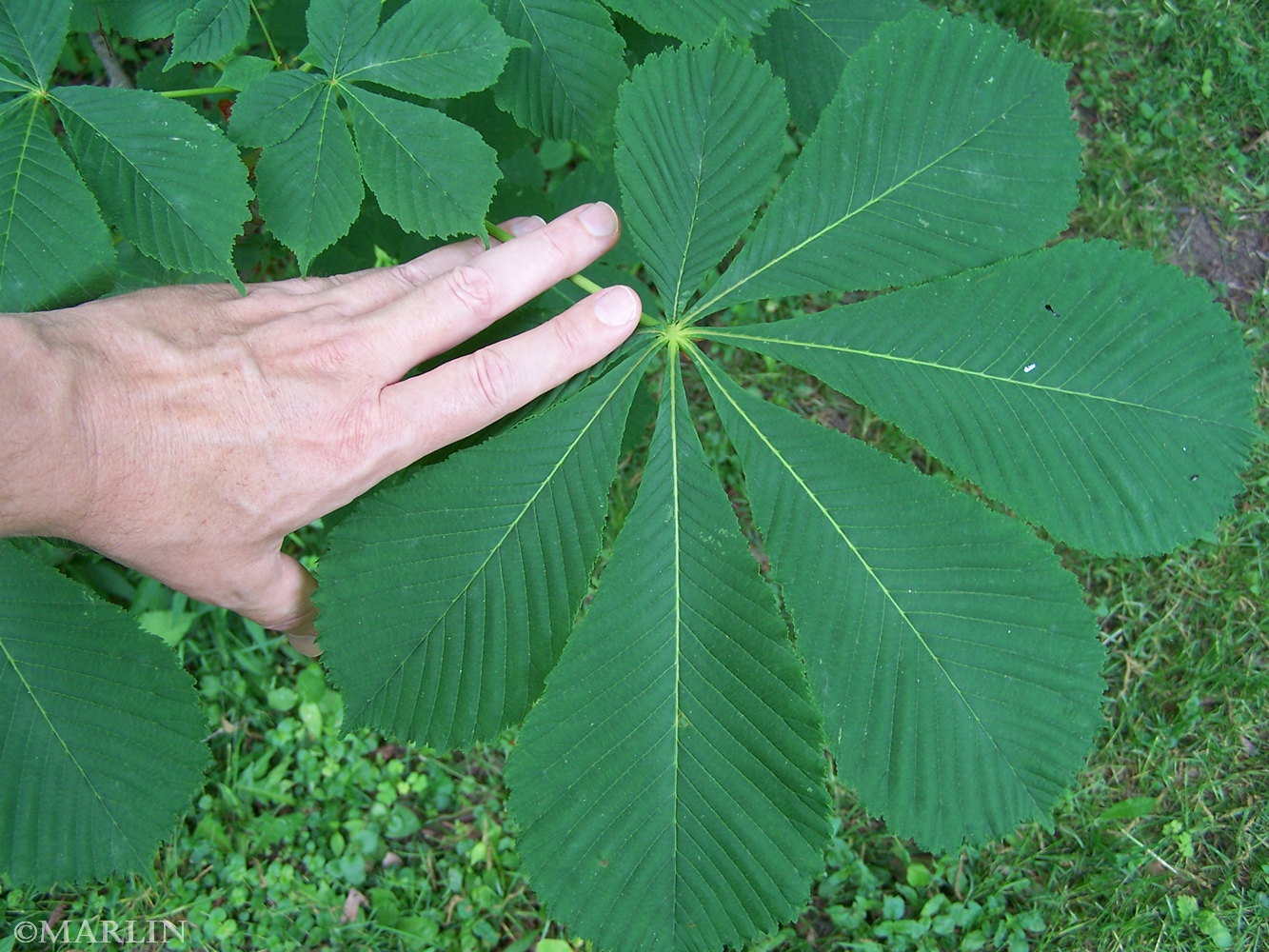
Description: Deciduous tree reaching 50 to 80 feet in height with a round or oblong crown. Large leaves are opposite, palmately divided with 5 leaflets. Large white flowers with yellow and red spots are produced in spring. Flowers are bisexual and have 5 white petals in large, terminal clusters. The fruit is a round, prickly, leathery capsule enclosing 1 to 3 smooth, chestnut brown seeds. Buds are large brown to nearly black and leaf-scars are large, shield-shaped or irregular.
Habitat: It prefers full sun and can grow in clay, loam, sand, acidic, alkaline, or well-drained soils.
Distribution: It is located from Maine in the Northeastern states to the Midwestern states and south to North and South Carolina. In addition, the National Park Service reports it invasive in GA, ME, OR, PA, and WI. It may be scattered in northern Kentucky.
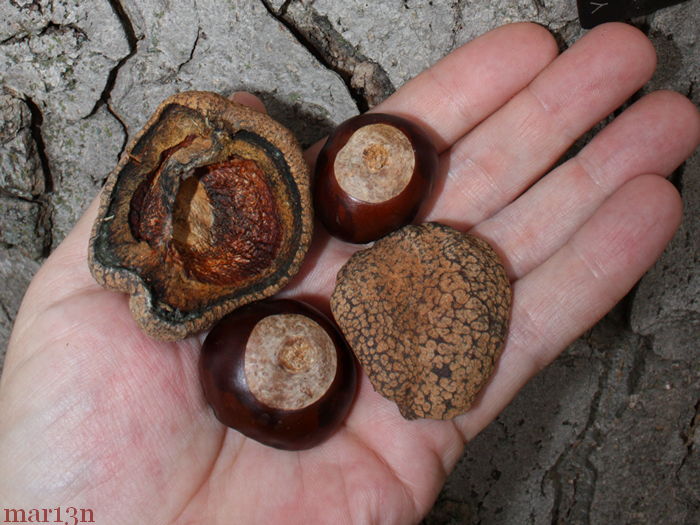
“Conkers” – seeds, or horse chestnuts
Ecological Impacts: This species is on the Mid-Atlantic Exotic Pest Plant Council list. It has been planted as an ornamental for the attractive large white flowers and has escaped intended plantings. The weak-wooded branches break easily. The large leaves, nuts and dropping twigs create litter. Once established, this species competes with native species for sunlight, moisture and nutrients.
Toxicity: Seeds and tea made from leaves and sprouts are highly toxic and can cause death.
Flowers are creamy-white with a red blotch, and are borne on an upright thyrse up to a foot tall in late spring. The fruit is a nearly spineless, egg-shaped yellow-green husk with usually 1 brown seed inside [3]. A truly spectacular specimen tree, suitable for formal gardens or wide lawns, Japanese horse-chestnut is tolerant of a wide range of soils.
Natural Enemies: various tussock moth, Japanese beetle, leaf blotch, powdery mildew, anthracnose, and leaf scorch.
References:
1. Japanese Horse-Chestnut, Morton Arboretum accession 555-83-1, photos by Bruce Marlin
2. John White and David F. More, The Illustrated Encyclopedia of Trees – Timber Press
3. Flora of China, Aesculus turbinata
Family Hippocastanaceae – Horse-Chestnuts & Buckeyes
Consisting of three genra a 15 species, this small family is sometimes lumped together with Aceraceae (maple) in family Sapindaceae. Many are native to Europe, Asia, and North, Central, and South America. By far the most familiar of this family (at least in America) is the Ohio Buckeye (Aesculus glabra).
Tree Encyclopedia | Tree Index | Fruit Trees