Fuji Cherry – Prunus incisa
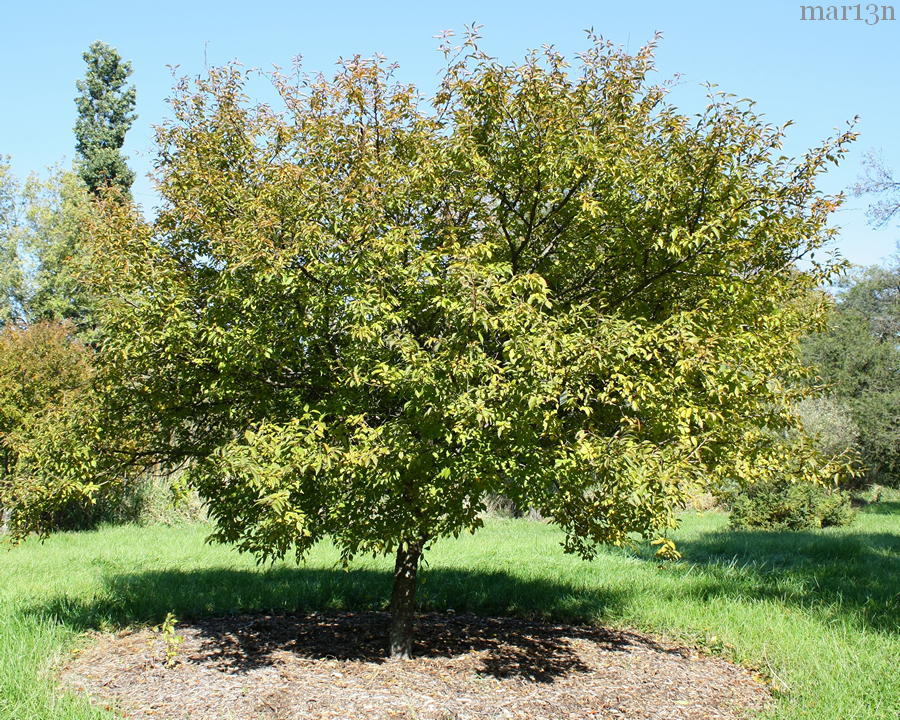
Fuji cherry grows to 20 ft. and spreads to 20 with an oval form
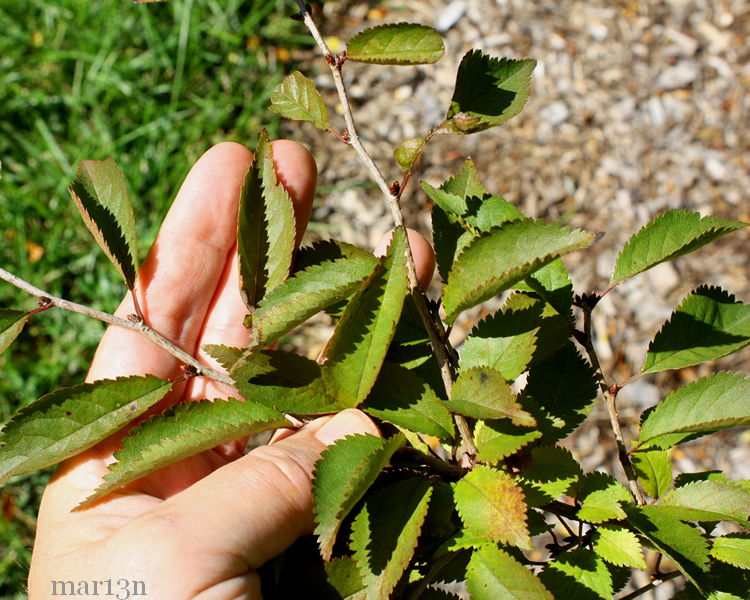
This cherry’s species epithet incisa comes from the deeply-incised edged of the leaflets. There are about 30 speacies in this genus, commonly called cherry or plum [2]. Fuji cherry is a small tree or shrub growing to 20 feet with a similar spread. This tree’s blossoms are said to be among the best of the best; I will try to catch this tree in bloom.
The United States is one of the leading producers of sweet cherries in the world. In 2000 the U.S. was second in overall production worldwide with 203,000 metric tons of cherries with Iran leading the way with 229,000 tons. Germany was fifth with 133,000 tons, behind Turkey and Italy. In the U.S. the majority of cherries are produced in the Pacific Coast states of Washington, Oregon and California with the greatest volume of production in the north. The five year average, ending in 2000 shows Washington averaging 86,000 metric tons, Oregon a distant second at 50,000 tons and California at 36,000 tons. The only other significant cherry production region in the United States is Michigan in the north-central region with 18,000 tons, most of which is grown for the processing market. [3]
Michael Landem, noted Master cabinetmaker of Boulder, Colorado gives his description of the properties of cherry wood: “Cherry is a pleasant wood to work, having a fragrant aroma when cut, an obedient nature and good working properties when properly dried. Blades must be kept sharp as the wood does have a tendency to burn under heavy milling. The wood is hard but relatively light, having a specific gravity of 0.63, a weight of 39 pounds per cubic foot.
Cherry can be highly figured or relatively plain, but the wood frequently displays fine optical properties. Sapwood is pale pinkish to creamy and the heartwood brown with gold and green hues running through it, showing distinctly darker bands of summer growth. It will darken with age and oxidation to a rich, reddish-brown.”
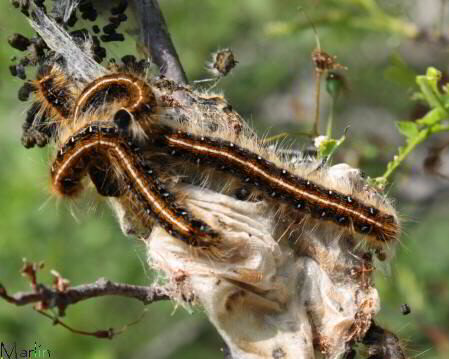 Plants in the Prunus genus are often infested with tent caterpillars
References
- Fuji Cherry, Morton Arboretum accessions 150-93*4 photos by Bruce Marlin
- Flora of China, ‘Prunus‘
- Wikipedia, “List of countries by cherry production”
Many of these plants are of vital economic importance, the fruit of which contain vitamins, acids, and sugars and can be used both raw and for making preserves, jam, jelly, candy, wine, brandy, cider and other beverages.