Black Cherry - Prunus serotina
Family: Rosaceae. Black cherry is the largest of all cherry trees native to North America. Found throughout the Eastern United States, it produces the only cherry wood with commercial value.
[Cirrus Home]  [Tree Encyclopedia] [Trees Alphabetic Table of Contents]  [Family Rosaceae Table of Contents]
 

Black Cherry Foliage
Unlike domestic cherries, black cherry flowers (about the middle of May) after the leaves appear.


Black cherry, the largest of the native cherries and the only one of commercial value, is found throughout the Eastern United States. It is also known as wild black cherry, rum cherry, and mountain black cherry. Large, high-quality trees suited for furniture wood or veneer are found in large numbers in a more restricted commercial range on the Allegheny Plateau of Pennsylvania, New York, and West Virginia. Smaller quantities of high-quality trees grow in scattered locations along the southern Appalachian Mountains and the upland areas of the Gulf Coastal Plain. Elsewhere, black cherry is often a small, poorly formed tree of relatively low commercial value, but important to wildlife for its fruit.
Black cherry and its varieties grow under a wide range of climatic conditions, and it tolerates a wide variety of soils, providing the summer months are cool and moist. In Canada, black cherry grows at sea level, while in the Appalachians it grows at 5,000 feet or more. It is thought black cherry will move its range northward and upward in response to man-made global warming.
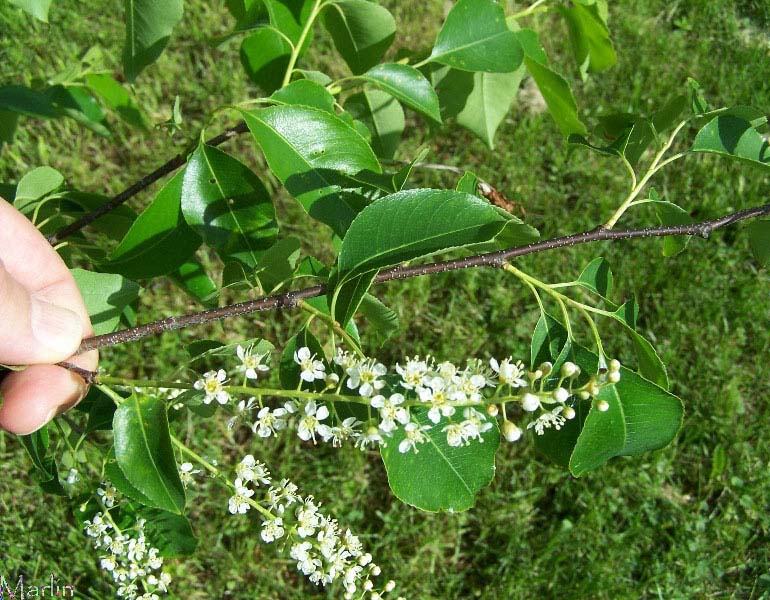
Flowering and Fruiting- Unlike domestic cherries, which flower before the leaves appear, black cherry flowers late in relation to leaf development. At the latitude of 41° to 42° N. in Pennsylvania and New York, black cherry flowers usually appear around May 15 to May 20. At that time, the leaves are nearly full-grown though still reddish in color (36). Flower development in other parts of the range varies with climate-from the end of March in Texas to the first week of June in Quebec, Canada.

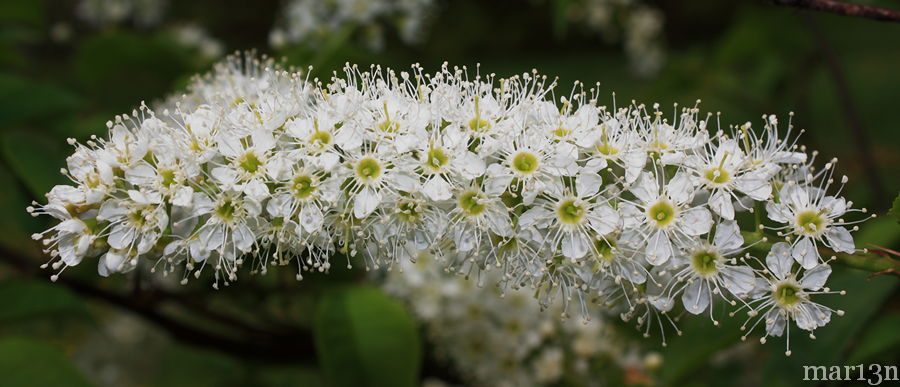
Black cherry flowers are white, solitary, and borne in umbel-like racemes. The flowers are perfect and are insect pollinated. Several species of flies, a flower beetle, and several species of bees, including the honey bee, work the blossoms for pollen and nectar. Self-pollination has been observed, but none of the self-pollinated flowers developed into viable seeds.

Late spring frosts may damage the flowers before they open, and frosts occasionally cause large numbers of newly set fruits to fall from the pedicels without maturing. Premature dropping of green fruits is also a problem in some years. The fruit is a one-seeded drupe about 10 min (0.38 in) in diameter with a bony stone or pit. The fruit is black when ripe.

The bulk of the seed crop falls to the ground in the vicinity of the parent tree. Circles of advance seedlings beneath scattered cherry trees and an absence of seedlings elsewhere are common occurrences in closed stands. As a result, the amount of black cherry advance reproduction is highly dependent on the number and distribution of seed-producing trees in the overstory. Songbirds distribute modest quantities of seeds in their droppings or by regurgitation. Omnivorous mammals, such as foxes and bears, also distribute seeds in their droppings. Bird and mammal distribution often accounts for a surprising abundance of advance cherry seedlings in stands lacking cherry seed producers.

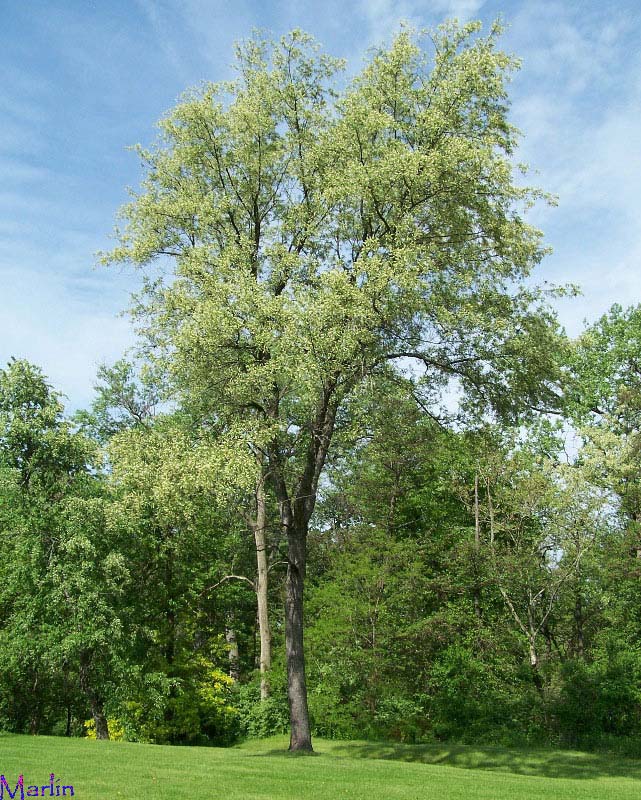
Black Cherry Tree
This black cherry is about 80 feet tall, flowering on May 26th, 2008, Near Chicago, Illinois.

The root system of black cherry is predominantly spreading and shallow, even in well-drained soils. Most roots are restricted to the upper 60 cm (24 in) of soil or less, with occasional sinker roots extending to depths of 90 to 120 cm (36 to 48 in). On wet sites, the tendency toward shallow rooting is especially pronounced. Because of this tendency to grow taller than associated species in mixed stands, cherry is vulnerable to windthrow, especially on poorly drained soils and at older ages.

The most important defoliating insects attacking black cherry include the eastern tent caterpillar (Malacosoma americanum) and the cherry scallop shell moth (Hydria prunivorata). Infestations of these insects are sporadically heavy, with some apparent growth loss and occasional mortality if heavy defoliations occur several years in a row.


Attacks by numerous species of insects cause gum defects in black cherry, resulting in reduced timber quality. Gum spots in the wood are often associated with the Agromyzid cambium miner (Phytobia pruni), the peach bark beetle (Phloeotribus liminaris), and by the lesser peachtree borer (Synathedon pictipes). A wide variety of insects can cause injury to terminal shoots of black cherry seedlings and saplings, resulting in stem deformity. Archips spp. and Contarinia cerasiserotinae are among the more important.

The most common disease is cherry leaf spot caused by Coccomyces lutescens. Large numbers of black cherry seedlings are sometimes weakened or killed by this disease. Repeated attacks reduce the vigor of larger trees. Most other foliage diseases cause little damage.

Black knot, a native disease caused by the fungus Apiosporina morbosa is common on black cherry. It causes elongated rough black swellings several times the diameter of the normal stem. Small twigs may be killed within a year after infection. Large cankerous swellings, a foot or more in length, may occur on the trunks of larger trees, and where several such lesions are scattered along the bole, the tree is worthless for lumber. Cytospora leucostoma is the cause of a canker disease responsible for widespread branch mortality of black cherry in Pennsylvania. Common infection courts are decaying fruit racemes and bark fissures caused by excessive gum production following passage of the larvae of Phytobia pruni, a cambium mining insect.

Black Cherry Flowers
Black cherry flowers are white, solitary, and borne in umbel-like racemes. The flowers are perfect and are insect pollinated. I think they stink.

Several basidiomycete fungi that cause root and butt rot of living black cherry trees include Armillaria mellea, Coniophora cerebella, Polyporus berkeleyi, and Tyromyces spraguei. Many other fungi cause decay of the main trunk; these include Fomes fomentarius, Fomitopsis pinicola, Poria prunicola. P. mutans, and Laetiporus sulphureus. Damage caused by glaze storms exposes black cherry to infection by top-rot fungi.

Porcupines girdle and kill black cherry trees and also consume bark, thereby providing entry points for fungi. Meadow mice and meadow voles girdle the stem near the ground. Such damage where grass or other herbaceous cover provides suitable habitat for the mice is probably one of the major causes of planting failure in unregenerated clearcuts and old fields.
White-tailed deer, rabbits, and hare feed on black cherry seedlings. In parts of Pennsylvania, deer browsing is the most serious problem of black cherry.

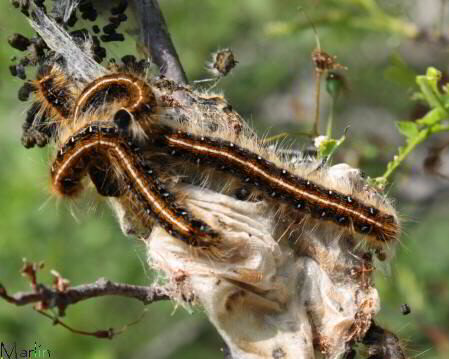
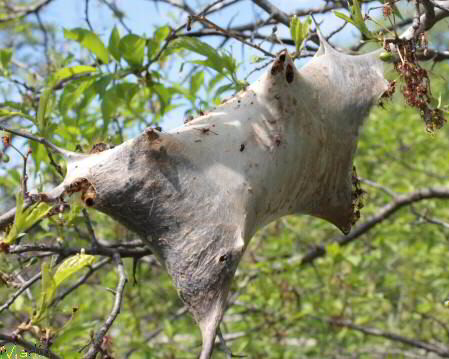
tent caterpillar
Black cherry is often infested with tent caterpillars in springtime.

Special Uses
Black cherry fruits are an important source of mast for many nongame birds, squirrel, deer, turkey, mice and moles, and other wildlife. The leaves, twigs, and bark of black cherry contain cyanide in bound form as the cyanogenic glycoside, prunasin. During foliage wilting, cyanide is released and domestic livestock that eat wilted foliage may get sick or die. Deer eat unwilted foliage without harm.

The bark has medicinal properties. In the southern Appalachians, bark is stripped from young black cherries for use in cough medicines, tonics, and sedatives (36,39). The fruit is used for making jelly and wine. Appalachian pioneers sometimes flavored their rum or brandy with the fruit to make a drink called cherry bounce. To this, the species owes one of its names, rum cherry.


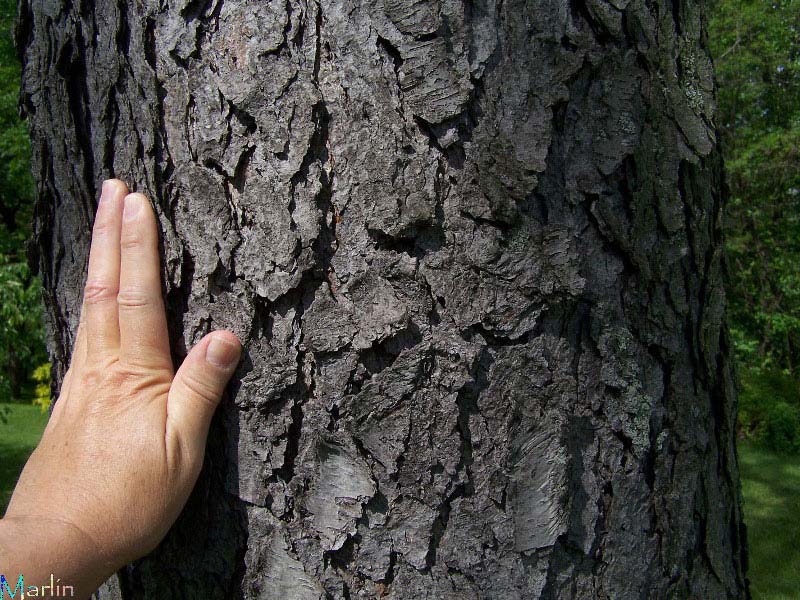
Black Cherry Bark

References
  1. U.S. Forest Service, North Eastern Area. David A. Marquis, Prunus serotina Ehrh. Black Cherry.
  2. NATIONAL AUDUBON SOCIETY, National Audubon Society Field Guide to North American Trees--E: Eastern Region, Chanticleer Press Ed (Knopf, 1980).
              
 
       web      www.cirrusimage.com

[Cirrus Home]    [Butterflies]    [Bugs]    [Beetles]    [Mantids]    [Spiders]    [Bees & Wasps]    [Dragon & Damselflies]    [Moths]   [Wildflowers]
[Fungi & Mushrooms]    [Flies]   [Butterflies of the World]  [Trees of North America]  [Cicadas & Grasshoppers]   [Ticks & Mites] 

© Red Planet Inc.