Bitternut Hickory – Carya cordiformis
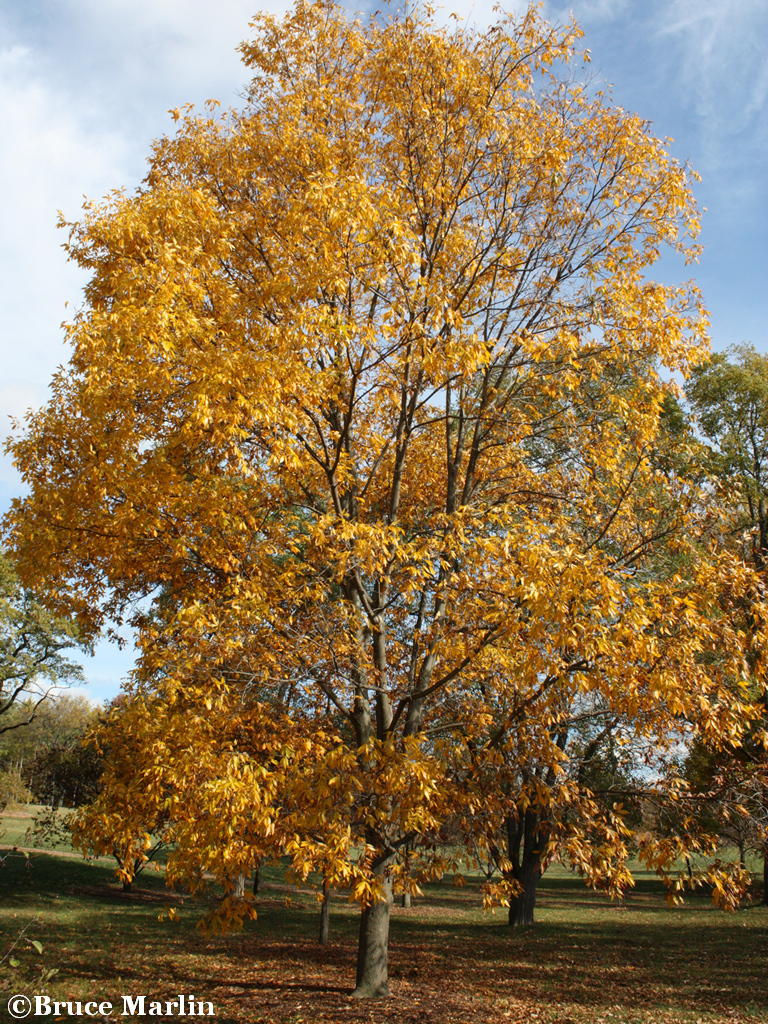
Bitternut hickory is probably the most abundant and most uniformly distributed of all the hickories. It grows throughout the eastern United States from southwestern New Hampshire, Vermont, Maine, and southern Quebec; west to southern Ontario, central Michigan, and northern Minnesota; south to eastern Texas; and east to northwestern Florida and Georgia. It is most common, however, from southern New England west to Iowa and from southern Michigan south to Kentucky.
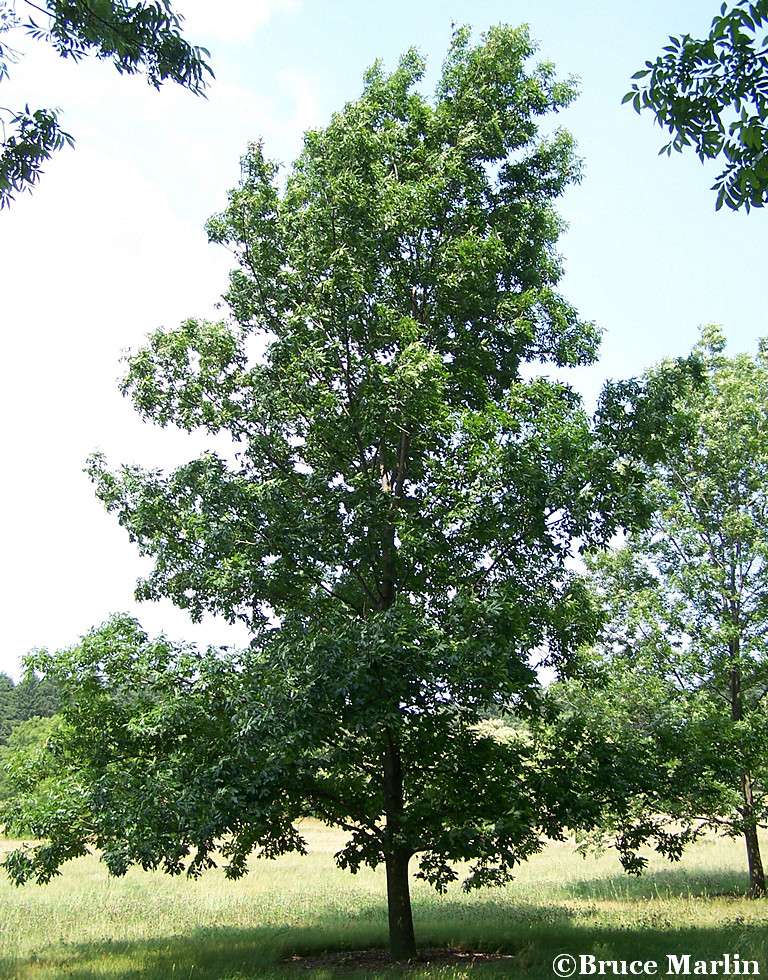
This Bitternut Hickory was started from seed 25 years ago
Bitternut hickory grows in moist mountain valleys along streambanks and in swamps. although it is usually found on wet bottom lands, it grows on dry sites and also grows well on poor soils low in nutrients. In the northern part of its range, bitternut hickory is found on a variety of sites. It grows on rich, loamy, gravelly soil in low wet woods, and along the borders of streams in Michigan, but it is also found on dry uplands. In the southern part of its range, bitternut is more restricted to moist sites.
Bitternut hickory develops a dense root system with a pronounced taproot. It is windfirm and can be transplanted more successfully than any other hickory species. Saplings are easily damaged by fire, and older trees also are susceptible to fire damage because of the low insulating capacity of the hard bark.
Nuts of all hickory species are susceptible to attack by the hickory nut weevil (Curculio caryae). Another weevil (Conotrachelus aratus) attacks young shoots and leaf petioles. The Curculio species are the most damaging, often destroying 65 percent of the hickory nut crop.
Bitternut is used for lumber and pulpwood. Pecan hickories such as bitternut are not equal to true hickories in strength, hardness, or toughness. Hickory species are most desirable for charcoal and fuelwood; pecan hickories are less desirable than the true hickories. Bitternut hickory ranks third in heating value among hickories; it burns with an intense flame and leaves little ash. Because bitternut hickory wood is hard and durable, it is used for furniture, paneling, dowels, tool handles, and ladders. It is a choice fuel for smoking meats.
Bitternut hickory seeds are eaten by wildlife but are of little value for human consumption because of their high tannin content, and extreme bitterness and astringency. Early settlers used oil extracted from the nuts for oil lamps. They also believed the oil was valuable as a cure for rheumatism. Bitternut hickory is desirable as an ornamental or shade tree, and the dense root system provides good soil stability. –USDA Forest Service Handbook, Silvics of Forest Trees of the United States

Family Juglandaceae – Nut Trees – Walnut, Hickory, Butternut, Pecan
The Walnut family is a large group of deciduous, aromatic trees including the commercially important nut-producing trees. The Persian walnut (Juglans regia) is one of the major nut crops of the world. Tree Encyclopedia | Tree Index | Juglandaceae Index