
Giant Arborvitae – Thuja plicata
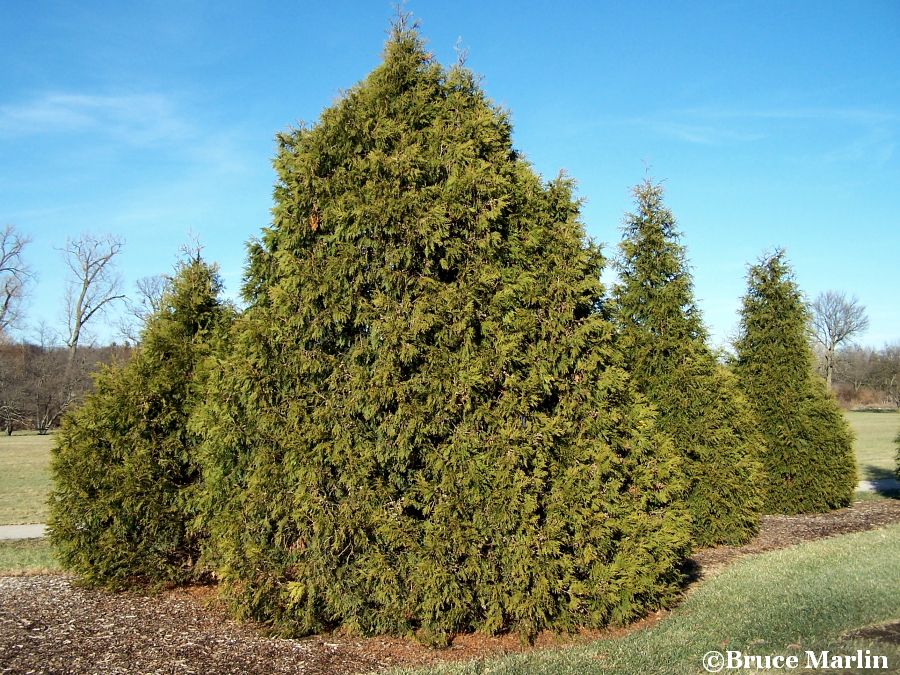 Elegant Giant Arborvitae Thuja plicata ‘Elegantissima’
These outstanding specimens reside at the Morton Arboretum, Lisle Illinois
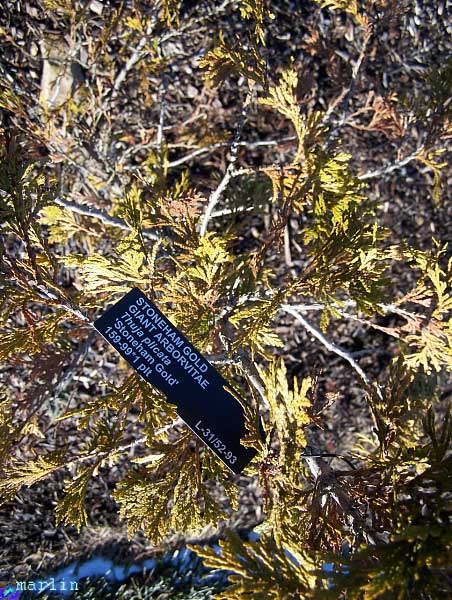 Giant Arborvitae ‘Stoneham Gold’ |
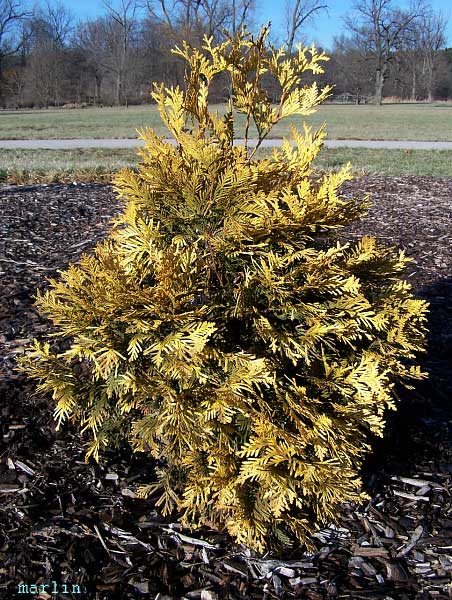 ‘Stoneham Gold’ |
Stoneham Gold (Western Red) Cedar or Arborvitae
-
Conifer, evergreen tree, dwarf form, to 7 ft (2.1 m) tall, compact, upright, bushy, prominent branch tips are golden-yellow or bronze-yellow.
-
Sun to partial shade.
-
Hardy to USDA Zone 7
-
Developed by W.H. Rogers & Son, Southampton, England. Named in 1948.
Thuja species are used as food plants by the larvae of some Lepidoptera species including Autumnal Moth, The Engrailed and Juniper Pug. The foliage is also readily eaten by deer, which where deer population density is high can adversely affect the growth of young trees.
Arborvitae wood is light, soft and aromatic. It can be easily split and resists decay. The wood has been used for many applications from making chests that repel moths to shingles. Thuja poles are also often used to make fence posts and rails. The wood of Thuja plicata is commonly used for guitar soundboards. The foliage of thujas is rich in Vitamin C, and was used by Native Americans and early European explorers as a cure for scurvy. –adapted from Wikipedia
There are thirty (many monotypic) genera and 142 species in the family Cupressaceae, now widely regarded as including the Taxodiaceae, previously treated as a family. The Cupressaceae are found in the fossil record as far back as the Jurassic Period, about 210 million years ago.