European Beech - Fagus sylvatica var. 'Zlatia'
Family: Fagaceae - Beeches, Chinkapins and Oaks
There are about 900 species in this family worldwide, about 65 trees and 10 shrubs of which are native to North America. Fagus, the beech genus, comprises ten species of deciduous trees native to temperate Europe, Asia, and North America. Fagus is Latin name for Beech, sylvatica translates as "of forests".


The fruit is a small, 3-angled nut borne in soft-spined husks often known as beechmast.
In the Northern and Central States, beech flowers appear in late April or early May when the leaves are about one-third grown; the species is monoecious. The flowers are quite vulnerable to spring frosts. Male flowers occur in long-stemmed heads; female flowers in clusters of two to four (40). Beechnuts require one growing season to mature and they ripen between September and November. Two or (rarely) three nuts may be found within a single bur. The first nuts to fall are usually wormy or aborted. Seed fall begins after the first heavy frosts have caused the burs to open and is completed within a few weeks. Some empty burs remain on the trees throughout the winter.

 
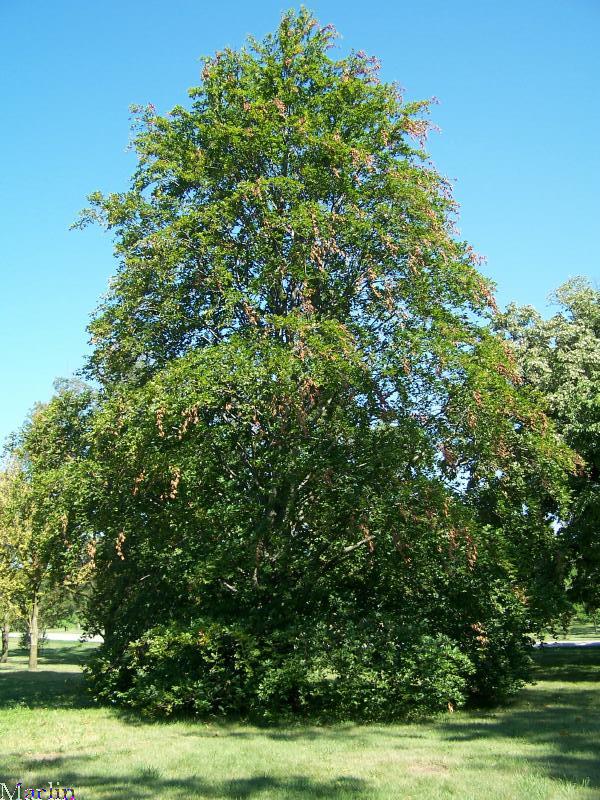
The European Beech is a large shade tree, maturing at about 60' tall by 40' wide, although it can become much larger under favorable conditions. It has an upright oval growth habit (for the species form, and many of the cultivars), and an initially slow growth rate, becoming a medium growth rate by middle age.

Beeches generally require full sun to partial sun but are tolerant of partial shade to full shade in youth. They grow best deep, rich, evenly moist, well-drained, slightly acidic soils, but are tolerant of neutral to alkaline pH soils, average soils, compacted soils, heat and drought, once established. Species form is propagated by seeds, while the cultivars are usually propagated by grafting onto seedling rootstock.

The Beech Family has few disease or pest problems of significance; European Beech adapts much better than American Beech (Fagus grandifolia) to moderate urban stresses, but still struggles with urban stresses (heat, drought, poor soils, and soil compaction), performing best in areas with cool summers. Many specimens are allowed to branch low to the ground, due to their exquisite foliage and graceful horizontal to upswept branching. European Beech is somewhat sensitive to being transplanted in autumn, and care should be taken to amend the soil, fertilize, water thoroughly, mulch adequately, and avoid winter salt spray.

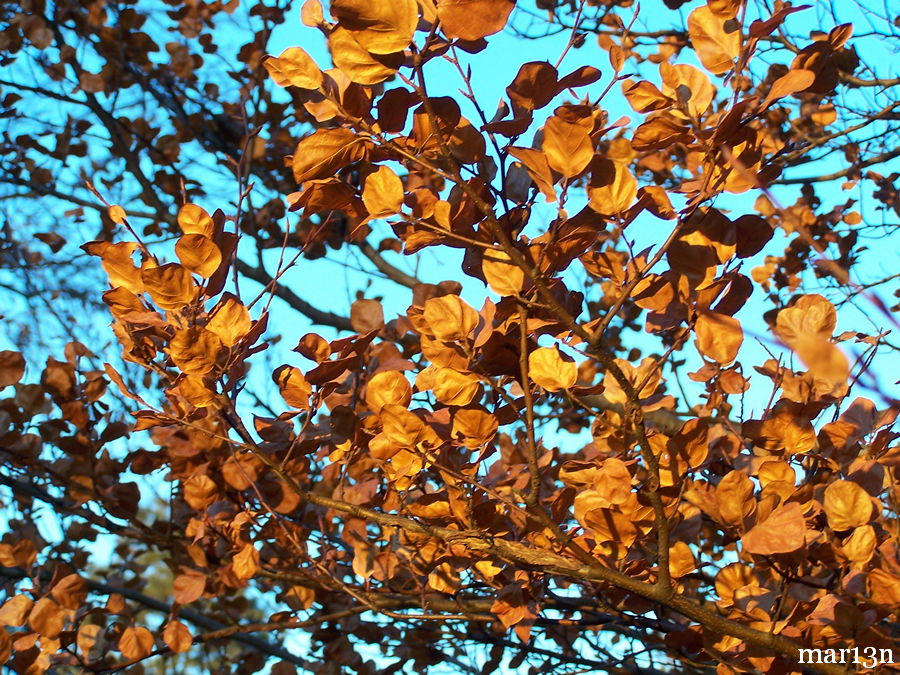
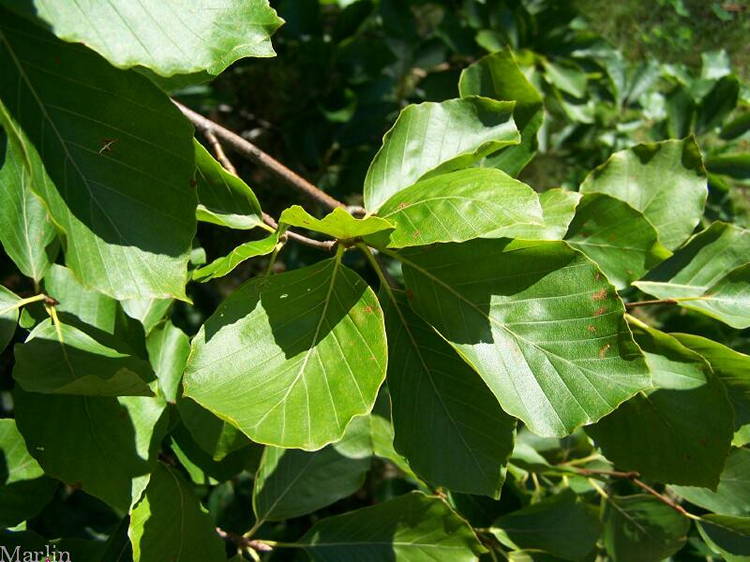
The species form and several cultivars are medium to dark green and shiny, but several foliage-color variants exist (mostly purple or variegated). Leaves are alternate, ovate to elliptical, entire to crenate along the margins, often with an undulating margin, and short-petioled; some cultivars are cutleaf or deeply crenate. Fall color for the species form is chartreuse, golden, or yellow -brown.

Separate staminate (male) and pistillate (female) inflorescences occur on the same tree (monoecious), flowering in late April and early May, ornamentally insignificant and partially obscured by the expanding foliage. Fruit consists of three-sided pointed nuts, with one to three nuts per fruit, exposed as the external bristly husk splits open in September and October. Nuts are quickly devoured by squirrels and larger birds.


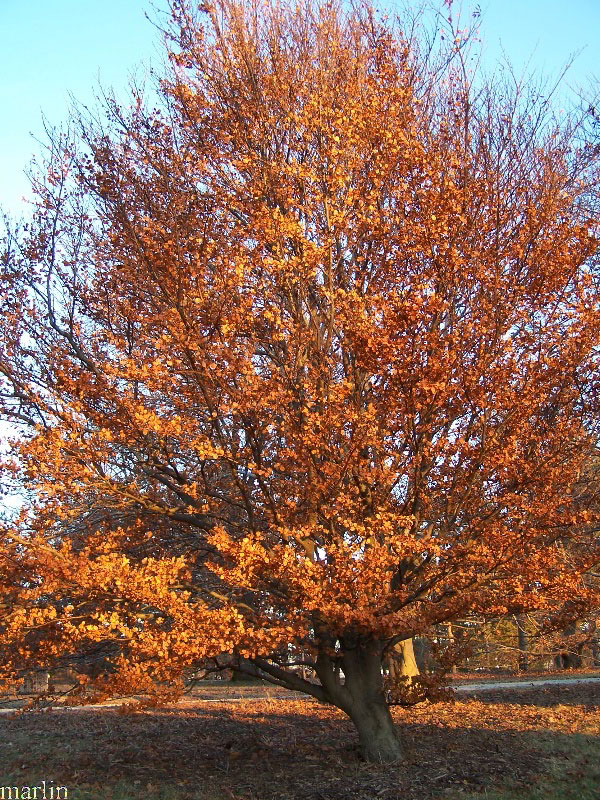
This European Beech variation 'Zlatia' is Morton Arboretum specimen.
Beech trees prune themselves in well-stocked stands. Open-grown trees like the specimen pictured above, however, develop short, thick trunks with large, low, spreading limbs terminating in slender, somewhat drooping branches that form a broad, round-topped head.

European Beech is recommended for use in public areas.  Makes an excellent hedge because of its ability to withstand heavy pruning.  It is better adapted to growing conditions than the native American Beech.   This cultivar is a slow grower - many years to produce good shade. It can be adapted to  bonsai.  (United States Department of Agriculture NRCS Plant Fact Sheet).

The wood of the European Beech is used in the manufacture of numerous objects and implements. Its fine and short grain makes it an easy wood to work with, easy to soak, dye (except its heartwood), varnish and glue. Steaming makes the wood even easier to machine. It has an excellent finish and is resistant to compression and splitting. Milling is sometimes difficult due to cracking and it is stiff when flexed. It is particularly well suited for minor carpentry, particularly furniture. From chairs to parquetry (flooring) and staircases, the European Beech can do almost anything other than heavy structural support, so long as it is not left outdoors. Its hardness make it ideal for making wooden mallets and workbench tops. The wood of the European Beech rots easily if it is not protected by a tar based on a distillate of its own bark (as used in railway sleepers). It is better for paper pulp than many other broadleaved trees though is only sometimes used for this. Common beech is also considered on of the best fuels for fireplaces. -- From Wikipedia