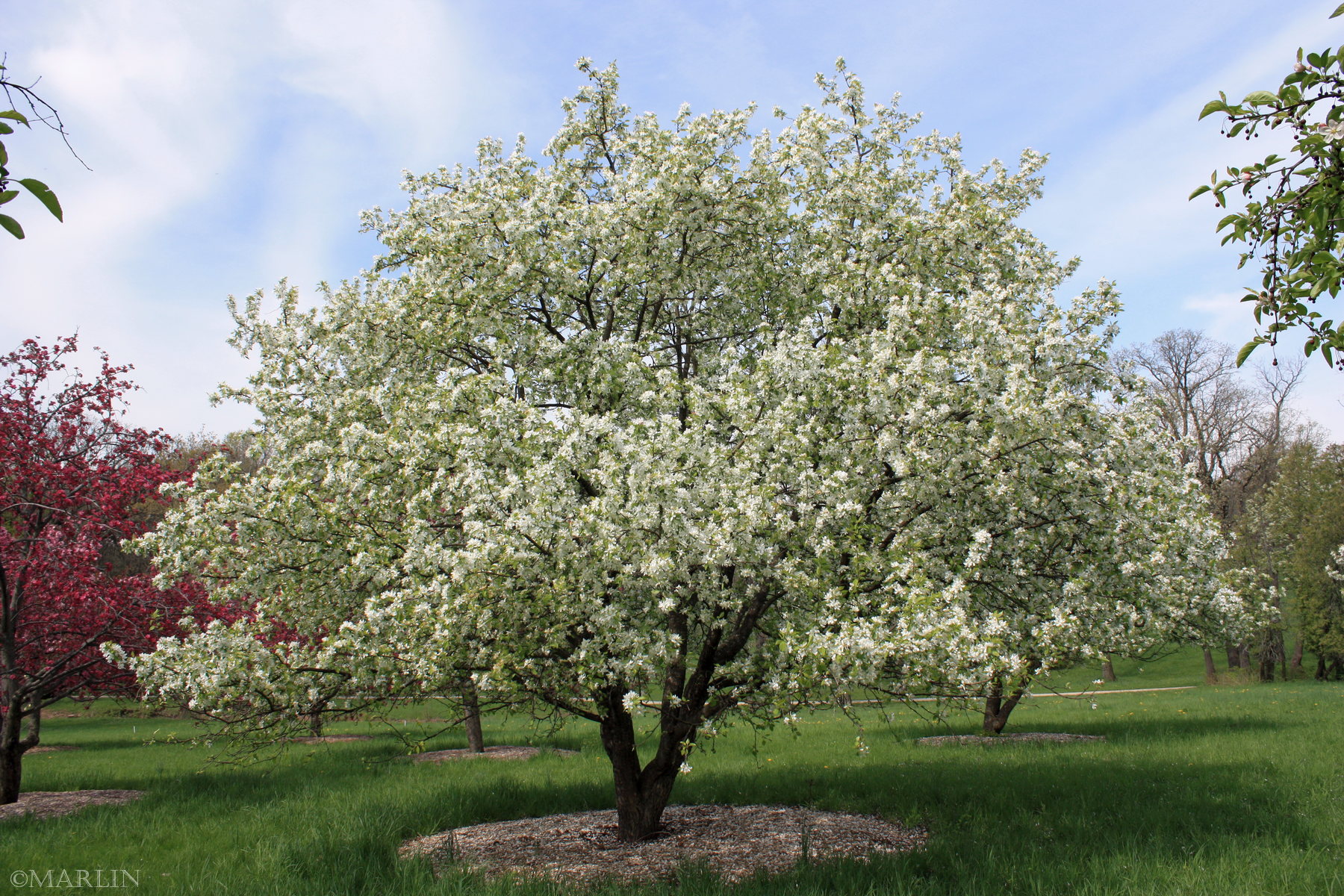
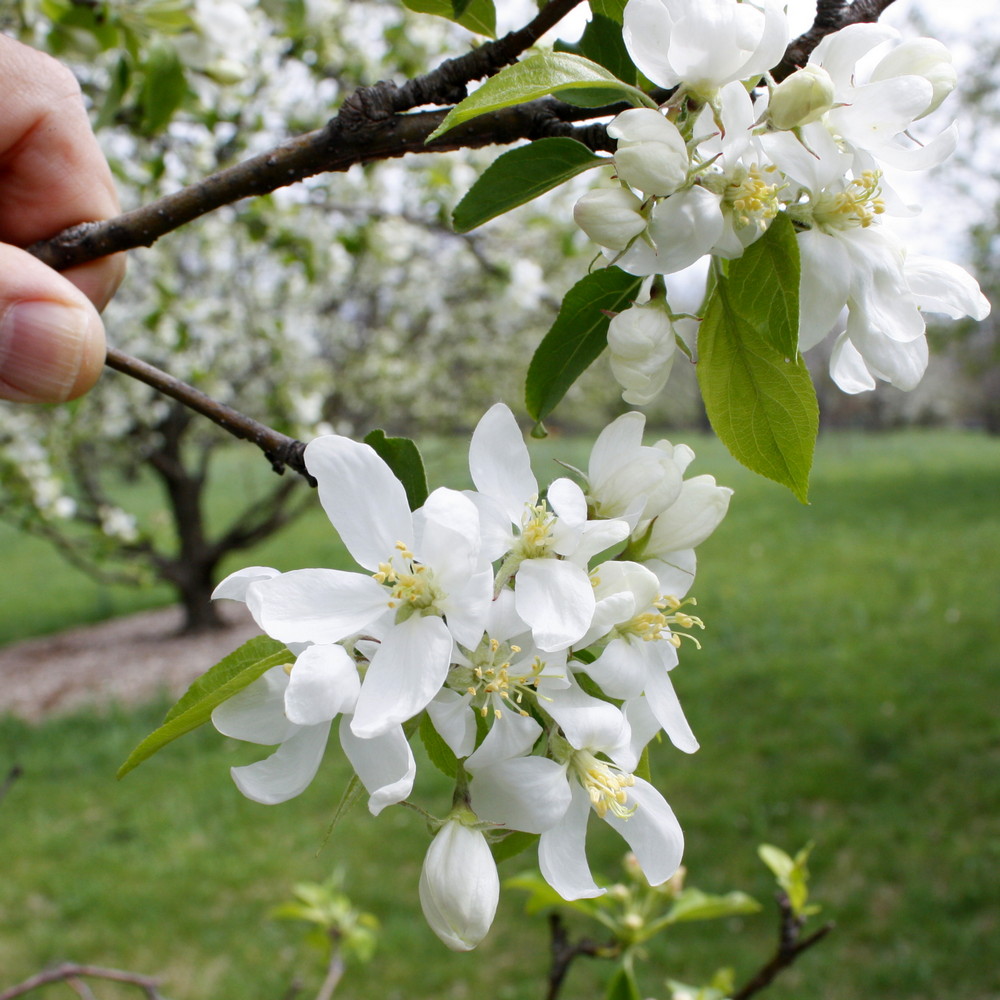
Dolgo Crabapple - Malus 'Dolgo' [2]
Rose Family: Rosaceae
Dolgo crabapple is particularly resistant to apple scab, and is grown for its large edible fruits. [4]
[Cirrus Home]  [Tree Encyclopedia] [Trees Alphabetic Table of Contents]
  Dolgo Crabapple
Crabapples are versatile, small, ornamental trees used in the urban landscape. Crabapples bloom in spring, usually in May, bearing flowers that vary a great deal in color, size, fragrance ,and visual appeal. It is common for flower buds to be red, opening to pink or white flowers. The fruit ripens between July and November, and varies in size from ¼ to 2 inches long or wide.

Crabapples thrive in full sun and grow best in well drained, slightly acidic soils (pH 5.5-6.5); however, they will grow well in many soil types. Most crabapple selections tolerate the cold winters and hot, dry summers prevalent in the Midwest. For many years, crabapple cultivars have been selected on the basis of their flowers, but with some cultivars, undesirable features, such as disease problems and early fruit drop, outweigh their short-lived spring beauty. No single cultivar can fulfill every landscaping need. Consider the following information when choosing a crabapple cultivar for your landscape. [3]
Dolgo Crabapple
Dolgo Crabapple, Morton Arboretum acc. 108-84*2 is 25 years old [2]

Dolgo crabapple requires very little pruning but any that is needed should be completed before late spring, to ensure dormant flower buds are not removed. Trees used as street trees should be trained to develop a central trunk and should be occasionally thinned to eliminate water sprouts or crossed-branches, and to open up the crown. This allows for better air circulation through the crown and helps reduce disease.
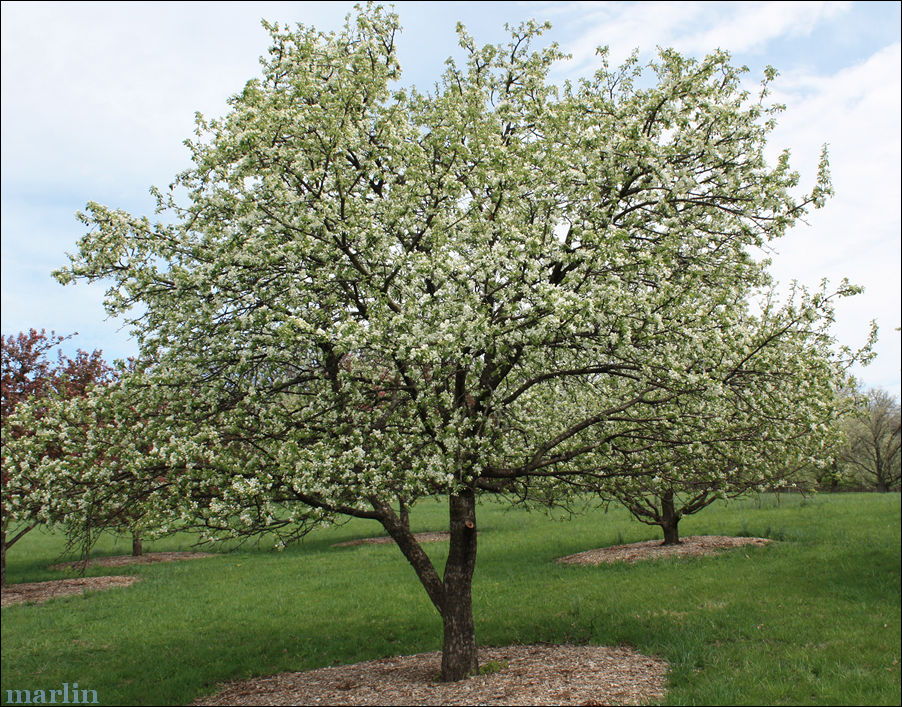
Crabapples are useful as median trees where the fruit will not fall on pedestrians. Placed in the lawn area as an accent so they receive occasional irrigation, Dolgo crabapple will give you years of wonderful flowers and showy fruit. It is best to locate them away from a patio or other hard surface so the fruits will not cause a mess. Set it back just far enough so the crown will not overhang the walk, but close enough so the flowers and fruit can be enjoyed. Dolgo crabapple grows in moist, well-drained, acid soil in full sun locations for best flowering. They are not recommended for sandy soil due to their inability to tolerate drought, but any other soil is suitable, including some clay.  [1]

 
Kingdom Plantae – Plants
Subkingdom Tracheobionta – Vascular plants
Superdivision Spermatophyta – Seed plants
Division Magnoliophyta – Flowering plants
Class Magnoliopsida – Dicotyledons
Subclass Rosidae
Order Rosales
Family Rosaceae – Rose family
Genus Malus Mill. –apple                                                         

Dolgo Crabapple


DISEASE
In selecting a crabapple cultivar, disease resistance should be your first consideration. Many resistant cultivars are available and recommended in order to avoid the most common disease problems. Before making a selection, keep in mind that not all crabapples do well in every location. Disease intensity varies from region to region, and disease strength can vary from year to year. For instance, some crabapples will be more prone to disease susceptibility in areas with greater rainfall than in drier climates. Careful consideration of the following information will be helpful in choosing the right crabapple cultivar. There are four diseases that seriously affect crabapple:

Apple scab is one of the most serious diseases from an aesthetic standpoint, but usually not a serious threat to the health of the tree. It is a fungal disease, caused by the fungus Venturia inaequalis, which develops in cool, wet springs.  Dolgo crab is one among numerous cultivars that are resistant or very tolerant (still susceptible but with little defoliation) so choose one based on its resistance. It is . On susceptible crabapples, apple scab causes spotting of the leaves, premature defoliation, and unsightly spots on the fruit. Apple scab mainly affects members of the rose family, including nearly all commercial cultivars of apple (Malus spp.), crabapple (Malus spp.), hawthorn (Crataegus spp.), mountain-ash (Sorbus spp.), cotoneaster (Cotoneaster spp.), firethorn (Pyracantha spp.), and common pear (Pyrus spp.). [4]

Cedara-apple rust is a less serious leaf-spotting disease common to our native crabapple cultivars. It is usually a problem in areas where native junipers (Juniperus) are planted. Selecting resistant cultivars can control this disease.

Powdery mildew is a fungal disease that can cause considerable damage to leaves and fruit of susceptible cultivars without threatening the health of the tree. Poor air circulation, close association with susceptible apple cultivars, and wet, humid weather conditions will greatly influence disease incidence and severity. Fire blight is a serious bacterial disease of crabapples. Though it is less common then the others, if left untreated it can be fatal to susceptible crabapple cultivars. Select resistant cultivars. [3]

References
  1. USDA National Forest Service Fact Sheet 393, Malus x 'Mary Potter'
  2. Dolgo Crabapple, Morton Arboretum acc. 108-84*2, photographed April 27, 2009. © Bruce J. Marlin
  3. Morton Arboretum Crabapples For The Home Landscape
  4. Morton Arboretum, Apple Scab


       web       www.cirrusimage.com