![]() |
Bob White Crabapple - Malus 'Bob White' [2] Rose Family: Rosaceae Ormiston Roy Crabapple is cited as one variety resistent to apple scab [4] [Cirrus Home] [Tree Encyclopedia] [Trees Alphabetic Table of Contents] [Family Rosaceae Table of Contents] |
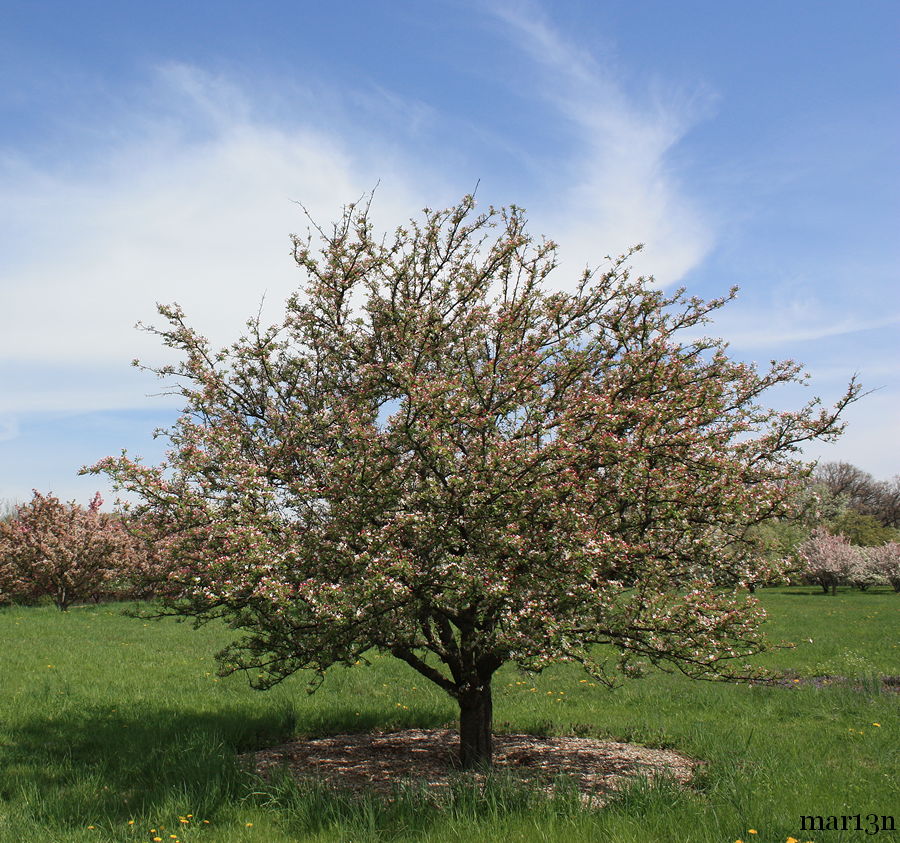
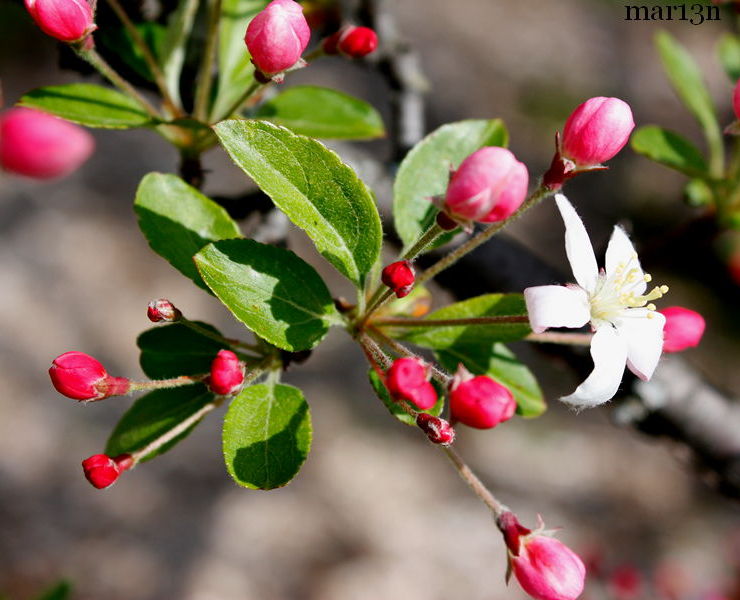
![]() Bob White Crabapple's white flowers are a spring highlight. Newer varities are more disease resistant, but this spreading tree still yields deep red fruits and winter food for birds. |
|
One of the most stunning trees used in
the Midwestern landscape is the crabapple. Most crabapples are small trees, making them an appropriate size for most home
gardens, but their spring blooming is prolific and showy.
They are exciting throughout the year, with craggy branches
and persistent fruits in winter. Some of the specimens in this collection are almost large enough to be considered shade trees, while others are quite small. There is a great variety of shape as well, from wide to upright and narrow, weeping, and multi-stemmed. There is variety in flower color, ranging from white to pink, red, purple, and crimson. Some flower buds will be one color, and then open up to a completely different color! Fruits range in size from smaller than a pea, to nearly the size of most apples; they can be red, purple, orange, yellow, or green. Some of the smaller fruits persist on the tree throughout winter, providing a splash of color in the cold months. [1] |

|
Crabapples are versatile, small, ornamental trees used in
the urban landscape. Crabapples bloom in spring, usually in
May, bearing flowers that vary a great deal in color, size,
fragrance, and visual appeal. It is common for flower buds
to be red, opening to pink or white flowers. The fruit
ripens between July and November, and varies in size from
¼”to 2” long or wide. Crabapples thrive in full sun and grow
best in well drained, slightly acidic soils (pH 5.5-6.5);
however, they will grow well in many soil types. Most
crabapple selections tolerate the cold winters and hot, dry
summers prevalent in the Midwest.
For many years, crabapple cultivars have been selected on the basis of their flowers, but with some cultivars, undesirable features, such as disease problems and early fruit drop, outweigh their short-lived spring beauty. No single cultivar can fulfill every landscaping need. Consider the following information when choosing a crabapple cultivar for your landscape. [3] |
|
|

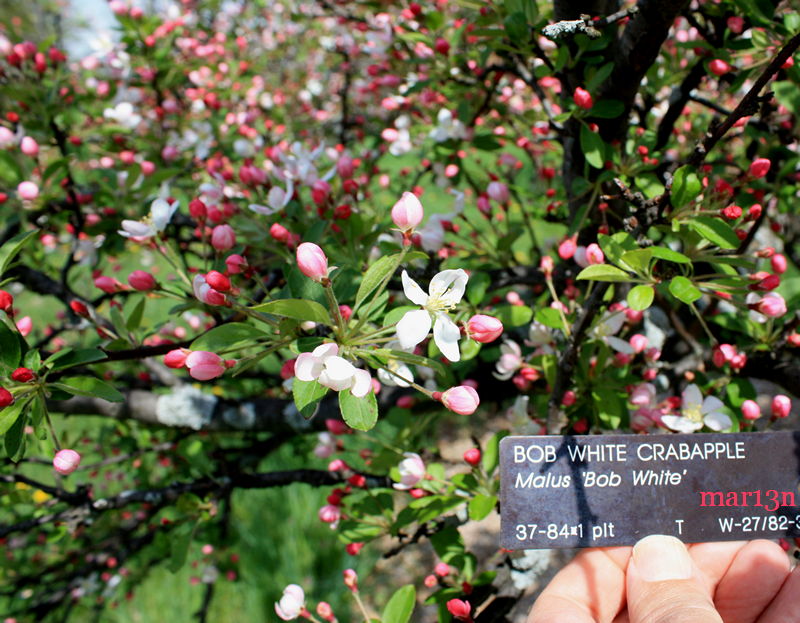
Bob White Crabapple Foliage
|
DISEASE |
References
|
|
|
![]() |
|
![]() |
![]() |
![]() |
![]() |
![]() |
![]() |
|
|
[Cirrus Home] [Tree Encyclopedia] [Trees Alphabetic Table of Contents] [Family Rosaceae Table of Contents] |
| © Cirrus Digital / All Rights Reserved |