
Adams Crabapple – Malus ‘Adams’
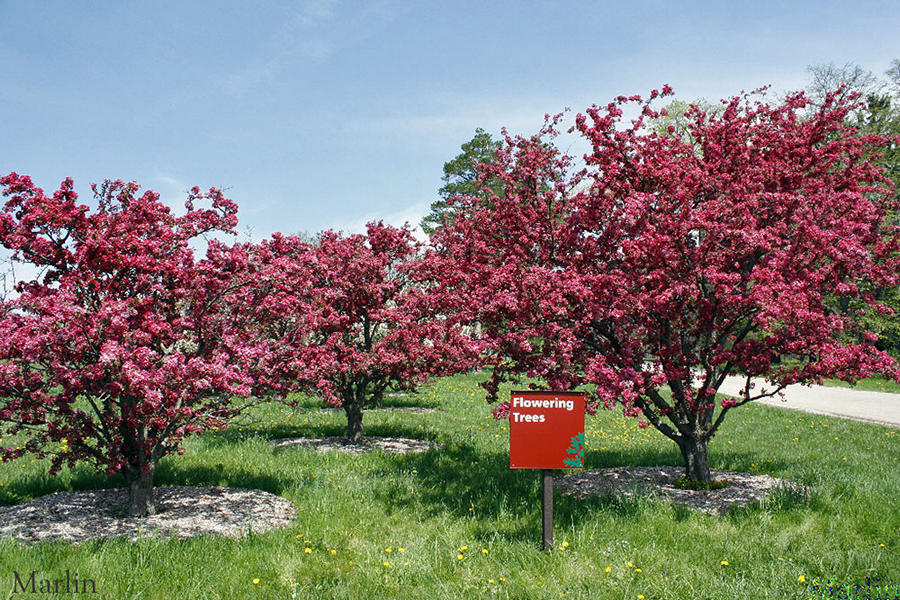
The three Adam crabapples pictured welcome visitors to the Morton Arboretum’s west side Flowering Plants section with a brilliant flaming burgundy flower extravaganza. It’s an almost-overwhelming bath of color. One of my favorite places on Earth in springtime, and these three ladies are about the epitome of the botanist’s art.
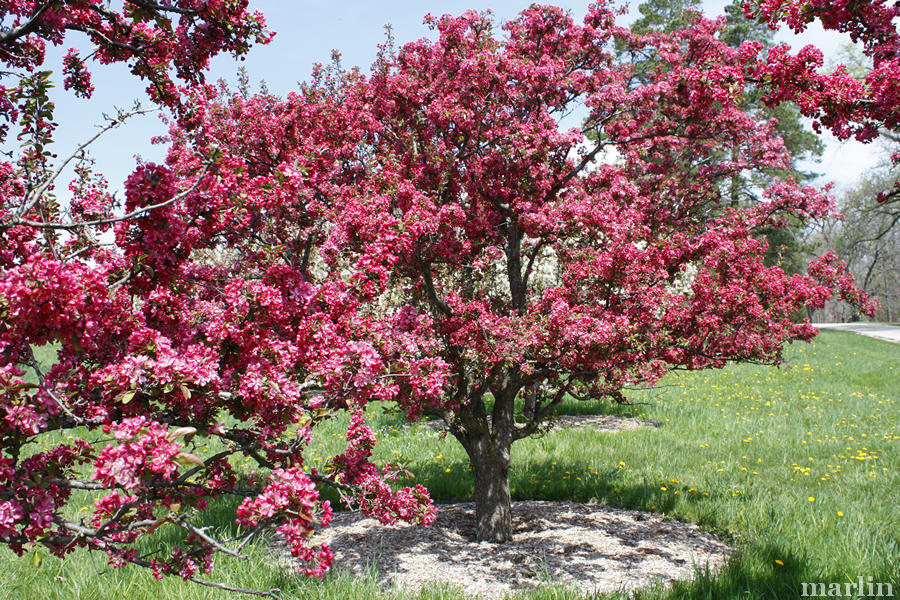
Backyard Gardener says the Adams crabapple cultivar is “very disease resistant.” Michigan State University lists it as “Very Resistant, with only slight susceptibility to scab, fire blight, and mildew. Grows to 20 feet tall (6.5m) and 15 wide (5.5m), best in full sun and moist soil. Fruit persistent, dark, dull, glossy red, 5/8 in. diameter.
Summer Foliage: Reddish tint in spring, green all summer
Autumn Foliage: Golden yellow in late autumn, clean
Winter Color: Bright red fruit provides winter interest, all fruit usually eaten by winter birds or robins in springtime.
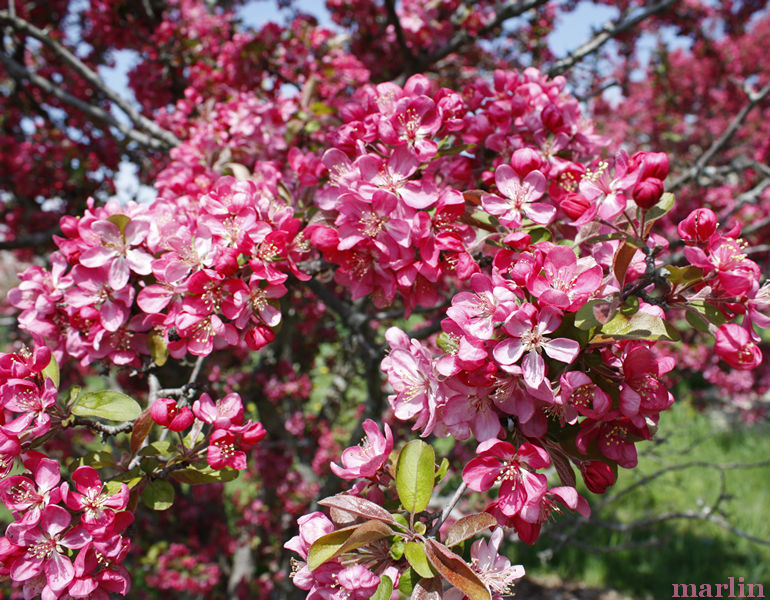
The Morton Arboretum’s Crabapple Collection was started in 1924. Part of this collection on the West Side participated in the National Crabapple Evaluation Program which evaluated new and disease-resistant varieties. As a result of the multi-year evaluation and additions, it has transformed into the West Side Malus collection which now contains 60 different kinds and over 140 specimens with highly desirable qualities.
References
- Morton Arboretum, Crabapple: A Tree For All Seasons
- Adams Crabapple, Morton Arboretum acc. 112-90*1, May 8th. Photos: Bruce Marlin
- Morton Arboretum, Crabapples for the Home Landscape
- Morton Arboretum Online Collections Scientific Name Lookup, Malus prattii
Family Rosaceae – Rose Family; Fruit Trees
Containing Hawthorns, Apples, Pears, Cherries, Plums, Peach, Almond, Mountain-Ash and Whitebeam. Rosaceae is a large family of plants with about 3,000 species in ~100 genera. Crabapple and other fruit trees provide some of our most outstanding flowering ornamentals.
