 |
Wolf Spiders – Family Lycosidae There are over 200 species of Lycosidae in North America, ranging in size from 3 – 35mm. Spider Index | Spider Main | Orb Web | Cobweb |

Custom Search
|
|
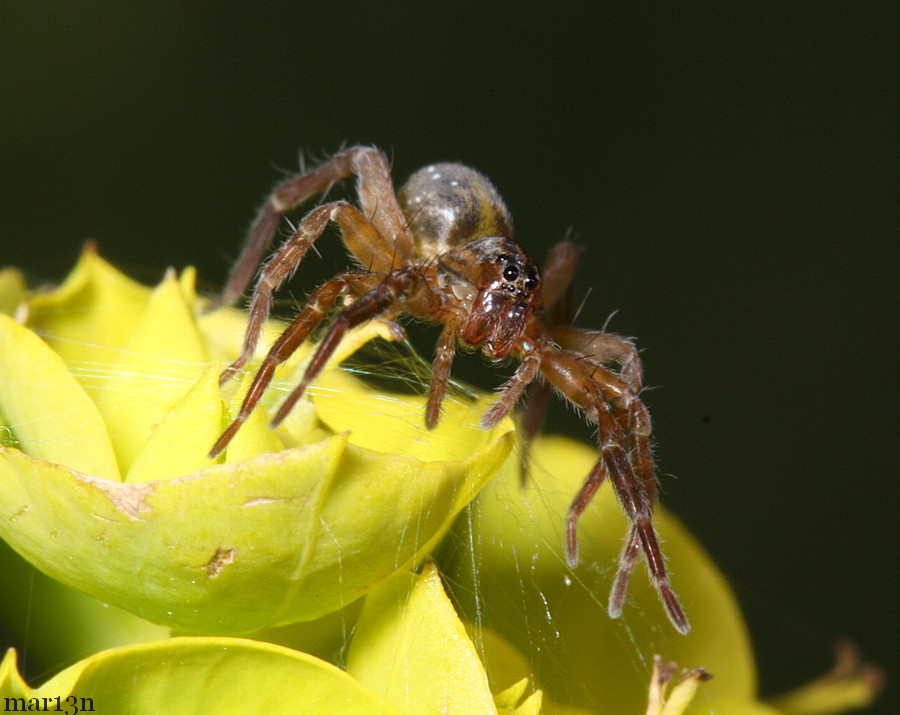
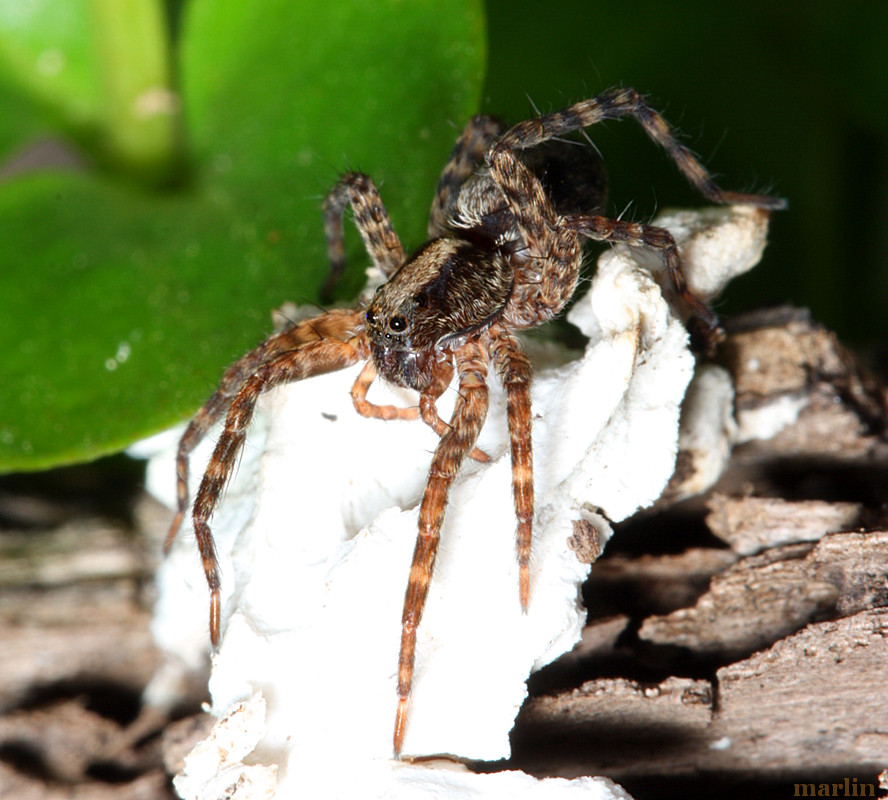
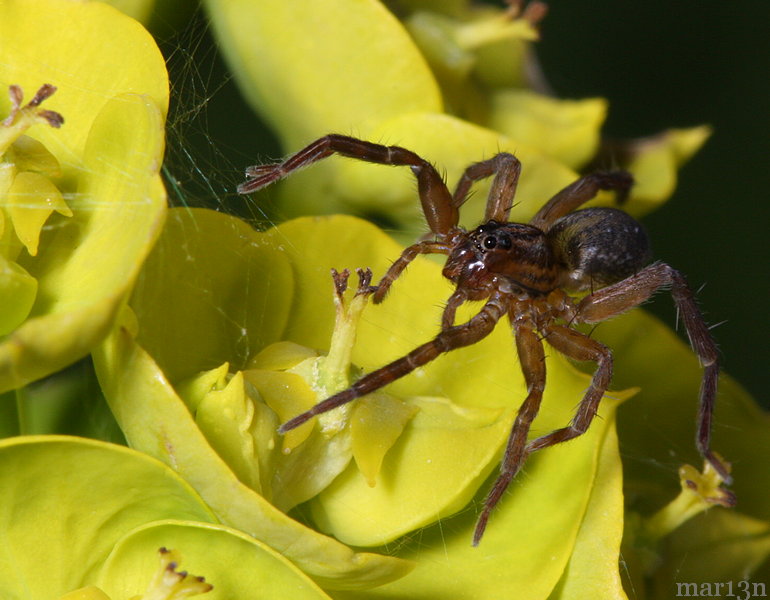
Wolf spiders are members of the family Lycosidae, from the Greek word "lycosa" meaning "wolf". Their namesake, their method of hunting is to run down their prey. They are robust and agile hunters that rely on good eyesight.
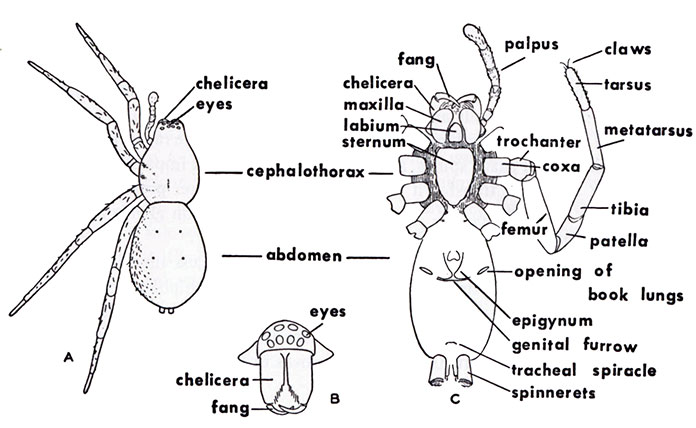
There are over 200 species of Lycosidae in North America, ranging in size from 3 – 35mm. They have eight eyes arranged in three rows. The bottom row consists of four small eyes, the middle row has two very large eyes (which distinguishes them from the Pisauridae), and the top row has two medium-sized eyes that face the side.
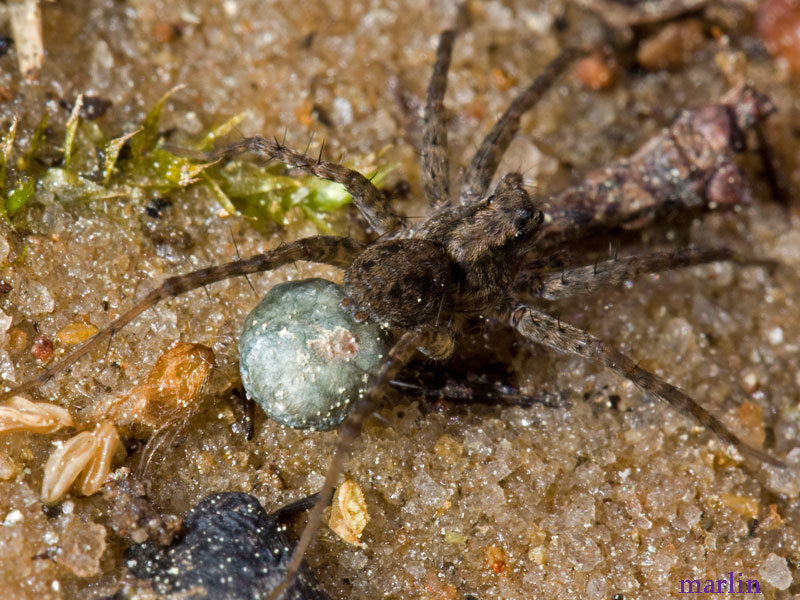
Wolf spiders carry their eggs along with them in a round silken globe, or egg sac, which they attach to the spinnerets at the end of their abdomen. The abdomen is held in a raised position to keep the egg case from dragging on the ground, but they are still capable of hunting while so encumbered. Also unique among spiders is their method of hatchling care: after the eggs hatch and emerge from the protective silken case, the new spiders climb up their mother's legs and crowd onto her abdomen. She may carry them around for several hours or days until they are ready to fend for themselves. It must be noted, however, that the hatchlings will scatter immediately if the mother spider is threatened or attacked.
|
References
|
| Wondering how to get that bug identified? Please see the kind folks at Bugguide.net. (North America) North American Insects & Spiders is dedicated to macro photography of live, wild organisms in situ. |
|
North American Insects & Spiders Explore over 3,000 close-up photos and information on over 700 arthropod species commonly found in North America. Our live insects & spiders have been photographed unposed, in the wild, at various locations in Canada, Mexico and the United States. Spiders Index | Spiders Main | Beetles | Butterflies | Stinging Insects |