 |
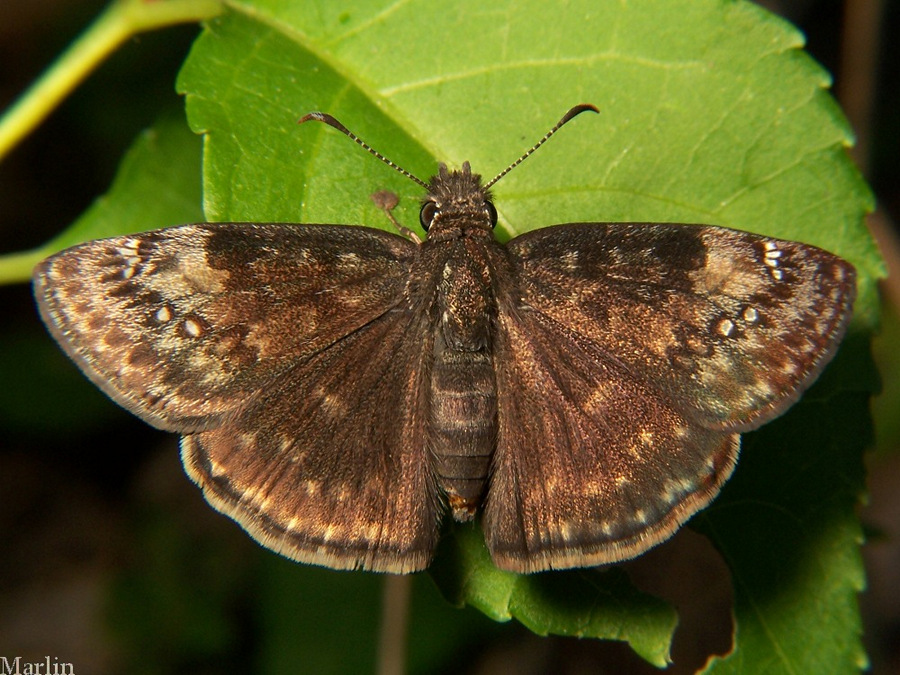
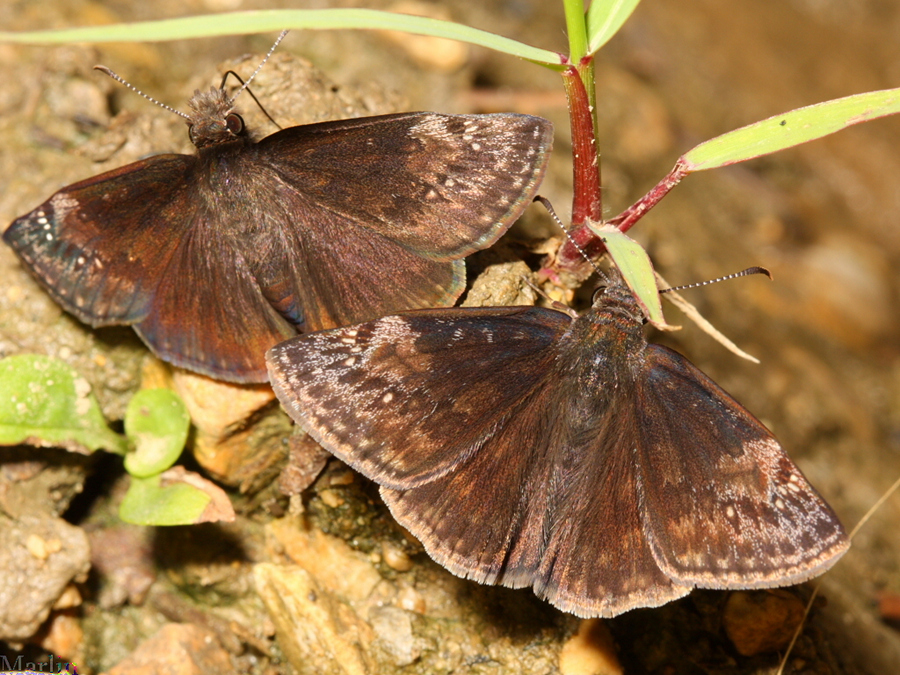
Wild Indigo Duskywing – Erynnis baptisiae Family: Hesperiidae – Skippers / Subfamily: Hesperiinae – Grass skippers Butterflies Home | Butterfly Index | Moths | Moths Index Live adult duskywing skippers photographed at DuPage County, Illinois. Size: 30-35mm wingspan |
|
Identification: Upper side of forewing is dark on the basal half and lighter on the outer half, with a distinct orange-brown patch at the end of the cell. Male has a costal fold containing yellow scent scales; female has a patch of scent scales on the 7th abdominal segment. Life history: Males perch in open areas on low shrubs to wait for females. Eggs are deposited singly on the host plant. Fully-grown caterpillars from the second brood hibernate. Flight: Two broods from late April to early June and from July to August. Wing span: 1 3/8 – 1 5/8 inches (3/5 – 4.1 cm). |
|
Range: Southern New England and southern Ontario west to central Nebraska; south to Georgia, the Gulf Coast, and south-central Texas. The Wild Indigo duskywing is rapidly expanding its range and abundance by colonizing plantings of crown vetch along roadways and railroad beds. Comments: The Columbine, Wild Indigo, and Persius dusky wings belong to the "Persius complex," a confusing group of very similar butterflies.
NatureServe Global Status: G5 – Demonstrably secure globally, though it may be quite rare in parts of its range, especially at the periphery. [1] |
|
Adult food: Nectar from flowers of blackberry, white sweet clover, dogbane, sunflower, crimson clover, and probably others. Adults take water from puddles and saturated soil. Habitat: Open woods and barrens for native hosts. Highways, railroad beds, and upland fields for the introduced crown vetch. These are extremely active and erratic flyers, especially on hot, sunny days. Fortunately, they sit still for extended periods – you can get close if you move slowly and don't blot out large portions of sky. |
| References |
|
|
Order Lepidoptera, which contains both butterflies and moths, includes at least 125,000 known species including 12,000 in North America. Butterflies are revered for their brightly colored wings and pleasing association with fair weather and flowers. |