Spongy / Asian Gypsy Moth – Lymantria species
Family: Erebidae
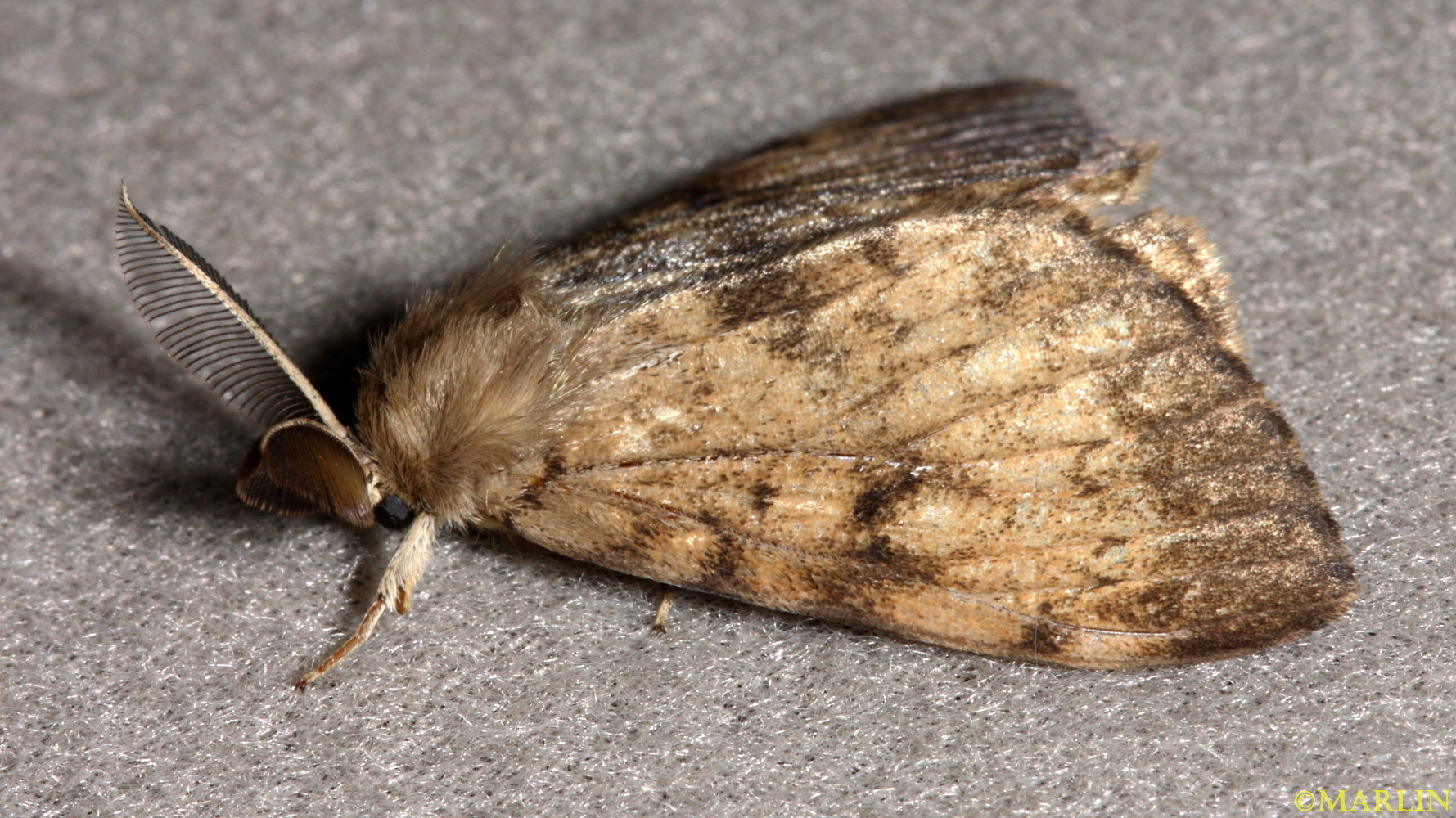
Live larvae and adults photographed at Illinois and Pennsylvania, USA.
WASHINGTON, March 2, 2022 – The Entomological Society of America (ESA) announced a new common name for the gypsy moth (Lymantria dispar) today replacing “gypsy moth” with “spongy moth” in their list of “Common Names of Insects and Related Organisms.”
“This moth—and related Lymantrid species—are significant invasive forest pests. They can defoliate hundreds of species of trees and shrubs and harm our country’s natural resources. The name “spongy moth” refers to the insect’s distinctive spongy-textured egg masses. The egg mass part of this moth’s life cycle is the life stage people are most likely to inadvertently move on outdoor items, which can lead to infestations in new areas. It is helpful to draw attention to the spongy-egg-mass stage in this pest’s life cycle to raise public awareness and highlight the actions people can take to reduce its spread. Public outreach is critical to reducing this pest’s impact and maintaining an effective regulatory program.
In re: The Asian gypsy moth. This name refers to five species or subspecies (L. dispar asiatica, L. dispar japonica, L. albescens, L. umbrosa, and L. postalba), which are regulated together as a species complex. These moths are native to Asia and not established in the United States. ESA is unable to change the name of this pest because it is outside their scope.” — USDA – APHIS
These huge, active moths are, unfortunately, quite numerous in the forests around Marienville, Pennsylvania. Diurnal moths with quick, erratic, darting flight, the gypsy moths are quite “friendly”, always seeming to get into the car, the tent, all sorts of enclosed spaces. I don’t know if they are attracted to my carbon dioxide or what, but at times they became bothersome. I also do not know if these specimens are “Spongy” or “Asian Gypsy” Moths – I suspect the latter – but in deference to the Romani people, I will henceforth refer to these specimens as “AGM.”
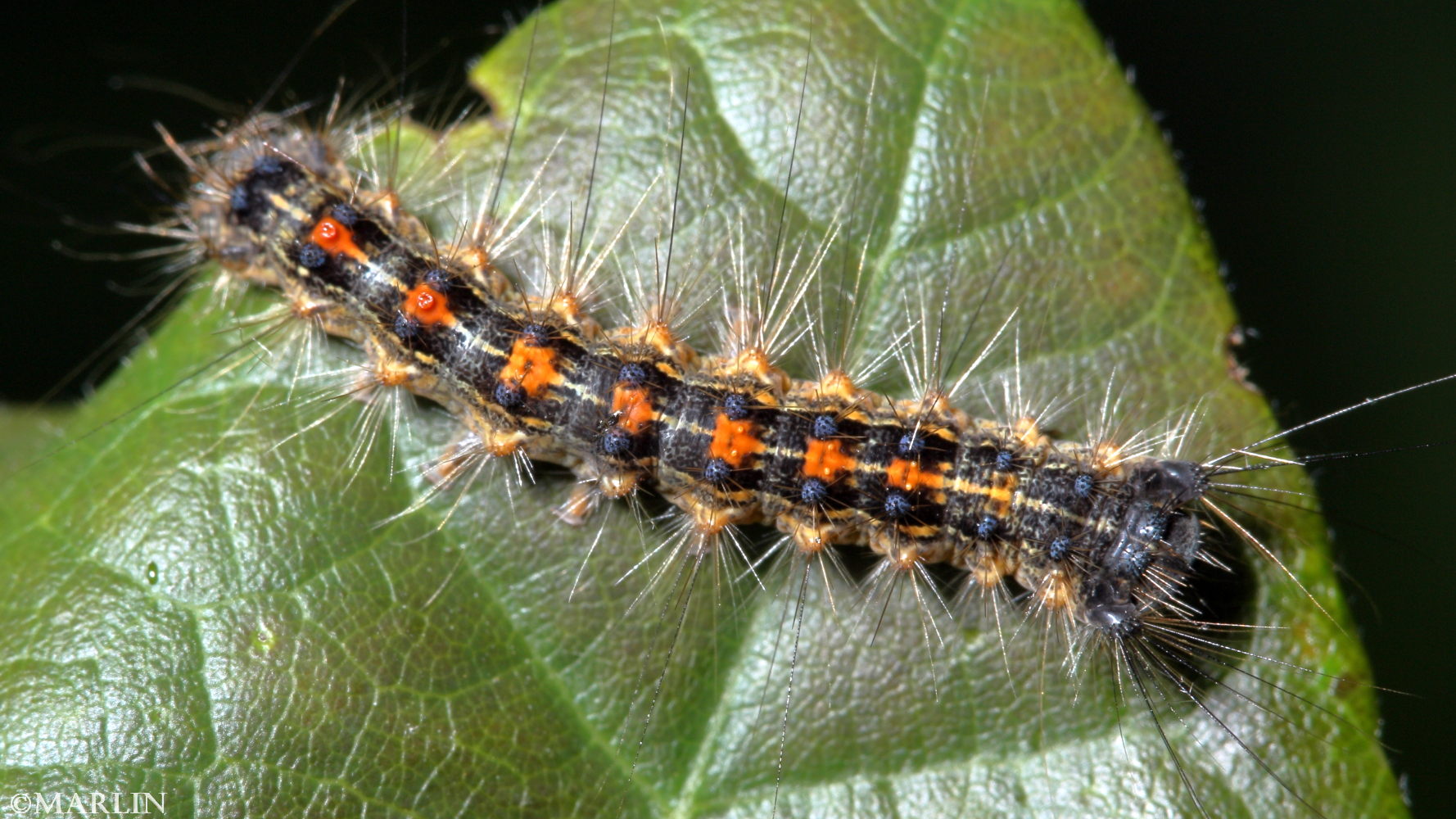
Spongy Moth caterpillar
AGM was first identified in North America late in 1991 near the Port of Vancouver in British Columbia, Canada. Moths were discovered in Washington, Oregon, and British Columbia shortly after that. Ships infested with egg masses from ports in eastern Russia probably introduced the pest to North America while visiting ports on the West Coast. Scientists believe that while the ships were docked, larvae hatched from the eggs and were blown ashore.
APHIS and State officials eradicated that infestation in the Pacific Northwest through trapping and spraying activities. Another infestation, this one in Sunny Point, NC, was caused by moths emerging from a ship carrying infested cargo containers from Germany. Spongy moth was not known to occur in Europe until tracebacks of this introduction led the U.S. Department of Agriculture there. The North Carolina infestation was declared eradicated in November 1997. Also in 1997, AGM was again detected in the area of Seattle and Tacoma, Washington state.
Spread of Infestations: Infestations spread in several ways. Adult female moths may fly to previously uninfested areas to lay eggs, thus spreading the infestation. Or, newly hatched AGM caterpillars may climb to tree crowns, where the wind picks up their silken thread and carries them to other areas. In addition, people can inadvertently transport egg masses. AGM egg masses are tolerant of extremes in temperature and moisture and travel well on logs, lawn furniture, nursery stock, pallets, shipping containers, and on the hulls and riggings of ships.
The most common eradication method used against this moth is the naturally occurring Bacillus thuringiensis (Bt) bacteria. Bt produces a caterpillar specific toxin. When sprayed on tree leaves, Bt will disrupt the digestive system of caterpillars that ingest the leaves, suppressing their appetites. The caterpillars’ movement then slows, and death results, generally in 7 to 10 days.
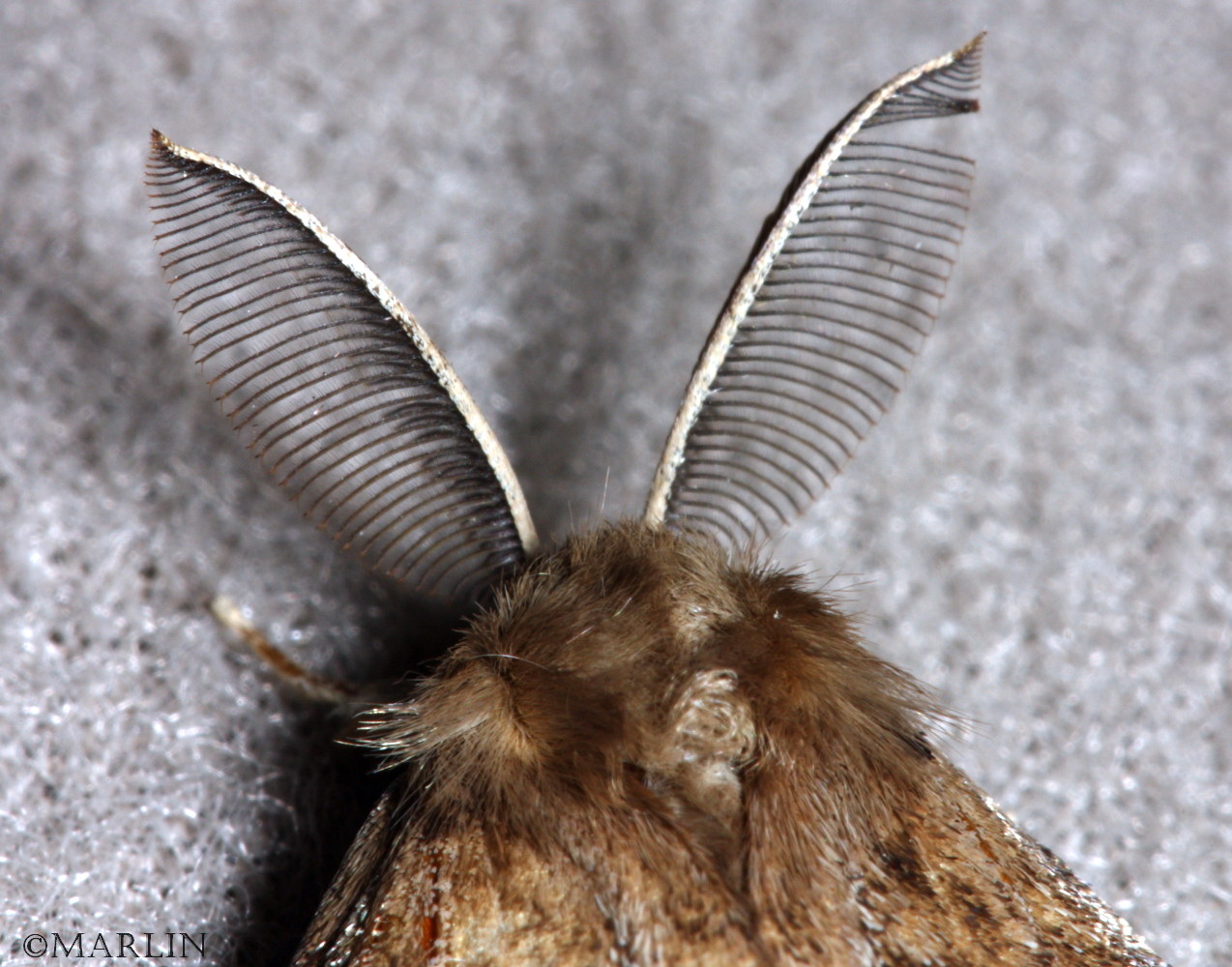 Feathery antennae are characteristic of the male adult moth
Each female could lay egg masses that in turn could yield hundreds of voracious caterpillars with appetites for more than 500 species of trees and shrubs. Defoliation would severely weaken trees and shrubs, killing them or making them susceptible to diseases and other pests. Caterpillar silk strands, droppings, destroyed leaves, and dead moths would be a nuisance in homes, yards, and parks. A risk assessment prepared by the USDA Animal and Plant Health Inspection Service (APHIS) and the USDA Forest Service concluded that because of similarities between Asian and North American ecosystems, the AGM has great potential for colonization in North American forests. [1]
Life Stages: The moth matures through four life stages: egg, larva (caterpillar), pupae (cocoon), and moth. Egg masses may be found on trees, stones, walls, logs, lawn furniture, and other outdoor objects. Each egg mass can contain more than 1,000 eggs. The mass is covered with buff or yellowish fuzz from the abdomen of the female. While the velvety egg masses average about 1 1/2 inches long and about 3/4 of an inch wide, they are often as small as a dime.
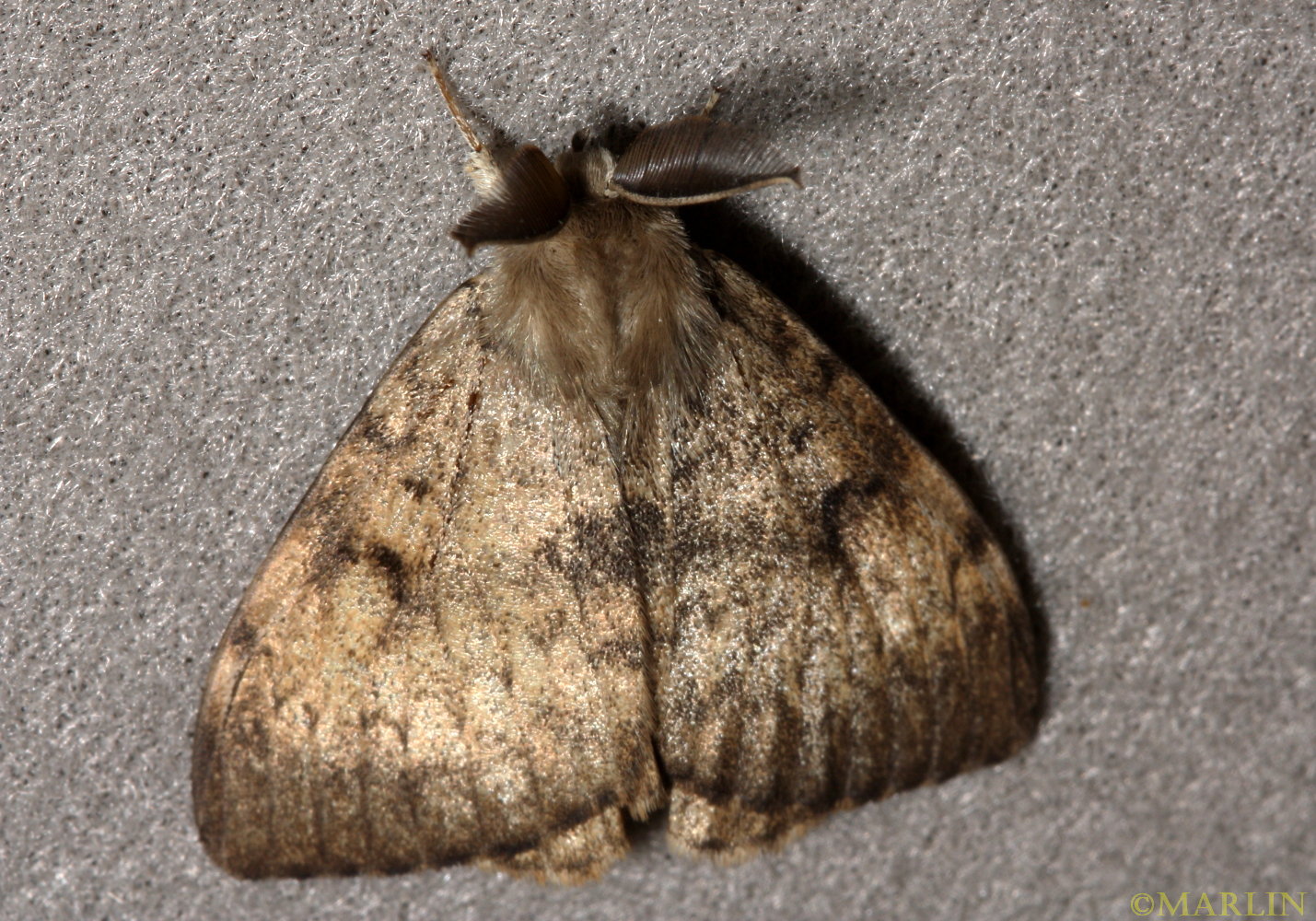
AGM eggs begin hatching into caterpillars in the spring. All of the damage caused by the spongy moth is done during the caterpillar stage, as the insects feed on leaves during this active period of growth. Caterpillars stop feeding when they enter the pupal or cocoon stage. This stage begins in June or July, depending on weather and temperature. Adult moths emerge from the dark brown pupal cases in 10 to 14 days. Adult males have grayish-brown wings and a wingspan of 1 1/2 inches. Adult female moths are white and larger, with wingspans up to 3 1/2 inches or more.
These creatures do not feed in the adult stage (which lasts 1 to 3 weeks) but only mate and lay eggs. Eggs are laid between July and September, depending on weather and location. The eggs remain dormant during winter and and hatch the following spring. [1]
Order Lepidoptera: Moths. Unlike the butterflies, moths are usually nocturnal. Many moths and their caterpillars are major agricultural pests in large parts of the world. Moths in the family Tineidae are commonly regarded as pests because their larvae eat fabrics, clothes and blankets made from natural fibers such as wool or silk. Moths in the genus Farinalis feed on stored grain, flour, corn meal and other milled grain products.