Celery Looper Moth – Anagrapha falcifera
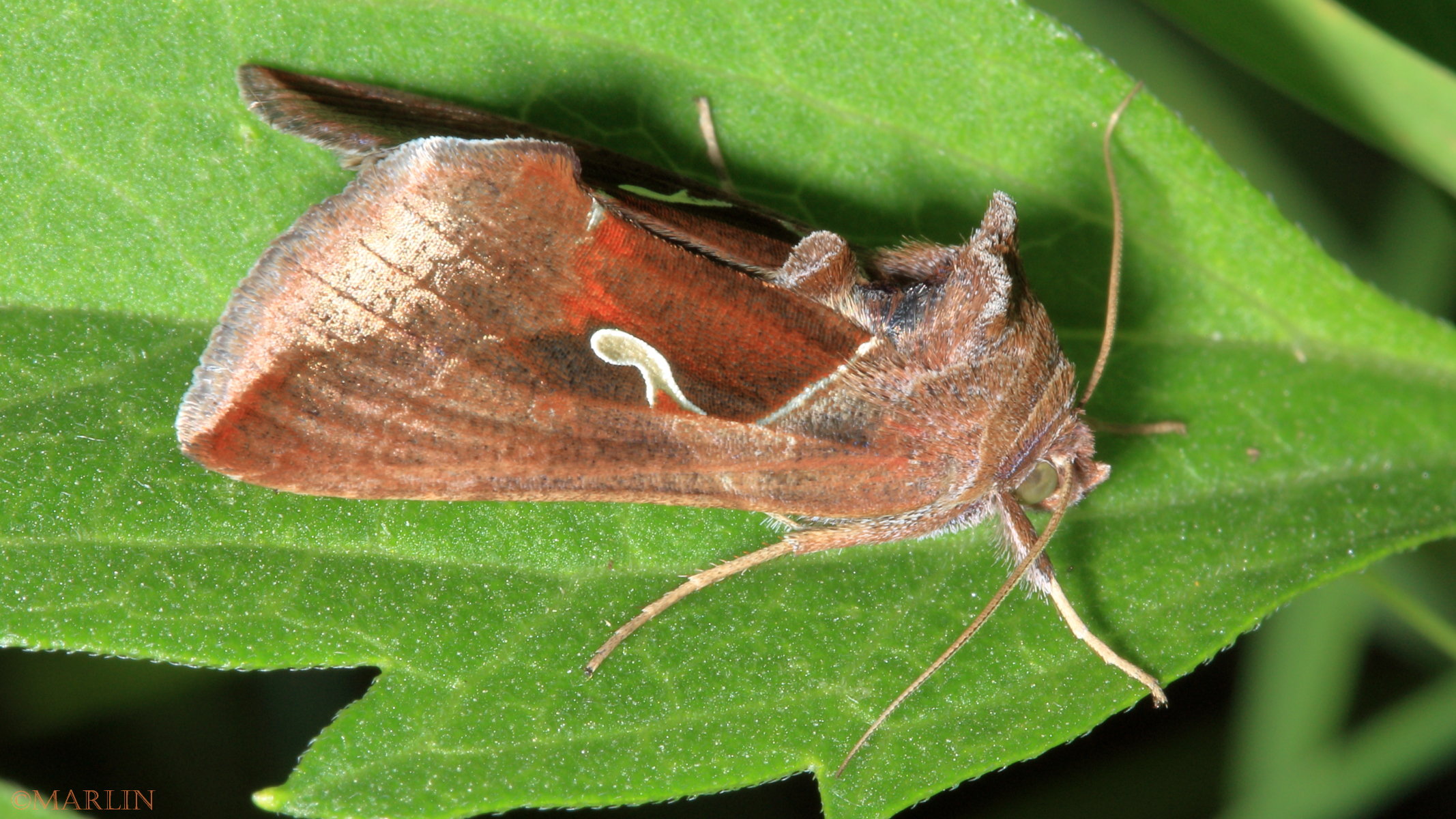
Celery Looper Moth – Anagrapha falcifera
The celery looper is common in waste places, along forest edges and in old farm fields. It has a very rapid, erratic flight and is very difficult to pursue. It is one of the most difficult to moths to approach – they are very skittish.
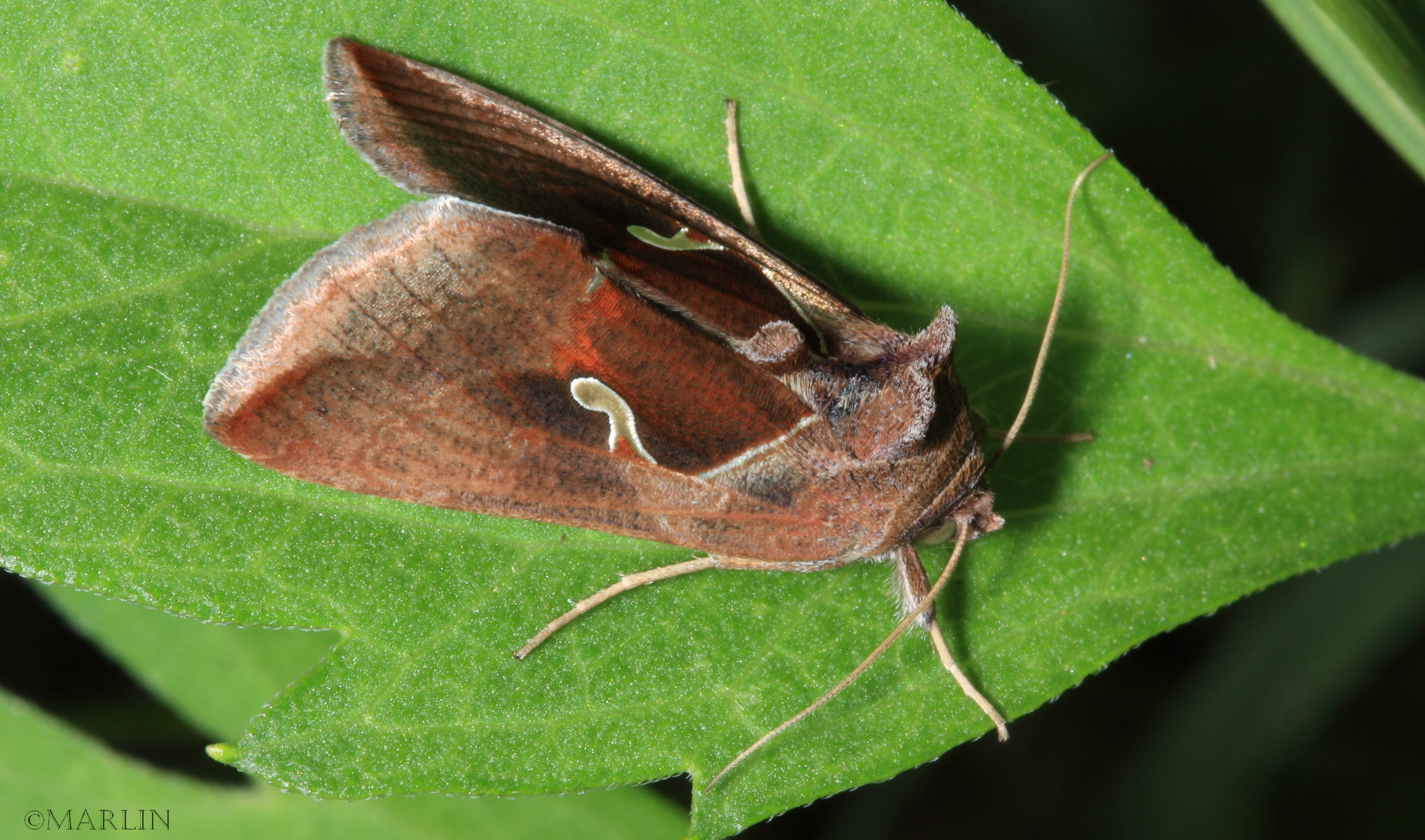
Order: Lepidoptera / Superfamily: Noctuoidea / Family: Noctuidae / Subfamily: Plusiinae
Noctuidae common names: noctuid moths, owlet moths, underwings, loopers. Common medium-sized, dull colored moths. Antennae threadlike, never feathery. Hind wings of most species without any pattern. Hind wings of underwing moths, however, show bands of bright colors when they fly. The family Noctuidae is the largest of the order with some 2,700 species in North America. The cutworms, armyworms, cabbage looper, and corn earworm are some of the serious agricultural pests occurring in this family.
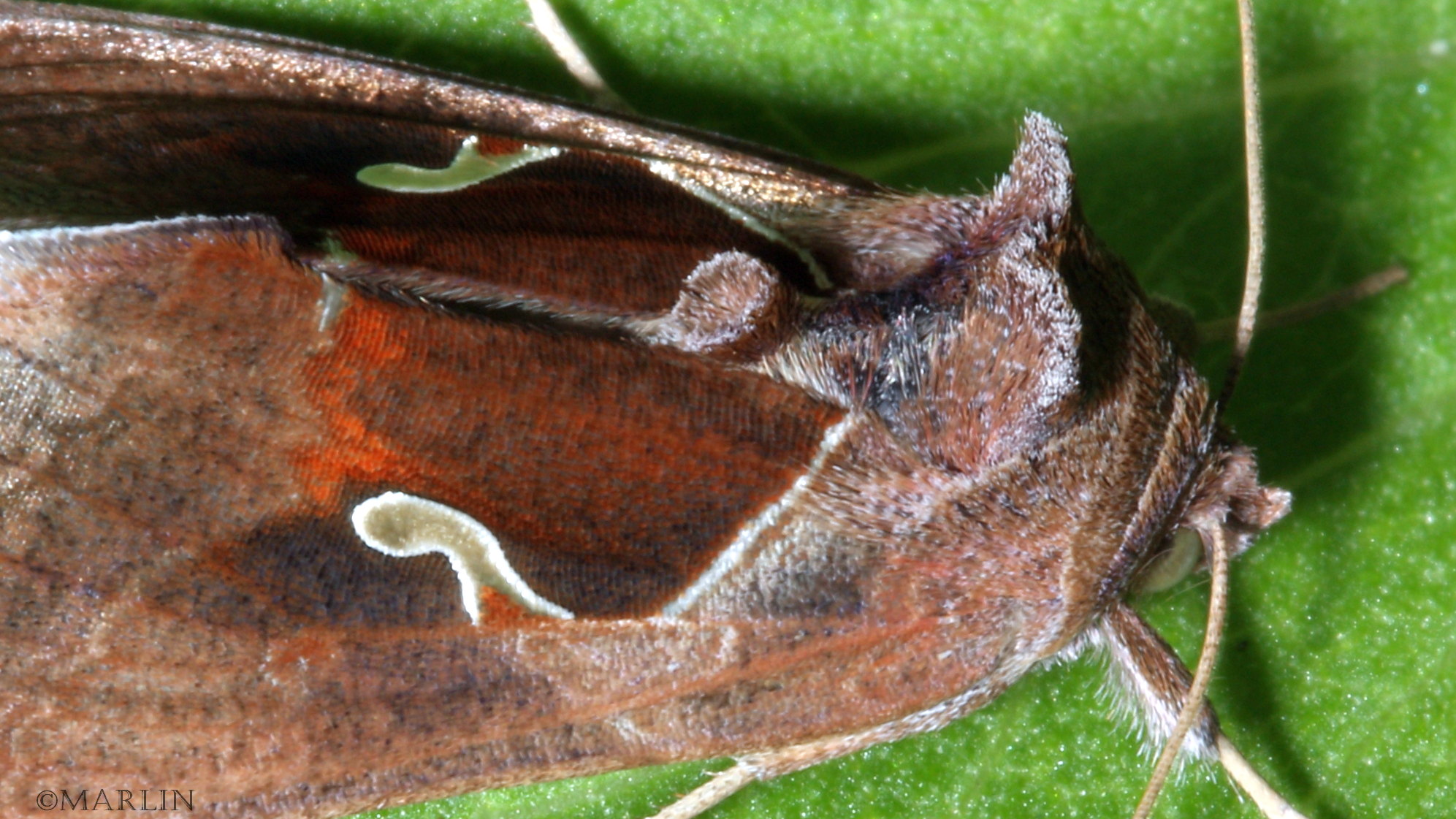
Click any image for larger version
As destructive as these moths are (it’s not their fault, after all) I love the bristles and the colors. I wish I could have gotten one from directly above – the two snake’s head figures back to back make for an amazing, illusory “design.”
Insects & Spiders | Moths Index | Moths | Butterflies Main | Butterflies Index | Skippers
