
 |
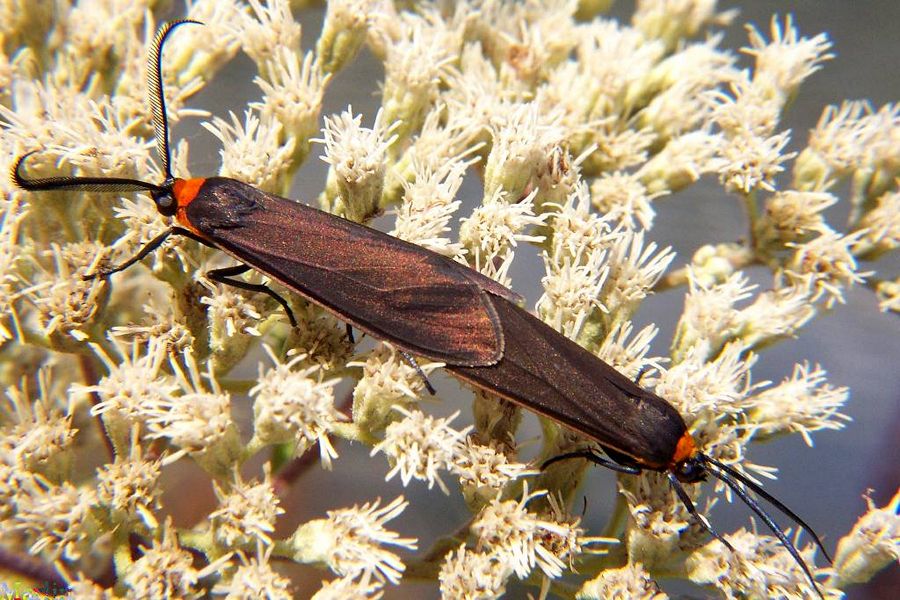
Yellow-collared Scape Moth – Cisseps fulvicollis Subfamily Arctiinae / Tribe Arctiini (Tiger Moths) Insects & Spiders | Moths Index | Moths | Butterflies Main | Butterflies Index | Skippers Live adult moths photographed at Winfield, Illinois, USA. |
|
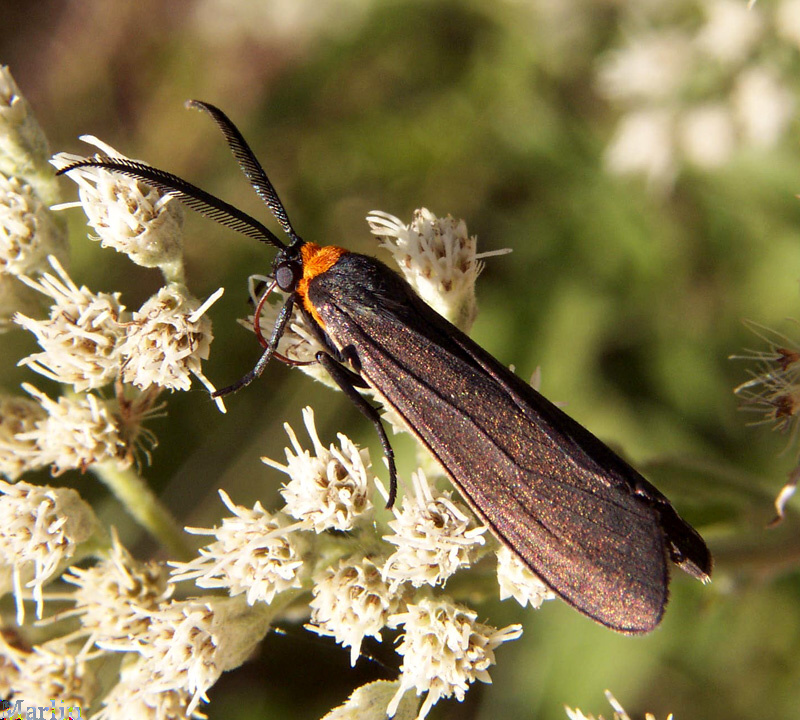
This is one beautiful moth – especially if you can get up close to see the iridescent multicolored scales on the wings and the iridescent blue-black body. The lovely deep orange "collar" is one of the most striking examples of this color in nature. A very active diurnal moth, I've found the scape moth nectaring on just about every flower we have here. |
|
Moths, including scape moths, pollinate many species of plants. Moth-pollinated flowers tend to have a strong, sweet scent and are white or pale in color. Gardens planted with these flowers may attract several kinds of sphinx moths, including the hummingbird and bumblebee mimics. While eating the nectar of a flower, moths receive a dusting of pollen by brushing against anthers, which produce pollen. Their fuzzy bodies are excellent pollen carriers. As a moth sips nectar from another flower of the same species, it transfers pollen from the previous plant. This cross-pollination is necessary for many species of plants to produce seeds. |
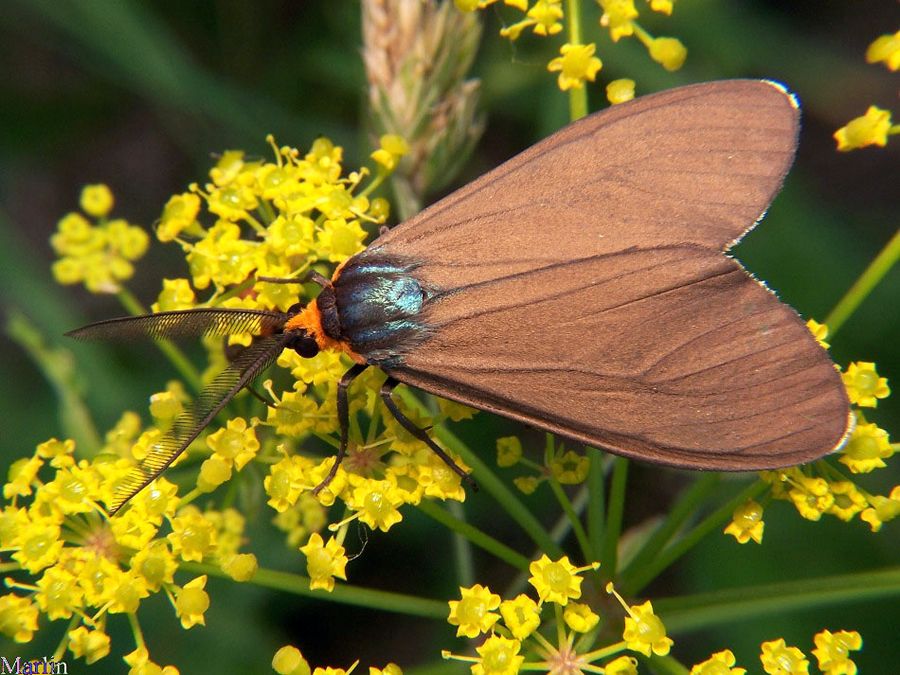
Compare to: Virginia Ctenucha Moth – Ctenucha virginica
|
|
Order Lepidoptera: Moths. Unlike the butterflies, moths are usually nocturnal. Many moths and their caterpillars are major agricultural pests in large parts of the world. Moths in the family Tineidae are commonly regarded as pests because their larvae eat fabrics, clothes and blankets made from natural fibers such as wool or silk. Moths in the genus Farinalis feed on stored grain, flour, corn meal and other milled grain products. Butterflies Main | Moths | Moths Index | Butterflies Index |
