Braconid and Ichneumon Wasps
Superfamily Ichneumonoidea
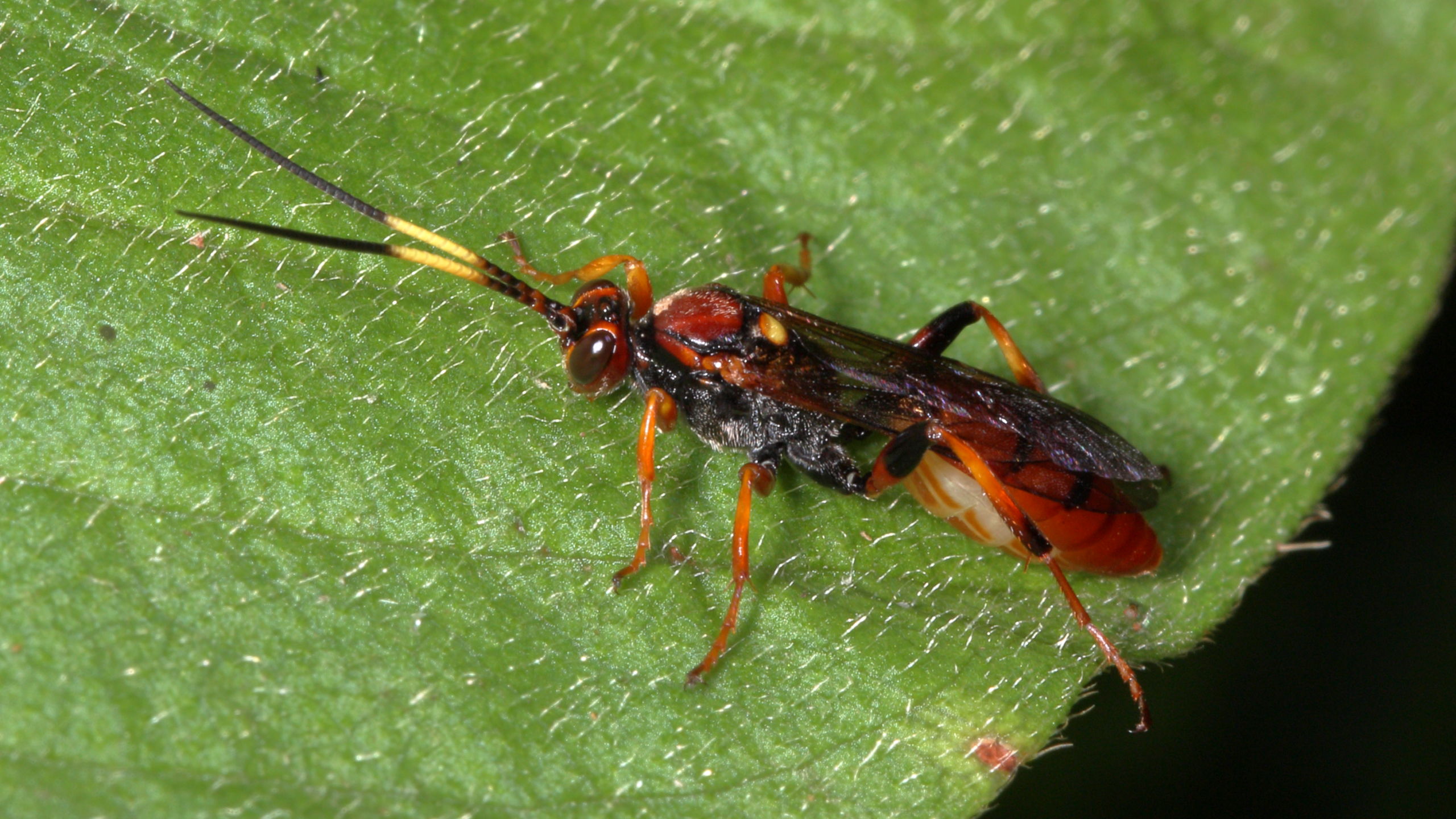
Includes Hymenoptera Superfamilies Chalcidoidea, Evanioidea, and Ichneumonoidea.
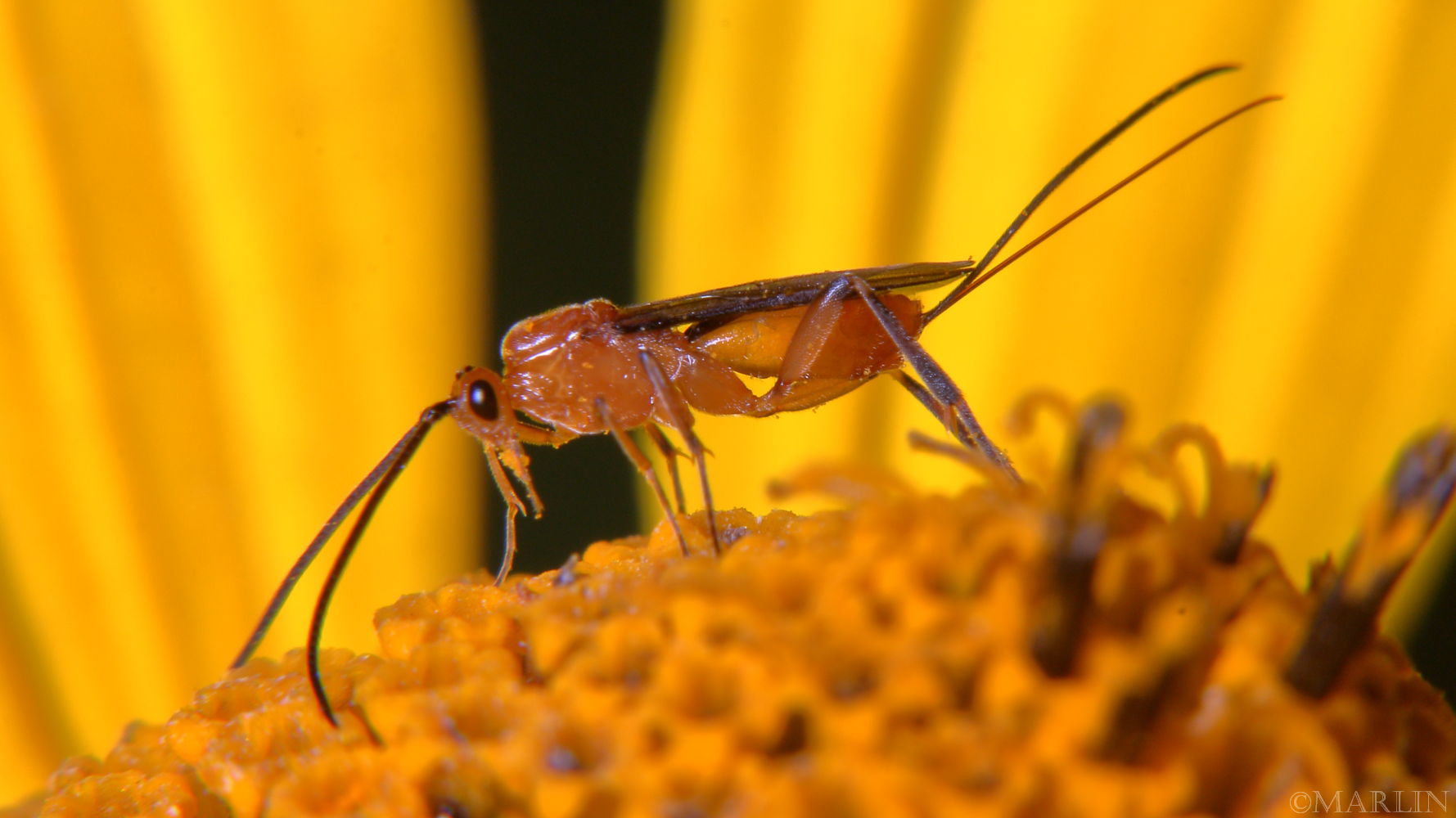 Tiny 5mm Braconid wasp egg-laying; the ovipositor gets zipped into the sheath trailing behind when she’s done
Ichneumonoid wasps are important parasites of other insects. Common hosts are larvae and pupae of Coleoptera, Hymenoptera, and Lepidoptera. There are approximately 3,000 species in North America – more than any other Hymenoptera family.
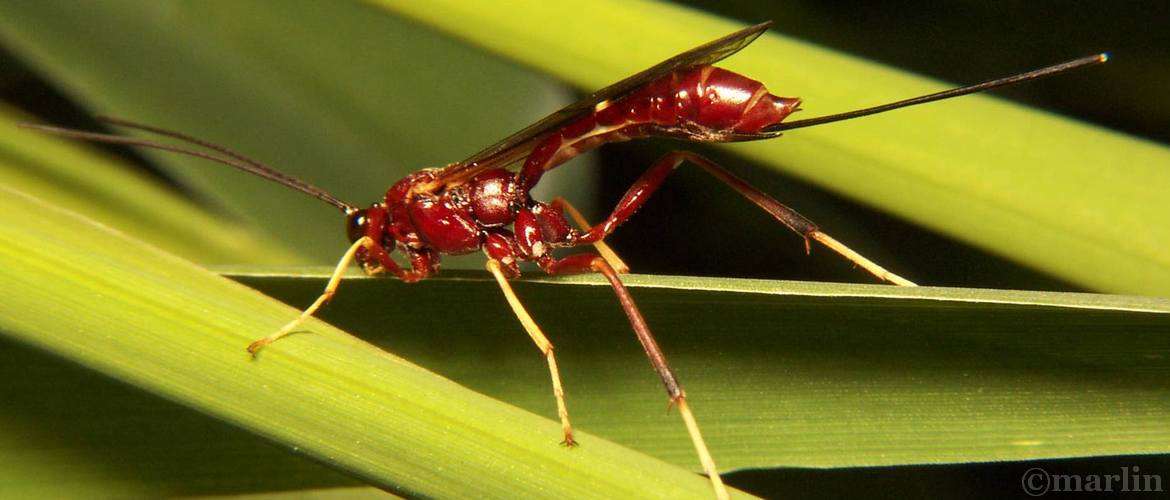
Ichneumon wasp Therion species
Female ichneumons frequently exhibit an ovipositor longer than their body. Ovipositors and stingers are analogous structures; some Ichneumons inject venom along with the egg, but they do not use the ovipositor as a stinger per se. Stingers are used exclusively for defense; they cannot be used as egg-laying equipment. Males wasps do not have stingers or ovipositors.
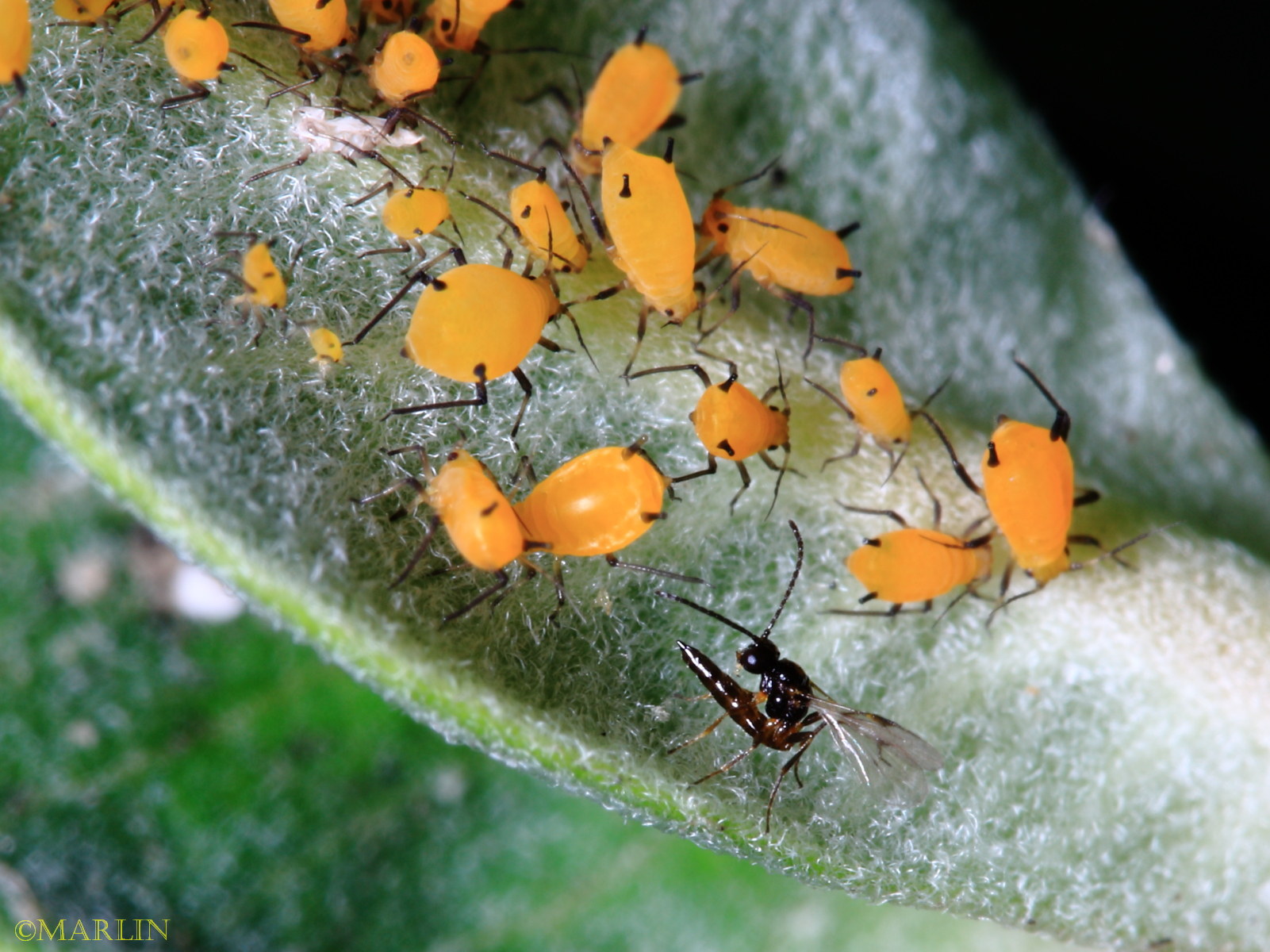 Family Braconidae – subfamily Aphidiinae. Tiny “aphid mummy” wasp (3mm) lays eggs on aphids
In some species of Ichneumon wasps, both sexes will wander over the surface of logs, tree trunks, and even grass stems tapping with their antennae. Each sex does so for a different reason; females are ‘listening’ for host larvae upon which to lay eggs, males are listening for newly emerging virgin females with which to mate. Upon sensing the vibrations emitted by such insect larvae, the female wasp will drill her ovipositor into the substrate until it reaches the cavity wherein lies the larva.
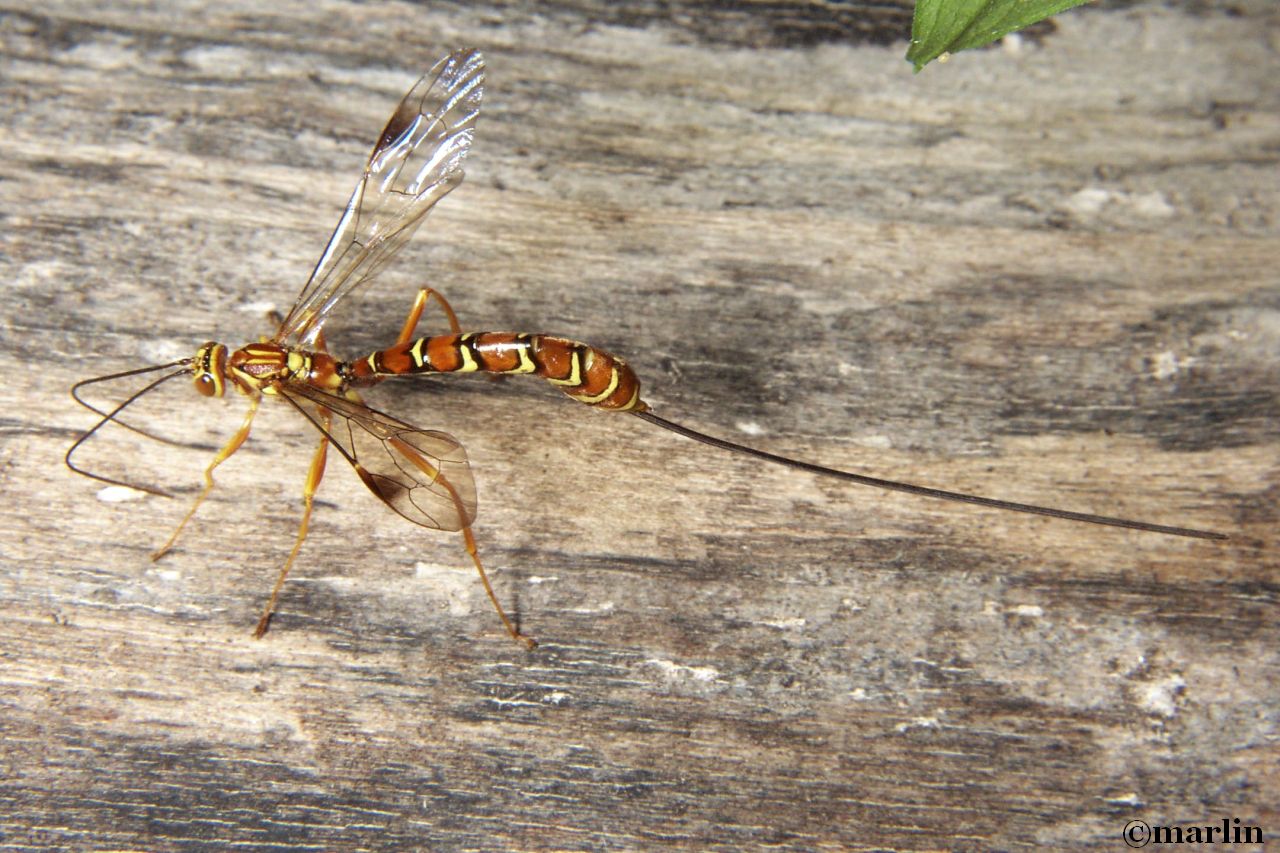 This female wasp is fully 4 inches long, including ovipositor. Megarhyssa greenei
She then injects an egg through the hollow tube into the poor unfortunate’s home (sometimes inside the larva itself). There the egg will hatch and the resulting larva will devour its host before emergence.

I found this male ichneumon wasp (subfamily Anomaloninae) as he hunted the forest understory for females. He flitted through the shadows in a bouncing flight; the black wings and black body become quite invisible, and all you see is the yellow antennae and yellow hind legs as 2 pairs of tiny filaments dancing in thin air – it’s really a magical sight!
I was lucky to catch him while he alighted to clean his abdomen with his back legs – the spurs on the rear legs are used to energetically scrape the abdomen in an (apparently successful) effort to dislodge eggs laid by other parasites.
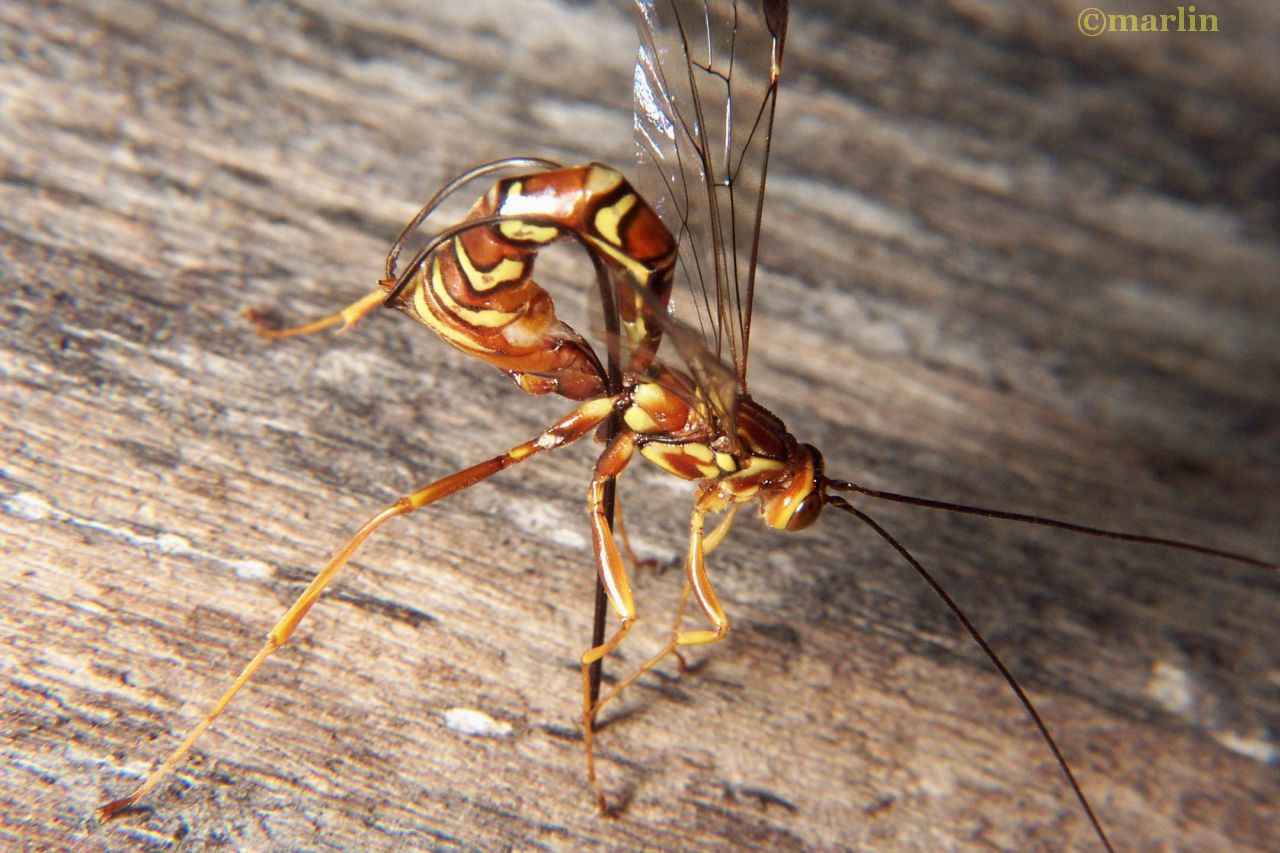
Scientists are still not sure how an ichneumon wasp “drills.” It is thought vibration might be involved but no one is sure. I suspect the tip of the terebra is sharp and the wasp forces aside the “soft” tissue of the wood much as you would push a needle into cork. I have seen ovipositors hanging from tree trunks, sans wasp.
It amazes me. How does that wasp know exactly where and when the egg must be laid? For it must be laid inside the cell of the alien larvae – sometimes laid directly on the body of the prey, sometimes inside the host larva, where it will develop and eat the host from the inside out!
Bees & Wasps Index
North American Insects & Spiders
Online since 2002