Ants Herd Tiny Aphids – Lasius sp.
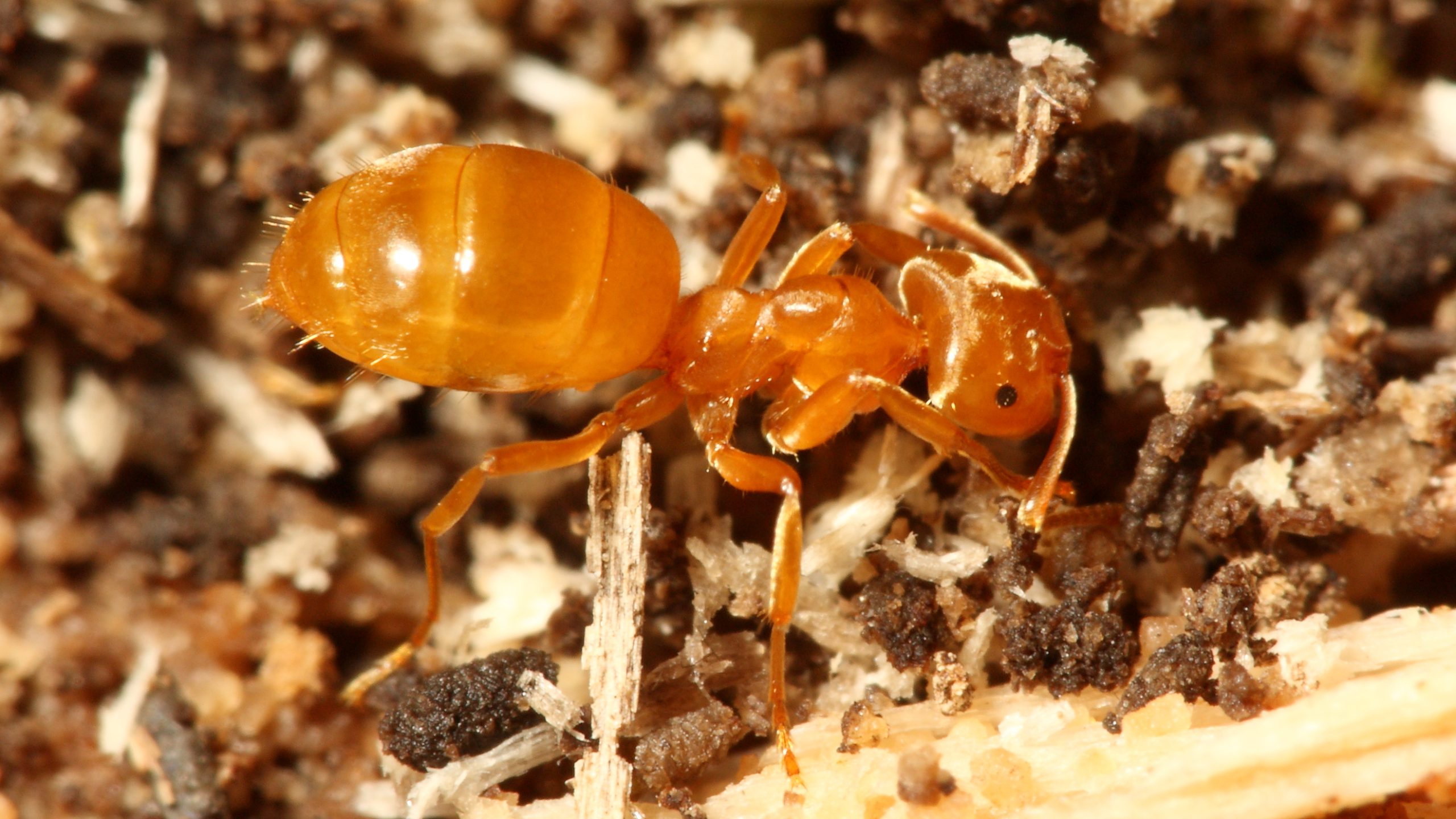 Lasius ant worker size=9mm
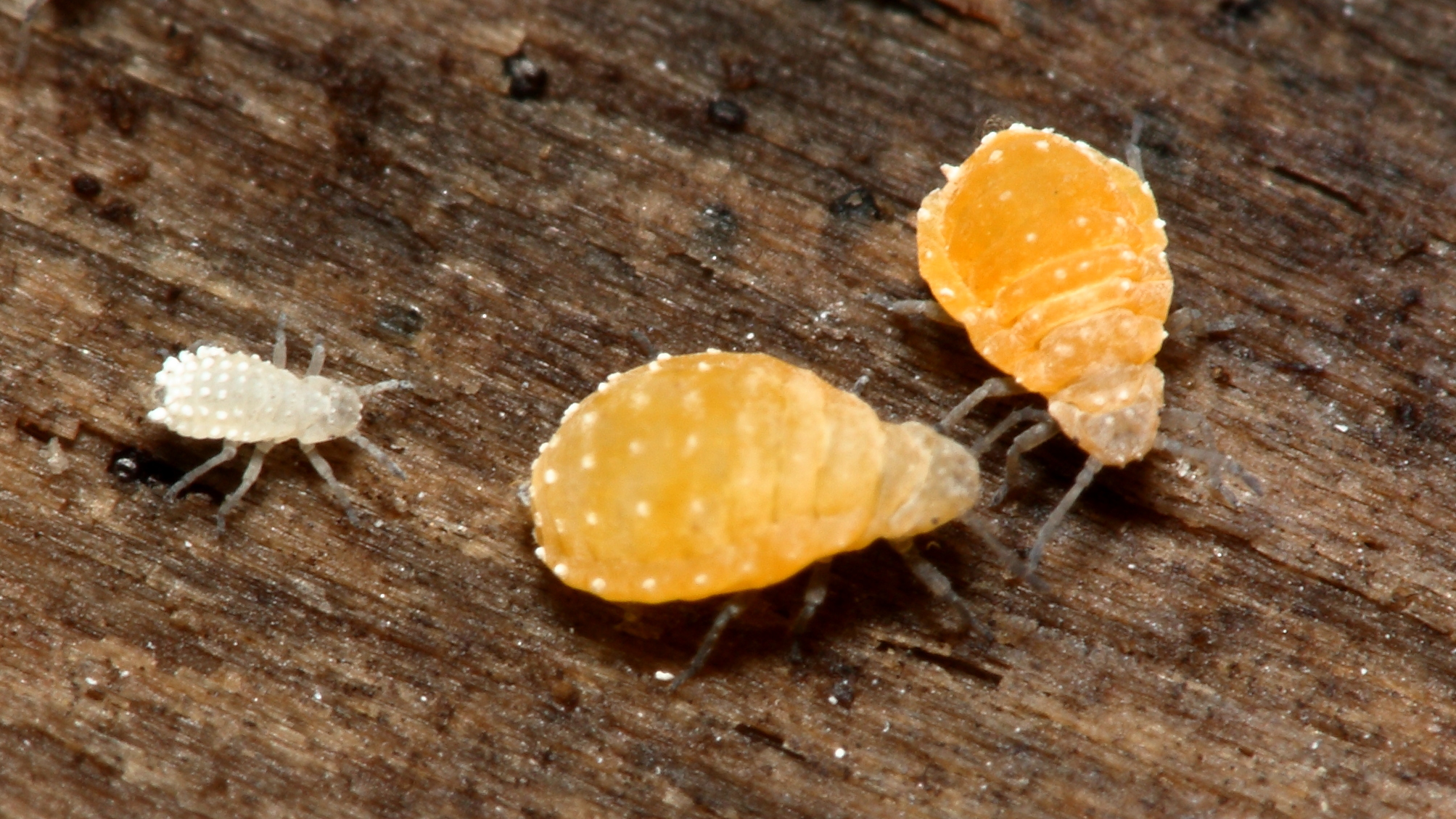
I found these very common ants tending some very tiny (1-3 mm) root aphids one spring day. I stripped some bark from a very rotten log, and there they were. The ants immediately set about carrying their charges out of sight.
Recent research suggests chemicals on ant feet tranquilize and subdue colonies of aphids, keeping them close by as a ready source of food. The study sheds new light on the complex symbiotic relationship between the ants and aphids, often hugely destructive insects in the order Hemiptera.
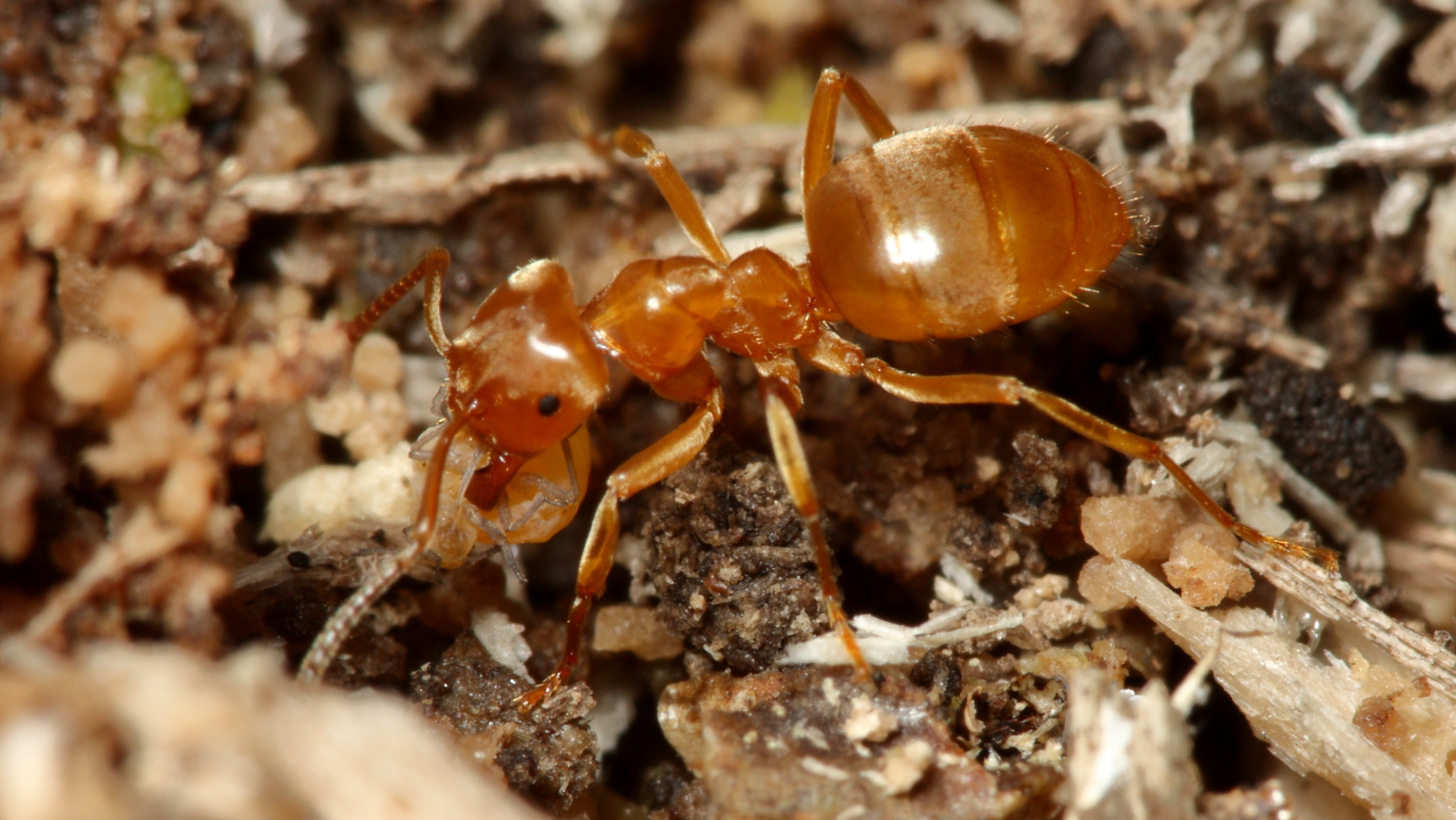
It has long been known that certain types of aphids and planthoppers are herded and farmed by ants, and that the ants offer protection from other insect would-be predators (ladybugs and their larvae are perhaps the most prolific), in exchange for honeydew, a sugary secretion the ants eat. Ants have been known to bite the wings off the aphids in order to stop them from flying away.
Chemicals produced in the glands of ants can also sabotage the growth of aphid wings. The new study shows that ants’ chemical footprints also play a key role in manipulating the aphid colony, keeping it sedentary.
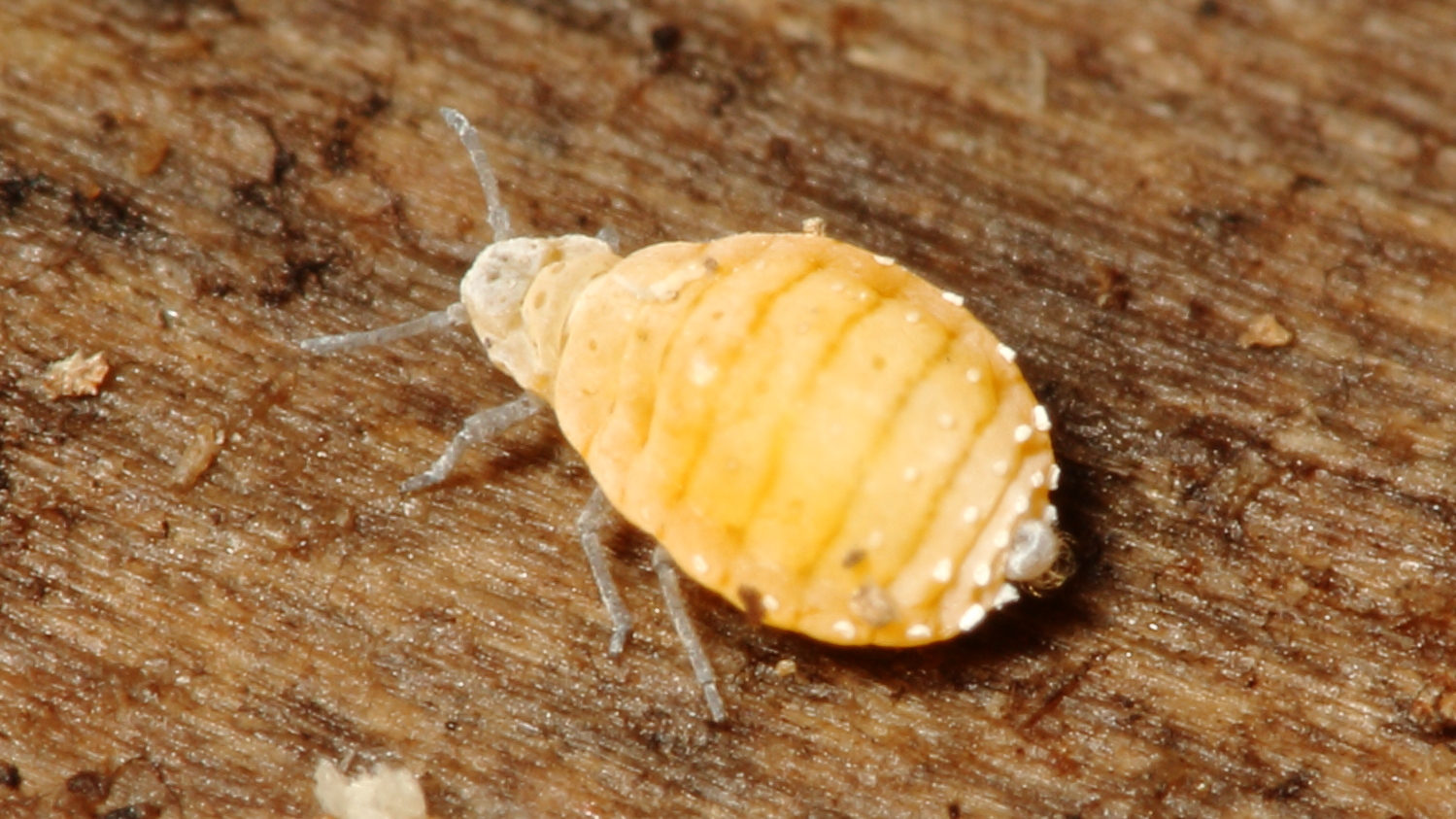
One of the larger aphids at 3mm – less than 1/8″
Aphids are plant sap-processing machines. They feed by inserting their hypodermic needle-like proboscis directly into a plant’s vascular system (phloem), which contains carbohydrate-laden sap under pressure. As a passive but very efficient process, sap flows into the insect’s digestive system. [1]
The sapsuckers must process a huge quantity of liquid, since the sap consists largely of water with only tiny amounts of nutrients. The excess (called honeydew) is excreted so copiously it has managed to fuel a symbiosis with ants. In return for the honeydew, ants will carry aphids or hopper nymphs to more vulnerable (and hence more productive) areas of the plant, and protect their charges by killing aphid-predators such as lady beetle and lacewing larvae. However, AMA and other ant species will also eat the resulting “excess” aphids as a bonus protein source.
References
- Ingraham, John L., “March of the Microbes: Sighting the Unseen” Belknap Press, 2010
- University of California Statewide Integrated Pest Management Program, Aphids