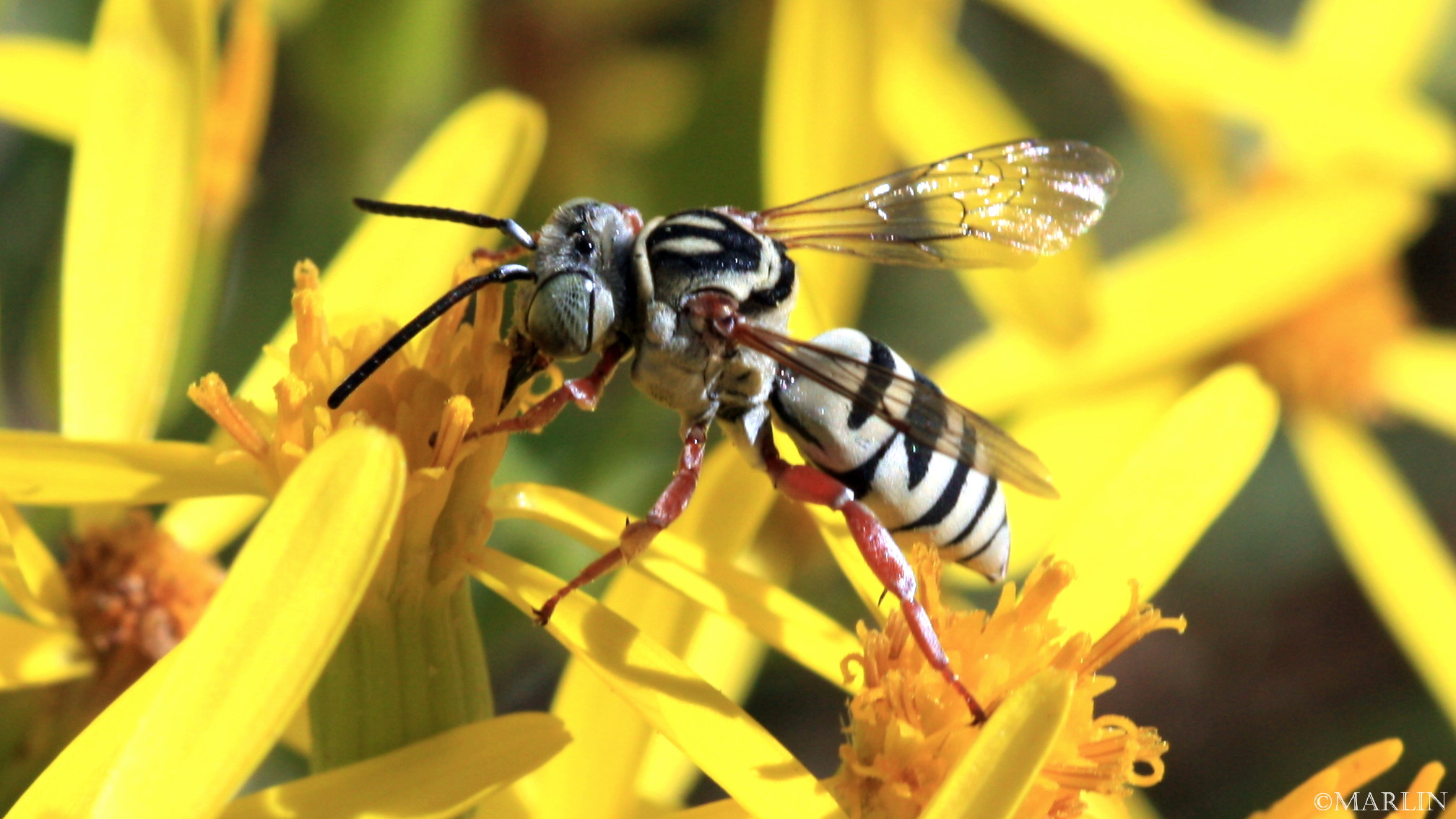
Cuckoo Bee - Triepeolus sp. [1]
Live adult Cuckoo Bee photographed near Newspaper Rock near Canyonlands Nat'l Park, San Juan County, Utah, USA
[Cirrus Home]   [Hymenoptera Table of Contents]   [Hymenoptera Main Page Graphics]
 

Cuckoo Bee - Triepeolus sp.
Desert Cuckoo Bee frenetically gathering nectar. Size: 10mm

Cuckoo Bees are parasites, in that the female cuckoo bee lays her eggs in the nest of other bees, primarily digger bees and Andrenids.  Cuckoos are also said to be kleptoparasites, stealing honey and pollen collected by others. Cuckoo bees lack any pollen-transporting apparatus (the scopa). Look for cuckoo bees flying low over the ground and foliage, hunting for foraging and nesting potential victims.

There is also a family of cuckoo wasps which lay their eggs in the nests of potter and mud dauber wasps; many types of wasps in various families have evolved similar habits. These insects are normally referred to as "kleptoparasites," rather than "brood parasites." The distinction is that the term "brood parasite" is generally restricted to cases where the immature parasite is fed directly by the adult of the host, and raised as the host's offspring (as is common in cuckoo birds). Such cases are virtually unknown in bees and wasps, which tend to provide all of the food for the larva before the egg is laid; in only a few exceptional cases (such as parasitic bumblebees) will a bee or wasp female actively feed a larva that is not her own species. The difference is only in the nature of the interaction by which the transfer of resources occurs (tricking a host into handing over food rather than stealing it by force or stealth), which is why brood parasitism is considered a special form of kleptoparasitism.

The number of times kleptoparasitic behavior has independently evolved within the bees is remarkable; C. D. Michener (2000) lists 16 lineages in which parasitism of social species has evolved (mostly in the family Apidae), and 31 lineages parasitizing solitary hosts (mostly in ApidaeMegachilidae, and Halictidae), collectively representing several thousand species, and therefore a very large proportion of overall bee diversity. There are no cuckoo bees in the families AndrenidaeMelittidae, or Stenotritidae, and possibly the Colletidae (there are only unconfirmed suspicions that one group of Hawaiian hylaeine species may be parasitic).-- from Wikipedia

"Kleptoparasitism is an important means by which many animals obtain limited resources. The success of kleptoparasitism may be influenced by a number of factors, including competitive differences among individuals and the spatial distribution of prey and hosts." --Read the Abstract: Ian M. Hamilton, Behavioral Ecology Vol. 13 No. 2: 260-267, © 2002 International Society for Behavioral Ecology, Kleptoparasitism and the distribution of unequal competitors

Cuckoo Bee - Triepeolus sp.
The Insects of Cedar Creek still classifies the Cuckoo Bees in the family Anthophoridae:
"Anthophorid Bees (920 NA spp) are most diverse in the western U.S. Three distinctive subfamilies are recognized: Nomadinae (Cuckoo Bees), Anthophorinae (Digger Bees), and Xylocopinae (Carpenter Bees). "  Many entomologists take a different view, including Michener (2000), who notes that "recognition of Anthophoridae is no longer justified," and includes its former members within Subfamily Apinae.
Publication:  Author: Michener, Charles D.
Publication Date: 2000   Book Name: The Bees of the World
Publisher: The Johns Hopkins University Press
ISBN/ISSN: 0-8018-6133-0      Reference for: Anthophoridae

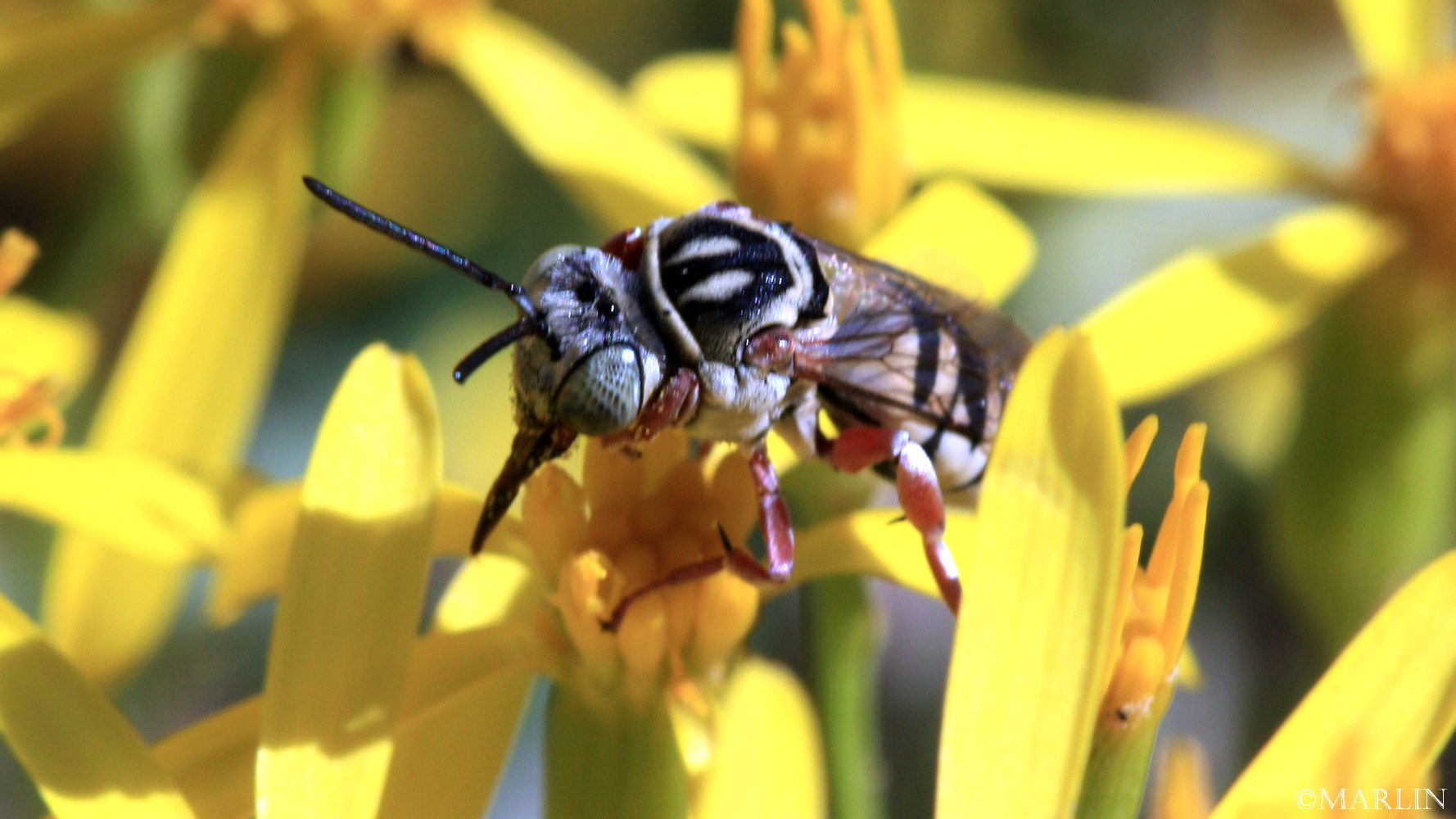
Cuckoo Bee - Triepeolus sp.
Sorry for the poor picture quality, but this bee was very energetic and skittish. I found most desert insects extremely wary.


Cuckoo Bee
Another species, female, probably Nomada luteoloides.
This mid-spring (May 10) cuckoo bee was busy nectaring - note distinct lack of pollen basket or pollen adherence.


Paper Wasp
Polistes dominula

Great Black Wasp
Sphex pennsylvanicus

Cuckoo Bee
Nomada sp.

Bald-faced Hornet
Dolichovespula maculata
References
  1. Bugguide.net, Triepeolus sp.
  2. Wikipedia, "Cuckoo Bee"
[Cirrus Home]   [Hymenoptera Table of Contents]   [Hymenoptera Main Page Graphics]
 
Custom Search

© Red Planet Inc.