
Andrenid Bees – Andrena barbilabris
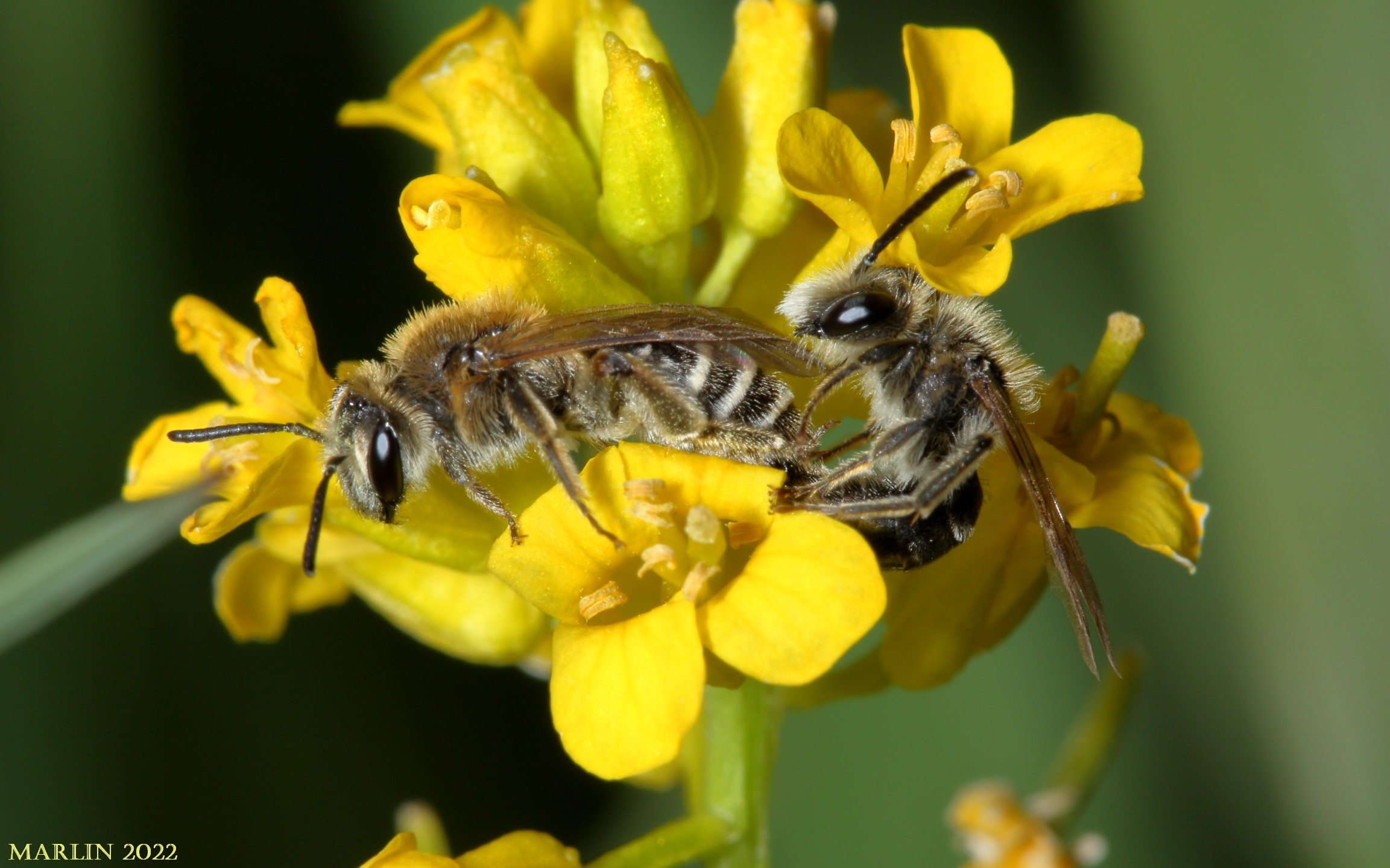
I found this pair of andrenid bees mating on marsh marigold flowers one fine spring day. They did not hang around long. Andrena is the largest genus in the family Andrenidae, and with over 1,300 species, it is one of the largest of all bee genera.
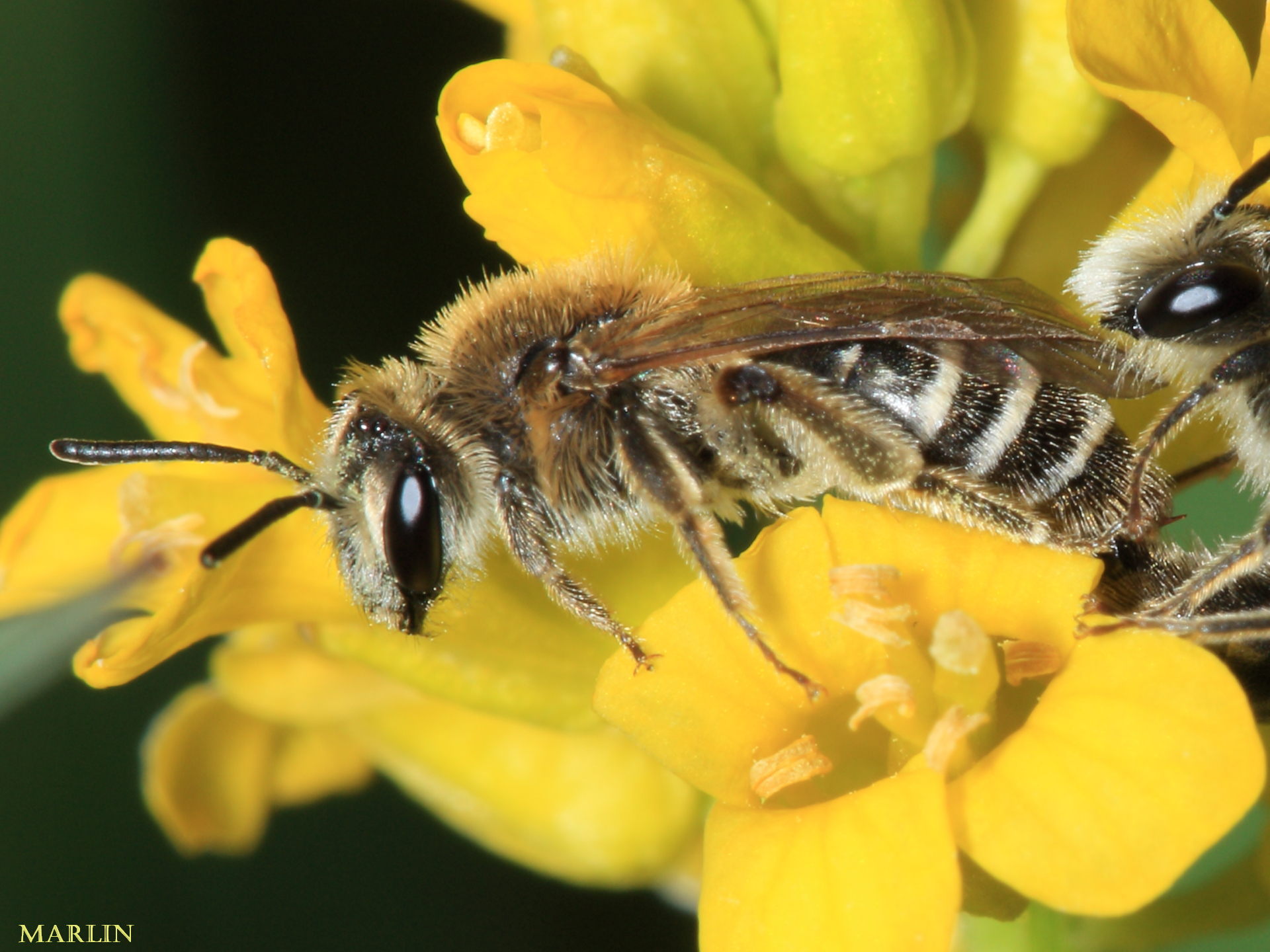
Andrenidae Queen nests underground, like may other “solitary” bees. The various species of small native bees provide pollination services that often go unsung – they visit tiny flowers their larger sisters, the honeybees, do not bother with. My pollinator gardens are flooded with clouds of these amazing creatures every year- especially when the goldenrod is blooming.
Reference: Bugguide.net, Andrenidae Mating – Andrena barbilabris –

Insects & Spiders | Bees & Wasps Index | Bees & Wasps Main | Beetles Index