Deer Fly – Chrysops callidus
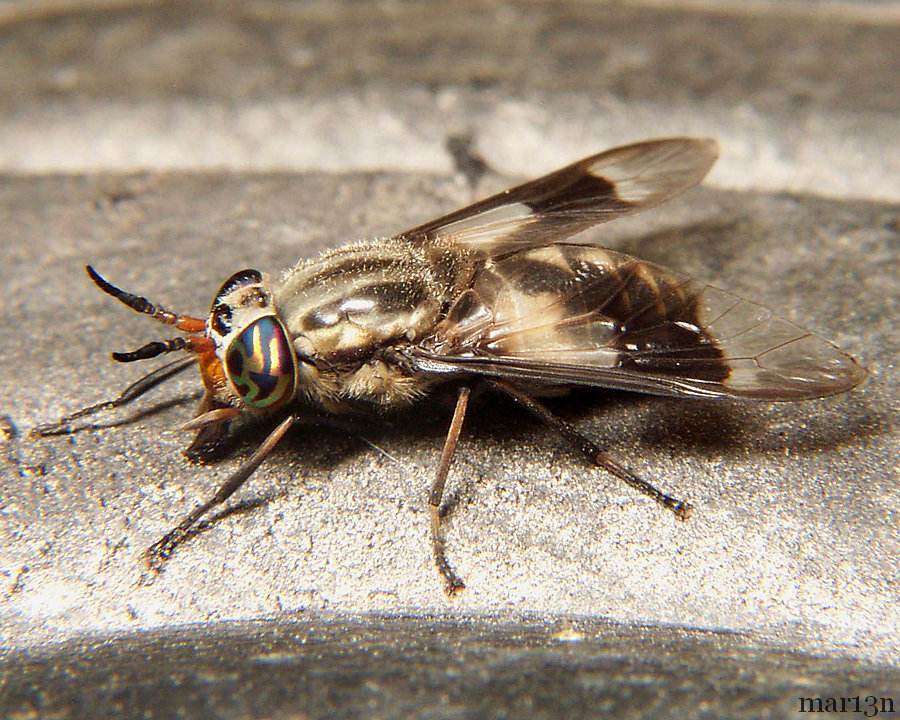
Family Tabanidae – Horse and Deer Flies. Live adult deer flies photographed at Winfield, Illinois, USA. Size: 12mm including antennae.
Adult deer flies (Chrysops spp.) are 6 to 12 mm long, with striped or banded wings and body. These Tabanids are distinguished from clegs, which have banded eyes and spotted wings. Larvae are usually found in the wet soil along the shores of ponds and marshy areas. They are cylindrical and pale yellow to white; there are longitudinal ridges along the body. There are swellings on segments 4-10, and the posterior spiracles are on an extended spine. North American species include: C. callidus (pictured), C. carbonarius, C. flavidus, and C. vittatus. Their abundance depends on weather conditions and the availability of prey.
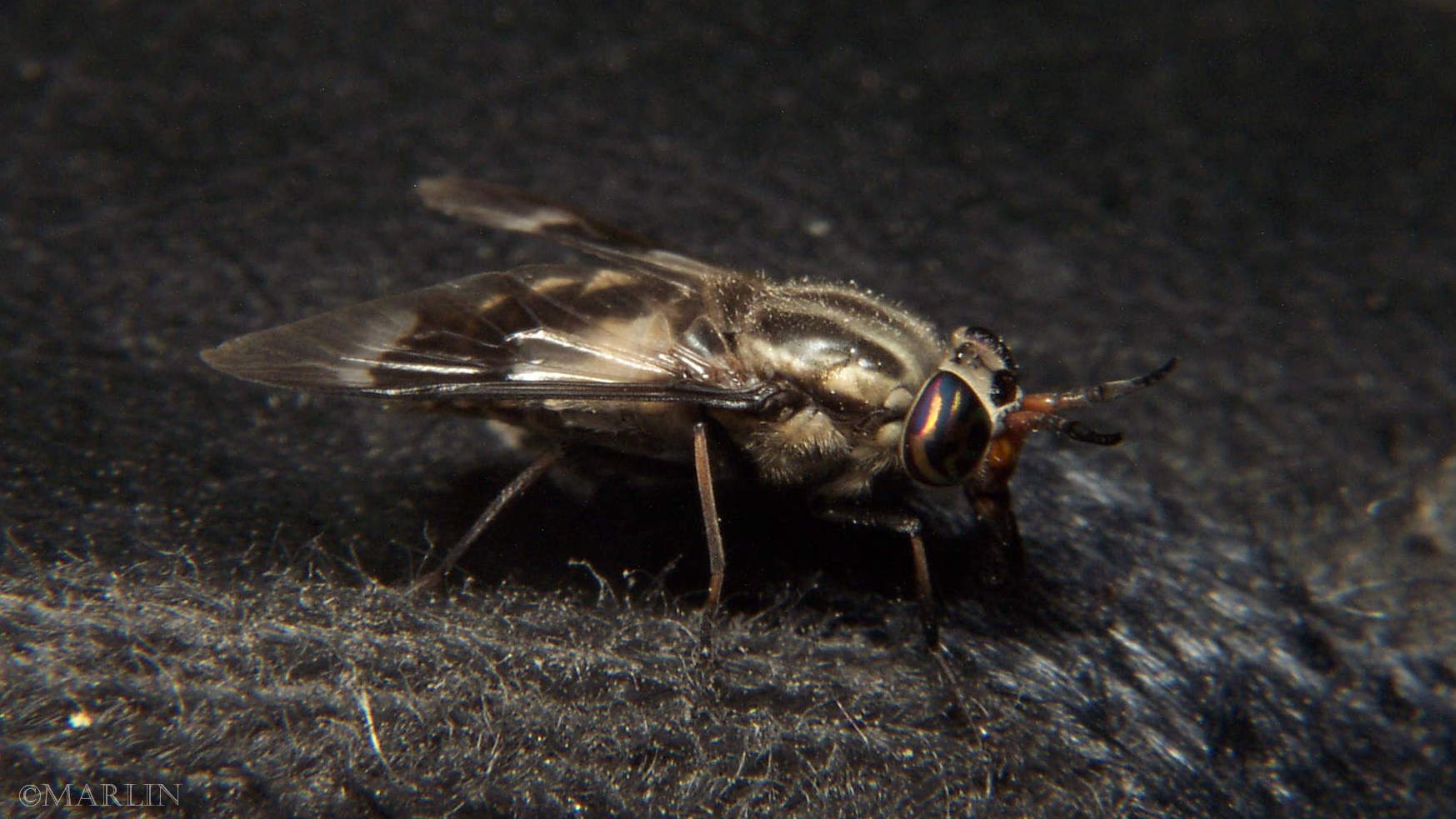
These flies have been driving me crazy the past few days. Deer flies harass dark-colored moving targets – they most often bother me when I walk through the woods or fields, buzzing rapidly past my ears and landing right on top of my head. Hey, they must like hair, right? Deer are hairy. But they rarely try to bite me. Not today. This fly kept attacking me while I was trying to photograph Gasteruptid wasps. Then it decided it would land on my shoes, but not where I could easily photograph it – it kept crawling around onto the heels of my shoes! DANGIT.
Do you have any idea how hard it is to photograph something on the heel of your shoe when you’re standing in knee-high weeds and it’s 90 degrees and you’re sweating like a pig? It ain’t fun. BUT. I got some great shots. I’ll now call this my “shoe fly.” Oh, and those eyes!? Too cool. Then, on the way home, another one attacked me, and bit me on the leg, then landed on my neck ARGH! It landed on my chest and I SMACKED it as hard as I could, and you know, that sucker fell to the ground and then got up and flew away. Nice.
Flies of North America – Order Diptera. Flies are prevalent in virtually all habitats, with over 16,000 species in North America. Flies can be distinguished from all other insects in that they only have one pair of normal wings. The other pair has evolved into small ball-like structures called halteres. Most flies have compound eyes and mouthparts adapted for piercing, lapping or sucking fluids.
Syrphidae | Flies Index | Tachinidae | Bee Flies | Robber Flies