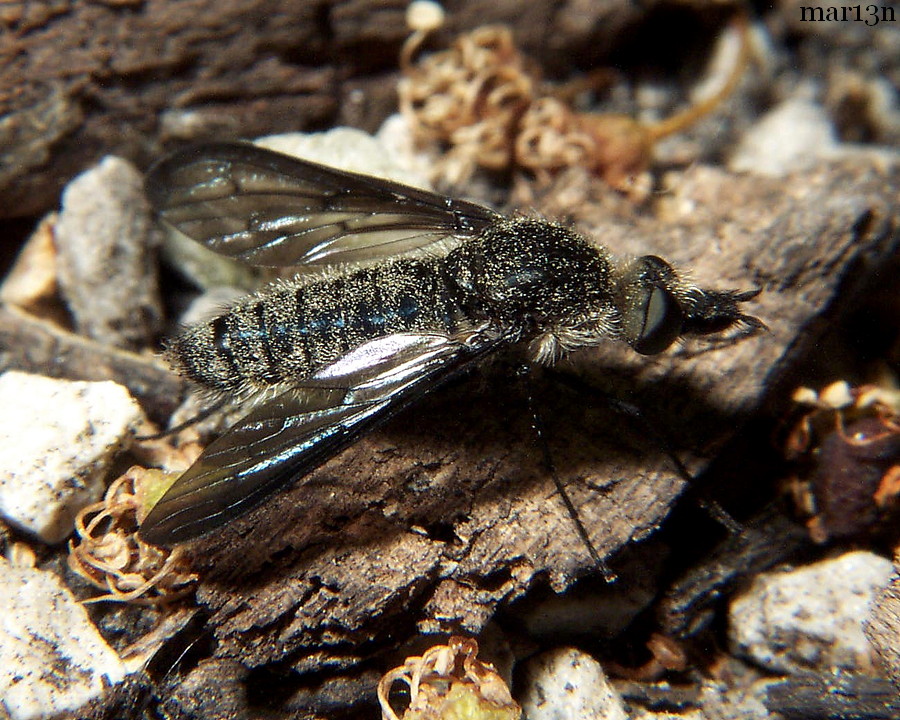
Bee Fly - Aldrichia sp.
Family Bombyliidae -- bee flies, bombiles / Subfamily Bombyliinae / Tribe Conophorini / Genus Aldrichia
Live adult flies photographed at Winfield, Illinois, USA.

Bee Fly - Aldrichia sp.
Bee Fly, Aldrichia sp.
Bee flies are stout-bodied flying insects said to resemble long-legged bumble bees, but I've never seen that connection. There are Syrphid flies and robber flies that do a much better job of impersonating bumble bees. Many bee flies have elongated mouthparts that form a conspicuous beak, used for sucking nectar long-distance while hovering over flowers.
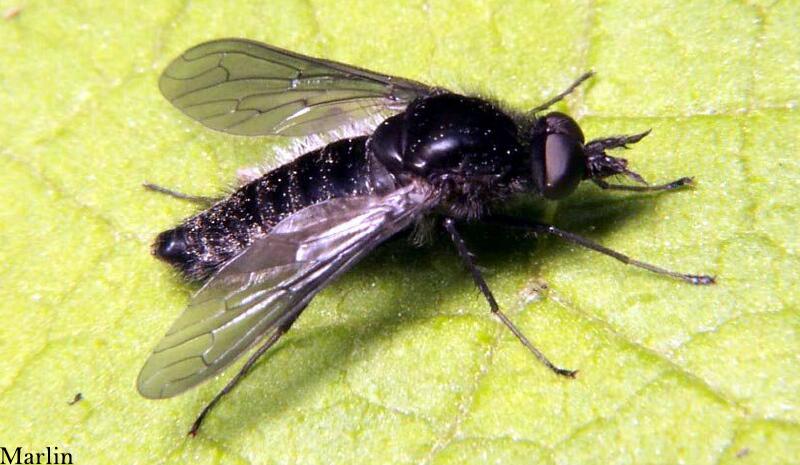
Bee flies much prefer to hover in midair while doing their nectaring, undoubtedly to avoid capture for those who lurk about flower blooms looking for an easy meal, such as the ambush bugs and the crab spiders. Adult bee flies become active about the third week in April, here in northern Illinois. This Aldrichia species is one of the varieties that is neither stout-bodied, or long-legged, and they do not have the long proboscis. Go figger. Also, I've never seen them mucking about at flowers.

Bee Fly - Aldrichia sp.
A darker, less hairy Aldrichia sp.

I most often see bee flies hovering around flowers, or if resting, usually on the ground, on bare soil. They are extremely wary and difficult to approach. No doubt their large compound eyes give them good vision, plus they have that air-motion sensing mechanism that helps the ordinary house fly avoid the swatter. Adult bee flies drink nectar, but the larvae are parasites of beetle larvae as well as the brood of solitary wasps and bees, the hole or burrow-nesting insects. I've heard tales of female bee flies hovering over a hole in the ground, flicking her eggs into the hole. I'm skeptical of these claims. I've often seen female Bombylius sitting in very loose soil, vibrating her butt like mad, so that the dirt is actually thrown outwards (see our Bombylius major pictures). One source says these flies are "gathering sand to coat their eggs", ostensibly to keep them from drying out.
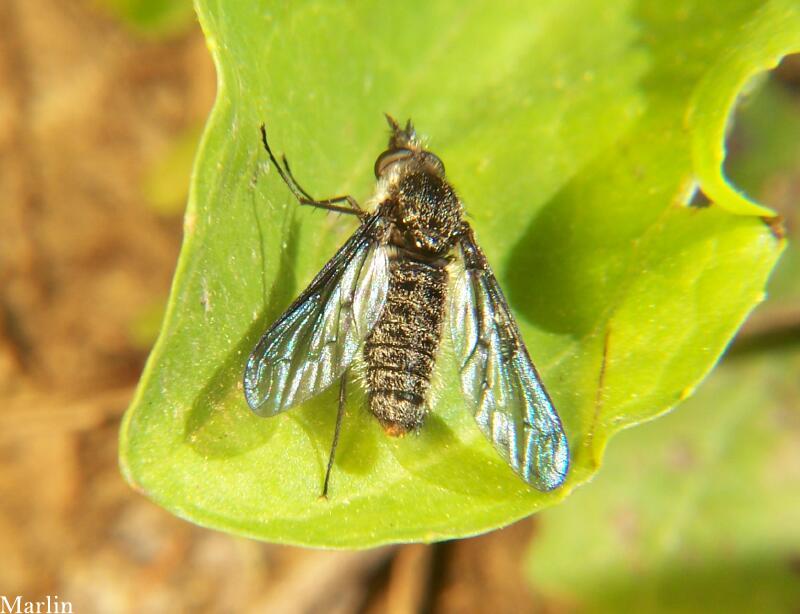
Bee Fly - Aldrichia sp.

Many bee flies have boldly patterned wings, but it's their shape that generally tips me off that a specimen is in the Bombyliidae family. The shape is reminiscent of the best swept-wing fighter jets. The relatively short and usually pointed antennae are another clue, along with, of course, that dangerous-looking beak. Good thing these flies don't bite or sting.

All in all, a fascinating insect worthy of study. Next springtime, why not take a trip to the woods? You'll find these gals busily gathering nectar from the dandelions along your favorite sunny path. Just watch out for the dog poo.


Custom Search