Bee Fly – Lepidophora lepidocera
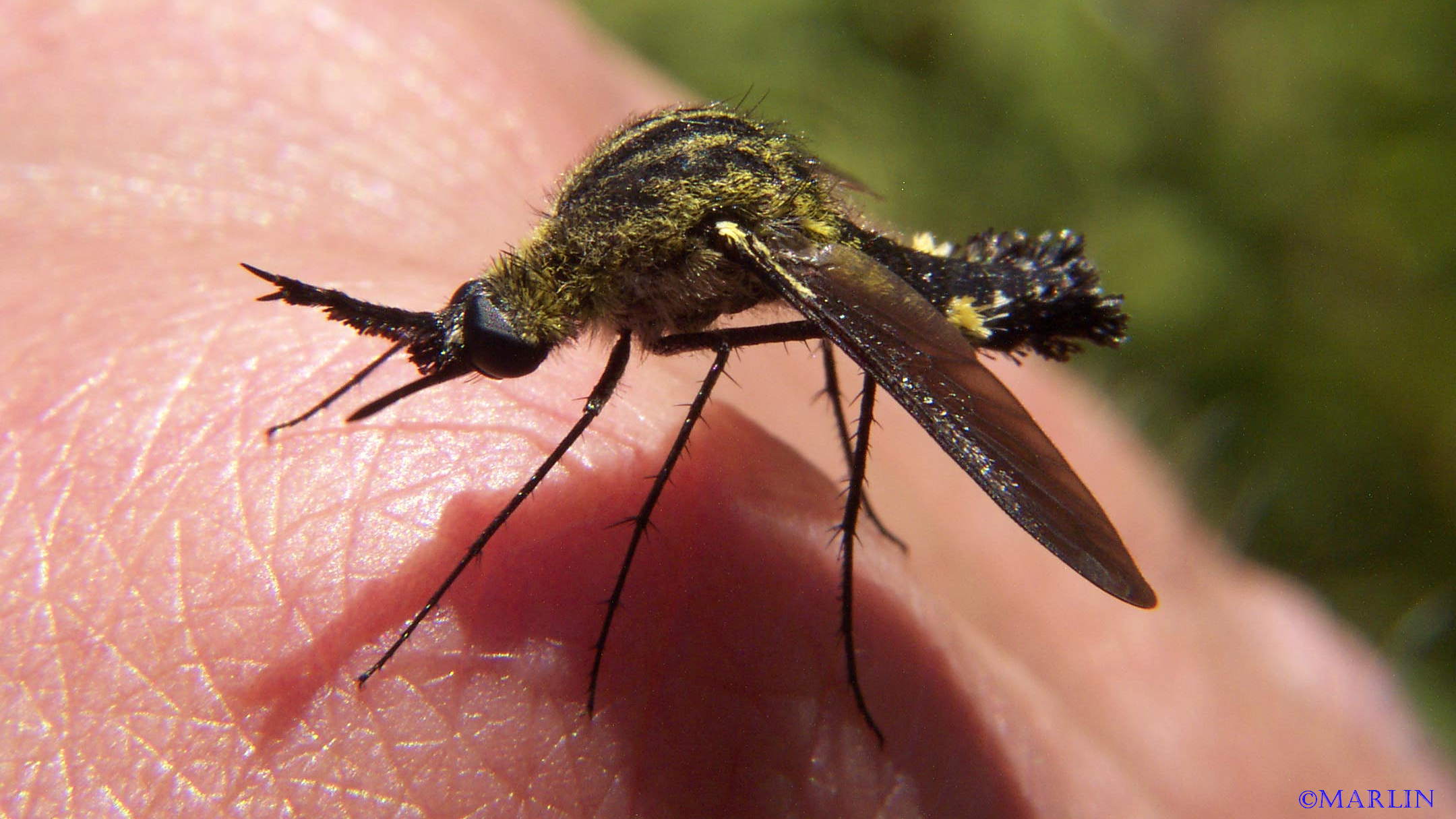
I LOVE this fly. I’ve only seen a couple of times. Now I’m out in the field photographing blister beetles, and along comes this Lepidophora, and decides he/she wants to bask in the sun on my shirt. Or my pants. Or my fingers or arms, you name it. What fun! Except some of those little bastard stable flies that like to bite your ankles decided to bite my ankles while I was holding my breath trying not to scare this absolutely strange and beautiful creature.
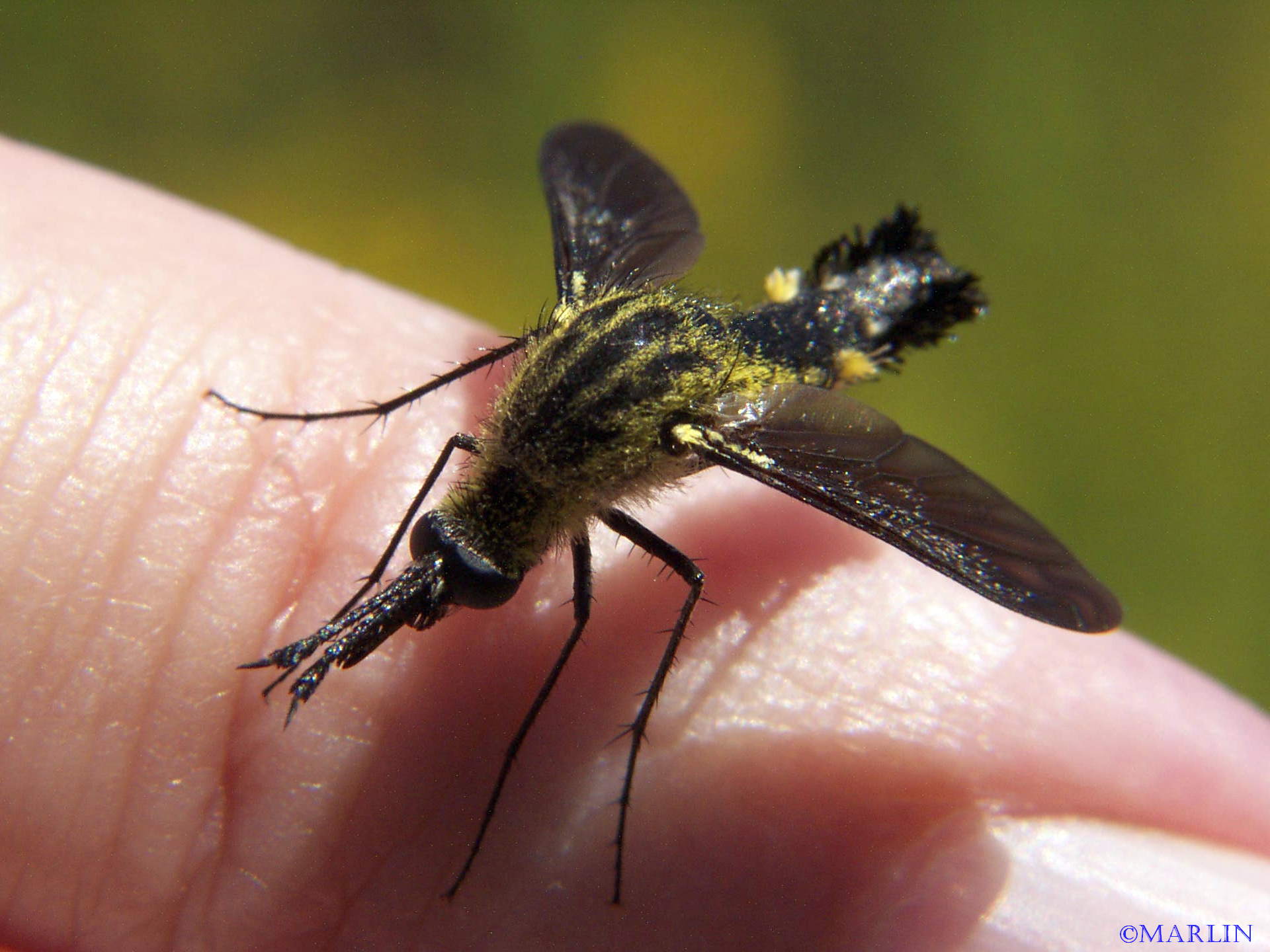
Bee flies get their common and scientific names from their resemblance to several different species of bees. However, if you look closely you can tell they have only one pair of wings, and their antennae are entirely wrong for a bee. Unlike bumblebees, they’re fast – really fast and agile, with great ability to hover, like syrphid flies. The best time to find bee flies is in early spring. What a glorious way to spend time outdoors – chasing flies!
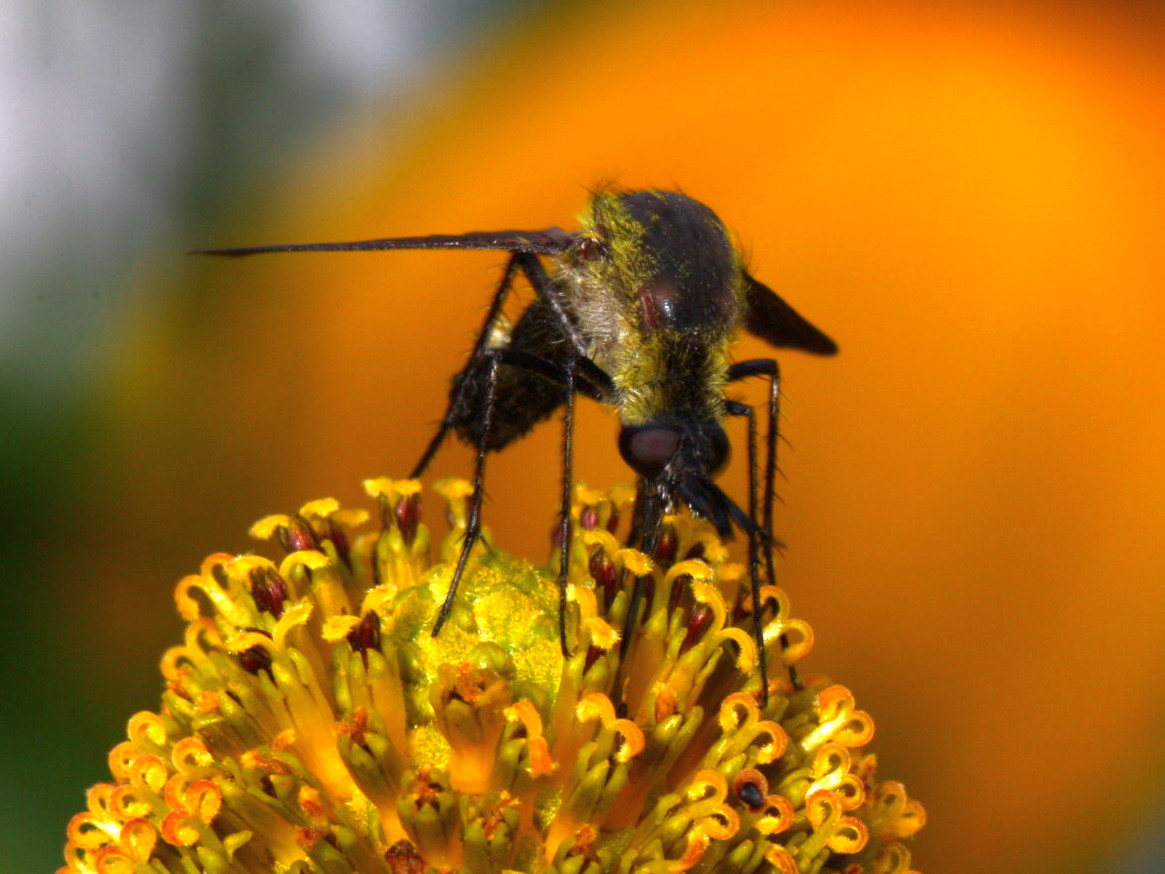
While adult Bombylius feed on nectar from early spring flowers (and carry pollen, which they don’t eat, on their fur), the larvae are parasitoids or predators on bee larvae. And now you know the shocking truth – bee flies are out so early so they can stash their eggs in the open tunnels of solitary bees while they are still being provisioned and before they get sealed up. When the female solitary bee goes in search of more pollen, the Bombylius hovers at the opening of the burrow. While still hovering, she ejects an egg inside the tunnel with a flick of her abdomen.
Flies Main | Flies Index | Tachinidae | Syrphidae | Bee Flies | Blow Flies | Flesh Flies