 |
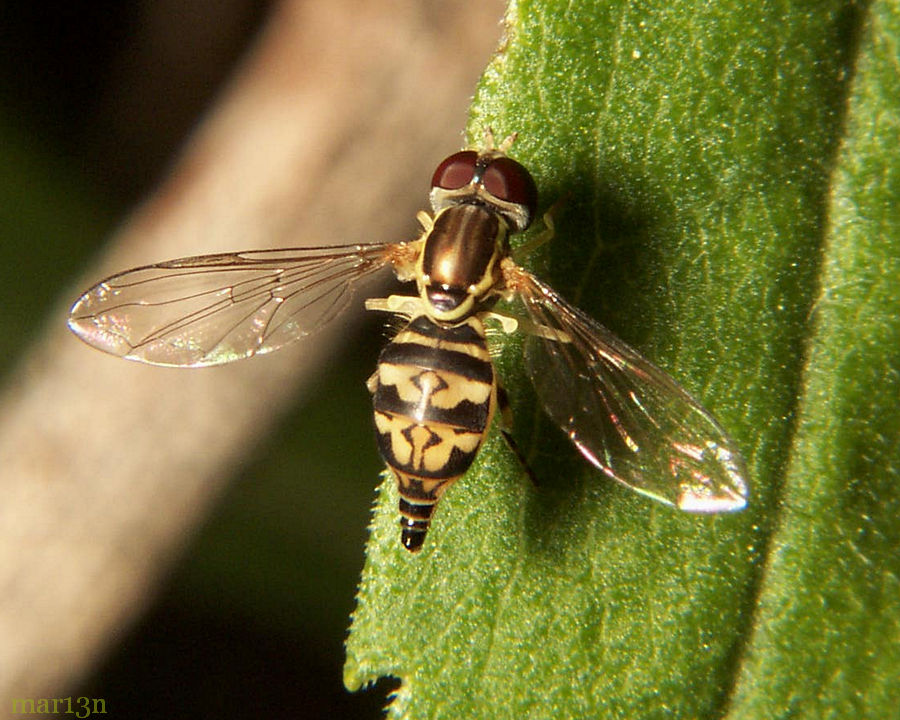
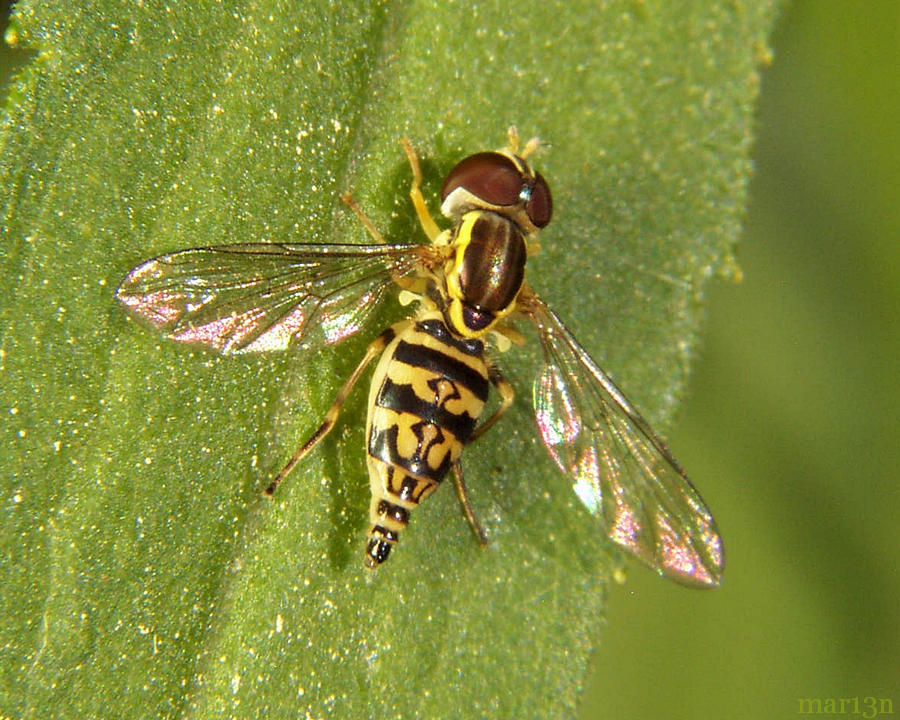
Syrphid Fly – Toxomerus marginatus Order Diptera | Family Syrphidae – Flower Flies, Hover Flies Live adult Syrphid flies photographed in the wild at San Antonio, Texas, and Winfield, Illinois, USA. |
|
Flies in the Diptera Family Syrphidae are commonly known as Hover or Flower flies, after their favorite activity: hovering around or visiting flowers. They range in size from about 4mm to over 25 mm (1 inch) and are usually brightly colored yellow and black, as Batesian mimics of stinging insects such as bees and wasps. Syrphid flies are important pollinators of flowering plants, out-pollinating native bee populations in many ecosystems. Syrphid larvae (maggots) prey on aphids, scales, thrips, and caterpillars of both butterflies and moths, a characteristic shared by lady beetles and lacewings. In these respects, the Syrphidae are viewed as extremely beneficial insects, and their importance to agriculture cannot be overstated..
The Syrphidae are abundant nearly everywhere on earth except a few deserts of Africa and Asia, and extreme southern latitudes. |
|
Most hover flies have large compound eyes that nearly cover the head. One rule of thumb for identifying hover fly gender is, if the eyes meet at the top of the head, it's a male specimen. Each wing has a characteristic fold, or "false vein" which can be visible to the naked eye – it is located anterior to the first large vein that runs all the way to the outer margin of the wing. Of course, being true flies, they have only one pair of wings, plus the characteristic halteres, or bulb-like organs that evolved from the second pair of flying wings. In Syrphid flies, however, the halteres are fairly inconspicuous. Much has been written about the Syrphids' mimickry of the bees and wasps. Their bright yellow and black markings are said to be a Batesian mimickry of the aposematic (warning) colors sported by the stinging insects. Some of these flies actually go so far as to use their front legs to mimic the jointed antennae of the Vespoid wasps, some are mimics of bumble bees or honey bees. |
|
|
Flies of North America – Order Diptera. Flies are prevalent in virtually all habitats, with over 16,000 species in North America. Flies can be distinguished from all other insects in that they only have one pair of normal wings. Most flies have compound eyes and mouthparts adapted for piercing, lapping or sucking fluids.
Syrphidae | Flies Index | Tachinidae | Bee Flies | Robber Flies |