Transverse Flower Fly – Eristalis transversa
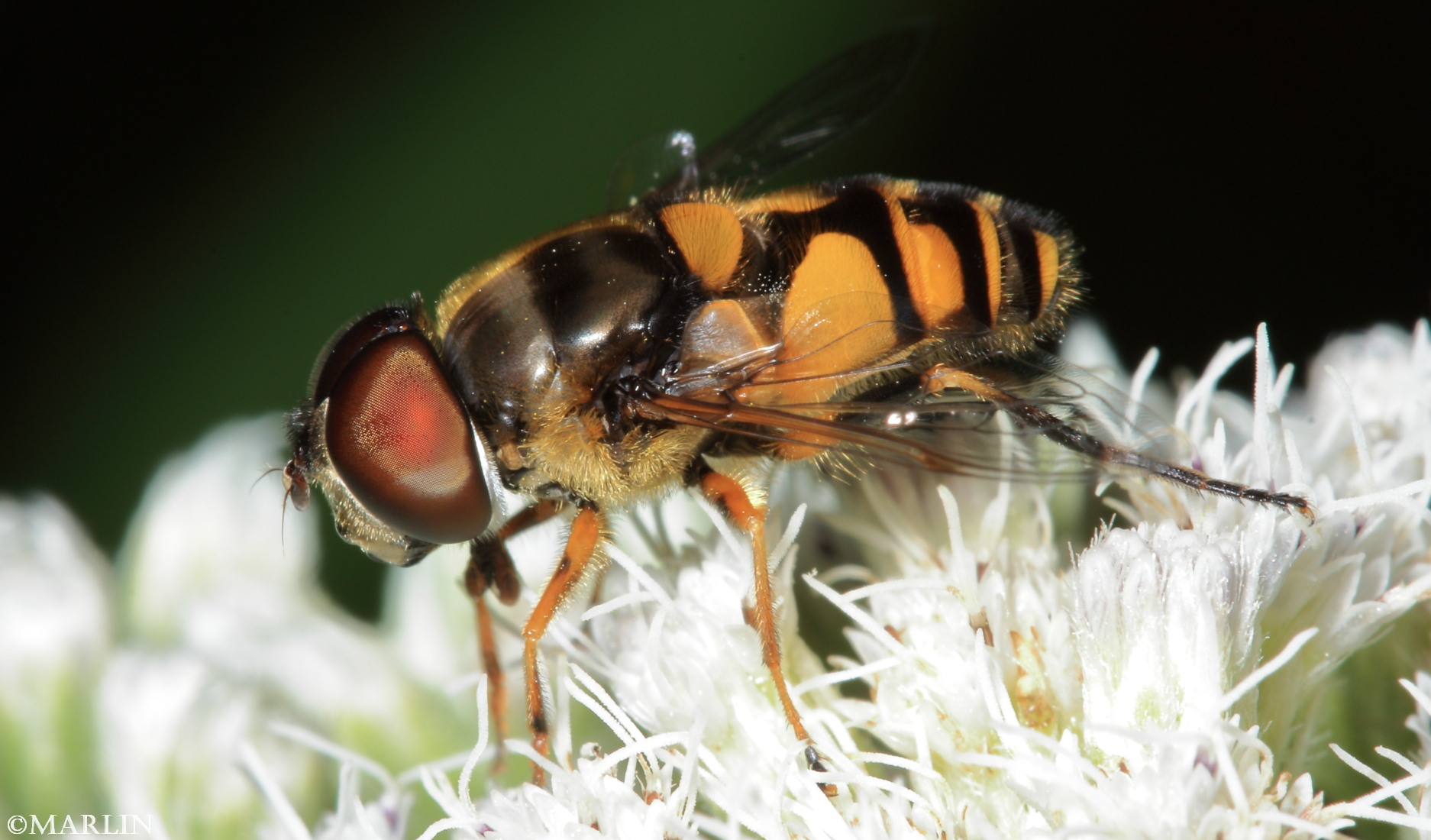
Live adult male Syrphid fly photographed in the wild at Marienville, Pennsylvania
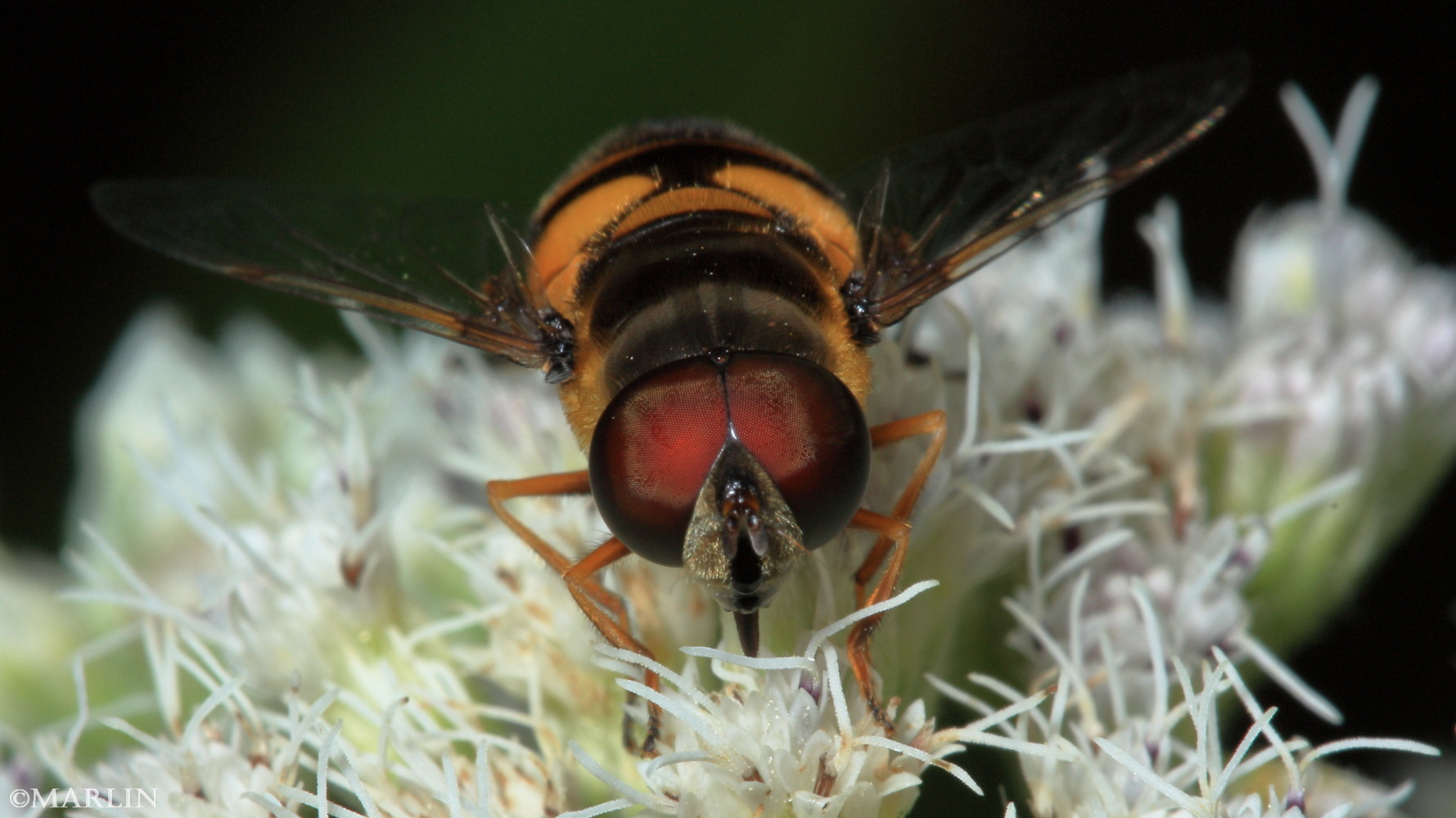 What a gorgeous fly! I love chasing these guys around
This Syrphid fly is undoubtedly one of the most colorful flies in this family I’ve ever seen – and big! at nearly 12 mm from antennae to tail. This is what I would call a stout, heavy-bodied fly. Not slow, though! Fast and agile. This male specimen needs plenty of energy in the form of flower nectar to fuel his quest for females and reproduction.
Some hoverflies’ larvae are important predators of aphids, thrips, and other soft-bodied prey. Many Syrphids are important pollinators, and in both roles are considered beneficial insects. Home gardeners do well to plant flowers that attract them: Alyssum, Iberis umbellata, statice, buckwheat, chamomile, parsley, and yarrow. I know they like New England Aster as well. Heck, just about any flower will do.
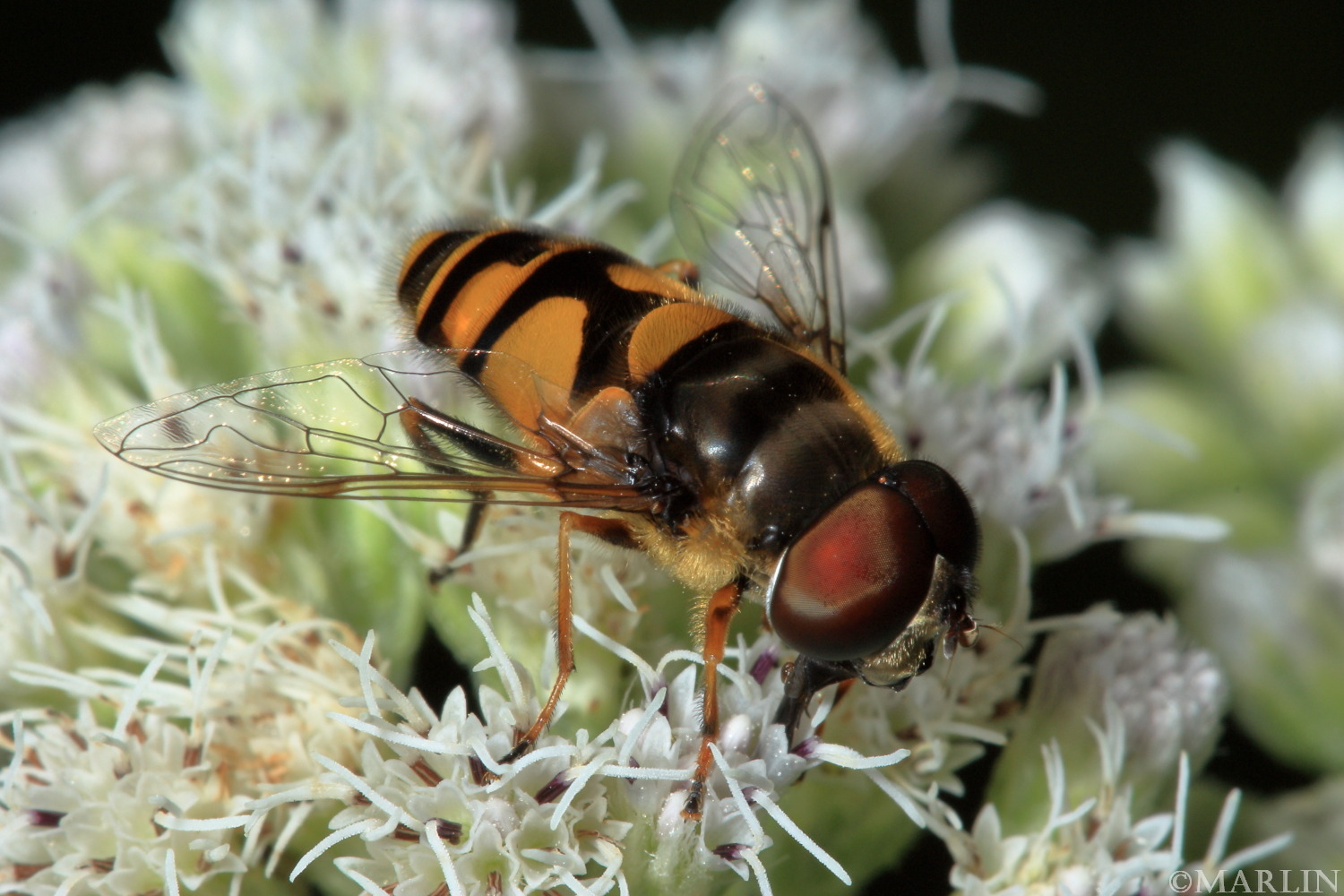
Quite a few flower fly species feed on aphids (aphidophagous). All are in the subfamily Syrphinae. Common aphidophagous flower flies in California vegetable crops include Toxomerus marginatus, Allograpta obliqua, Syrphus opinator among many others.
Syrphid flies are routinely used as a biological control in the lettuce fields of California’s vegetable-producing regions, where the fly’s larvae are generally effective in controlling lettuce aphid (Nasonovia ribisnigri). It is primarily the Syrphidae that enable organic romaine growers on California’s central coast to produce harvestable crops.
Syrphidae larvae are, in turn, parasitized by wasps in the Hymenoptera families Ichneumonidae and Pteromalidae [2].
References
- Bugguide.net, Transverse Flower Fly – Eristalis transversa
- University of California, DANR, “Biological Control Agents for Aphids in Vegetable Crops”
North American Insects & Spiders
Online since 2002